
Side profile of a bearded man wearing a dark brown baseball cap and a dark gray t-shirt against a plain light background.

Why your house is humid with the AC on in New Jersey

RepairCentral ACNew Jersey
Step 1 of 2

What ZIP code is the job in?

Why is my house humid even with the AC running in NJ?

New Jersey summers run thick with moisture, and you expect the AC to clear it out. When the house still feels clammy, floors feel damp, or the windows fog up even with the unit running, it feels like something's wrong. You're not imagining it. An AC that runs and runs without making the air feel dry usually has a specific reason behind it, not just "the weather."

Your AC is cooling the air but not removing enough moisture from it

An air conditioner pulls moisture out of your house as it runs, but only if it runs long enough in one stretch. A system that's oversized for your house cools the air fast and shuts off before it's had time to pull the humidity down, so the house feels cold and damp at the same time. A low refrigerant charge or a coil that's dirty or icing over does something similar: the unit still blows cold air, but it's not drawing moisture out the way it should. Either way, the result is the same sticky feeling you're trying to run the AC to get rid of. In a New Jersey summer, with the outdoor air already loaded with moisture, a system that isn't pulling its weight shows it fast.

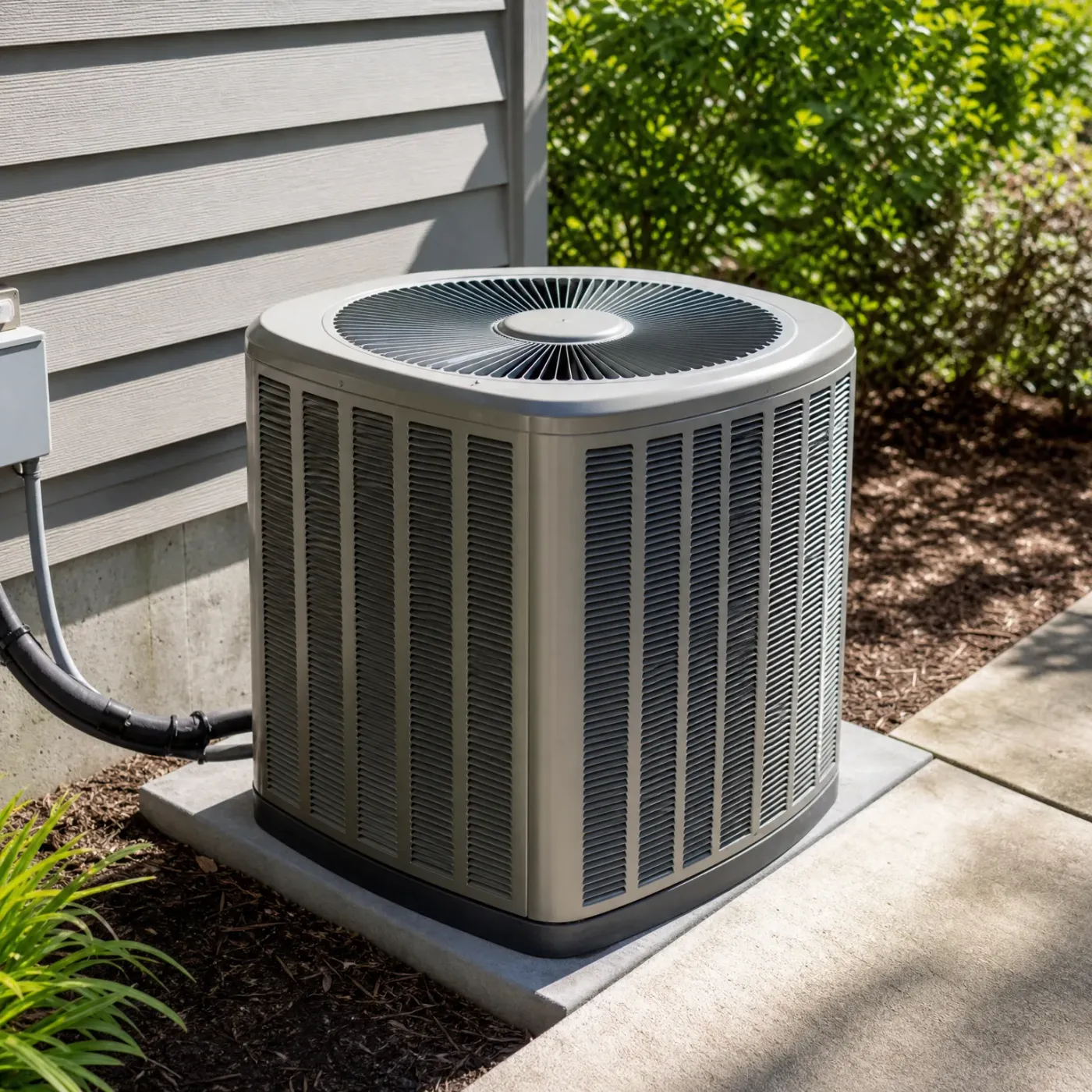
A gray outdoor air conditioning condenser unit on a concrete pad beside a house with horizontal siding and a stone veneer base, with refrigerant line and electrical disconnect box on the wall and flowering shrubs to the left.

AC Sized Right

A system sized for your house runs long, slow cycles. That long runtime is what pulls moisture out of the air, not just the temperature drop. The house feels dry, the windows stay clear, and the unit outside stays clean and clear of debris.


An outdoor air conditioner condenser unit on a concrete pad beside a house with light gray horizontal siding, with mulch and green shrubs on either side and a concrete walkway in the foreground.

Oversized Or Failing Unit

An oversized unit, or one losing refrigerant or airflow, cools the air fast and shuts off before it strips out the humidity. You get a cold house that still feels damp. A dirty, weathered unit like this one is often part of why it can't keep up.

A gray-haired man in a dark knit sweater sits on a light gray sofa in a living room, looking toward a sunlit window, with houseplants, a lamp, and framed art in the background.
A bearded man with graying hair in a dark green sweater sits on a sofa in a living room, looking off to the side, with a sliding glass door and a dim kitchen doorway behind him.
A gray-haired man in a dark green sweatshirt sits on a sofa in a living room, looking toward a bright window, with a houseplant, lamp, fireplace and framed art behind him.
A gray-haired man in a dark long-sleeve shirt sits on a gray sofa in a living room, looking toward a sunlit window with sheer curtains.

How Your AC Removes Moisture

  • Your AC cools the air first and pulls moisture out as a side effect of that process.
  • Air crosses a cold evaporator coil, and moisture in the air condenses on it the same way a cold glass sweats.
  • A thermostat set low makes the system satisfy the temperature fast, so it shuts off before it has run long enough to wring out the humidity.
  • An oversized unit cools a room in short bursts, and each cycle ends before the coil has time to collect much water.
  • A dirty or low refrigerant charge keeps the coil from getting cold enough, so less moisture condenses out even while the air feels cool.
  • Warm, humid air leaking in through gaps around doors and windows adds moisture back in as fast as the system can remove it.

Cooling and drying happen in the same step, not two separate jobs. Air from your house passes over the evaporator coil, which is cold enough that moisture in the air condenses on it, the same way water beads up on a cold glass in July. That water drips into a pan and drains outside. The coil only pulls out that moisture while it's cold and while air keeps moving across it, which takes time. A thermostat set low tells the system to shut off as soon as the air hits temperature, sometimes before the coil has been running long enough to collect much water at all. The same thing happens faster with a unit that's too big for the room. It blasts the space down to temperature in a few minutes, shuts off, and never runs long enough in that cycle to dry the air out. Low refrigerant or a dirty coil cause a quieter version of the same problem. The coil can't get cold enough to condense much moisture, so the air comes out cool but still wet. None of this shows up on the thermostat, which only reads temperature. You can have a house sitting at 72 degrees that still feels damp, because the number on the wall says nothing about how much water is still in the air. Add in warm, humid air leaking past door seals and window frames, and the system ends up fighting moisture that keeps coming back in as fast as it takes it out.

A woman with shoulder-length graying brown hair, wearing a beige cardigan over a white top, sits in a light upholstered armchair and looks off to the side, with a curtained window, bookshelf, and lamp shade behind her.
A woman with dark hair in a bun holds a sleeping child wrapped in a knitted beige blanket on a sofa, with a lit lamp and a window behind them.

Get your air conditioner to the right pro

Only one pro gets your request, so you hear from one company.

No fee to send it, and nothing to sign.

A short cycle cools the air fast but the coil barely has time to get wet. Moisture removal lags behind temperature drop, so the thermostat reads satisfied while humidity in the house stays high.

An oversized system or one losing refrigerant charge will do exactly that. A technician who checks the charge and the cycle length can tell you which one is driving the damp air in your house.

A weathered outdoor air conditioning condenser unit on a concrete pad beside a house with light horizontal siding, an electrical disconnect box and conduit on the wall, and mulched soil on either side.
Before you get your air conditioner repair
A gray outdoor air conditioner condenser unit on a concrete pad beside a house with horizontal vinyl siding, surrounded by mulch, flowering shrubs, and lawn.
After you get your air conditioner repair

What it does to your house

Sticky air sits on everything. Wood floors feel tacky underfoot, towels in the bathroom stay damp between uses, and closets start smelling musty even when they look clean. Windows fog on the inside, and in a finished basement that moisture has nowhere to go, so it settles into carpet and drywall. None of this means the room is warm. You can hold 72 degrees and still feel sticky, because the thermostat only measures temperature. A repair that gets your system running full cycles again is what brings the moisture down, not a lower number on the thermostat.

What it costs you to ignore

A system that short cycles runs its compressor and blower more often to chase a temperature that keeps creeping back up, and with New Jersey power rates among the highest in the country, that adds up on the bill before the house ever feels dry. Left alone through a full summer, the damp air it's not removing gives mold a place to start in closets, behind furniture, and in that basement corner that never quite dries out. A qualified local contractor who works on these systems all season knows what to check first and can get the cycle back to pulling moisture out the way it's supposed to.

Power costs 22.48 cents per kilowatt-hour statewide

At 22.48 cents a kilowatt-hour, a system working overtime to catch up on humidity shows up fast on your bill. Short cycling keeps the compressor kicking on and off all day without ever running long enough to dry the air, so you pay for the electricity without getting the comfort.

EIA-861 2025 statewide residential average

A gray outdoor air conditioner condenser unit on a concrete pad beside a house with horizontal lap siding, with a wall-mounted disconnect box and conduit to its right and shrubs to the left.

Running clean

This unit sits clear of leaves and dirt, with the coil guard open and the disconnect box close by on the wall. Airflow across the coil stays steady, so the system cools and wrings moisture out of the air at the same time, cycle after cycle.

An outdoor air conditioning condenser unit on a concrete pad beside a house with horizontal lap siding, with a conduit and electrical disconnect box on the wall at right.

Running dirty

Grime on the coil guard blocks airflow before it reaches the coil. The system works harder to hit the temperature you set, cycles short, and the coil never stays cold long enough to pull the moisture out. A tech who services units like this one every summer can tell you if that coil needs a cleaning or something else is going on underneath.

A woman in a tan sweater and jeans stands in the open black-framed front doorway of a white single-story house, while a blonde woman in an orange sweater and jeans walks toward her along a concrete paver path bordered by shrubs.

Humidity means the system isn't running the way it should

A house that stays damp with the AC on has a system that isn't doing the second half of its job. It might be cooling the air well enough while barely touching the moisture, and that gap is usually something a contractor can find and fix rather than live with every summer.

Someone who works on these systems all season in New Jersey has seen the short-cycling unit, the low charge, the oversized system, and knows which one tends to show up in which situation. Answering this page matches you with a licensed local contractor who takes calls for homes like yours, not a handful of companies competing for your number. They reach out, look at what your system is actually doing, and go from there.

Interior corner of a dining room with a round wooden table, a ceramic vase holding olive branches, a dark spindle-back chair near a curtained window, and a sideboard with a lamp against beige walls.
An outdoor air conditioner condenser unit on a concrete pad beside a house with horizontal lap siding, with a disconnect box and conduit on the wall, mulch and green shrubs nearby.

The right pro for this job

Find a licensed air conditioner pro

Your request stays with one local pro.

Sending the form costs nothing.