
Why your AC runs all day in New Jersey summers

RepairCentral ACNew Jersey
Step 1 of 2

What ZIP code is the job in?

Why does my AC run all day in the summer?

You come home from work, the house is sticky, and the AC has been running since you left this morning. It never seems to shut off, the thermostat never seems to catch up, and you're left wondering if something's wrong with the unit or if this is just what a New Jersey summer does to a system. Either way, the electric bill is going to show it.

It's running long because it has to keep up with the heat and humidity, but it shouldn't run nonstop

A central air conditioner is built to cycle on and off as it brings the house down to the set temperature. On a hot, muggy New Jersey afternoon, it takes longer to pull that humidity out of the air, so the system runs longer stretches before it shuts off. That part is normal. What isn't normal is a unit that never cycles off at all, or one that runs for hours and the house still doesn't feel right. That usually points to something making the system work harder than it should, like a low refrigerant charge, a dirty coil, or a unit that was sized wrong for the house to begin with. Given what power costs in New Jersey, a system working overtime is worth having looked at rather than lived with.

A gray outdoor air conditioner condenser unit on a concrete pad beside a house with horizontal vinyl siding, surrounded by mulch, flowering shrubs, and lawn.

Running normally

A clean condenser cycles on, cools the house, and shuts off. Air moves freely through the fins, the coil sheds heat the way it's built to, and the thermostat catches up. On a humid New Jersey day it still runs long, but it rests between cycles.

A weathered outdoor air conditioning condenser unit on a concrete pad beside a house with light horizontal siding, an electrical disconnect box and conduit on the wall, and mulched soil on either side.

Running all day

Dirt and grime packed into the coil fins block airflow the unit needs to dump heat outside. It can't cool the refrigerant properly, so it keeps running without catching up. The compressor strains longer for the same result, and on a muggy stretch it may not stop at all.

Long Runtime: Normal or Trouble

Normal strain

  • High humidity makes the system work to pull moisture out of the air, not just cool it, so long run times on muggy days are expected.
  • A system sized right for your house will still run most of the afternoon when it's 90 degrees and sticky outside.
  • The air coming out of the vents feels cold and the house temperature does come down, even if it takes hours.
  • Utility bills run higher in July and August here because the compressor is working harder and longer to keep up.
  • Once the sun goes down and the outside air cools off, the system starts cycling off again instead of running straight through.

Needs a look

  • The house never gets to the temperature set on the thermostat, no matter how long the system runs.
  • Air coming from the vents feels room temperature or barely cool instead of cold.
  • The outdoor unit is running but the air inside doesn't move the way it used to, or barely moves at all.
  • The system short cycles, shutting off after a few minutes and starting again instead of completing a normal run.
  • Ice shows up on the refrigerant line or the indoor coil, which means something is restricting airflow or refrigerant flow.
  • The system has been running nonstop for more than a day with no break, even overnight when it's cooler out.
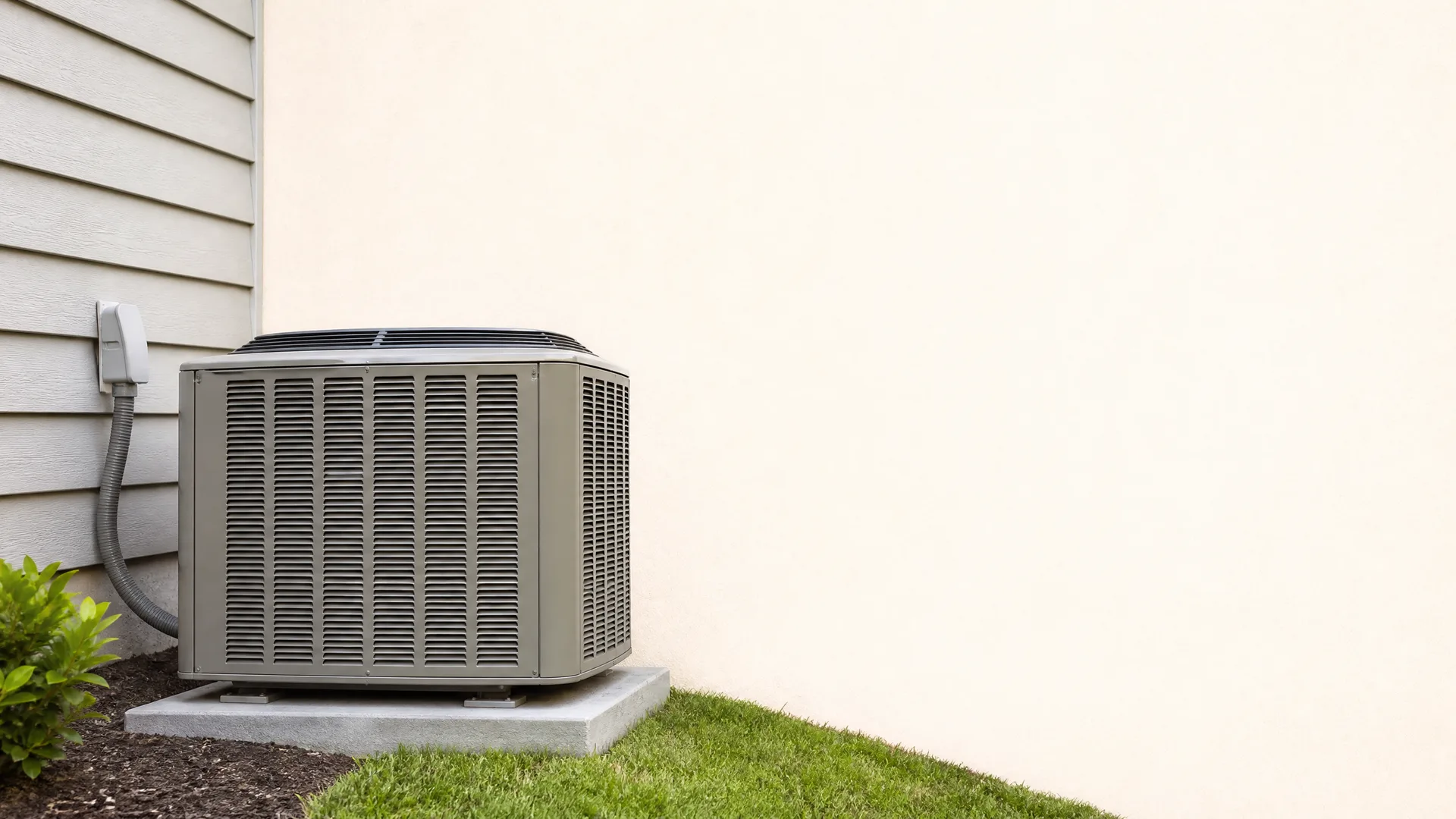
An outdoor air conditioning condenser unit on a concrete pad at the corner of a house, next to vinyl siding and a plain light-colored wall, with grass and a mulch bed in the foreground.

What a dirty coil costs you

Outside, the condenser coil gives up heat to the air around it. Dust and cut grass settle on those fins over a summer and block that exchange. The compressor still runs, drawing the same power, but less heat actually leaves the house. New Jersey power rates are among the highest in the country, so a system working harder for less cooling shows up fast on the bill, not just in a house that never quite feels cool.

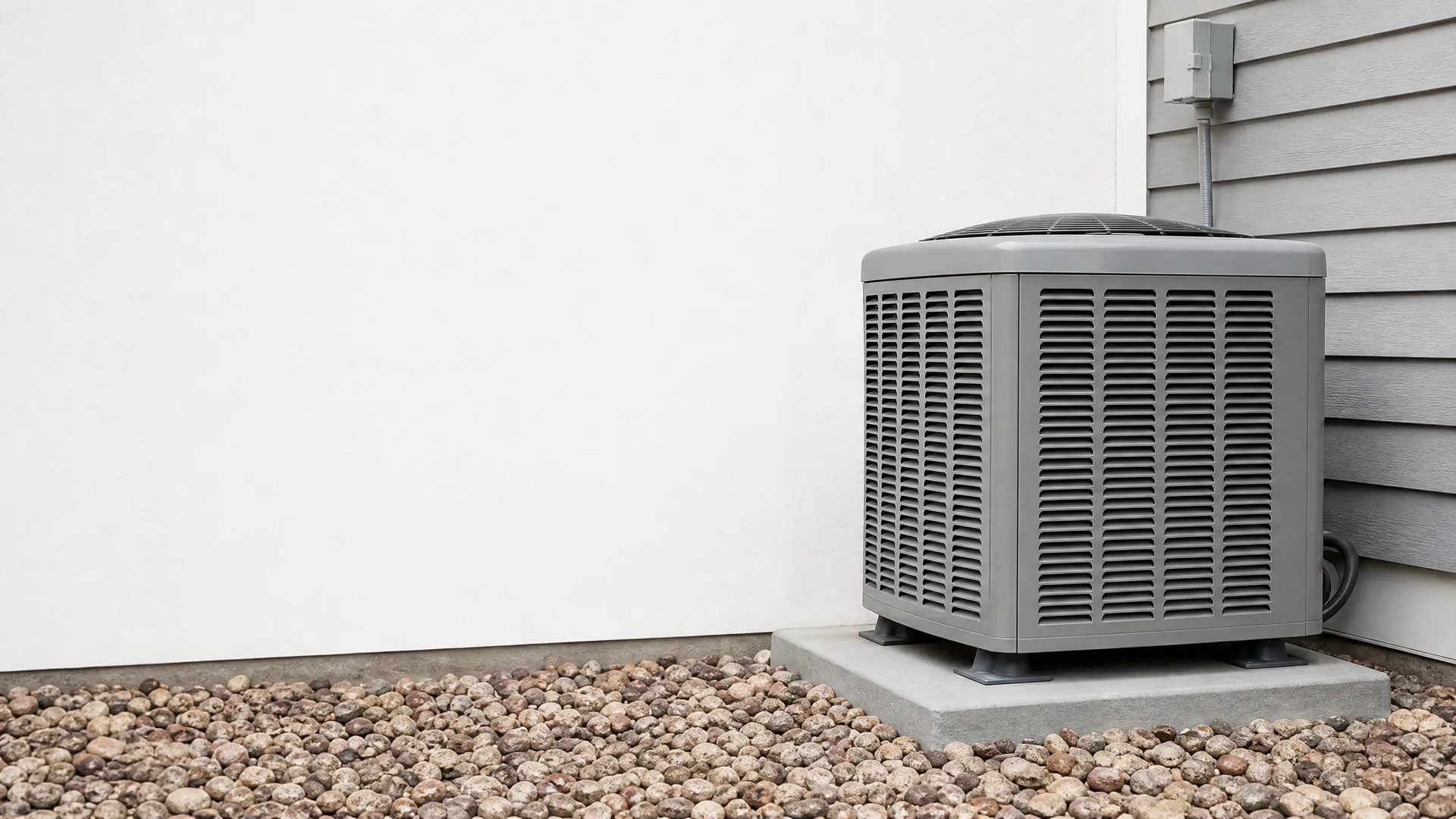
A gray outdoor air conditioning condenser unit sits on a concrete pad beside a white stucco wall and gray horizontal siding, surrounded by rounded landscaping gravel, with an electrical disconnect box mounted on the siding above.

The filter does less than people think

A clogged filter restricts airflow, but it doesn't clean the coil or the refrigerant charge, and swapping it won't fix a system that runs all day for other reasons. Ducts move the air, the filter only catches what passes through. If the house still won't cool down after a fresh filter, the cause is somewhere else, often the coil, the charge, or a part that's starting to fail.

Power costs 22.48 cents per kilowatt-hour statewide

At 22.48 cents per kilowatt-hour, every extra hour your AC runs shows up on the bill fast. A system that's straining, not just working hard on a muggy day, is pulling the same power for less cooling, and you're paying full price for that lost output.

EIA-861 2025 statewide residential average

A smiling bearded man in a dark blue henley shirt sits leaning back on a light grey sofa in a living room, with a bowl of popcorn on a wooden coffee table and a large window behind him.
A bearded man in a dark quarter-zip sweater sits smiling on a brown sofa in a dimly lit living room, with a bowl of popcorn and a mug on a table in the foreground and a potted plant near a window behind him.
A smiling man with graying dark hair and a beard, wearing an olive sweater, sits on a sofa in a living room beside a bowl of popcorn on a wooden table.
A smiling man in a dark green henley shirt sits on a gray sofa in a living room with a lit table lamp, wooden shelving unit, and a bowl of popcorn in the foreground.

A local pro for your air conditioner repair

A system running long on a sticky afternoon is doing its job. A system still running at the same pace into the evening, after the humidity's dropped and the sun's down, is telling you something's off. That difference matters more in New Jersey than almost anywhere, because at 22.48 cents a kilowatt-hour, every extra hour it runs costs you more here than it would in most of the country. Most homes nearby heat with gas, so the AC isn't carrying double duty. If it's still straining, the cause is in the system itself. A dirty coil, a weak capacitor, low refrigerant, any of these can keep it running without keeping up. Figuring out which one takes someone who can look at the unit, not guess from the thermostat. Getting a contractor out to check it now is a smaller thing than it feels like at the end of a long day, and it's the fastest way to stop paying for a system that's working hard and losing.

Long Days Are Normal, Not Resting Isn't

  • Long run times on a humid afternoon are normal; a system still running hard after dark is not.
  • A dirty condenser coil makes the compressor work the same amount for less cooling, and the bill shows it.
  • At 22.48 cents per kilowatt-hour in New Jersey, extra hours of runtime add up fast.
  • A system sized correctly for your house will still run most of the afternoon when it's 90 degrees and sticky.
  • The clearest sign of trouble is a system that doesn't rest once the sun goes down and the air dries out.
  • Repair fixes the strain, not the humidity, so some long runtime on a sticky day will always be there.

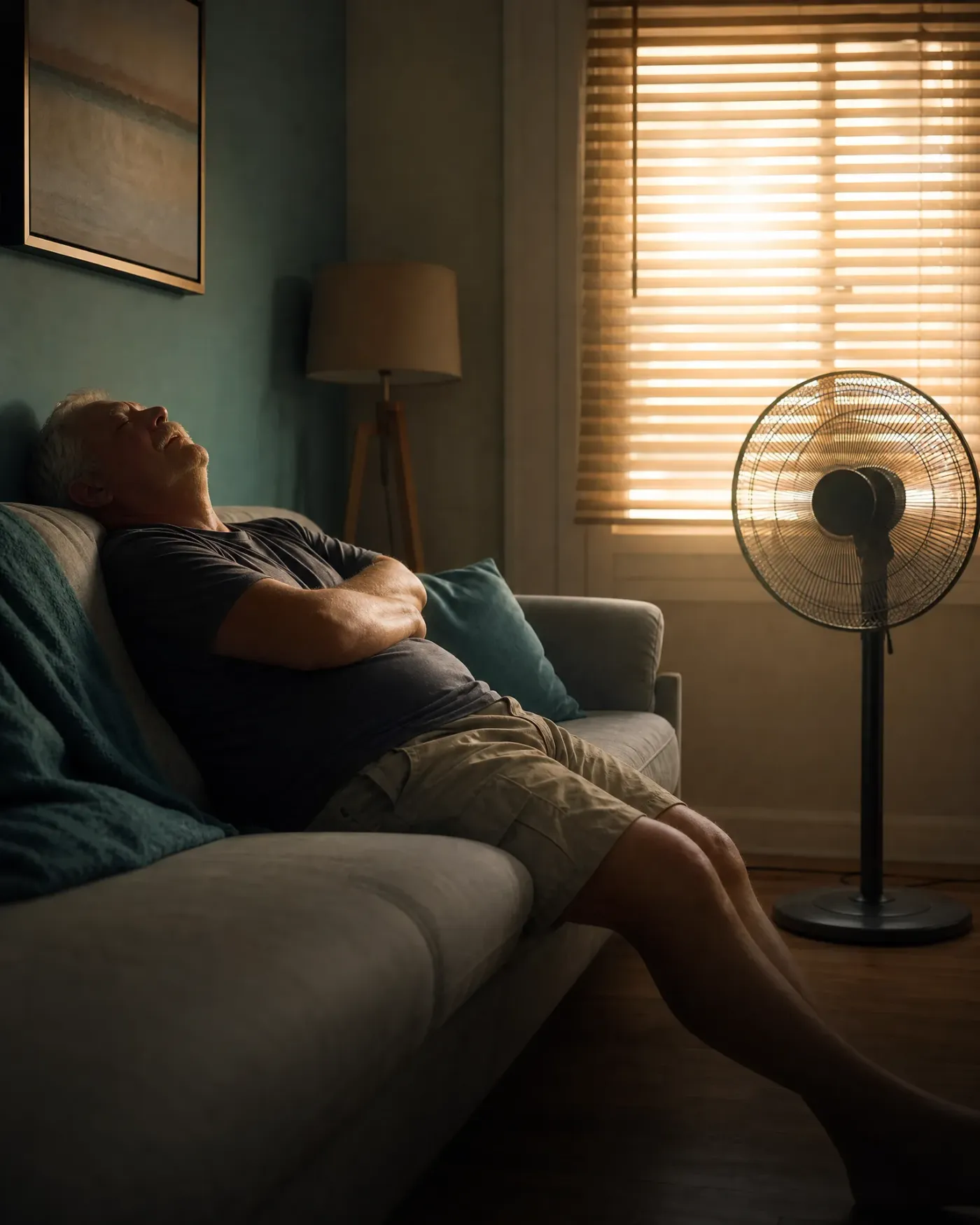
A New Jersey summer asks a lot of your AC, and most of what it's doing is right. The air is heavy, the system has to wring the moisture out before it can cool anything, and that takes time. An afternoon spent running isn't a sign of trouble by itself. What matters is whether the system ever lets up. One that cycles down once the sun sets and the air outside dries out is working the way it was built to. One that keeps going at the same pace into the evening, when the load on it should be easing, is telling you something inside it isn't keeping up anymore.

Most of the time that comes down to the condenser coil outside losing its ability to shed heat, usually because dust and cut grass have built up on the fins over the season. The compressor still pulls the same power, but it can't move the heat it used to, so it runs longer for less result. At 22.48 cents per kilowatt-hour, those extra hours aren't small, and they keep adding up every day the problem goes uncorrected.

Repair clears that strain. It won't change what humidity does to a system in July, and some long runtime on a sticky day is just New Jersey. But a system that rests at night again, the way it should, means the strain is gone and what's left is only the weather.

A woman with dark hair in a bun reclines on a gray sofa with her eyes closed and a slight smile, wrapped in a cream knit sweater and blanket, with an open book resting in the foreground and a lit lamp in the dim room behind.
A smiling bearded man in a dark crewneck sweater sits at a dinner table with a lit candle, glasses of wine and water, and plates of food in the foreground, with a lamp, framed art and a potted plant behind him.

Get the right pro for your air conditioner

A long run time on a humid afternoon doesn't mean much by itself. One that carries into the evening, after the air's cooled off outside, usually means the coil or the charge needs a look. Either way, at 22.48 cents per kilowatt-hour, the longer it runs without answers, the more you're paying to find out. Send the form and a licensed New Jersey contractor will reach out to look at your system and tell you what's actually going on.

Get a local pro

Send the request and finding a pro stops being your problem.

No charge to send it. You decide if you hire them.