Why one room stays hot with the AC on in New Jersey

RepairCentral ACNew Jersey
Step 1 of 2

What ZIP code is the job in?

Why is one room still hot when the AC is running?

You've got the AC running and most of the house is comfortable, but one room just won't cool down. In a New Jersey summer, with the humidity making everything feel worse, that's not something you want to just live with. You want to know if it's a quick fix or a sign of something bigger going on with the system.

That room isn't getting enough airflow, or it's picking up heat faster than the system can offset

A room that stays warm usually means the air reaching it has slowed down somewhere along the way. A duct run that's partly blocked, a damper that's closed or stuck, or a vent that's been shut too long can all starve one room while the rest of the house cools fine. Sometimes the cause isn't airflow at all. A room on the sunny side of the house, or one above a garage, takes on more heat than the thermostat in the hallway ever sees, so the system shuts off before that room catches up. Either way, the fix depends on finding where the air loses its way or where the heat is getting in, and that's a job for someone who can trace the duct run and check the room itself.

A gray outdoor air conditioner condenser unit on a concrete pad beside a house with horizontal siding and a stucco foundation, with a disconnect box and conduit on the wall, decorative gravel, mulch, and a shrub nearby.

The system itself is sound

A condenser that looks like this, clear of debris, sitting level on its pad, usually means the equipment is doing its job. When that's the case, one hot room points to something in the house itself, like a duct run or a closed vent, not a failing unit.

An outdoor air conditioning condenser unit on a concrete pad beside a house with horizontal lap siding, with an electrical disconnect box and conduit on the wall, mulch and a green shrub to the right, and a concrete walkway in the foreground.

The coil tells a different story

Dirt packed into the coil grilles chokes the airflow the whole system depends on. When a condenser looks like this, the unit can struggle to keep up everywhere, and the room farthest from it is often the first to show it.

Duct Problem or Room Heat Gain

Duct problem

  • A duct run that's crimped, disconnected, or crushed behind a wall will starve that one room of airflow even though the rest of the house gets plenty.
  • Rooms farthest from the air handler often run warmer because the duct run to them is longer and loses more cooling air along the way.
  • A closed or blocked supply vent, even partway, cuts how much cold air reaches that room no matter how hard the system works.
  • Flexible duct that's sagged or kinked in an attic or crawlspace restricts airflow in a way you can't see from inside the room.
  • Leaky duct joints let cooled air escape into the attic or basement before it ever reaches the vent in that room.
  • A return vent that's missing or undersized in that room can keep air from circulating properly even if the supply side is fine.

Room-specific heat gain

  • A room with more window area, especially facing west, picks up afternoon sun that adds heat the AC has to work against all evening.
  • A room above a garage or over an uninsulated space loses the fight against heat coming through the floor or ceiling.
  • A room on the top floor sits closer to attic heat, which pushes down through the ceiling even with the AC running.
  • Appliances or electronics running in that room, like a computer or a second refrigerator, add heat that the rest of the house doesn't have.
  • Insulation that's thinner in that one room's walls or ceiling, maybe from an addition or a renovation, lets outside heat in faster than the system can remove it.
  • A door kept closed most of the day blocks the room from mixing with the cooler air moving through the rest of the house.
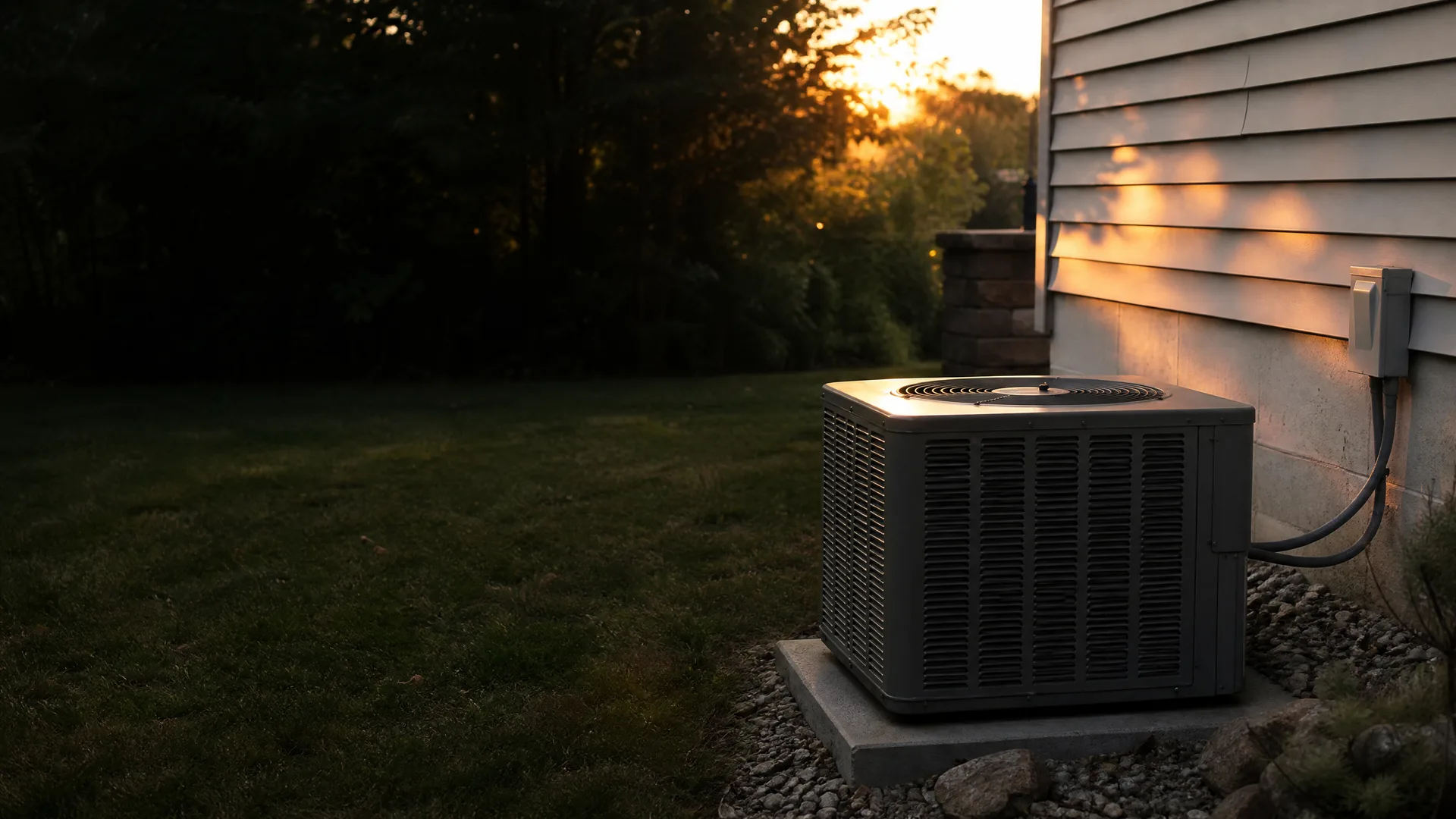
An outdoor air conditioning condenser unit on a concrete pad beside a house with horizontal lap siding, with a gravel bed, refrigerant lines and an exterior electrical disconnect box on the wall, and a lawn and trees at sunset in the background.

You're out back around seven, grass still warm underfoot, and you notice the quiet. The condenser fan isn't turning. Inside, your daughter's room has been stuck in the eighties all week while the rest of the house sits fine. You'd figured it was a duct problem, something closed off behind a wall. Now you're not so sure. You crouch down and the unit's dead still, no hum, no air moving off the coil. The sun's low and orange over the fence line, the kind of August light that usually means another sticky night ahead. You've already called your cousin who knows furnaces, and he didn't know what to make of it either. You straighten up, phone in hand, and start looking for someone who actually works on these.


Get the right pro for your air conditioner

A hot room with a working AC usually isn't something you can see from the thermostat. It could be a duct that's crushed behind a wall, a register closed in a room nobody uses, insulation that's thin over an addition, or a return that's starving for air. Figuring out which one takes someone opening up a vent, checking static pressure, maybe getting into the attic above that room. That's not a weekend of searching contractor reviews and getting three different guesses over the phone. With New Jersey summers running hot and sticky into September, and electric rates here among the highest in the country, a room that fights the system all season adds up on the bill whether or not you ever fix it. Handing this off means you describe the room once, to one contractor who works on these systems in New Jersey homes, instead of explaining it again to the next one and the one after that. The room's still hot right now. That part doesn't change until someone's in there with a meter.

What a bigger duct won't fix

Upsizing the duct to that room doesn't help if the real problem is a closed damper three rooms back or a return that can't pull enough air to begin with. Airflow in a duct system is a balance across every run, not just the one feeding the hot room. A contractor traces the whole path from the air handler before touching anything, because the fix usually sits somewhere other than where the symptom shows up. That's one reason a homeowner guessing at it from the attic rarely solves it on the first try.

Why the thermostat won't tell you

A single thermostat reads one spot in the house, usually a hallway, and the system runs off that number alone. It has no way to know your daughter's room is sitting fifteen degrees warmer down the hall. So the AC shuts off once the hallway hits its setting, even with one room still hot. That's true whether the system is two years old or twenty. A zoned system or a smart setup with room sensors can catch that gap, but most homes in New Jersey run on the one-thermostat setup this describes.

A smiling woman with long dark hair in a gray sweater sits at a white stone counter with a glass of white wine, with a kitchen, fireplace and sofa visible behind her.
A smiling woman with dark hair in a cream sweater sits at a marble table with a glass of red wine, with a lit lamp, sofa, fireplace and kitchen counter behind her.
A woman in a cream sweater laughs while seated at a marble countertop with a glass of red wine, with a dimly lit living room and sofa behind her.
A woman in a beige turtleneck sweater with her hair up sits laughing and looking to the side at a white marble table with a glass of red wine, in a dimly lit interior with a lamp and seating area behind her.

A duct or airflow problem in one room is worth chasing down. Fixing it means that room finally cools like the rest of the house, and you stop running a window unit or a fan just to get through the night.

Leave it alone and that room stays the one everyone avoids after 3 p.m. You keep paying to cool air that never reaches where you need it, and with what power costs in New Jersey, that's not a small thing to ignore.

An outdoor air conditioner condenser unit on a concrete pad beside a house with light horizontal vinyl siding, surrounded by bare dirt, gravel and dry leaves, with refrigerant lines and conduit running along the wall.
Before you get your air conditioner repair
A gray outdoor air conditioner condenser unit on a concrete pad beside a house with horizontal lap siding, with a flowering shrub at left and a disconnect box with conduit on the wall at right.
After you get your air conditioner repair
  1. Air leaves the air handler through a main trunk line.

  2. The trunk splits into branch ducts feeding each room.

  3. Dampers inside the branches divide airflow room to room.

  4. A crushed or disconnected branch starves its one room.

Power costs 22.48 cents per kilowatt-hour statewide

At 22.48 cents per kilowatt-hour, running a window unit or a box fan in that one hot room all summer to make up for weak airflow adds up fast. Fixing the duct or vent that's actually starving the room costs less than cooling it the hard way every night.

EIA-861 2025 statewide residential average

One room running hot while the rest of the house is comfortable almost always comes down to airflow, a duct that's crushed or disconnected, a damper closed somewhere behind a wall, a return that can't pull enough air, or thin insulation over an addition that never got finished right. The condenser and the air handler can both be working exactly as they should and that one room still won't cool, because the problem isn't the equipment, it's what happens to the air between the unit and that room. Finding which one it is means someone getting into the attic or behind the wall to trace the duct run and check it room by room. You don't have to sort through contractors to get that done, or explain the same problem to three different companies before one of them can look at it. Get matched with a contractor who handles this in New Jersey, and they'll reach out to you directly about your room and your system.

A smiling middle-aged man in a dark green sweater sits at a candlelit table with a glass of red wine and a bowl of salad in the foreground.
A woman in a cream knit sweater reclines on a beige couch with eyes closed and a slight smile, a gray hardcover book resting open on a textured blanket over her lap, with a lit table lamp and a leafy plant in the dim background.

A pro who works on air conditioners

Tracking down a crushed duct or a stuck damper behind a wall isn't a job for guessing. It takes someone who can actually find where the airflow quits. Instead of calling around New Jersey, explaining the hot room over and over, and sorting through quotes yourself, you can get matched with a contractor who handles this kind of diagnosis and have them reach out to you directly. That one room has a reason for running hot, and someone who knows where to look can find it.

Connect with a pro

Skip searching for an air conditioner pro and answer a few questions instead.

No fee to send it, and nothing to sign.