Profile view of a bearded man wearing a dark baseball cap and a dark gray T-shirt against a plain off-white background.

Why your AC keeps turning on and off in New Jersey

RepairCentral ACNew Jersey
Step 1 of 2

What ZIP code is the job in?

Why does my AC keep turning on and off in New Jersey?

You notice the compressor kicking on, running for a few minutes, then shutting off again, over and over through the day. With how sticky it gets here by July and August, that kind of cycling usually gets worse right when you need the system most, not better. You want to know if this is something to watch or something that needs a repair call now.

It's short cycling, and it usually means the system can't finish a full cooling cycle

A healthy central air system runs for a stretch, cools the house down, then shuts off until it drifts back up a degree or two. When it shuts off after a minute or two and starts again soon after, something is cutting the cycle short. A dirty air filter, a low refrigerant charge, a failing capacitor, or a thermostat sensing the wrong temperature can all cause it. An oversized system does it too, cooling the air near the thermostat fast without pulling humidity out of the rest of the house, which matters in a New Jersey summer where the air itself feels heavy. Short cycling wears on the compressor each time it restarts, and on a system working through a long humid stretch, that adds up fast.

An outdoor air conditioning condenser unit on a concrete pad beside a house with horizontal lap siding, with an electrical disconnect box and conduit on the wall and a green shrub to the right.

Normal cycling

A healthy system shuts off because the house has cooled to the set temperature, then starts again once it drifts back up a degree or two. On a mild day that might mean ten or fifteen minutes of running, then a rest. The time off is longer than the time on.

An outdoor air conditioner condenser unit on a concrete pad beside a house with horizontal siding and a lower concrete foundation wall, with coiled refrigerant lines at right.

Short cycling

This unit turns off after a few minutes, before the house comes close to cooling, then kicks back on almost right away. Dirt on the coil, a weak capacitor, or a refrigerant leak can all cause it. Left alone, the constant starts and stops wear the compressor down faster.

A closed silver laptop and a glazed ceramic mug on a wooden table, with a blurred kitchen counter, potted plant, cutting board and window in the background.

What short cycling does to your house

A system that keeps shutting off before it finishes a cycle never gets the humidity out of your air. You'll feel it on the worst days, the house feels cool on the thermostat but still clammy. That's the compressor stopping before it's pulled the moisture down, not just the temperature. Meanwhile it's drawing power every time it restarts, and with what electricity costs in New Jersey, a unit that starts and stops all day runs up a bigger bill than one that runs steady.

Left alone, the part causing it tends to wear faster, since the compressor takes its hardest hit every time it starts up. Once you've noticed the pattern, the next step is getting someone to look at it, not calling around to three or four companies, describing the same thing each time, and weighing quotes against each other. Send the details once and that search is off your plate.

A gray upholstered sofa with a beige cushion and knit blanket beside a curtained window, with a white mug and a book on a dark wooden table in the foreground and a lit lamp in the background.
An outdoor air conditioner condenser unit on a concrete pad beside a house with light horizontal siding, with a small electrical disconnect box on the wall, mulch and shrubs at left, and a plain white wall and concrete slab at right.

Why the compressor takes the strain

Every time the compressor stops and starts, it draws a heavy jolt of current just to get moving again. A system that cycles every few minutes is doing that dozens of times a day instead of a handful. Over a summer of New Jersey heat, that adds up to wear on the compressor and the capacitor that gets it started, parts that are built for long runs, not constant restarts.

A dark gray outdoor air conditioner condenser unit on a concrete pad beside a house with horizontal siding and a plain light wall, with mulch and grass in the foreground and a conduit and electrical box on the wall.

What a contractor checks first

A thermostat placed near a window or a supply vent can read the room wrong and shut the system off before the house is actually cool. An oversized unit will satisfy the thermostat fast and shut down before it pulls the moisture out. A contractor can check the thermostat location, the refrigerant charge, and whether the unit was ever sized right for your house, and narrow it down from there.

Is this something you'd notice in your own house?

You'd catch it mostly in the rooms you sit in. The air comes on, you feel it blowing, then it stops before the room actually feels different. Upstairs might stay warm while the thermostat downstairs says it's satisfied. The electric bill climbs even though the system seems to be working hard, because starting up over and over costs more than running steady. Left alone through a full New Jersey summer, this is the kind of strain that wears out a compressor years before it should, and a compressor is the expensive part to replace. If you've noticed the house never quite feels dry, or a room or two that never catches up, that's the same problem showing itself a different way.

A smiling man in a navy long-sleeve shirt sits at a wooden table in a kitchen and dining area, with a ceramic mug, a potted plant, and a sliding glass door behind him.
A smiling bearded man in a green henley shirt stands at a kitchen island with a gray mug, looking off to the side, with a dining area and shelves blurred behind him.
A smiling bearded man in a navy sweater sits at a white kitchen island with a ceramic mug, with open shelves, potted plants and a range hood behind him.
A smiling man in a dark olive long-sleeve shirt sits in a kitchen beside a counter with a dark mug, with a dining table, sideboard and hallway visible in the blurred background.

It's off your list after this

Describe what your air conditioner is doing once, in one form.

Sending the form costs nothing.

Dealing with it on your own

You could watch the thermostat for a few more days, see if the cycling tracks with the hottest afternoons, maybe swap the air filter and see if that changes anything. Some of that is worth doing. But if the cause is a refrigerant leak or a failing capacitor, nothing you try from the thermostat fixes it, and the compressor keeps taking that hard jolt every few minutes. Meanwhile you're still looking up contractors, calling around to see who can come out, and explaining the same thing to each one before you get a straight answer.

Getting someone out to look

A contractor can get a gauge on the refrigerant charge, test the capacitor and contactor, and watch a full cycle to see where it's cutting out early. That tells you in one visit what days of guessing at the thermostat won't. Once you send the form, you're done hunting for who's available and who's worth calling. Instead of sorting through options yourself, the search part is off your plate, and you're waiting on one answer instead of juggling three or four conversations with people you don't know yet.

An outdoor air conditioner condenser unit on a concrete pad beside a house wall with stucco lower section, horizontal siding above, and a white downspout to the right.
Before you get your air conditioner repair
A gray outdoor air conditioning condenser unit on a concrete pad beside a house with horizontal lap siding, with a wall-mounted electrical disconnect box and refrigerant lines, shrubs, mulch and lawn around it.
After you get your air conditioner repair

What's actually making it cycle

  • A thermostat set too close to the room's actual temperature can make the compressor shut off within a minute of starting.
  • A low refrigerant charge makes the coil freeze, which trips the system off until the ice melts and it starts again.
  • A failing capacitor can't hold the charge needed to keep the compressor running, so it stalls out partway through the cycle.
  • Dirty condenser coils outside trap heat the system can't shed, and the compressor cuts off on high pressure before it's done cooling.
  • A clogged filter starves the system of airflow, and some units shut down rather than run that way.
  • An oversized air conditioner cools the air fast without running long enough to pull moisture out, so it shuts off and on all afternoon.

Short cycling always traces back to one of a few things, and most of them show up in how the system behaves right before it shuts off. If the thermostat sits in a spot that reads the room wrong, close to a vent or in direct sun, the compressor thinks the work is done when it isn't and shuts off early. A low refrigerant charge works differently. The coil gets too cold, ice builds up on it, and the system trips off to protect itself until that ice melts, then starts the whole thing over. A capacitor that's going bad can't deliver the steady charge the compressor needs to keep running, so the compressor stalls partway through instead of finishing the cycle. Outside, condenser coils caked with dirt or grass clippings can't shed the heat the system is pulling out of your house, so pressure builds and the system cuts off before it's done. Inside, a clogged filter chokes off airflow across the evaporator coil, and some systems shut down rather than keep pulling air through a blocked filter. And sometimes the unit itself is the problem. An air conditioner sized too big for the house blasts cold air fast enough to satisfy the thermostat in a few minutes, long before it's run enough to pull the humidity out of the air. That one tends to show up worst on the stickiest New Jersey afternoons, when the air feels cool but still damp. Each of these has a different fix, and the cycling pattern itself is often the first clue to which one you're dealing with.

Power costs 22.48 cents per kilowatt-hour statewide

At 22.48 cents per kilowatt-hour, a compressor that short cycles isn't just failing to cool the house, it's pulling a heavy startup draw again and again without finishing the job. You end up paying more for less comfort every time it kicks on.

EIA-861 2025 statewide residential average

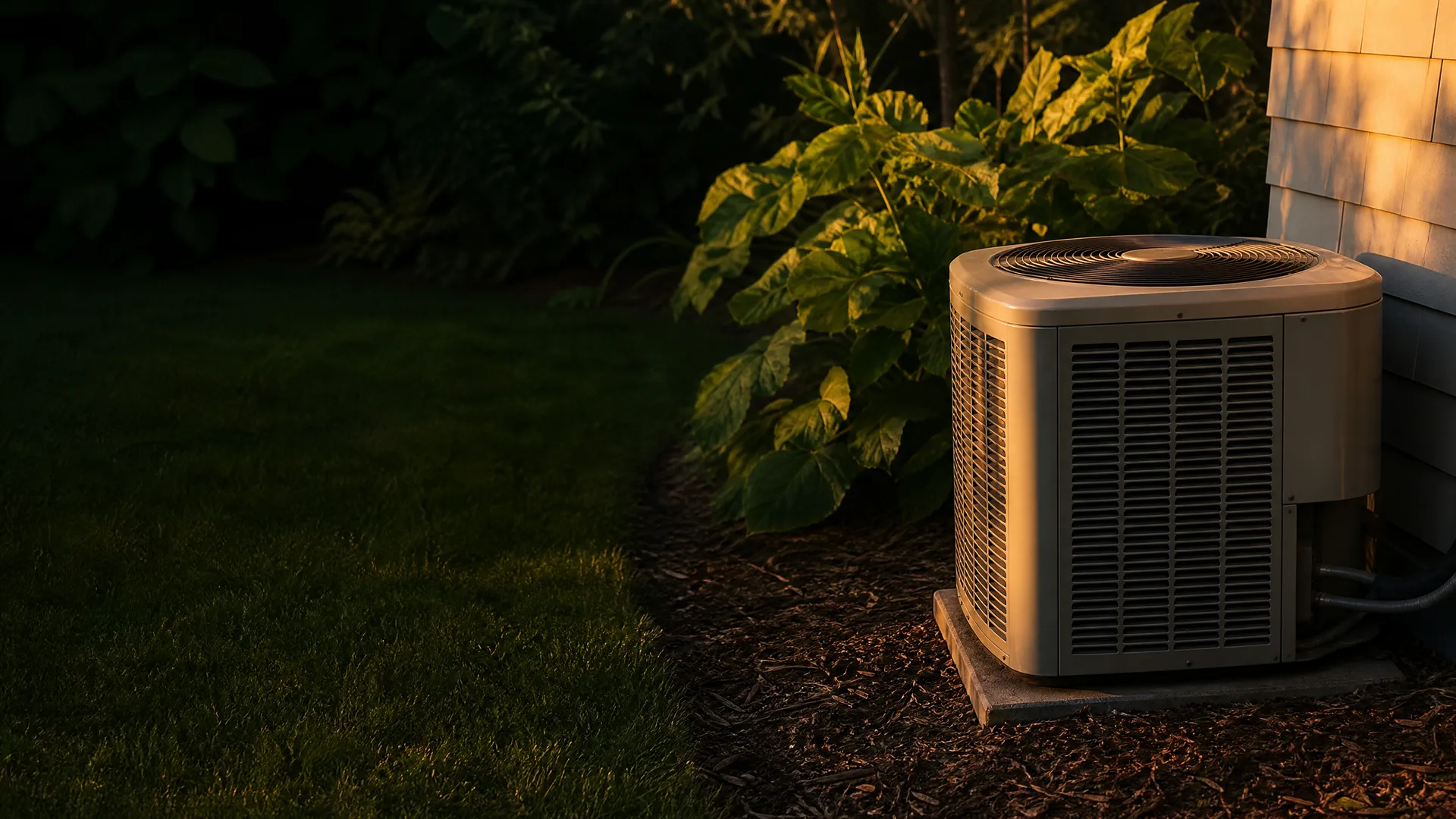
An outdoor air conditioner condenser unit sits on a concrete pad beside a shingled house wall, surrounded by mulch, broad-leaved shrubs and a lawn in low evening light.

By seven that evening the sky still held that late-summer glow, the light going gold over the yard. You'd come out to move the hose and noticed it first as quiet. The condenser was there against the fence, humming the way it always did, except the fan wasn't turning. No air coming off it. Inside, the thermostat still read three degrees above where you'd set it. You stood there a second, waiting to see if it would kick back on, the way it usually did. It didn't. Just that low electrical hum from a unit that was running without actually doing anything, while the house behind you held onto the day's heat.


A gray outdoor air conditioning condenser unit on a composite pad beside a house with horizontal lap siding, with a wall-mounted disconnect box, refrigerant lines, and a wooden fence and shrubs to the left.
This is what the unit looks like when the cycle runs its course, compressor and fan working together until the house actually reaches the set temperature.
An outdoor air conditioning condenser unit on a concrete pad beside a house with light vinyl siding, with electrical conduit running to a wall-mounted disconnect box and a shrub in mulch to the right.
This is what it looks like when the same unit is shutting off early, the compressor stopping and starting against that wall over and over through the afternoon.
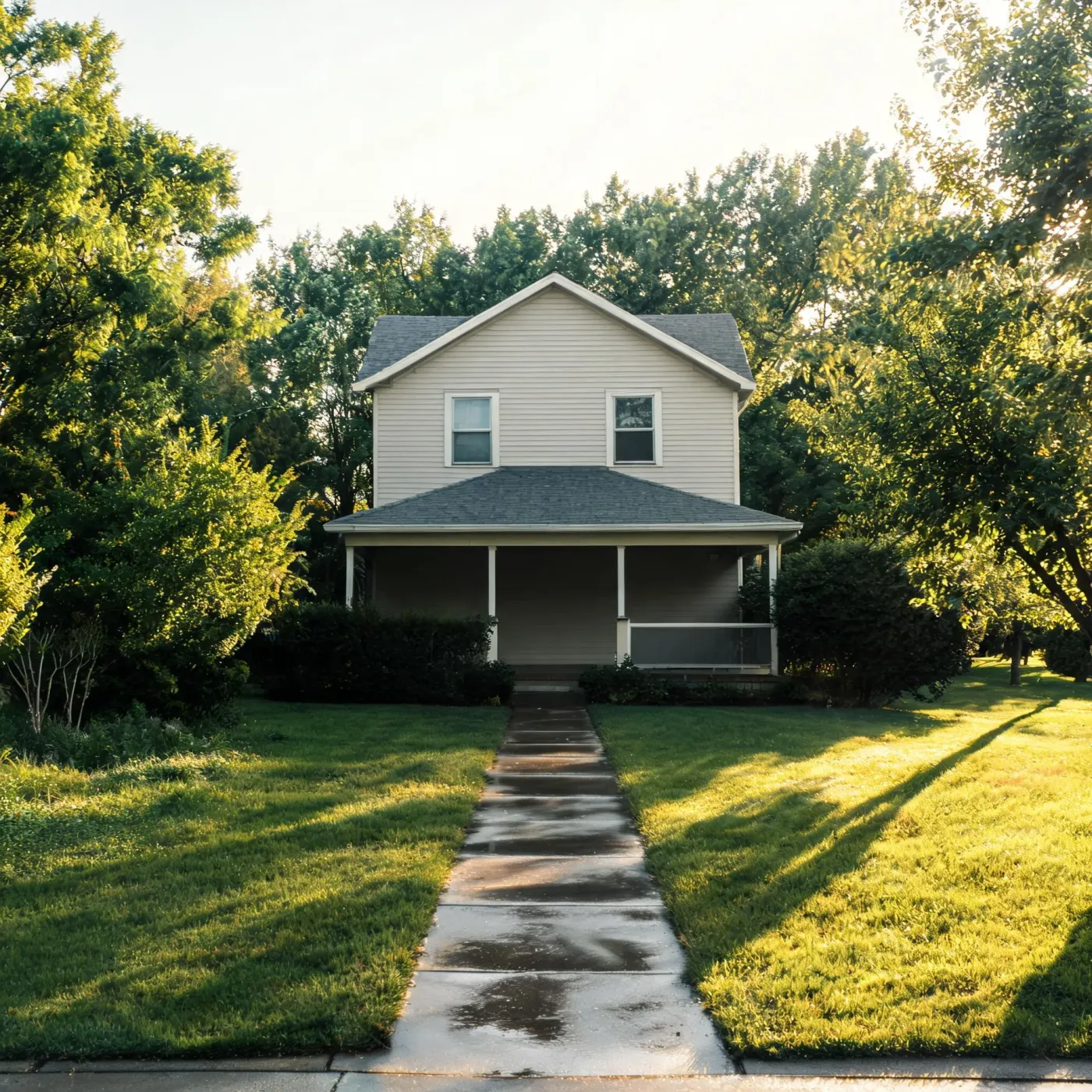
A two-story cream-colored house with a covered front porch and gray shingled roof, fronted by a concrete walkway crossing a green lawn, with large leafy trees on both sides in late-day light.

New Jersey summers average a dew point of 63°F across June, July and August, measured from local weather data. That's heavy, damp air for the coil to work against. A healthy system pulls that moisture out slowly, over a full run. A short-cycling one shuts off before it gets there, so the coil never stays cold long enough to wring the water out of the air. You end up with a house that's cool by the thermostat but still sticky to the skin, especially upstairs or in rooms the air doesn't reach as easily.

NASA POWER T2MDEW county cells weighted by homes

A bearded man in a navy T-shirt sits on a light-colored couch indoors, smiling while looking down at a laptop screen in the foreground, with a framed picture and a potted plant blurred behind him.
A bearded man in a plaid flannel shirt stands indoors looking out a window at snow-covered conifers, with a ceramic mug on the wooden sill and wooden cabinets behind him.

A compressor that keeps kicking on and off instead of finishing its cycle isn't cooling your house and isn't resting either. It's a thermostat set too tight, a frozen coil from low refrigerant, a capacitor on its way out, or something else making the system quit before it's done the job. Left alone through a New Jersey summer, that strain adds up on the compressor and on the electric bill. You don't have to figure out which one it is yourself, and you don't have to start calling around, sitting through the same explanation with every company, then weighing one quote against another. Send the details once and the work of tracking down someone qualified to look at your system stops being yours to carry. You still know what you knew reading this: the cycling has a cause, and it's worth finding before August's worst week asks more of this system than it has left to give.

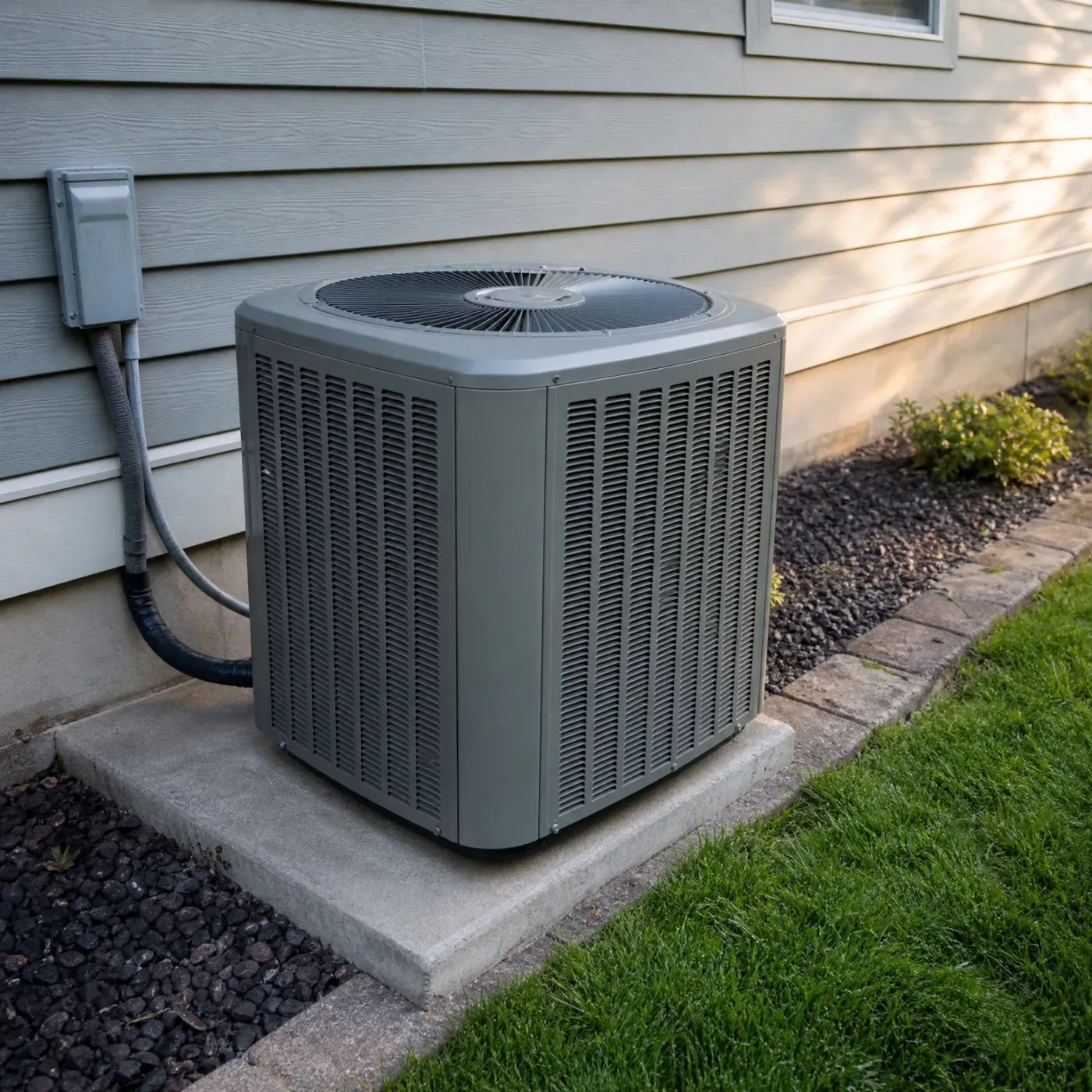
A gray outdoor air conditioning condenser unit on a concrete pad beside a house with horizontal lap siding, with a wall-mounted disconnect box and conduit, lava rock mulch, a shrub, and grass nearby.

Hand off the search today

Answer a few questions

Answer a few questions instead of calling shop after shop.

You're not committing to anything by asking.