Why your AC is running but not cooling in New Jersey
Explain the job once and skip repeating it on every call.
Your AC is running. Air is coming out of the vents. But it's not cold, or it's cold for a few minutes and then warm again. In a New Jersey summer, with the humidity pressing in, that's not a small thing to live with.
A system that runs without cooling is usually telling you something specific. It could be low refrigerant, a frozen coil, a failing capacitor, or a blower that isn't moving enough air. Some of these you can look at yourself. Most of them need a gauge, a meter, or a trained eye to pin down.
Finding someone to look at it is usually the part that eats your afternoon. You search, you find a handful of companies, you call, you explain the symptoms, you wait for someone to call back, you explain it again to the next one, then you sit with two or three quotes trying to guess which contractor actually knows what they're doing versus which one just answers the phone fastest.
This page skips that. Tell it what your AC is doing and you're matched with one licensed New Jersey contractor, someone who works on home cooling systems all summer in this state and has seen this exact complaint plenty of times. Not a list of five companies competing for your callback. One contractor, local, already lined up to look at your system.
You still have a repair ahead of you. Nobody can tell you from a search box whether this is a part or a bigger job. But the part where you have to find and vet someone to trust with it, that part is handled once you reach out from here.
Below, you'll find what usually causes this, so you know what the contractor is likely to check first.
The most common reason an AC runs without cooling is low refrigerant, usually from a leak in the coil or the lines. The system keeps blowing air because the fan still works, but without enough refrigerant it can't pull the heat out of your house. A dirty outdoor unit or a clogged filter can cause the same thing, since the system needs airflow over the coils to do its job. In New Jersey's humidity, a struggling system also fails to pull moisture out of the air, so the house feels damp and warm even with cold air hitting your skin for a moment near the vent. Sometimes the compressor itself is wearing out, and the air you feel is just whatever temperature is already in the ducts. None of these fix themselves by running longer. The system needs to be opened up and checked, because guessing which of these it is from the thermostat alone is not something you can do from inside the house.
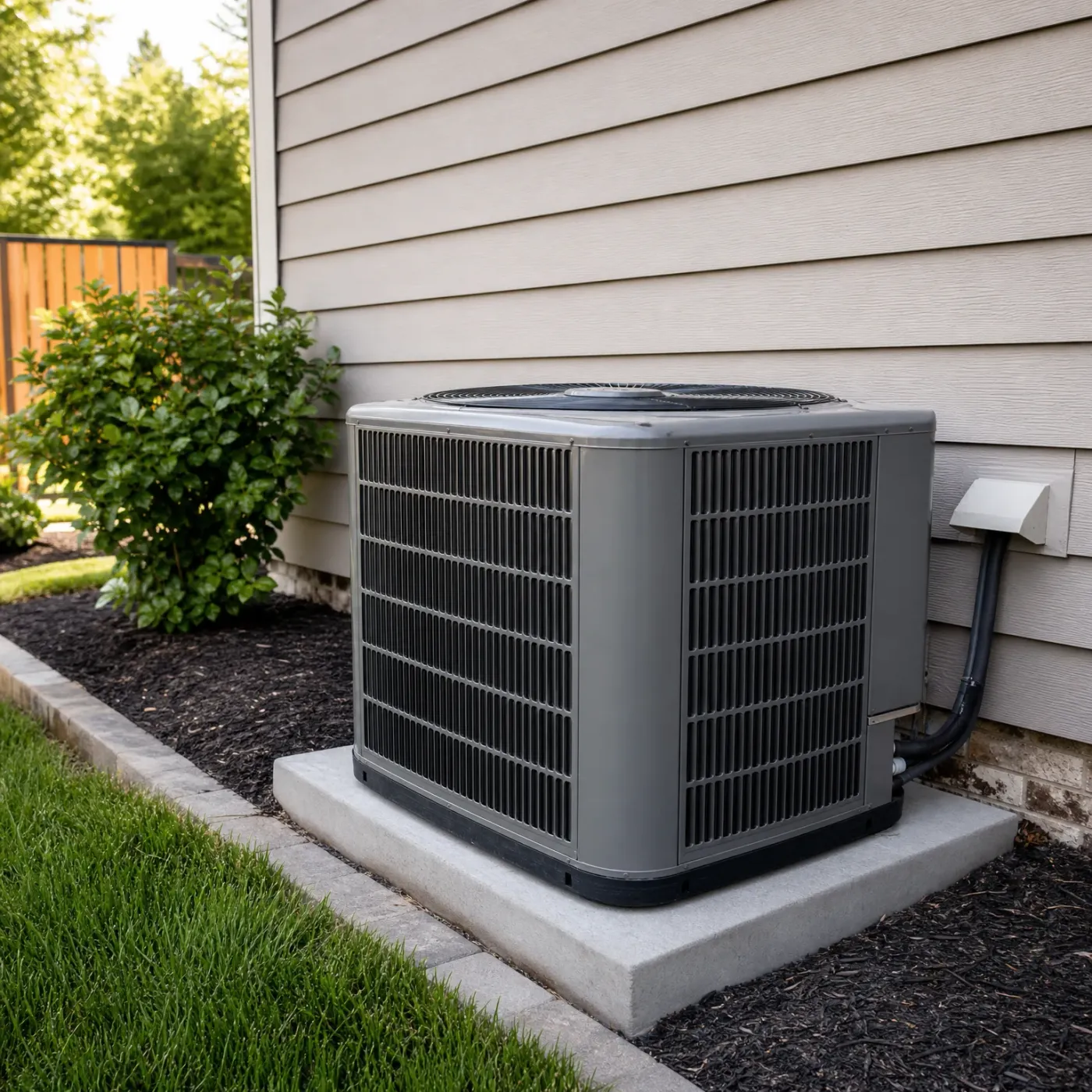
A clean condenser like this one has open coil fins, so it can shed the heat it pulls out of your house.
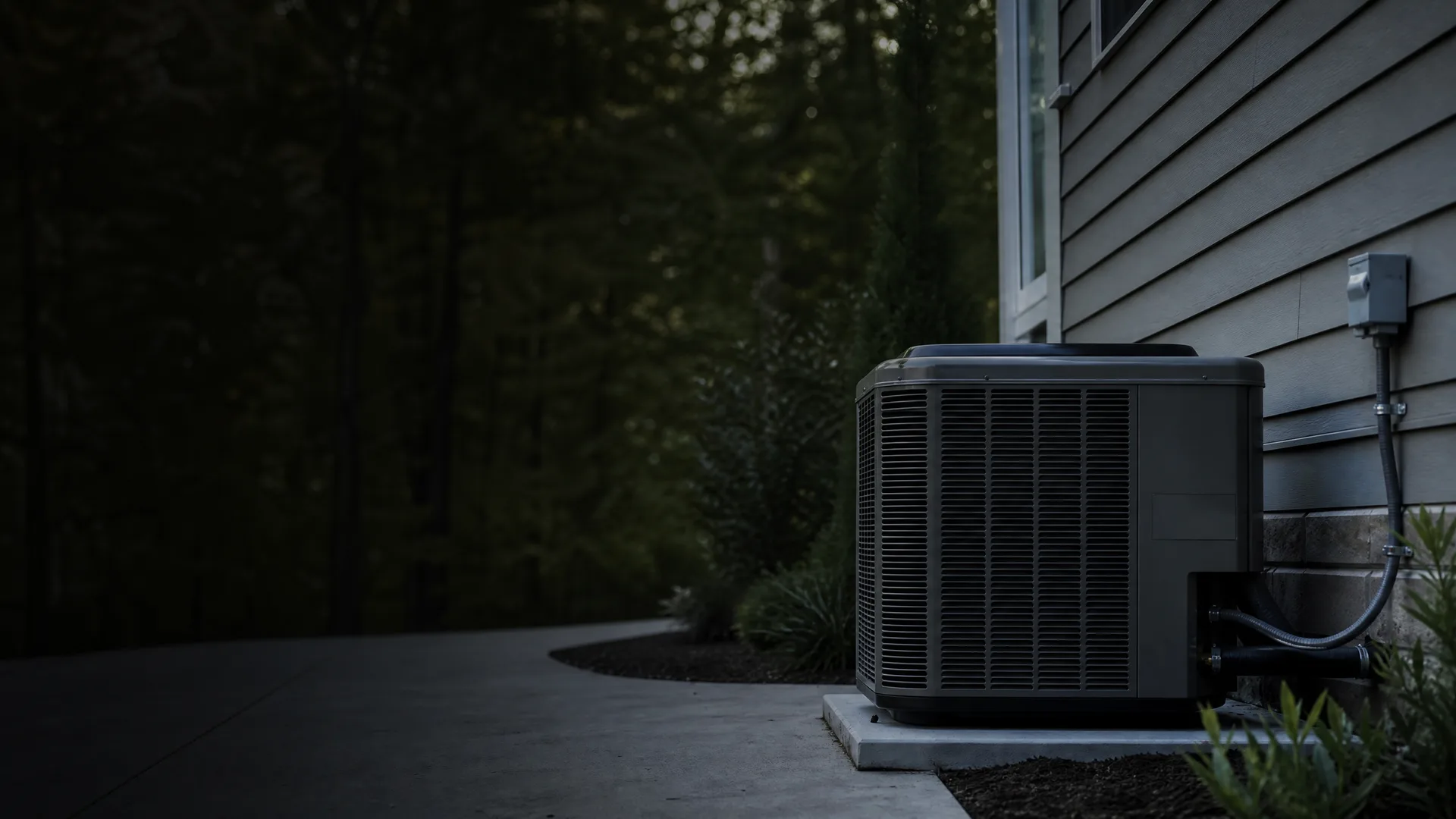
A coil this clogged can't shed heat, so the system runs and runs while the air stays warm.
Cooling your house takes a few things happening in order, and a break anywhere in that order leaves the fan running with nothing behind it. The compressor has to start and keep running, moving refrigerant through the coils so heat has somewhere to go. If it overheats or starts short-cycling, an internal switch shuts it down while the blower keeps pushing air. That same refrigerant has to travel an unbroken path to the evaporator coil, where the actual heat exchange happens. A kink or a leak anywhere along that line, or ice built up on the coil itself, and warm air just passes through untouched. A weak capacitor can leave the compressor unable to start even while the blower still gets power and runs like nothing's wrong. And the thermostat has to send a working signal in the first place. A bad sensor or a loose wire can call for cooling that never actually starts. Any one of these breaks the chain, and from inside your house, it looks the same: air moving, nothing cold.
What's Actually Happening Inside
A compressor pumps refrigerant through the coils, and if it overheats or short-cycles, it trips an internal switch and the fan keeps running with no cooling behind it.
The evaporator coil inside the air handler is where heat actually leaves your house, and if it freezes over with ice, warm air just moves past it untouched.
A failing capacitor can leave the compressor too weak to start while still sending enough power to run the indoor blower.
The thermostat tells the system when to run, but a bad sensor or miswired connection can call for cooling the system never delivers.
Refrigerant lines carry heat outside through the outdoor unit, and a kink, leak, or blockage anywhere along that line stops the transfer without stopping the fan.
A clogged filter restricts airflow across the evaporator coil, which can push it cold enough to ice over and block the cooling process entirely.
Describe it once
The pro who reaches out is licensed in New Jersey.
Skip searching for an air conditioner pro and answer a few questions instead.
No charge to send it. You decide if you hire them.
Is your house staying warm no matter how long the AC runs
You've probably noticed the thermostat says 72 but the room feels nothing like it. Maybe you've put a hand up to the vent and the air is barely cool, or cool for a minute before it turns lukewarm. The system might be running almost nonstop, cycling on and off every few minutes instead of settling into a steady run. Some rooms hold the heat worse than others, usually the ones farthest from the air handler. Left alone, a system working this hard can ice up the coil or strain the compressor until it fails outright, and in the meantime your house stays sticky while the power bill climbs for a system that isn't doing its job.
1
Thermostat calls for cooling and the indoor fan starts
2
Refrigerant should absorb heat at the evaporator coil
3
Low refrigerant or a dirty coil blocks that heat transfer
4
Warm air keeps moving through the ducts and out the vents
Power costs 22.48 cents per kilowatt-hour statewide
At 22.48 cents per kilowatt-hour, a compressor that keeps running without actually cooling your house is burning money the whole time it fails to do its job. The longer a repair waits, the more that failing system costs you before it even gets fixed.
EIA-861 2025 statewide residential average
Humidity makes it worse
New Jersey summers run thick with moisture, and a working AC pulls that moisture out of the air along with the heat. When refrigerant is low or a coil is blocked, the system stops doing either job well. The air coming out of the vents may feel cool enough to pass a quick hand test, but the room stays clammy and heavy because the moisture never leaves. That's often the clearest sign something is wrong before the air even turns warm.
Ductwork can hide the problem
Not every case of warm air at the vents starts at the unit outside. If ducts run through a hot attic or crawlspace and have a gap or a crushed section, cooled air can lose its temperature before it ever reaches the room, or escape before it arrives at all. A contractor checking the system usually checks the path the air takes, not just the compressor and coil, since a duct leak can mimic the same complaint as a refrigerant problem.
An AC that runs without cooling needs a diagnosis, not a thermostat reset
A system blowing warm or weak-cool air almost always comes down to one of a few things: refrigerant low from a leak, a coil too dirty to shed heat, or a compressor tripping out from the strain. Running the AC longer doesn't fix any of those. It just keeps your house warm while the unit works harder and the power bill climbs, in a state where electricity already costs more than most places.
Finding out which one it is means someone local looking at your coil, your refrigerant charge, and your compressor, not another round of searching for a contractor, explaining the problem over the phone, and waiting on quotes from people who've never seen your system. A technician who services this equipment all summer in New Jersey knows what usually fails first and what to check next. One licensed contractor, matched to you, looking at the actual unit, is how you find out what's wrong and get your house cool again.
No phone calls to make
Only one pro gets your request, so you hear from one company.