Why your AC keeps tripping the breaker in New Jersey
Why does my AC keep tripping the breaker?
It's been tripping more than once, maybe every time you try to run the AC on the hottest, muggiest days. You've reset the breaker and tried again, and it keeps happening. That's not something to keep resetting and ignoring. A breaker that trips repeatedly is doing its job, and the reason behind it needs a look before you run the system again.
Your AC is drawing more current than the breaker allows
Most of the time this comes down to the compressor or the fan motor pulling too much power, often because a capacitor is weak or failing and the motor has to strain to start and run. A dirty condenser coil or a clogged filter can make the system work harder too, which raises the draw on the same circuit. On a muggy New Jersey afternoon, with the AC running long stretches to keep up, that extra strain shows up right when you need the system most. A breaker that trips once might be a fluke. One that trips every time you start the unit is telling you a part inside is already failing, not that the breaker itself is the problem.

The compressor draws a hard surge of power to start up.
A weak capacitor forces the motor to pull even more current.
A dirty condenser coil makes the compressor work harder than it should.
That extra current heats the breaker past its rated limit.




A breaker trips because the current running through it has crossed the number stamped on its switch. It's doing exactly what it's built to do.
On a muggy afternoon when the AC runs longest, the compressor is working hardest and pulling the most current. That's why the trips line up with the worst days of summer.


The breaker isn't the problem. It's telling you something upstream of it is drawing more current than it should, and that part doesn't fix itself. Every time you flip it back on, the compressor starts up under the same strain and pulls the same surge, so the trip happens again on the next hot, humid day. That usually means the day the house needs cooling the most. Left alone, a compressor working that hard runs hotter than it's built to, and the strain adds up faster than the breaker trips show you. What started as a bad capacitor or a dirty coil can turn into a compressor replacement, a much bigger job. In the meantime you're without AC during a New Jersey heat wave, which matters more if anyone in the house doesn't handle heat well. The panel and wiring are fine. The breaker is doing its job. The part drawing too much current is somewhere in the AC itself, and that's what needs a look before you try running it again.
What This Means For Your House
- A breaker that trips every time you start the AC on a humid afternoon will keep tripping until the underlying part is fixed, not reset.
- A compressor pulling extra current from a weak capacitor or dirty coil runs hotter, and that shortens its life even before the breaker shuts it off.
- Resetting the breaker over and over puts you through the cycle again on the next ninety-degree day, often at night when the house is hardest to cool.
- If the compressor keeps starting under strain, you risk a repair that costs more than fixing the capacitor or coil would have cost earlier.
- A home with no cool air during a New Jersey heat wave is more than an inconvenience if anyone in the house is sensitive to heat.
- Each trip is the breaker protecting the wiring in your wall, which means the problem is in the AC, not in the electrical panel.


One request and it's handed off
A breaker that keeps tripping on the same AC isn't going to fix itself before the next heat wave. Every muggy stretch from July through September will put the same load on that compressor, and the same weak part will trip the same breaker again. Finding a licensed contractor who works on AC systems all summer long, in houses like yours, with New Jersey's humidity pushing the same wear into the same parts, takes the guesswork out of it. Your request goes to one local contractor, not a handful competing for the job, so you're not fielding five calls and explaining the problem five times. You explain it once, to someone who already knows what a tripping breaker on a muggy day usually means. With power costs what they are here, a compressor straining against a bad capacitor or a dirty coil is costing you on top of the risk of it failing outright. Sending the request now gets that answer moving instead of waiting through another reset.

A summer dew point averaging 63°F across New Jersey, per NOAA, is the kind of air your compressor has to fight all season. Humid air carries more heat into the house, so the AC has to run longer stretches just to pull the moisture out and get the thermostat to drop. Longer run times mean the compressor spends more minutes pulling hard current instead of cycling off to rest. If a capacitor is already weak or the coil needs cleaning, that stretch of running time is exactly when the extra draw catches up with the breaker. You'll notice it most on the stickiest afternoons, when the AC has been running close to nonstop for hours.
NASA POWER T2MDEW county cells weighted by homes
What are you noticing when the AC shuts off
You hit the thermostat, the AC kicks on, and a few minutes later it's quiet again. You walk over and the breaker's flipped. Maybe you hear a hum or a click right before it trips, or the air coming out of the vents feels weaker than it used to before it cuts out. The house starts warming back up fast once it stops, especially upstairs. If you've been resetting that same breaker more than once a week, the part causing it isn't getting better on its own. Left alone, the compressor keeps taking that same hard hit every time it tries to start, and that wears it down faster than normal running ever would.
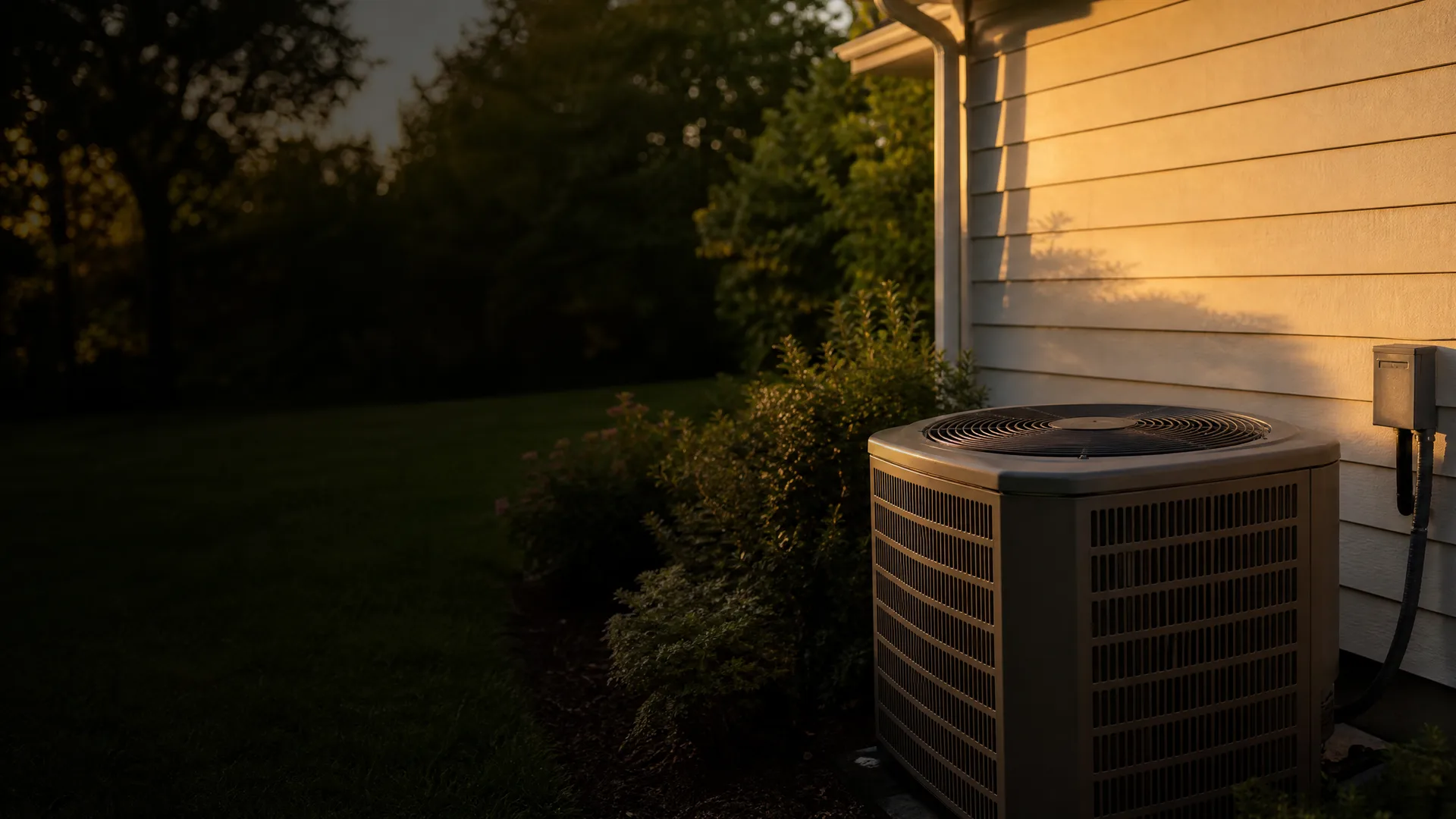
You're out back around seven, the light going gold over the yard, grass still warm from the day. Inside, the thermostat's set to 72 and has been climbing. You walk over to the condenser and the fan isn't moving. No hum, no click, nothing. You'd reset the breaker twenty minutes ago and it held through dinner. Now it's tripped again. The air's thick enough that you can feel it sitting on your skin, the kind of evening where the house needs the AC most and it's the time it quits. You crouch by the unit, and the only sound out there is a neighbor's AC still running fine.
Power costs 22.48 cents per kilowatt-hour statewide
A compressor pulling extra current because of a weak capacitor or a dirty coil doesn't just trip the breaker, it runs up your bill doing it. At 22.48 cents per kilowatt-hour, that strain costs you twice before it ever gets fixed.
EIA-861 2025 statewide residential average
What Fixing This Looks Like
- A breaker that trips every time the AC runs on a humid day is telling you a part is drawing too much current, not that the breaker is bad.
- Resetting it again only repeats the cycle until the capacitor, coil or compressor problem behind it gets fixed.
- A contractor who works on AC systems in New Jersey all summer has seen this exact trip pattern on plenty of other homes nearby.
- You'll be matched with one licensed local contractor, not a handful of companies competing for the job.
- Leaving it alone through another muggy stretch just means the same part fails the same way on the next hot day.
- Once the match is made, tracking down who can look at it stops being something you have to manage yourself.
The breaker isn't the problem. It's doing its job, cutting power before a struggling compressor or a weak capacitor gets hot enough to cause real damage. Every time it trips on a muggy afternoon, that's the same underlying part asking for the same fix. Resetting it buys you a few minutes, not a summer.
A contractor who works on AC systems in New Jersey sees this pattern often, because the air here forces compressors to work harder than they do in drier climates. That's not guesswork on their part. It's the kind of trip they've traced back to a bad capacitor or a dirty coil on other homes nearby, often enough to know where to look first. That's worth something when the part failing in your system is still a question mark to you.
The match you get through this page is with one licensed local contractor, not a batch of companies calling you back at once. You explain the problem once, to someone equipped to actually solve it. From there, the search is off your plate. You won't be the one calling around or vetting who's legitimate.
What doesn't change on its own is the part causing the trip. Whatever it is, a capacitor losing its charge, a coil caked with dirt, a compressor pulling more than it should, it'll still be there on the next hot day, waiting to trip the same breaker again.





Done looking for an air conditioner pro
Your request goes to one pro, not a list of companies.
It costs nothing to send, and you don't have to hire anyone.