

Running clean
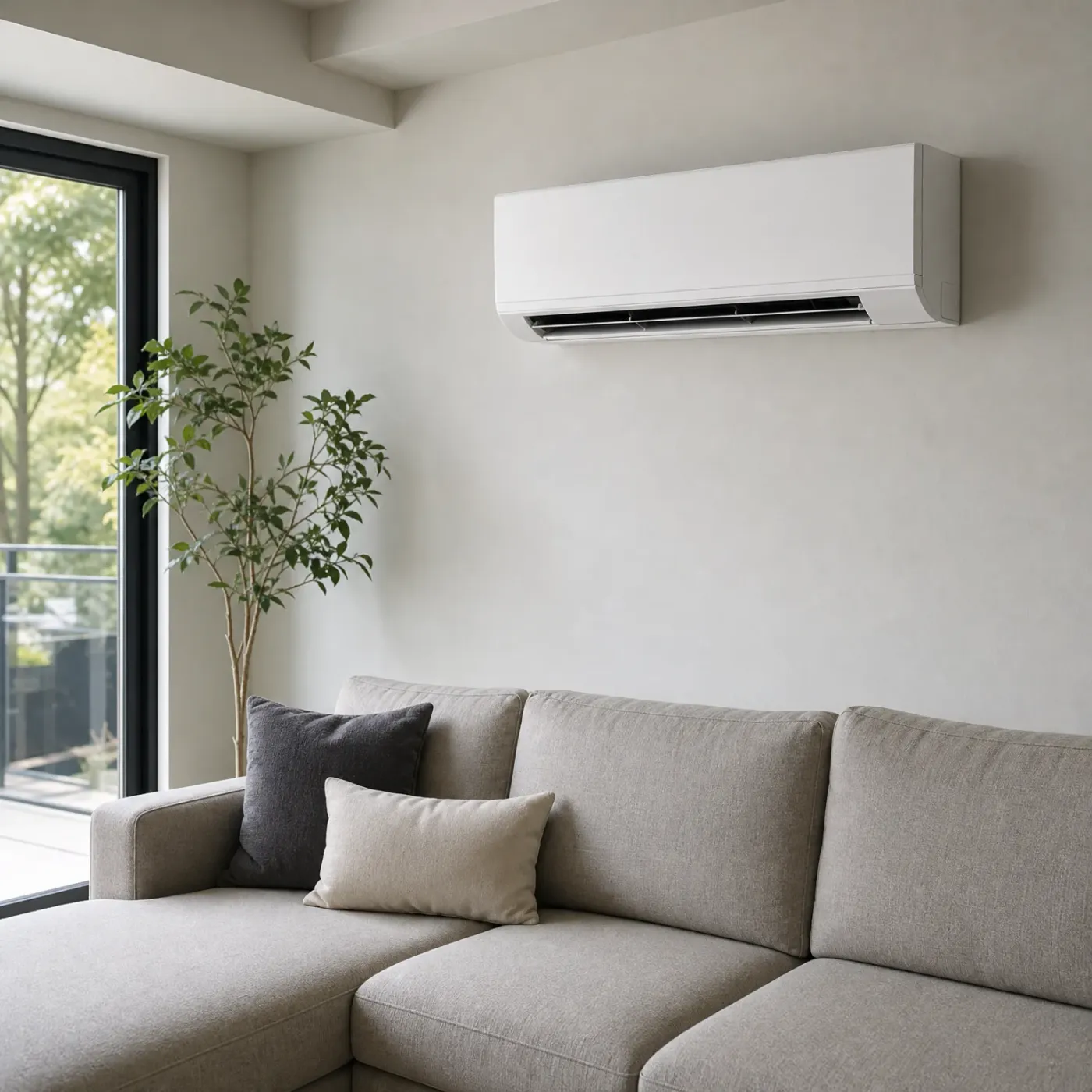
A mini split that's sized right for the room holds its temperature through a sticky New Jersey afternoon without strain. The wall stays clear, the vents stay open, and the room behind it stays steady from June through September.
Your house is older, the ductwork wasn't built for central air, and you're wondering if a mini split was the right call or just a patch job. Maybe you already have one in a room or two and you're sizing up whether to add more, or you're about to install your first unit and want to know if it actually holds up here, through a sticky New Jersey summer and a cold winter, before you commit.
A mini split doesn't need ductwork, so it sidesteps the biggest problem older homes have with central air: there's often no good place to run ducts without tearing into walls or ceilings. Each unit cools and heats only the room it's in, which also means you're not paying to condition air that leaks out through old duct seams or uninsulated attic runs. With power here among the most expensive in the country, that matters. Most homes in New Jersey heat with gas, and a mini split can work alongside a gas furnace, covering rooms that run hot in summer or stay cold in winter without replacing the whole heating system.




A technician mounts the indoor unit and outdoor compressor.
A conduit links them through a small hole in the wall.
Refrigerant lines, power, and a drain run inside that conduit.
The compressor pulls heat in or pushes it out, no ducts needed.


Skip collecting and comparing quotes for the new mini split.
Send the request and finding a pro stops being your problem.
You're not committing to anything by asking.


Walk into the room with the mini split and you probably already know if it's working. One wall stays cool while the hallway outside it goes sticky by afternoon. A bedroom with its own unit sleeps fine while the room next door needs a fan running all night. If the house still leans on an old window unit or a stretch of duct that never reached that far room, you're likely running both the mini split and something else just to cover the gap. A unit that's undersized for the room it's in will run long and still lose ground on the muggiest days, and one that's never been cleaned loses capacity before it ever shows up as a breakdown.

A mini split that's sized right for the room holds its temperature through a sticky New Jersey afternoon without strain. The wall stays clear, the vents stay open, and the room behind it stays steady from June through September.

Dirt and mold along the vents mean the unit is working harder to push the same air through. Airflow drops, the room takes longer to cool, and whatever collects on that casing is moving into the air with it.
A mini split runs on electricity, not gas, so every degree it moves shows up on that side of your bill. At 22.48 cents a kilowatt-hour, a unit sized wrong or left dirty costs you more here than it would most places to find that out.
EIA-861 2025 statewide residential average

A mini split sends refrigerant through a line set straight to the room, not air through sheet metal. There's no duct run losing cooled air on the way, no joint in a crawlspace leaking what the compressor just made cold. Whatever the outdoor unit produces, the indoor head delivers. In a house where the ductwork predates central air, that's the difference between a room that holds 72 and one that drifts back up by evening.

Each indoor head answers to its own thermostat, not a system trying to balance the whole house through one return. That means the room with the mini split can run at a different temperature than the room without one, all day, without a damper or a duct adjustment anywhere. It also means a unit sized for a 12 by 14 bedroom won't help a 20 by 24 addition. Getting that match right at installation is what decides whether the room holds up on the hottest afternoons.
A mini split can work well in an older New Jersey home. It just has to be sized for the room it serves and installed by someone who accounts for what your house is, not a generic layout. Where ductwork would lose cooled air to a crawlspace, a mini split sends it straight to the room through a line set. That's the whole case for it here, where summers turn muggy and electricity costs more than it does almost anywhere else to get wrong. Whether yours is doing that job right now is a separate question from whether the idea was sound, and the answer to that one is in how the room feels at three in the afternoon. If it's not holding up, that's a sizing or installation problem, not a mark against the equipment. Instead of calling around, explaining the same thing to every contractor who answers, and sorting through quotes that are hard to compare against each other, you can send this once and let a licensed installer who works on these systems take it from here.

One form replaces the calls you'd make to find a mini split pro.