







White colonial-style houses with lit windows photographed at dusk along a tree-lined street.

Heat Pump Repair in Trenton, NJ

Tell us about the job

Takes about a minute. No obligation.

RepairHeat PumpMercer County, NJ
Step 1 of 2

What ZIP code is the job in?

A heat pump works hardest right when the season turns. September is the last quiet month before heat starts in October, and a part that was already weak tends to give out once the system has to run every day. The same thing happens in reverse come May, before cooling starts in June. A low refrigerant charge or a worn-out capacitor can sit fine for months and then fail the first cold week it's asked to do real work. If your heat pump is struggling right now, that's the usual pattern, not bad luck, and it's worth having someone find the actual cause rather than waiting to see if it sorts itself out.

7 months
October through April, your system heats
4 months
June through September, it cools
26°F
the average winter night it heats against
85°F
the average summer afternoon it cools against
Isometric cutaway illustration of a small house showing interior rooms with furniture, an indoor air handler with ductwork, and lines running to an outdoor condenser unit beside the building.
Your system heats October through April and cools June through September.

NOAA nClimDiv, 1991–2020 normals

Trenton winters sit around 26°F on average overnight, nothing close to the deep cold that pushes a heat pump to its limit.

A unit here is less likely to be worn out from strain, so a repair usually fixes a real problem instead of patching over years of hard use.

At 19.34 cents a kilowatt-hour, a heat pump that's struggling costs you more here than almost anywhere else

Power costs 19.34 cents a kWh statewide
112 damaging wind events from 2015 to 2024
23 hail events from 2015 to 2024
Half the homes here were built in 1969 or earlierIf your heat pump came with the house, it may be closer to the end of its life than the middle.

So if a contractor tells you the compressor is worn out or the reversing valve is bad, that's probably the real story, not a symptom of a system that's been overworked for years. Worth asking what actually failed and why, rather than just replacing parts until it runs. The storms that come through here, wind, hail, the occasional ice storm, are harder on the outdoor unit's cabinet and coil than the weather is on its workload. If yours sits exposed to the yard, a bent fin or a cracked line from a fallen branch is worth ruling out before anyone opens it up looking for something else.

A struggling heat pump gets more expensive the longer it runs this way

A heat pump that's low on charge or losing efficiency still runs, it just runs longer and costs more doing it. At 19.34 cents a kilowatt-hour, that difference shows up on the bill fast. Getting the actual cause diagnosed now stops the leak instead of paying for it every month.

Find a contractor
A person in a dark jacket, knit cap and tan work pants climbs porch steps toward a dark green front door, carrying a canvas tool bag, with a potted shrub beside the entry.
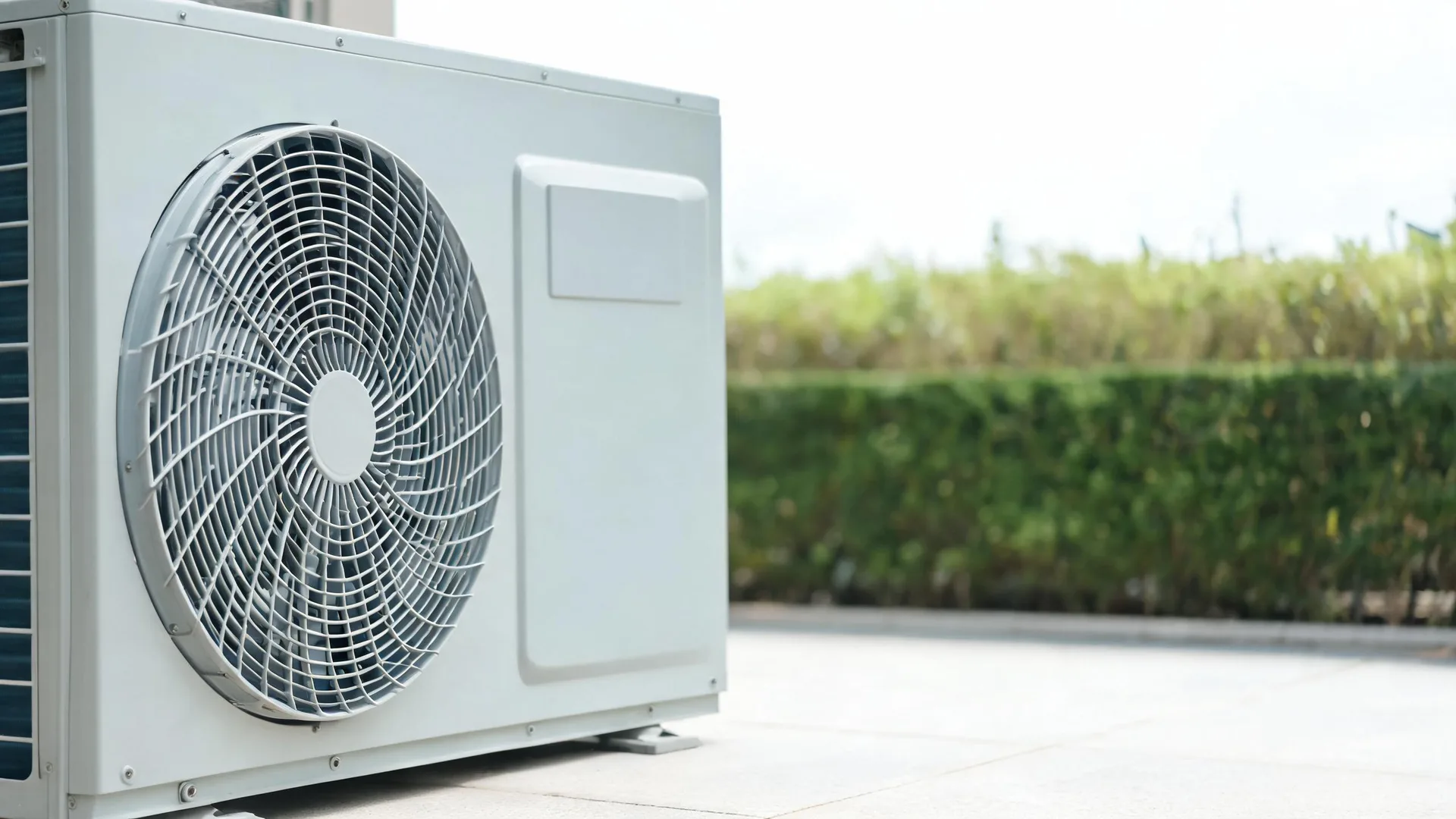
A gray air-source heat pump mounted on a concrete pad next to a house with gray vinyl siding, surrounded by gravel and flanked by green shrubs and white hydrangea flowers.

Worth knowing what you're repairing

That's worth asking before money goes into this repair. A contractor can check the age and condition of your unit and tell you whether you're fixing something with years left or patching one that's near the end. If your heat pump is original to the house, get that answer before you commit to the work.

What you can check safely

Look at the outdoor unit and make sure nothing is blocking it, no leaves, no snow, no branches pressed against the coil. Check the thermostat is set to heat and the temperature you expect. Go to the breaker panel and see if anything has tripped. If you have a filter you can get to, pull it and look at it against the light. These take a few minutes and tell a contractor something useful even if they don't solve the problem.
What to leave alone

Don't open the outdoor cabinet or touch the refrigerant lines. Don't take the cover off the indoor unit or go near the electrical connections. If the outdoor unit is coated in ice, don't chip at it, a heat pump cycles into defrost on its own and forcing it can bend a fin or crack a line. If a breaker trips more than once after you reset it, stop resetting it and leave that one for the contractor.

Short cycles are usually the first thing people notice, the system kicks on, runs a few minutes, shuts off, then starts again before the house has even changed temperature. That points to a thermostat sensor, a dirty coil, or low charge, and it's worth a look before the compressor takes the extra wear. Warm air blowing in heat mode means the reversing valve isn't switching the way it should, or the charge has dropped low enough that the system can't pull heat from outside air anymore. Ice building up on the outdoor coil and not clearing on its own is another one, a heat pump is supposed to defrost itself on a cycle, and if it's not doing that the defrost control or a sensor has likely failed. A hissing sound right at the lines usually means refrigerant escaping, and that's not something that gets better on its own. If the outdoor fan isn't turning while the system runs, or it's making a grinding or rattling noise, the motor or its bearings are on the way out.

A repair is worth doing when one part failed and the rest of the system is sound, the compressor runs fine, the coils are clean, and something specific broke, a capacitor, a sensor, a control board. Replacing that one thing gets you back to normal. It stops being worth it when the compressor itself is failing, since that's the part that actually moves refrigerant and does the work of heating or cooling the house, and there's no fixing it, only replacing it. Age matters less than what's actually wrong with it right now. An old heat pump with a bad capacitor is an easy call. An old heat pump with a failing compressor usually isn't, because once that goes, the cost of fixing it starts to compete with just replacing the system. A contractor who opens up the unit can tell you which situation you're in before you spend anything.