Heat pump not cooling in Newark, NJ

Get matched with someone who does this kind of work in Essex County.

Request a pro

A heat pump that won't cool usually comes down to one of a few things. The outdoor unit could be frozen over, which happens when airflow is blocked or the refrigerant charge is low. The reversing valve, the part that switches the system between heating and cooling, can get stuck in heating mode and never shift over. Low refrigerant from a slow leak will also leave it blowing warm or barely-cool air no matter how low you set the thermostat. On a muggy Newark summer day, any of these shows up fast, because the system has to work harder just to keep the house dry and comfortable. If the outdoor unit isn't running at all, check the breaker before anything else. None of these are problems to wait out. A heat pump that's stuck heating or barely cooling will keep running without doing its job, and the strain on the system tends to get worse, not better, until someone looks at it.

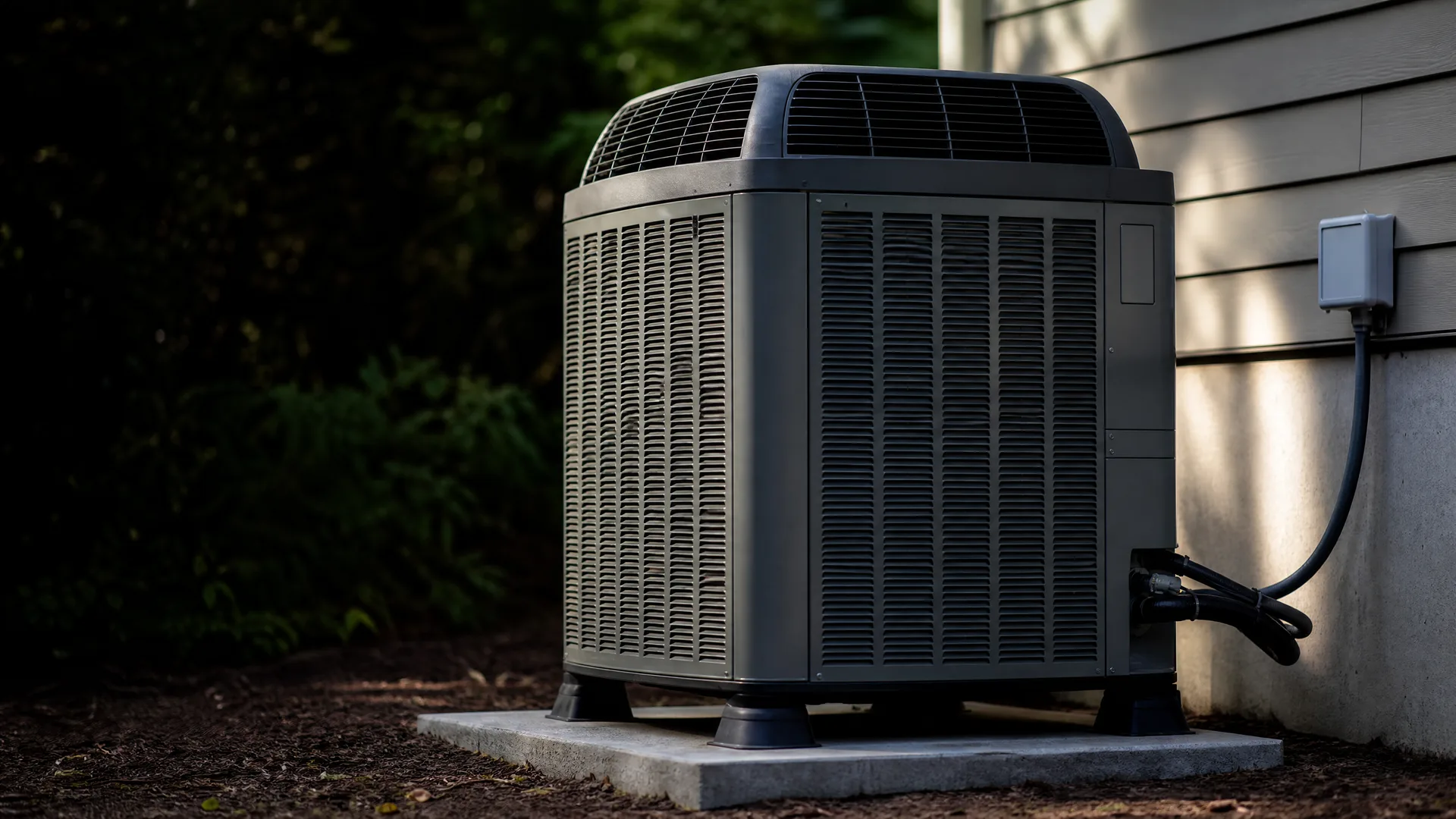
A gray outdoor condenser unit on a concrete pad beside a house with gray lap siding, connected by conduit and refrigerant lines to a wall-mounted disconnect box, with a green shrub and mulch bed at left.

Running the way it should

A heat pump that's cooling fine looks like this. The fins are clean, the unit sits level on its pad, and air moves through it without any resistance. The disconnect box stays wired up and the condenser cycles on and off without strain.

A weathered gray outdoor condenser unit sits on a concrete pad beside a house with horizontal siding, with refrigerant lines entering the wall at left and a mulched shrub bed at right.

Grime holding it back

Dirt caked across the fins and base blocks airflow the unit needs to move heat out of your house. Buildup like this often shows up alongside warm air at the vents or a system that runs longer than it used to without cooling the rooms.

Why does a heat pump have to work so hard here

  • Winter nights average 25°F

    Nights near 25°F mean the system reverses to defrost often, and a stuck reversing valve shows up fastest on a cold morning like this.

  • Heat runs October through May

    Eight months of heating asks a lot of the same reversing valve and outdoor coil that cooling depends on come summer.

  • Cooling runs June through August

    Three months of cooling isn't long, but when a July heat wave hits, you need the switch from heat to cool to work the first time.

NOAA nClimDiv 1991-2020

Why the outdoor unit freezes up

A heat pump moves heat from the outside air into your house, and in winter that outdoor coil runs colder than the air around it. Some frost on it during a defrost cycle is normal. A coil that's caked in ice, with frost creeping up the sides of the unit, is not. That usually means airflow is blocked, by a dirty coil, a failed fan motor, or snow packed against the cabinet, or it means the refrigerant charge has dropped and the coil can't shed the frost the way it should. Either way, the unit can't pull heat from outside, and you'll feel it as warm air that never quite gets warm, or air that stops coming at all.

What the reversing valve actually does

The reversing valve is what lets one heat pump do a job that would otherwise need two separate systems, one for heat and one for cooling. A coil pulls current to slide the valve one way or the other, and refrigerant flows through the system in opposite directions depending on which way it's set. When that valve sticks, the system keeps running in whichever mode it was last in, heat or cool, no matter what the thermostat is asking for. You'll hear the compressor and feel air moving, but the temperature won't match the setting, which is why a stuck valve can look like a dozen other problems until someone checks it directly.

A woman in a gray turtleneck sweater stands in a dimly lit room beside a large window, looking out at falling snow and a neighboring house with lit windows.
A woman in a cream turtleneck sweater stands beside a large window looking out at a snowy yard at dusk, with a warmly lit living room, lamp, sofa and shelves behind her.
A woman in a cream cable-knit turtleneck sweater stands in a warmly lit living room with a fireplace and shelves behind her, looking out a window toward snow-covered trees and a railed deck.
A woman in a gray turtleneck sweater stands by a window looking outside at snowy ground, with a dimly lit living room containing a sofa, shelves, lamp and a lit candle behind her.

A heat pump has one job that a regular air conditioner doesn't: it has to switch directions. The reversing valve is what does that, sliding a core back and forth with a small solenoid coil. When that coil loses power or wears out, the valve can stick halfway, and the system keeps blowing cold air even though the thermostat is calling for heat or cooling the way it should. Refrigerant charge matters just as much. If it's low, the compressor can't build enough pressure to move heat where it needs to go, and the indoor coil ends up cold instead of warm. A compressor that's failed outright won't build any pressure at all, so the refrigerant just sits there. Outside, the fan motor has to keep pulling air across the coil during defrost, and if it seizes, frost builds up until the whole system locks up. Sometimes the problem is simpler than any of that. A loose wire on the O or B terminal at the thermostat can send the system the wrong signal entirely.

What's actually going wrong inside

  • The reversing valve shifts a sliding core with a small solenoid, and a coil that loses power sticks it between positions.
  • A stuck reversing valve can leave the system blowing cold air no matter where the thermostat is set.
  • Low refrigerant charge drops the pressure the compressor needs to push heat into the house, so the indoor coil runs cold instead.
  • A failed compressor won't build pressure at all, so refrigerant just sits in the lines without moving heat either direction.
  • The outdoor fan has to pull air across the coil during defrost, and a seized motor leaves frost to build until the system locks up.
  • A thermostat wired for heat pump operation can call for the wrong cycle if the O or B terminal connection has come loose.
A gray outdoor air conditioner or heat pump unit on a concrete pad beside a house with horizontal lap siding, with conduit and refrigerant lines running up the wall and green shrubs and mulch at left.
The coil is clean and free of frost, and the unit cycles on and off on its own without running all day.
An outdoor air conditioning condenser unit sits on a concrete pad beside a white horizontal-siding house, with a gray electrical disconnect box and insulated refrigerant lines on the wall, mulch and green shrubs to the right, and a concrete slab in the foreground.
Weathered and older like this, listen for the compressor running long after the house has reached the temperature on the thermostat.
A dark bedroom at night with a rumpled duvet and pillows on a bed beside a rain-streaked, condensation-covered window with distant lights, a curtain, and a bedside lamp.

By eleven the sheets are damp enough that you keep turning the pillow over for the cool side. The window unit in the hallway hums but the vents in here are just pushing warm air, and you already checked the thermostat twice. Outside, the compressor clicks on, runs a minute, then goes quiet, like it gave up partway through. You can hear the Garden State Parkway through the window you cracked open, which never happens in August. Your phone's on the nightstand, screen still lit from the search you just ran, and you set it down knowing someone's going to call about this tomorrow instead of you spending the week chasing it yourself.


Get matched with a heat pump pro in Essex County

A heat pump blowing warm air in July isn't an August problem you can let ride. Newark summers get sticky fast, and a system stuck in the wrong mode or running low on charge won't fix itself with the thermostat. Every day it sits like this is a day the compressor keeps trying and failing, which is how a stuck reversing valve or a weak capacitor turns into a bigger repair. You've already got enough going on without tracking down who's licensed, who answers the phone, and who actually shows up. Hand off the diagnosis part. Someone who works on these systems in this county, through the heat and through winters that push them just as hard, can tell you what's actually wrong once they're looking at it. That's one less thing on your list this week.

You call for service as soon as something seems off, and with a heat pump that habit pays off more than once a year, in both directions.

The same reversing valve and the same outdoor coil carry you through a muggy July and a 25 degree January night, so a small problem caught now is one less failure on the coldest or hottest day of the year.

A bearded man in a dark plaid flannel shirt stands indoors looking out a window at a snow-covered yard, with a dark gray mug on the windowsill and kitchen shelves behind him.
A smiling bearded man in a blue-gray t-shirt sits on a gray couch in a living room with wooden shelving and a bright window behind him, looking down toward a device at the lower edge of the frame.
A gray outdoor condenser unit on a concrete pad beside a light-colored lap-sided house, with a wall-mounted disconnect box and conduit, dark mulch, and a green shrub to the right.

Clean and clear

The fins are open and you can see straight through them to the housing behind. The unit sits level on its pad, the disconnect box is wired up tight, and the lines running to the house are intact. Air moves through it without working around anything.

A dirty outdoor air conditioner condenser unit with debris on its coil grille, sitting on a concrete pad beside a light-colored horizontal siding wall, with bare dirt ground in front and a shrub at right.

Clogged and buried

Dirt, leaves, and plant growth have packed into the grille until the fins behind it barely show. The outdoor coil needs air moving through it to work, and a unit caked like this is pulling warm air through debris instead. It won't cool the house right until that coil is clear.

Call now or wait and see

Call now

  • A contractor can check the reversing valve and the charge the same day and tell you whether the fix is quick or not.
  • If the outdoor coil is iced over, someone qualified needs to find out why before it refreezes the next time the system defrosts.
  • You stop guessing at settings on the thermostat and find out if the problem is the valve, the charge, or something electrical.
  • A system stuck blowing warm air in July keeps running the compressor without doing the job, and that strain doesn't reverse itself.
  • Getting matched with a contractor today means the diagnosis starts before the next humid afternoon sets in.

Wait it out

  • The thermostat gets reset, the breaker gets checked, and the system still blows warm air because the actual part never got looked at.
  • A frozen coil that isn't addressed can ice over again on the next defrost cycle, and each cycle it's working against more buildup.
  • A stuck reversing valve doesn't loosen up on its own, it stays wherever the solenoid left it until someone deals with it directly.
  • Every muggy day the system runs without actually cooling is a day the compressor works without doing what it's built to do.
  • Waiting means the same call eventually gets made, just after more days of warm air through the vents.
An outdoor air conditioning or heat pump condenser unit on a concrete pad beside a house with horizontal vinyl siding, a gray electrical disconnect box and conduit on the wall, and a concrete walkway in the foreground.
Before you get your heat pump repair
A dark gray outdoor condenser unit on a concrete pad beside a house with beige horizontal siding, with a gray electrical disconnect box and conduit on the wall, mulch beds, a hosta plant, a shrub, and mowed lawn in front.
After you get your heat pump repair

Power here costs 24.38 cents per kilowatt-hour

At 24.38 cents per kilowatt-hour, a heat pump stuck running the wrong way or cycling nonstop shows up fast on your bill. A compressor straining to cool a house it can't actually cool still draws power the whole time it runs.

EIA-861 2025

What a Working Heat Pump Tells You

  • A frozen coil, a stuck reversing valve, or a low refrigerant charge are the usual reasons a heat pump stops cooling.
  • The outdoor unit still has to make it through muggy Newark summers and cold Essex County nights without the same part failing twice.
  • A system blowing warm air doesn't fix itself by changing the thermostat setting, and it keeps drawing power while it runs.
  • Checking for ice on the coil, a loose disconnect, or a compressor that won't stop cycling tells you whether the problem is urgent or just starting.
  • Once a contractor is matched to the job, the search for who to call is off your plate.
  • The same parts that failed in July are the ones that carry the system through the next cold snap, so the fix matters twice over.

A heat pump that won't cool traces back to one of three places almost every time: the outdoor coil frozen under ice, a reversing valve stuck between heating and cooling, or a refrigerant charge that's dropped too low to move heat the way it should. None of those get better because the thermostat gets switched up or down. The compressor keeps running, the power meter keeps turning, and the house stays warm.

What makes this worth sorting out now rather than later is that the same unit sitting outside has to get through a muggy Newark summer and then an Essex County winter with nights cold enough to send it into defrost over and over. A reversing valve that's already sticking in July is a bad sign for January. Ice that keeps forming on the coil points to an airflow problem or a charge problem that won't resolve on its own between seasons.

Checking the unit tells you what kind of problem you have. Ice on the coil, a disconnect box that's come loose, a compressor that runs long after the house has cooled down, or no change at all when you flip the system to cool, each one points somewhere different, and some of those point to something that gets worse if it sits.

Once you send the request, the job of finding someone qualified is no longer yours to carry. A contractor gets matched to what you're dealing with, and from there it's their call to make, not another search for you to run.

An outdoor air conditioning or heat pump condenser unit on a concrete pad beside a house with horizontal siding, with a wall-mounted disconnect box and refrigerant lines, and dark shrubs to the left.

Find a heat pump repair pro in Essex County

RepairHeat PumpEssex County, NJ
Step 1 of 2

What ZIP code is the job in?