Normal operation
A clean coil with a light, even coat of frost melts off fast once the defrost cycle kicks in. You might see steam coming off the unit for a few minutes. That's the system clearing itself, not a problem.
A frozen heat pump in winter usually just means it's doing what heat pumps do. In cold weather, the outdoor unit pulls heat from the air, and moisture in that air collects on the coil and turns to frost. Your system should run a defrost cycle every so often to melt that off, switching briefly to cooling mode and running the outdoor fan to clear the ice before going back to heating. If you see a thin layer of frost that disappears within an hour or so, that's normal, especially on a cold Bergen County night. If the whole unit is coated in a thick sheet of ice that isn't going away, or you notice it building up day after day, something is keeping the defrost cycle from working, like a stuck reversing valve, a bad sensor, or low refrigerant. Running the system in that condition can strain the compressor, so it's worth having someone look at it before it gets worse.

A clean coil with a light, even coat of frost melts off fast once the defrost cycle kicks in. You might see steam coming off the unit for a few minutes. That's the system clearing itself, not a problem.

Thick ice covering the fins, or ice that builds back within a day of melting, means the defrost cycle isn't doing its job. Dirt packed into the coil or grille blocks airflow and makes it worse. That calls for a repair, not a wait and see.
Winter nights average 25°F
Nights here average 25°F in December, January and February, so your unit is pulling heat from air that's often near freezing.
Heat runs October through May
Heat runs eight months a year here, October through May, so a defrost cycle that's failing has a lot of chances to leave ice behind.
Cooling runs June through August
Cooling only runs three months here, June through August, so a heat pump that freezes up is doing winter work, not summer work.
NOAA nClimDiv 1991-2020
The thermostat or a control board checks coil temperature on a timer, usually every thirty to ninety minutes. When it senses frost building, it reverses the system briefly, sending hot refrigerant through the outdoor coil to melt the ice. The outdoor fan shuts off during this so it doesn't blow cold air across the melting coil. A few minutes later, it switches back to heating your house.
The reversing valve is what switches the system between heating and defrost. If it sticks, the unit never flips into defrost mode, or it flips and never flips back. Either way, ice keeps building with nothing to stop it. This is one part a contractor checks early, since a stuck valve looks the same from outside as a bad sensor or a blocked drain, but the fix is different.
You'll see it on the coil and the fan grille, a hard, thick layer instead of a thin coat that melts off. Sometimes it climbs up the refrigerant lines too. The fan might be straining to turn, or not turning at all. You may hear the unit running longer than usual without ever getting quiet, because it's trying to push heat through ice instead of air. Inside, the house feels cooler than the thermostat setting, or the heat seems to run constantly and still fall short. Left alone through a cold stretch, this strains the compressor, and a compressor is the most expensive part of the system to replace.




A heat pump that stays iced up through a stretch of January nights in the 20s isn't going to clear on its own, and running it that way risks the compressor. Something in the defrost cycle has stopped doing its job, a sensor, a reversing valve, a control board, and figuring out which one takes someone who works on these systems through a Bergen County winter and knows where they tend to fail. That's not a weekend project with the unit caked in ice and more cold nights ahead. Send the request and a local contractor licensed to work on your system takes it from there, so you're not stuck checking the coil every few hours wondering if it's gotten worse. With the kind of winter you're in the middle of, the sooner someone who knows this equipment looks at it, the sooner your heat pump goes back to doing what it's supposed to do.

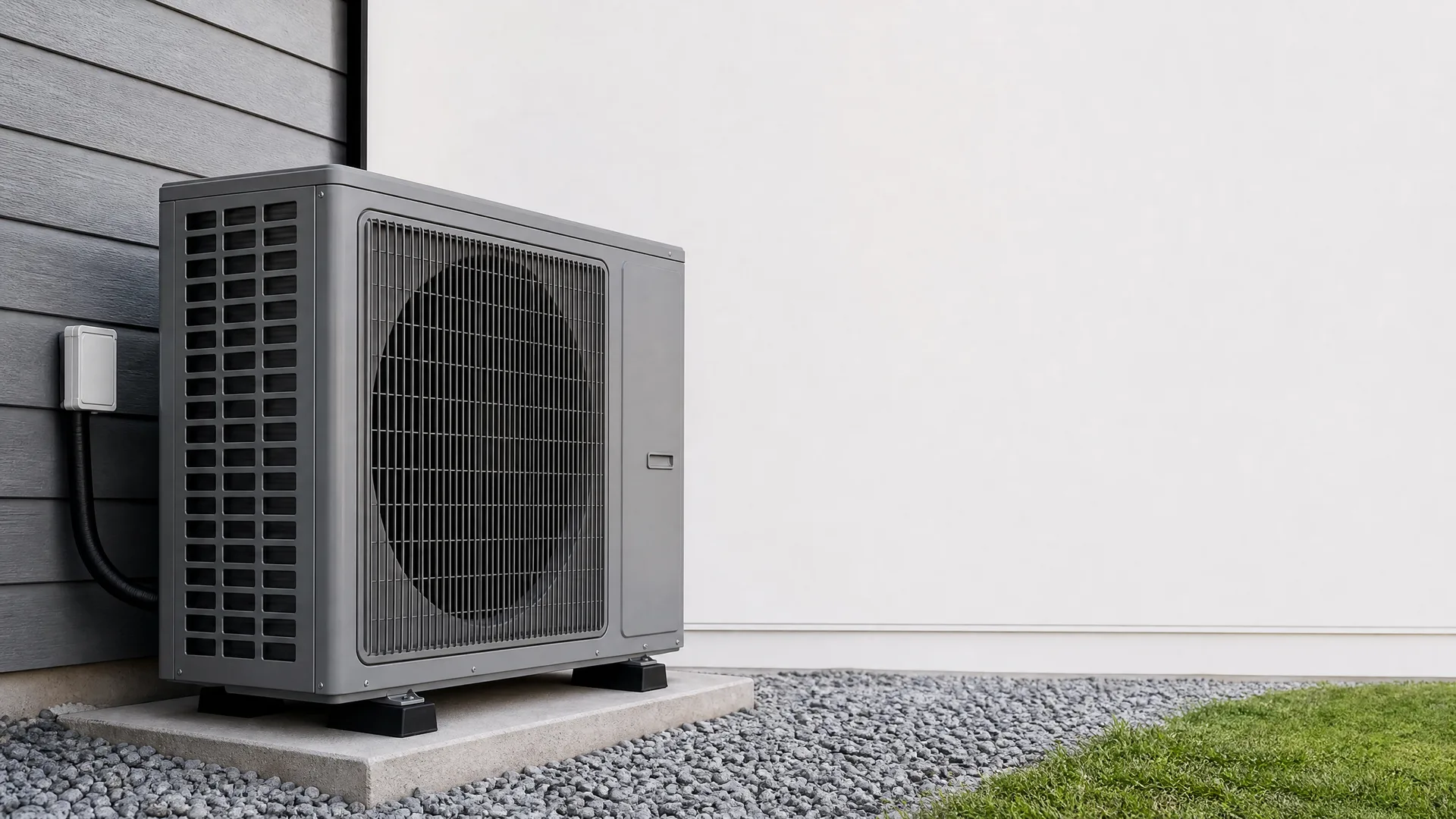
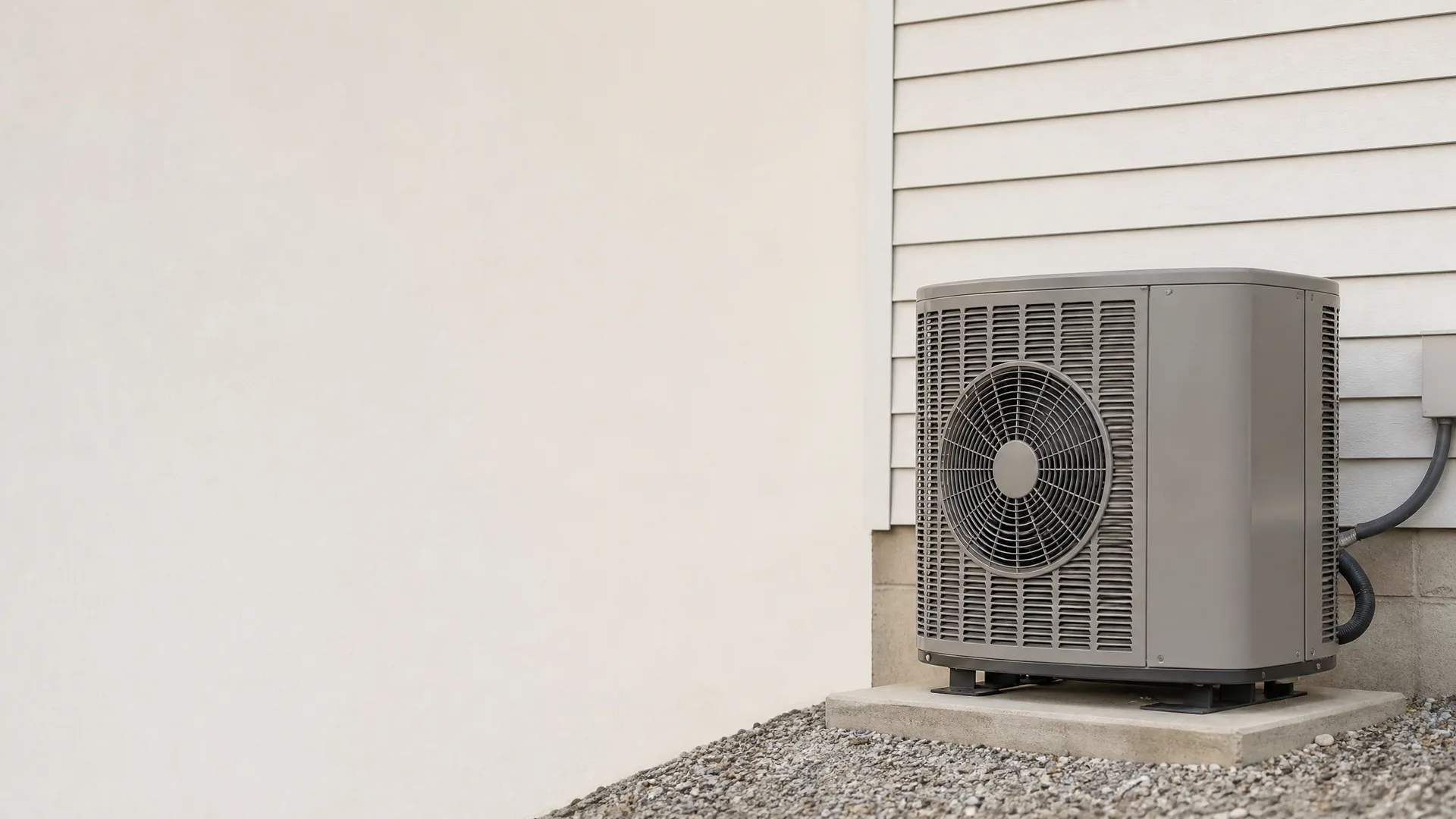
This is what a healthy outdoor unit looks like, set on its pad with the lines and disconnect box in good order. Nothing on the grille or the coil. When frost forms in winter, it melts off on its own and the unit goes back to pulling heat from the air.

Grime on the grille and top panel, leaves piled against the base. A unit in this shape has a harder time shedding frost, and buildup like this can keep air from moving through the coil the way it needs to. This is the one worth a second look.
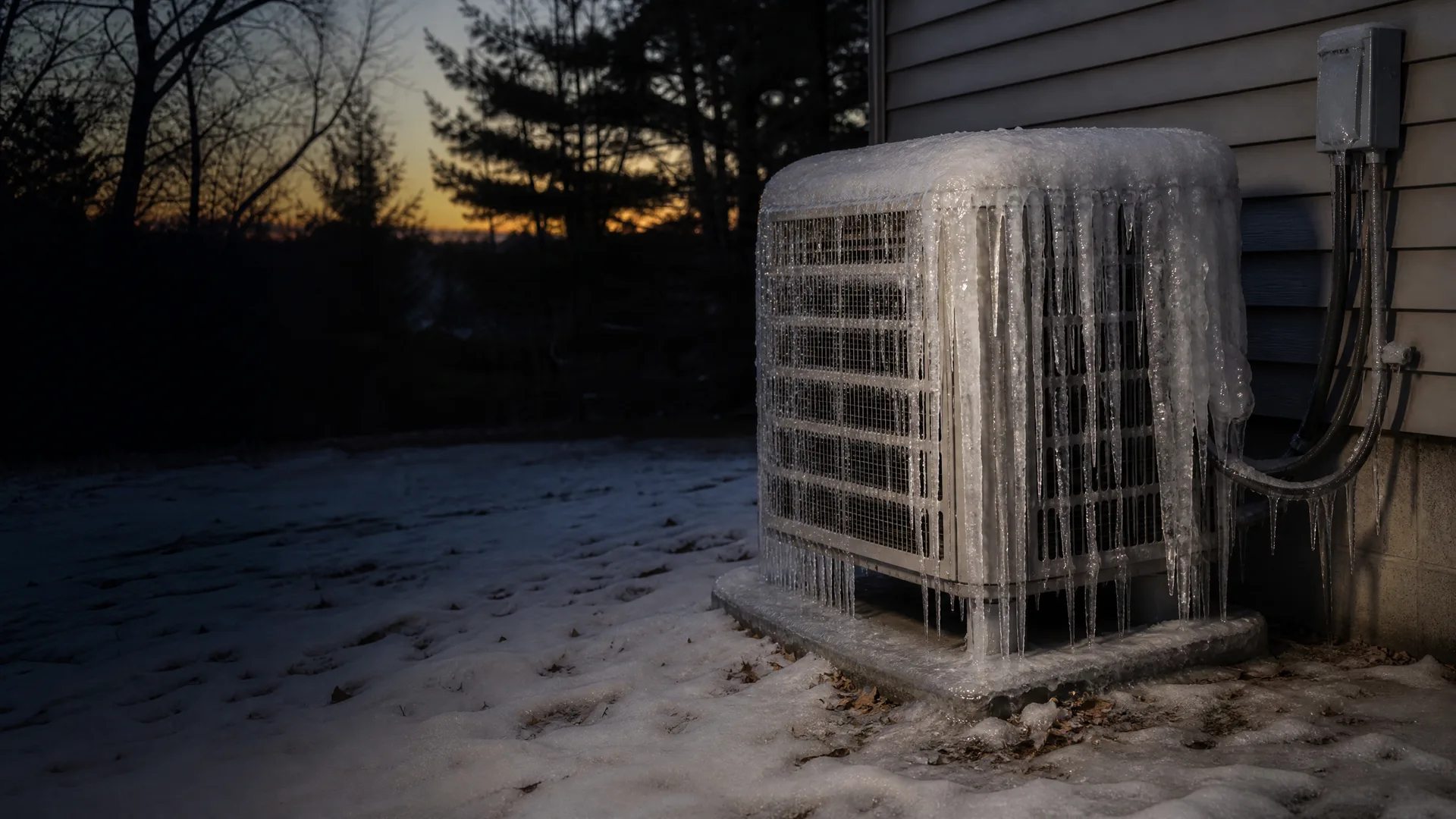
Six-thirty, still dark, and you're at the kitchen window with coffee before work. The side yard is just catching the gray light. The heat pump out there has a thick white shell over it now, coil, grille, the whole cabinet, nothing like the thin frost you've seen melt off by itself other mornings. The lines running up the wall have a crust on them too. No steam, no sound of the fan. It's sat like that since last night, through a stretch in the 20s, and it hasn't cleared on its own the way it usually does by sunrise.
At 24.67 cents per kilowatt-hour, every hour your heat pump runs stuck in a failed defrost cycle instead of heating normally adds up fast on the bill. A unit fighting ice works harder for less heat, which costs you more than the repair would.
EIA-861 2025


A frozen heat pump almost never clears itself once the defrost cycle has stopped working right. The ice tells you something upstream failed, a sensor giving the control board bad information, a reversing valve stuck in the wrong position, a board that isn't firing the cycle on schedule. Melting the frost off by hand, or letting a warm day do it, doesn't touch any of that. The unit will ice right back up the next cold night, and every hour it runs that way it's pulling less heat for more power, on some of the highest electric rates in the country.
A contractor who works on heat pumps through Bergen County winters has seen this pattern before, because the same cold nights that freeze your unit freeze the same part on others nearby. That's who gets matched to the job, someone local, licensed, familiar with this equipment in this climate, not a general call center. Only one contractor takes your request, so you're dealing with a single visit to get diagnosed rather than juggling callbacks from several companies while the unit sits there straining.
The longer a heat pump runs iced over, the more load it puts on the compressor, and that's the expensive part to replace. Getting the actual cause found now, instead of waiting to see if it clears on its own, is what keeps a stuck defrost cycle from turning into a bigger repair.





The pro who gets in touch is licensed in New Jersey and works in Bergen County.
There's no charge for the request.