




A row of similar small gabled houses with light siding behind a long wooden picket fence, with mown grass in the foreground and leafy trees above.

Heat Pump Repair in Phillipsburg, NJ

Tell us about the job

Takes about a minute. No obligation.

RepairHeat PumpWarren County, NJ
Step 1 of 2

What ZIP code is the job in?

Phillipsburg sits in a zone 5A climate, which means winter is the long haul for a heat pump here, not summer. That's steady work, not hard work. There's no brutal heat load pushing the compressor to its limit for months on end. Overnight lows average 21°F across December through February, cold enough that the system leans on its backup heat some nights, but nothing extreme for the region. So when a heat pump in Phillipsburg is acting up, it's rarely because the climate wore it out. More often it's age, a part that failed, or maintenance that got skipped. That's the kind of problem worth fixing.

8 months
October through May, your system heats
3 months
June through August, it cools
21°F
the average winter night it heats against
82°F
the average summer afternoon it cools against
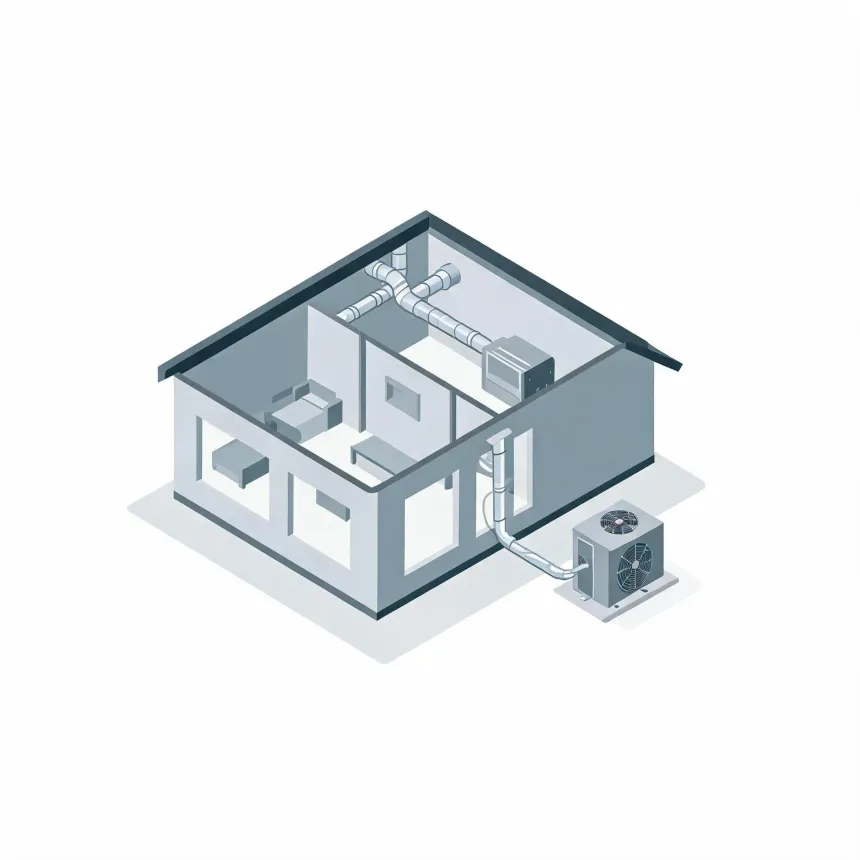
Isometric illustration of a cutaway house showing interior rooms, ceiling ductwork and an air handler, connected by lines to an outdoor condenser unit on a pad beside the building.
Your system heats October through May and cools June through August.

NOAA nClimDiv, 1991–2020 normals

Heat here runs October through May, eight months on the heat pump.

September is when a weak part gets found, before the system has to lean on it every day.

Warren County doesn't take an unusual toll on a heat pump

199 severe weather events from 2015 to 2024
11% of homes statewide lost power a day or more in 2024
167 damaging wind events from 2015 to 2024

New Jersey electricity ran 19.34 cents per kilowatthour in 2024, well above what most of the country pays. A heat pump that's working fine already costs more to run here than it would somewhere cheaper. One that's low on refrigerant or struggling to defrost costs more on top of that, every day it keeps running that way. The unit doesn't fix itself, and the bill doesn't wait for a convenient month. If something's off now, getting it looked at sooner costs less than letting it run wrong all winter.

If your heat pump is as old as the house, ask what it's worth fixing

Half the homes in Warren County were built in 1972 or earlier. A heat pump that came with a house that age is old enough to be near the end of its run, even if it's been kept up well. Before you pay for a major repair, it's worth asking the contractor how many years are likely left in the system. Sometimes the fix is small. Sometimes the money is better spent on a replacement.

Find a contractor
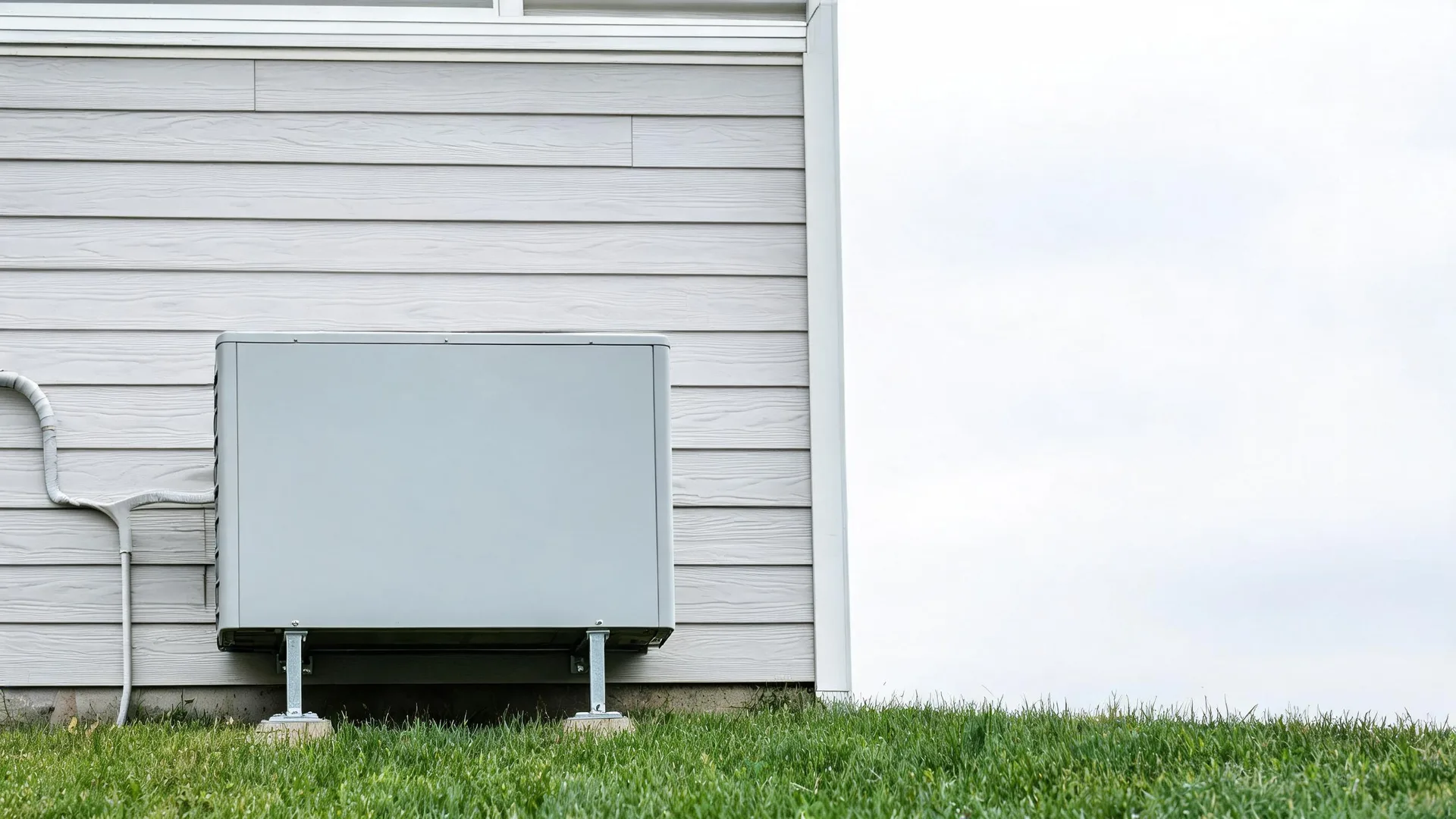
A gray outdoor HVAC unit mounted on a concrete pad beside a house with gray lap siding and a stone foundation.

Years of running, not years of strain

Wind is what actually tests this system, not heat. Warren County has had damaging wind 167 times between 2015 and 2024, and a heat pump sits outside through all of it, bolted to a pad with nothing around it. If yours is cycling oddly, tripping its breaker, or making a new noise, a storm is worth asking about before anything else. A contractor can check the fan blade, the cabinet, and the wiring for anything that got knocked loose or bent, long before it turns into a bigger repair.

Check the obvious before you call

Go to the thermostat first. Make sure it's set to heat and the set point is actually above room temperature. Check the breaker for the outdoor unit and the one for the air handler, both can trip separately. Look at the outdoor unit itself. If it's buried in ice with no sign of a defrost cycle running, or leaves and debris are packed against the coil, that alone can stop it from working right.
Know what you can fix and what you can't

The filter is the one real maintenance item on this system, and a clogged one will choke airflow enough to cause icing or weak heat. Swap it if it's dirty. Past that, the job isn't a homeowner job. Low refrigerant, a bad defrost board, a failing reversing valve, these need gauges and training to diagnose. Opening the cabinet without that won't tell you much and can void a warranty.

A heat pump that needs attention usually tells you in how it runs, not just whether it runs. Air coming from the vents that feels cool rather than warm is normal for this system, but if it stays barely lukewarm, something's off. Listen for the outdoor unit cycling on and off more than it used to, or running long stretches without ever seeming to catch up. Watch the outdoor coil through a few cold mornings. Some frost is normal and it should clear on its own during a defrost cycle. A coil that stays caked in ice, or a unit that seems to run defrost constantly, means that cycle isn't doing its job. Inside, a system that switches on with a rush of noticeably cold air before settling into heat is often leaning on backup heat strips more than it should. Any of these is worth a call before the part that's struggling now fails outright.

A heat pump repair is usually worth doing. Most failures are one part giving out, a capacitor, a contactor, a defrost sensor, a low refrigerant charge, and swapping or fixing that one part brings the whole system back to normal. Replacement makes sense when the compressor itself is failing, since that's the one part that costs close to what a new system costs, or when the unit is old enough that parts for it are getting hard to find. Age alone isn't the test. A heat pump that's been maintained, filters changed, coils kept clean, coolant lines protected, often outlasts one that's been ignored even if they're the same age. Ask what actually failed and why before deciding what the fix is worth. A part that failed on its own is a different situation than a system that's been straining for years and finally gave out.