






Two white colonial houses with lit windows and black shutters photographed at dusk along a tree-lined residential street.

Heat Pump Repair in Ocean City, NJ

Tell us about the job

Takes about a minute. No obligation.

RepairHeat PumpCape May County, NJ
Step 1 of 2

What ZIP code is the job in?

A heat pump in Ocean City is not fighting the kind of winter that wears a system down fast. Zone 4A asks real work of both heating and cooling, but the overnight low here only averages 29°F across December, January and February. That's cold enough to run the system hard some nights, not cold enough to push it to its limits night after night. Less strain over the years means a unit that breaks down is more often dealing with a worn part or a skipped service than a system that's simply used up. That's worth knowing before you decide whether a repair makes sense.

7 months
October through April, your system heats
4 months
June through September, it cools
29°F
the average winter night it heats against
83°F
the average summer afternoon it cools against
Isometric line illustration of a cutaway house showing interior rooms with furniture, ceiling ductwork connected to an indoor air handler, and refrigerant lines running to an outdoor condenser unit on a pad.
Your system heats October through April and cools June through September.

NOAA nClimDiv, 1991–2020 normals

Half the homes in Cape May County were built in 1981 or later.

A heat pump installed with a newer house usually has years of working life left in it, which is worth knowing before you rule out a repair.

Electricity here runs 19.34 cents a kilowatt-hour, so a heat pump that's struggling is costing you more to limp along than to fix

Power costs 19.34 cents a kWh statewide
96 damaging wind events from 2015 to 2024
22 winter storms from 2015 to 2024

At 19.34 cents a kilowatt-hour, a heat pump that's short cycling or running nonstop is burning power the whole time it's not doing its job right. That cost shows up on the bill before the part ever gets diagnosed. If your system came with a newer build here, this is the case for getting it looked at now rather than letting it limp through a few more weeks. A stuck reversing valve or a weak capacitor doesn't fix itself, and the unit keeps drawing power trying to compensate. Get the diagnostic done and know what you're actually paying for.

A newer system is worth repairing first

If your heat pump came with a newer build here, get the repair quote before you assume the worst. A system with years of life left is worth fixing first and replacing only if the numbers say otherwise.

Find a contractor
A man in a cap, gray long-sleeve shirt and brown work pants carries a canvas tool bag up porch steps toward a dark blue front door.
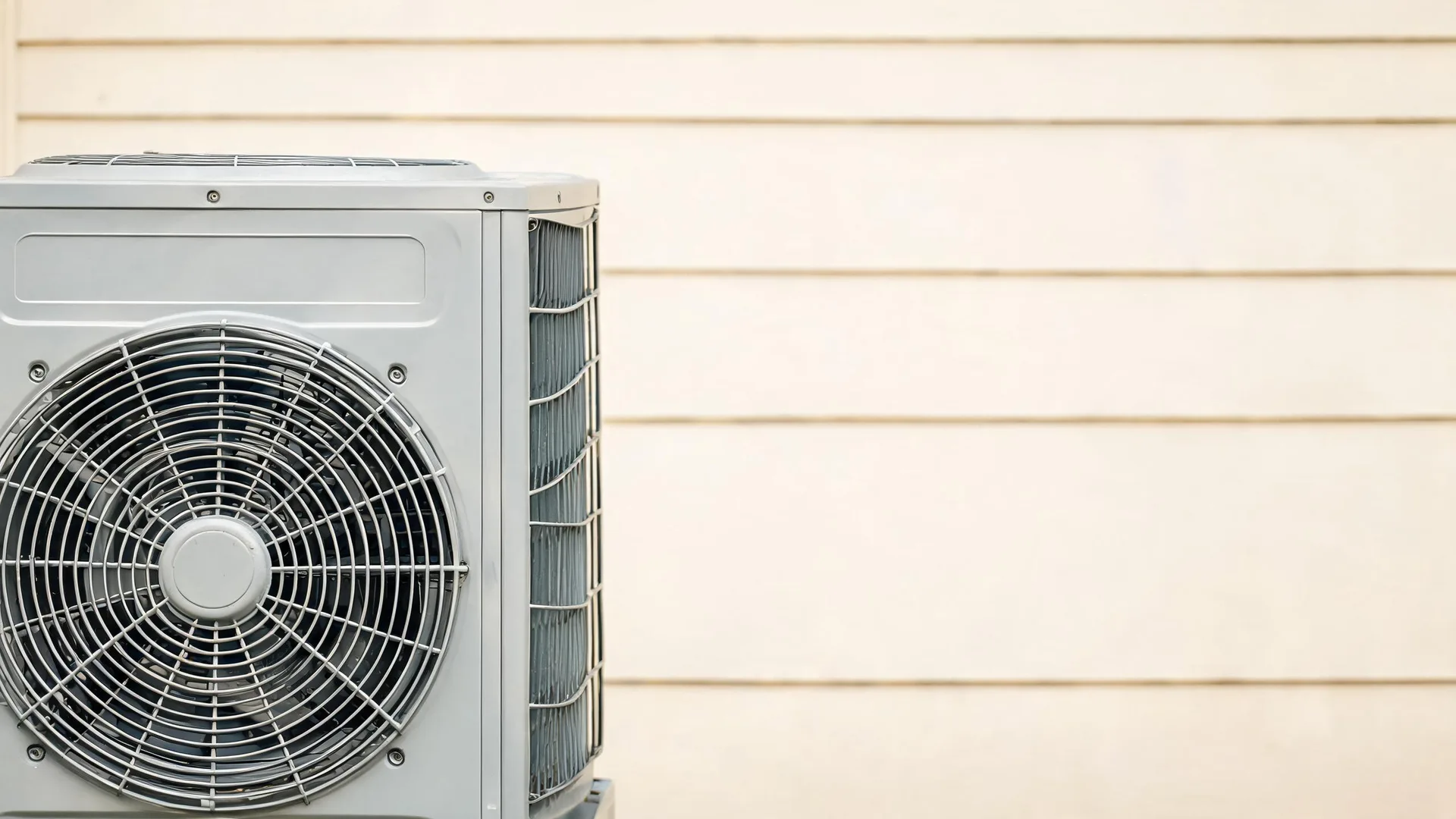
A residential heat pump outdoor unit mounted on a concrete pad next to a house with gray vinyl siding.

What actually wears out

A heat pump runs on a cycle of wear that has nothing to do with the weather outside. The reversing valve switches it between heating and cooling, and that valve is one of the first things to stick or fail after enough cycles. The outdoor fan motor and condenser fan bearings wear from simple runtime, hour after hour of spinning in a unit exposed to the weather. Refrigerant leaks show up at fittings and coil joints over time, and a system low on charge has to run longer to do the same job, which wears everything else faster. The defrost board and sensors fail quietly, so the unit starts icing up in cold weather and nobody notices until it stops heating altogether. Capacitors weaken with age and heat cycling, and a weak capacitor makes the compressor or fan motor struggle to start, which is hard on both. None of this is about a system being old. It's about parts that wear on their own schedule, and a unit that gets a filter change and a yearly look tends to catch these before they turn into a breakdown.

It's blowing air that isn't warm or cold enough

A heat pump that runs but doesn't bring the room to temperature is often low on refrigerant or stuck between modes because the reversing valve isn't fully shifting. Either way the system is working, just not doing the job, and it keeps running longer trying to catch up, which adds wear everywhere else.
It's short cycling or won't stop running

A unit that kicks on and off every few minutes usually has a thermostat sensor problem or a failing component that's tripping it on safety. One that never shuts off is usually chasing a load it can't meet, often from a frozen coil or a fan that's not moving enough air. Both wear out a compressor fast if left alone.

Before you call anyone, check the simple things a service visit would check first. Look at the outdoor unit and clear away any leaves, ice or snow blocking the coil, since airflow problems there show up as poor heating inside. Check the air filter and swap it if it's gray or clogged, because a dirty filter starves the system the same way a blocked outdoor coil does. Look at the thermostat and make sure it's set to heat, not auto or cool, and that the batteries aren't dying if it's not hardwired. Check any breaker or disconnect near the outdoor unit to rule out a simple trip before assuming a part has failed. If the outdoor coil is coated in ice beyond what a normal defrost cycle clears, that's past what you can fix yourself and points to a sensor or board issue underneath.

A diagnostic visit starts outside at the service ports. A tech checks refrigerant pressures there first, because that number points toward a leak, a bad metering device or a failing compressor before anything else gets touched. From there it's the reversing valve, checked by feel and by temperature readings on both lines, to see whether it's actually shifting the system between heating and cooling. The capacitor gets tested under load, not just looked at. A capacitor can read fine sitting still and still fail to start a motor. If there's any sign of icing, the defrost board and sensors get checked too, since a bad sensor can tell the board the coil is warm when it isn't. Each reading rules something out until what's left is the actual cause.