





A row of illuminated white colonial houses along a road photographed at dusk.

Heat Pump Repair in North Plainfield, NJ

Tell us about the job

Takes about a minute. No obligation.

RepairHeat PumpSomerset County, NJ
Step 1 of 2

What ZIP code is the job in?

Winter is the harder season for a heat pump here, and that is where Somerset County lands, zone 5A, with overnight lows averaging 24°F through December, January and February. That is real work for the system, pulling heat out of cold air night after night. It is not extreme cold, though, and a heat pump built for this climate is sized for exactly those temperatures. So when one here is cycling oddly or not keeping up, the cause is more often a worn part than a machine that was pushed past what it could handle. Worth checking into before you write it off.

8 months
October through May, your system heats
3 months
June through August, it cools
24°F
the average winter night it heats against
84°F
the average summer afternoon it cools against
Isometric line illustration of a cutaway single-story building showing interior rooms, ceiling ductwork, an indoor air handler, and an outdoor condenser unit connected by refrigerant lines.
Your system heats October through May and cools June through August.

NOAA nClimDiv, 1991–2020 normals

Half the homes in Somerset County were built in 1982 or later.

A heat pump in a newer home usually hasn't been run into the ground yet, so repair is the way to bet.

Electricity here runs 19.34 cents a kWh, so a heat pump limping along is costing you more than it should.

Power costs 19.34 cents a kWh statewide
153 damaging wind events from 2015 to 2024
12 hail events from 2015 to 2024

If a repair tech finds a worn part rather than a burned-out machine, that is worth something when you're deciding what to do next. A heat pump that has spent its life working against 24°F nights, not weeks of single digits, holds up. So a bad capacitor or a failing sensor is usually just that, not a sign the whole unit is on its way out. Worth asking the tech what shape the rest of the system is in while they're there. Wind and winter storms have hit this county often enough over the past decade that outdoor units take some knocks too, so it's worth mentioning anything odd you noticed after a storm.

Get it checked before heat starts in October

September is the month to get it looked at. Heat hasn't started yet, so a tech can find the worn part before it has to carry you through an October night. Once heat starts in October, that same part is what fails first, usually in the first cold snap, not in the easy weeks after.

Find a contractor
A white mini-split heat pump outdoor unit mounted on a concrete pad beside a gray-sided house, surrounded by gravel and green shrubs.

Built in 1982 or later? Fix it first

If your house here was built in 1982 or later, call a repair tech before you call for quotes on a new system. A heat pump that age still has years in it, and most breakdowns at that age come down to one part, not the whole unit. Get the part named before you decide anything.

Check the thermostat first

Make sure it's set to heat, not cool, and that the set temperature is actually above room temperature. A thermostat bumped into the wrong mode or a dead battery in a wireless one looks exactly like a failed heat pump from the living room.
Look at the outdoor unit

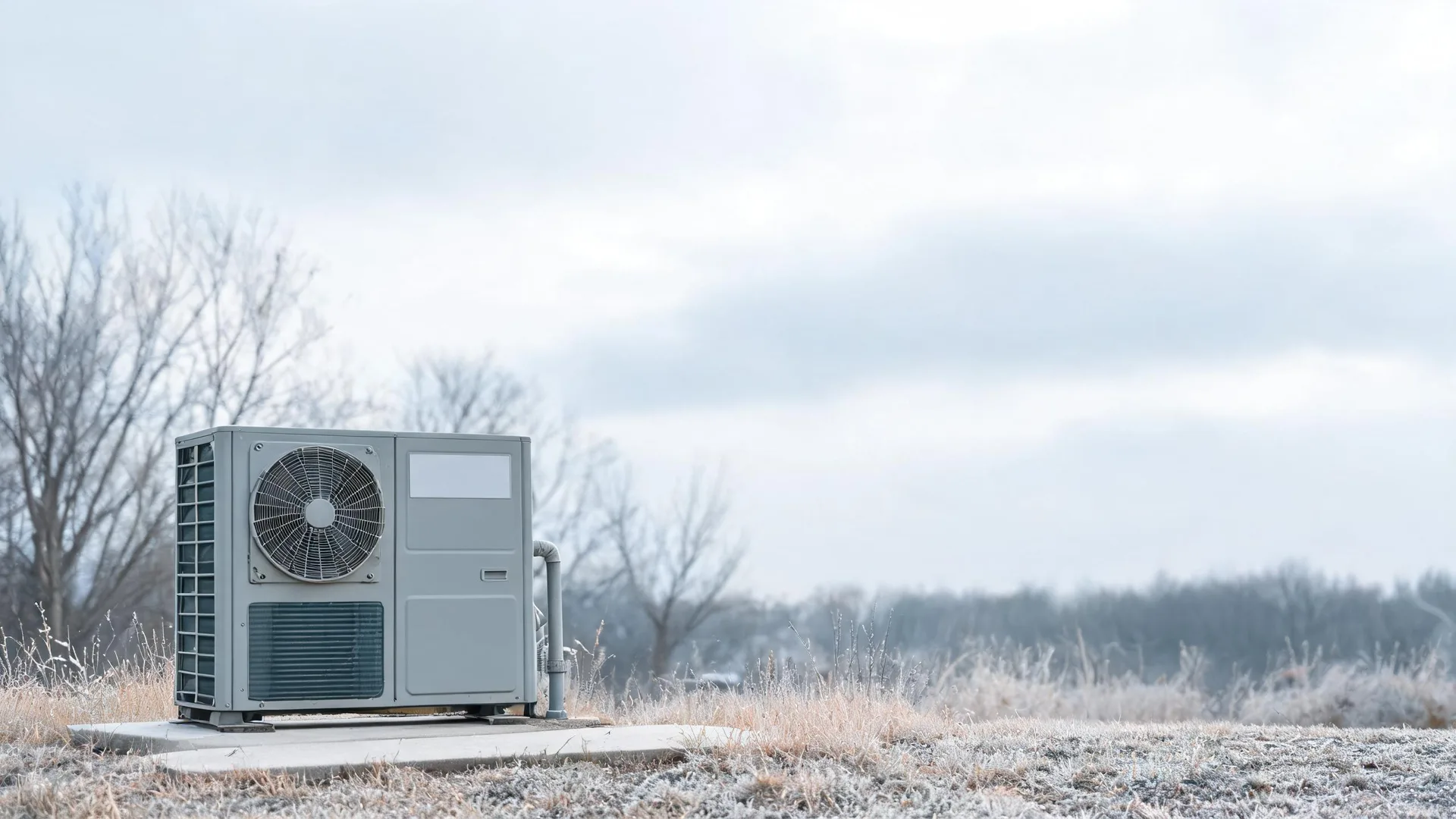
Walk outside and check the outdoor unit for ice buildup, leaves, or anything blocking the sides and top. Heat pumps pull air through that unit constantly in winter, and if it's packed with debris or buried under a frost layer that isn't clearing on its own, airflow is cut off before the system even gets a chance to work.

A heat pump fails the same handful of ways most of the time. The reversing valve is usually first, since it's what switches the system between heat and cool, and it wears from being thrown back and forth every time the thermostat calls for a different mode. A capacitor weakens over time and eventually can't give the compressor or fan motor the jolt it needs to start, so the unit hums or clicks but doesn't run. Refrigerant leaks show up at fittings and coil joints, and once charge is low the system can't pull heat from the air no matter how hard it runs. Sensors and defrost controls drift out of calibration too, and when that happens the outdoor unit can't tell it's iced over and needs to shed that frost. Contactors pit and stick from the arcing of constant cycling, and when one fails the whole system stops responding to the thermostat at all.

A diagnostic visit starts outside at the unit and inside at the thermostat, because the tech needs to see what the system is actually doing before taking anything apart. They'll run it in heat mode and watch how it responds, whether the outdoor fan starts, whether the compressor kicks in, whether air coming out of the vents is actually warm. From there it's gauges on the refrigerant lines to check charge, a meter on the capacitor and contactor to see if they're holding up, and a look at the defrost board if the outdoor coil shows ice. Most of that points to one part fairly quickly. Once they find it, a good tech will tell you straight whether it's worth fixing on the spot or whether it's tied to something bigger, and that's the conversation worth having before anything gets replaced.