





White colonial houses with lit windows photographed at dusk along a tree-lined residential street.

Heat Pump Repair in New Brunswick, NJ

Tell us about the job

Takes about a minute. No obligation.

RepairHeat PumpMiddlesex County, NJ
Step 1 of 2

What ZIP code is the job in?

Heat pump season here runs long. Cooling from June through September, then heat picks up October through April. September sits right in the middle, some days still cooling, then the switch to heat. A part that was already weak tends to give out right at that switch, when the system starts working harder than it has in months. If yours is short cycling or the air coming out doesn't feel warm enough once the heat kicks on, that is usually not a new failure. It is an old one showing up now.

7 months
October through April, your system heats
4 months
June through September, it cools
26°F
the average winter night it heats against
85°F
the average summer afternoon it cools against
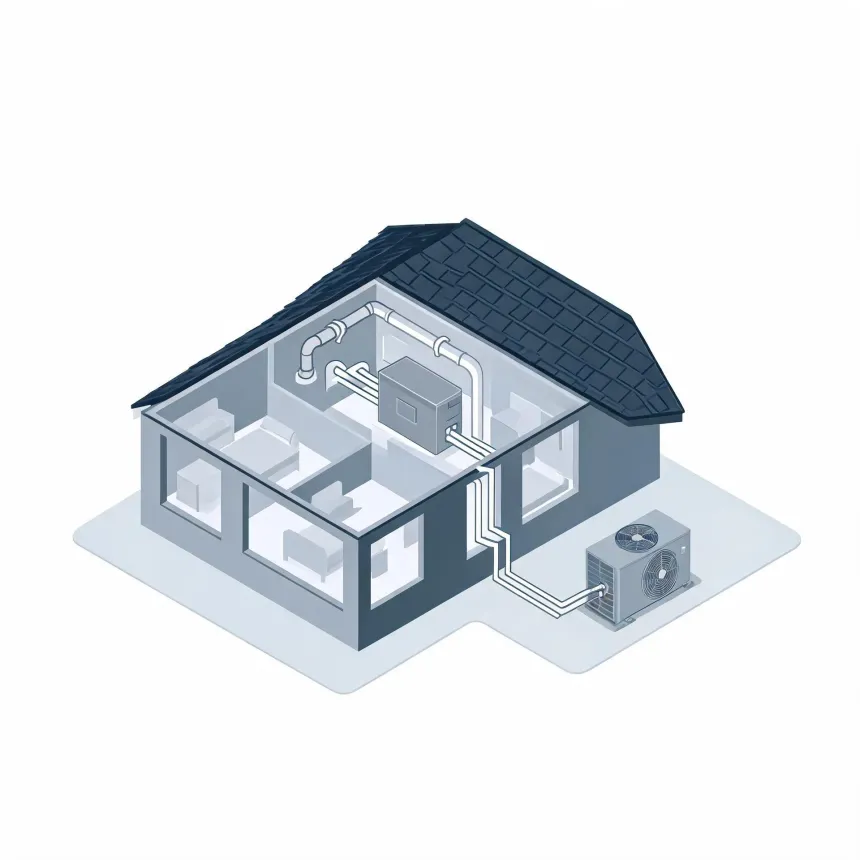
Isometric cutaway illustration of a gray house showing interior rooms, a central air handler with ducts in the attic, and refrigerant lines running to an outdoor condenser unit beside the building.
Your system heats October through April and cools June through September.

NOAA nClimDiv, 1991–2020 normals

A heat pump that runs and runs without the house changing temperature has lost its grip on the job.

Low refrigerant charge or a reversing valve that won't switch clean are the usual cause, and neither fixes itself.

At 19.34 cents a kilowatt-hour, a heat pump working harder than it should is a bill you'll notice

Power costs 19.34 cents a kWh statewide
139 damaging wind events from 2015 to 2024
29 hail events from 2015 to 2024

Middlesex County gets its share of wind and the odd winter storm, but nothing here runs a heat pump any harder than normal. Most repair calls trace back to wear, not weather. A storm knock to the outdoor unit or a short power outage can still trip something that was already close to failing. If the power blinked and the heat pump hasn't run right since, mention that when you call. Otherwise, treat this like what it almost always is. A part wore out from regular use and needs attention now.

Your heat pump's age is the one that matters, not the house's

Half the homes here were built in 1974 or earlier, half later. Neither one puts extra strain on a heat pump. If yours is losing the fight against the temperature, the age of the house isn't the reason. Something inside the unit wore out and needs a look.

Find a contractor
A man in a cap, dark work shirt and dusty tan pants walks up concrete steps toward a blue front door, carrying a worn canvas tool bag in his right hand, with a potted shrub beside the entry.
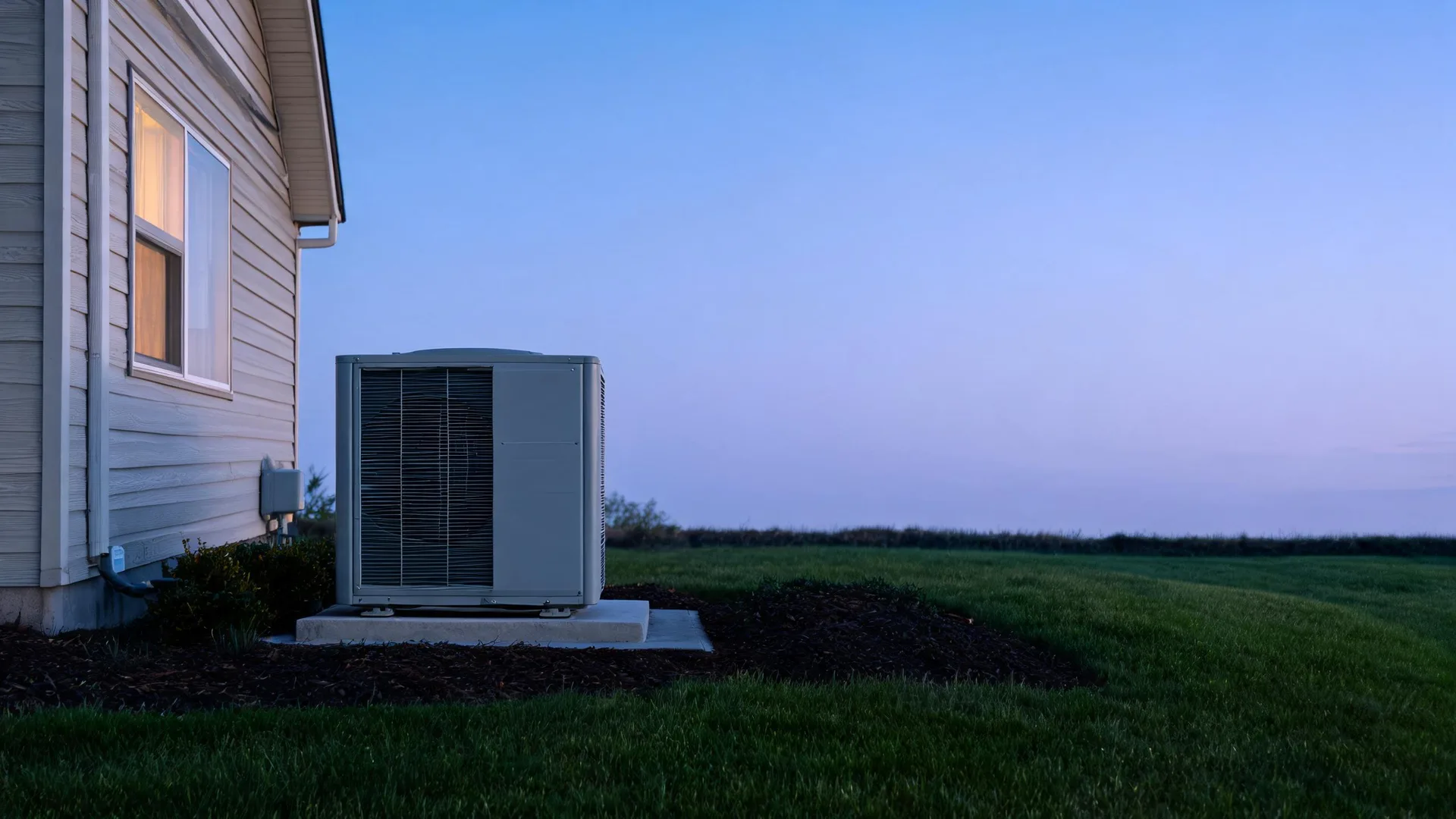
A gray heat pump outdoor unit mounted on a concrete pad next to a residential house with lap siding and stone accents.

What to check yourself before you pick up the phone

A few things are worth checking before anyone comes out. Go outside and look at the outdoor unit. If the coil is packed with leaves, grass clippings or ice, that alone can stop a heat pump from keeping up, and clearing it off takes no tools. Make sure nothing is pressed right up against the sides, the coil needs open air to move. Inside, pull the air filter and hold it up to a light. If you can't see through it, swap it or clean it. A clogged filter makes the whole system work harder and can cause exactly this kind of problem. Check the thermostat is set to heat, not auto or cool, and check the batteries if it takes them, since a dying thermostat can cause short cycling that looks like something worse. Walk the house and make sure supply vents are open and not blocked by furniture or rugs. Check the breaker too. A tripped breaker will stop a heat pump cold. None of this means opening up the unit itself. If all of that checks out and the system still won't hold temperature, that's the point where it needs someone with gauges and training to find what's wrong.

The reversing valve sticks before it fails outright

The reversing valve is what lets a heat pump switch between cooling and heating. When it starts to go, it doesn't always die clean. It can stick halfway, so the system blows cool air when it should be heating, or it can hum and buzz without switching at all. A valve in that state is already failing. It won't fix itself by running longer.
A failing capacitor shows up as a hard start, then no start

The capacitor gives the compressor and fan motors the jolt they need to get moving. A weak one makes the outdoor unit hesitate or click before it kicks on. Left alone, that hesitation turns into the unit not starting at all. Catching it at the hesitation stage is a smaller job than catching it after the compressor stops taking the strain.

A heat pump that's struggling doesn't fail gently if you let it keep running. A compressor working against a bad valve or a low charge pulls harder than it was built to, and heat builds up in places it shouldn't. That heat is what takes out a compressor for good, and a compressor is the one part that usually means replacing the whole outdoor unit rather than repairing it. Short cycling does its own damage too. Every restart is a jolt to the capacitor and the motors, so a system that's stopping and starting every few minutes is wearing those parts down fast. The fix that was small last week, a valve, a capacitor, a low charge topped off, is still small today. Give it another month of running wrong and it usually isn't.

A diagnostic call starts outside at the unit itself, before any panel comes off. The tech checks that the outdoor fan is turning and the coil is clear. Then gauges go on to read the refrigerant pressure on both sides. Low charge, a valve not sealing, a compressor working too hard, each one leaves its own pattern on the gauges. A multimeter goes on the capacitor next, checking it holds the charge it's rated for. The contactor gets checked too, since a pitted or burnt one won't pass power clean. If the system is stuck in one mode, the reversing valve gets tested directly, usually by listening for it to shift when it's told to and checking the line temperature on both sides once it does. None of this is guesswork. Each check rules something in or out, and by the end the tech can point to the part that's failing instead of guessing at a list of maybes.