






Heat pump stuck on emergency heat in New Brunswick, NJ

Let a pro reach out

Your thermostat shows the little sun or the flame icon, the one marked EM HEAT, and it won't go off no matter what you set. That means your heat pump has stopped moving heat and the backup electric strips are carrying the whole house. In New Brunswick, with power priced the way it is here, that can run up a bill fast, and it's not something to leave running through a cold stretch while you look for help. Normally this is where you'd start calling around, asking who's free, explaining the thermostat and the icon and the noise it made two days ago to each one, then waiting on quotes to compare. Send the form here instead and that search is off your plate. A contractor who works on heat pumps in Middlesex County gets your information and takes it from there. You stop chasing it down and start waiting for a fix.

A heat pump stuck on emergency heat has usually switched there on its own, which means the outdoor unit has stopped working and your thermostat has fallen back on electric strip heat to keep the house warm. Sometimes a thermostat gets bumped or set there by mistake, and switching it back solves it. More often the system put itself there because the outdoor unit iced over and never defrosted, the refrigerant charge is low, or the compressor or a motor failed. With cold stretches in New Brunswick, ice on the outdoor coil is a common reason it happens. Emergency heat will keep your house warm, but it runs on electric resistance heat instead of the heat pump's normal cycle, so it costs more to run the longer it stays on. It is not a setting to leave on and forget. It is a sign the heat pump itself needs a look before it can go back to carrying the house on its own.

Why does emergency heat cost so much to run here?

  • Winter nights average 26°F

    Those electric strips have to fight a 26°F night on their own, with no help from the outdoor unit, and they're far less efficient at it.

  • Heat runs October through April

    Heat runs October through April here, so a heat pump stuck on emergency heat for even a few weeks of that stretch adds up on the bill.

  • Cooling runs June through September

    Summers bring four months of cooling, June through September, and that same outdoor unit needs to be working right for both jobs.

NOAA nClimDiv 1991-2020

Leave it on emergency heat until a contractor looks at the outdoor unit. The strips will keep the house warm, and running the system this way for a few days won't hurt anything.

Your power bill will tell a different story. Electric strip heat costs more to run than a working heat pump, and the longer it carries a Middlesex County winter alone, the more that shows up on the next bill.

A smiling bearded man in a dark gray t-shirt sits on a gray couch in a living room, with a large glass bowl of popcorn on a wooden table in the foreground.
A smiling middle-aged man in a dark shirt sits on a gray sofa in a living room, with a bowl of popcorn on a side table and shelves, a window and kitchen area behind him.
A smiling man in a green long-sleeved shirt sits on a beige sofa in a living room, with a bowl of popcorn in the foreground, a large potted plant and shelving behind him.
A smiling bearded man in a dark green hooded jacket and blue t-shirt sits on a couch in a living room with shelves, a potted plant, and a bowl of popcorn on a wooden table.

Your thermostat calling for heat is really a signal to a reversing valve, telling the refrigerant which way to flow so the outdoor coil can pull heat from the air outside, even cold air. When something in that outdoor unit faults, a failed contactor, a tripped breaker, a bad capacitor, the control board locks the compressor out and flips the thermostat to emergency heat by itself. Nobody has to set it that way. The electric strips that take over live inside the air handler, not outside, so they keep working even if the outdoor unit is iced over or dead. They heat the same way a toaster element does, by resistance, with no refrigerant and no outdoor coil doing any of the work. That's why they can carry the house on their own, and why they cost more to run. A contractor clears the lockout by finding what actually failed outside. Once that part is fixed, the system switches itself back to normal heat pump operation and the icon on your thermostat goes out on its own.

What's Happening Inside the System

  • A thermostat set to call for heat sends a signal to a reversing valve that switches the refrigerant cycle so the outdoor coil can pull heat from the outside air.
  • When that outdoor unit faults, a lockout circuit in the control board stops the compressor and switches the thermostat display to emergency heat on its own.
  • The electric strips sit in the air handler itself, not outside, so they can run even when the outdoor unit is dead or iced over.
  • Those strips heat by resistance, the same way a toaster does, with no refrigerant and no outdoor coil involved at all.
  • A contractor checks the outdoor unit for a failed contactor, a tripped breaker, a bad capacitor or a defrost control before clearing the lockout.
  • Once that fault clears, the system switches itself back to normal heat pump operation and the icon on the thermostat goes out.
A gray outdoor condenser unit on a concrete pad beside a beige vinyl-sided house, with a wall-mounted disconnect box, flexible conduit, mulch bed, shrubs and a concrete walkway in front.
The outdoor unit here is clean and clear, running on its own to pull heat from the air with no help from the strips.
An outdoor air conditioner condenser unit on a gray composite pad beside a house with horizontal lap siding, with refrigerant lines and a conduit running to a wall-mounted disconnect box, and a shrub at left.
A coil caked like this can't pull heat from the air, which is often what pushes the system into emergency heat.
A dark bedroom at night with an unmade bed and a pillow beside a rain-streaked window showing distant lights and trees outside.

It's past eleven on a January night, cold enough that the windows have gone dark and still. You've got the thermostat set to 70 and it's holding, but the hallway near the electric panel feels warm in a way it never used to, almost close. Downstairs, the meter outside is spinning the way it does when the dryer and the oven run at once, except nothing else is on. You pull another blanket back off the bed because the room's too warm now, and you lie there doing the math on what tonight is going to cost before you've even seen the bill.

Finding a pro stops being your job

A heat pump that won't come off emergency heat needs someone to look at the outdoor unit, not a new thermostat setting. You could start calling contractors around Middlesex County yourself, sit on hold, explain the thermostat icon and the strip heat and the power bill to each one, then try to line up their schedules against the next cold night. Or you could send this request once and let that work land on someone else's desk. The strips will carry the house while you wait, so there's no need to rush into the first name you find online, but every day on emergency heat is a day of strip heat pricing on a system that's supposed to run cheaper than that. Send the request and stop being the one who has to track down who's free, who answers, and who actually knows heat pumps instead of just furnaces. That part of it is off your plate the moment you hit send.

What the icon is telling you

That EM HEAT marking is not a warning light or an error code. It is the name of a separate heating mode built into the thermostat, one that bypasses the outdoor unit entirely and runs the electric strips by themselves. Most heat pump thermostats have had this mode since the day they were installed, sitting unused unless something tells the system to switch to it. Seeing it lit does not tell you what failed outside. It only tells you the thermostat decided the outdoor unit could not be trusted to carry the heat and handed the job to the strips instead.


What a contractor checks first

A heat pump that locks itself into emergency heat almost always has a fault code stored in the outdoor unit's control board, even if the display outside shows nothing. That code narrows the search before a panel ever comes off: a pressure switch, a frozen sensor reading, a compressor that tripped on overload. Reading it takes the right meter and knowing where the board stores it, not guesswork at the thermostat. Checking the breaker and the disconnect outside rules out the simple causes first. If those are fine, the fault code is usually where the real answer is sitting.

A woman with long wavy brown hair in a knit sweater reclines on a couch with eyes closed under a textured blanket, an open book on her lap, beside a lit table lamp and potted plant.
A smiling middle-aged man in a dark knit sweater sits at a dimly lit dinner table with a glass of red wine, a bowl of food, and a lit candle in the foreground.

Call a contractor now

A technician checks the outdoor unit, finds why the compressor locked out, and gets the heat pump running again, so the strips stop carrying the whole load.

Hand it over

Keep running on emergency heat

The house stays warm, but the electric strips keep pulling full power on their own, night after night, until the outdoor unit gets looked at.

Hand it over

Call Now or Wait It Out

Call now

  • A technician can run the outdoor unit through its paces and find the specific fault that tripped the lockout, whether that's a pressure switch, a failed capacitor, or a frozen coil.
  • Once the compressor is back online, the thermostat drops out of emergency heat on its own and the strips stop carrying the load.
  • You skip the work of searching contractors around Middlesex County, waiting on hold, and explaining the EM HEAT icon more than once.
  • A heat pump that's been locked out for days is still locked out until someone resets and repairs the actual fault, no matter how long you wait.
  • Getting the outdoor unit running again matters most on the coldest nights, when the strips are working hardest and costing the most.

Wait it out

  • The house stays warm either way, since the electric strips are built to heat the whole home by themselves.
  • Every day on emergency heat is a day without the outdoor unit's help, and the strips alone cost more to run than the heat pump and strips working together.
  • The underlying fault that locked out the compressor doesn't fix itself, so the system stays stuck in this mode until someone looks at it.
  • Waiting doesn't shorten the list of calls and comparisons ahead, it just delays it to a day when the house might be colder.
A gray outdoor condenser unit on a concrete pad beside a house with horizontal lap siding, a conduit and disconnect box on the wall, a shrub with white flowers at right and evergreen foliage at left.

The outdoor unit doing its job

This is what a working heat pump looks like outside. The coil stays clear, the fan runs free, and refrigerant moves through the lines into the house carrying heat pulled from the outside air. No strips needed.

A weathered outdoor condenser unit on a concrete pad beside a house with white horizontal vinyl siding, with refrigerant lines and conduit running to a wall-mounted electrical box.

A unit that's quit

Grime like this across the grilles blocks the airflow the coil needs to pull heat from outside. Once it can't do that, the compressor locks out and the thermostat falls back on EM HEAT to keep the house from going cold.

Power here costs 23.82 cents per kilowatt-hour

At that rate, every hour your house runs on strip heat instead of the heat pump adds up fast on the bill. A heat pump moves heat for a fraction of what it costs to make it with resistance wire, so the longer that outdoor unit sits locked out, the more this rate works against you.

EIA-861 2025

Where this leaves you

  • Your thermostat moved itself to emergency heat because the outdoor unit locked out, not because of anything you set wrong.
  • The electric strips can hold the house at 70 degrees, but they cost more to run than the heat pump every hour they carry the load.
  • A technician who checks the outdoor unit can find the specific fault, whether that's a pressure switch, a failed capacitor, or a frozen coil.
  • Once the compressor is cleared to run again, the thermostat drops out of emergency heat on its own and the strips stop carrying the house.
  • Nothing about the icon or the setting needs to be fixed from inside; the fix is at the outdoor unit.
  • Leaving it on emergency heat a few days while you arrange a repair won't damage the system, but it will show up on the bill.

The thermostat did what it was built to do. When the outdoor unit locked out, it switched to the strips so your house wouldn't go cold, and it will keep running that way for as long as you let it. That's not a setting to hunt down and fix. It's a sign the compressor outside needs attention, and no amount of pressing buttons on the thermostat changes that. The strips will hold 70 degrees tonight and next week if they have to, but every hour they carry the house instead of the heat pump costs more, and with heat running October through April here, that adds up over a winter. The part that actually needs sorting out is outside, at the unit itself, where a pressure switch, a capacitor, or a frozen coil is keeping the compressor from running. Once that's found and cleared, the thermostat drops itself out of emergency heat. You won't need to reset anything inside the house. Finding someone to look at the outdoor unit is normally its own chore, calling around Middlesex County, sitting on hold, explaining the icon and the strip heat to one contractor after another, then weighing quotes against each other before you even get a date on the calendar. That part is what this page clears out of your way. The furnace or the strips keep the house livable in the meantime. The outdoor unit is what gets it back to running the way it should.

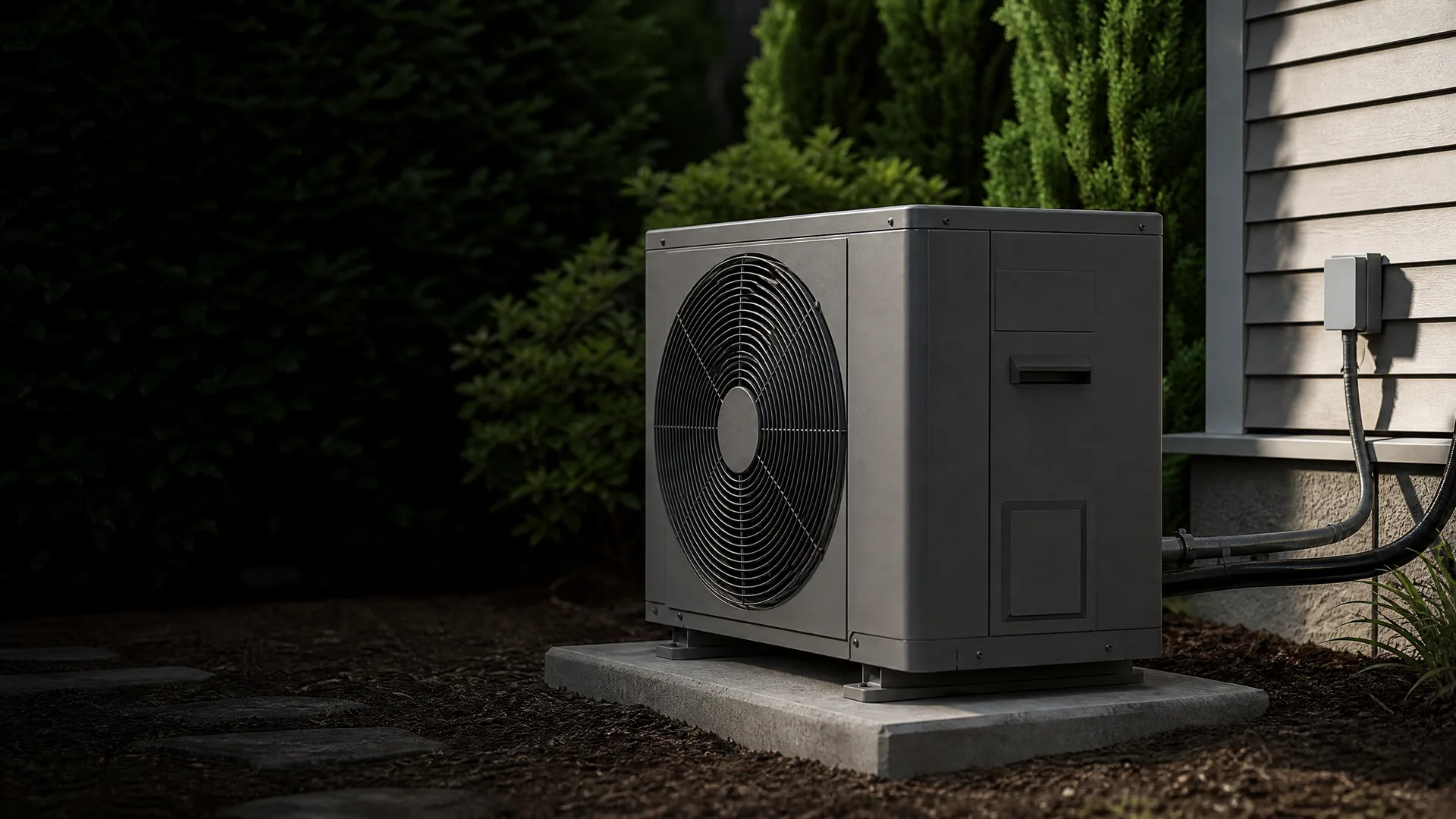
A gray outdoor heat pump unit with a large circular fan grille sits on a concrete pad beside a house with lap siding, with refrigerant lines running to an exterior electrical box and dark shrubs behind.

One request and it's handed off

RepairHeat PumpMiddlesex County, NJ
Step 1 of 2

What ZIP code is the job in?