White colonial houses with lit windows and dark shutters line a tree-lined street at dusk, bordered by dry-stacked stone walls.

Heat Pump Repair in Morristown, NJ

Tell us about the job

Takes about a minute. No obligation.

RepairHeat PumpMorris County, NJ
Step 1 of 2

What ZIP code is the job in?

Winters here work the system hard

Morris County overnight lows average 22°F across December, January and February, and heating is the bigger load all season here. A heat pump earning its keep through a stretch like that is just doing its job. Steady runtime in winter is not a sign anything was installed wrong.


The usual causes are still the likely ones

A heat pump that runs nonstop, blows cool air, or short cycles in weather like this is almost always dealing with a known problem. Low refrigerant. A failing reversing valve. A frozen outdoor coil. A thermostat set wrong for the system. Nothing about Morristown winters points to anything stranger than that. A contractor still needs to see it running to know which one it is.

8 months
October through May, your system heats
3 months
June through August, it cools
22°F
the average winter night it heats against
82°F
the average summer afternoon it cools against
Isometric line illustration of a cutaway house showing interior rooms with furniture, ceiling ductwork, and an outdoor condenser unit connected by lines along the exterior wall.
Your system heats October through May and cools June through August.

NOAA nClimDiv, 1991–2020 normals

Heat pumps here switch over in October and run heat all the way to May.

A weak part often makes it through summer and fails once the system leans on heat mode for real.

Morris County weather is not what's wrong with your heat pump

248 severe weather events from 2015 to 2024
11% of homes statewide lost power a day or more in 2024
188 damaging wind events from 2015 to 2024

Half the homes in Morris County were built in 1971 or earlier. A heat pump put in when a house like that was built, or even one installed years later, is old enough now to be near the end of what it can give you. Most of these systems last a couple decades before repairs start costing more than they're worth. If your system came with the house, that's worth finding out before you commit to a big repair. A contractor can tell you how much life is likely left in it, and whether this fix is the right one to make.

A heat pump running wrong costs more here than it would elsewhere

At 19.34 cents per kilowatt-hour, New Jersey power costs more than most of the country pays. A heat pump that's running nonstop or short cycling is burning through that rate every hour it's stuck doing it wrong. Getting the actual cause fixed is what stops the bleeding.

Find a contractor
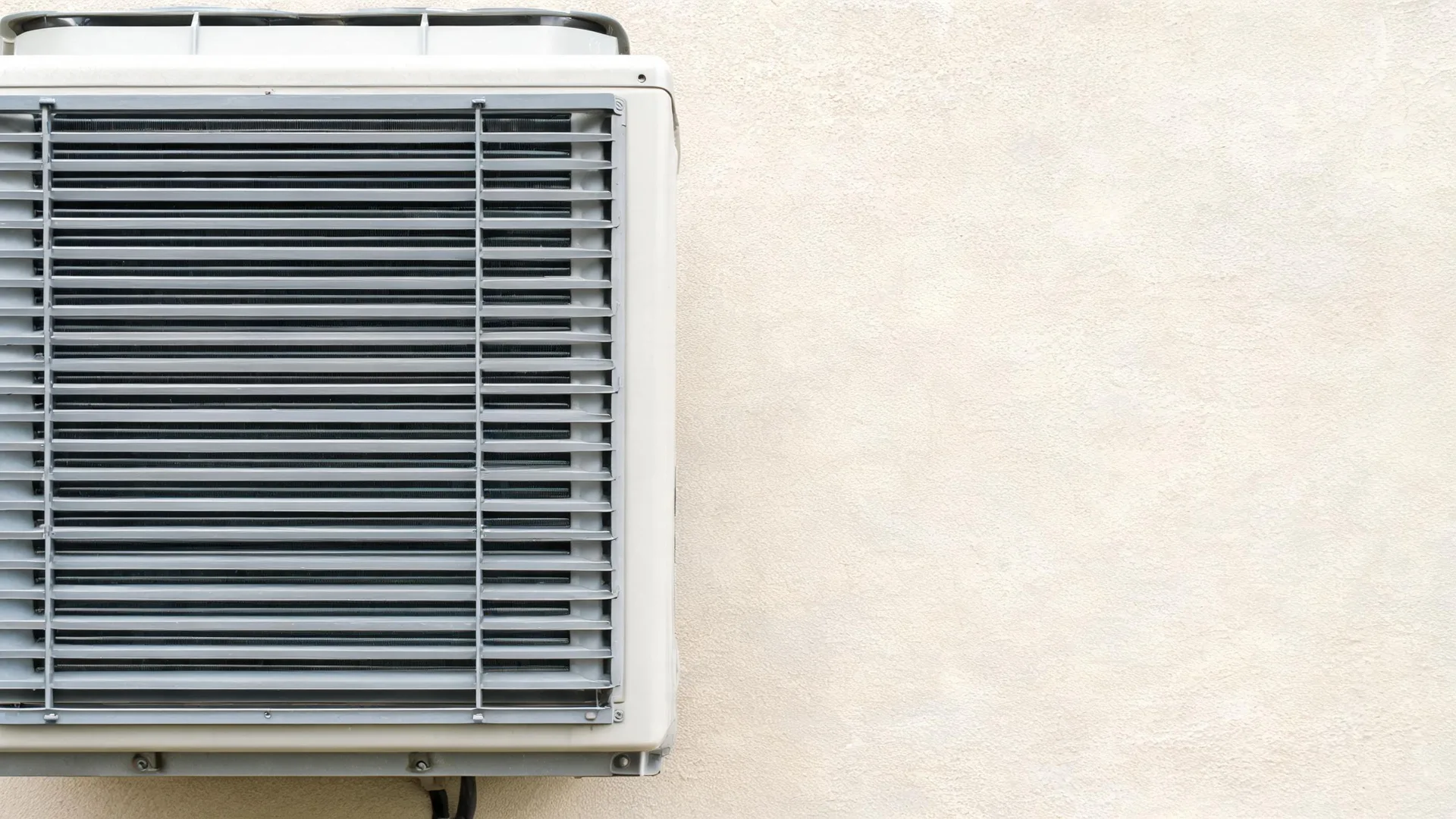
A gray heat pump outdoor unit mounted on a concrete pad next to the stone-accented exterior wall of a house.

Ask what you're repairing before you pay for it

Before paying for the repair, ask how old the system actually is. If it came in with the house, or close to it, a contractor can tell you where it stands against the couple decades these units typically last. That changes what this repair is worth doing.

The reversing valve wears out from switching every cycle

The reversing valve redirects refrigerant to switch the heat pump between heating and cooling, and it works every single cycle, all year. The coil inside it wears down from that constant switching. When it starts to fail, the system gets stuck in one mode, blows air that's the wrong temperature, or makes a hard clunk when it tries to switch over.

A dirty coil or a slow leak strains the compressor

An outdoor coil caked with dirt or ice can't pull heat from the air, so the heat pump runs long and still can't keep up. A slow refrigerant leak causes the same struggle, and it also puts extra strain on the compressor, the part nobody wants to see fail. Either one is worth catching before the compressor starts showing damage too.

Most calls start with something simple the homeowner noticed. Warm air blowing when the thermostat is set to heat. A unit that runs and runs without ever hitting the set temperature. Ice building up on the outdoor unit that doesn't melt off during the defrost cycle. A hissing or bubbling sound near the lines, which usually points to refrigerant escaping somewhere it shouldn't. Clicking that repeats without the system ever settling into a steady cycle. None of these fix themselves, and running a heat pump in that state usually just stresses the compressor further. The sooner a contractor sees it, the more likely the fix stays small.

A diagnostic call starts outside, at the unit itself, before anything gets opened up. A tech checks the refrigerant charge, the pressures on both sides, and how the system responds when it's told to switch between heat and cool. The reversing valve gets tested directly, since a valve that's sticking can look like a thermostat problem from inside the house. Electrical connections get checked too, since a loose or corroded one can make a system short cycle in a way that looks like a refrigerant issue until someone actually measures it. Airflow gets checked at the coil and the vents, since a system starved for airflow will struggle no matter what else is right with it. The goal is one clear answer about which part is failing, not a guess.