A row of similar two-story wood-sided houses with gabled roofs behind a white picket fence and mown lawn, with large trees overhead.

Heat Pump Repair in Hopatcong, NJ

Tell us about the job

Takes about a minute. No obligation.

RepairHeat PumpSussex County, NJ
Step 1 of 2

What ZIP code is the job in?

Winter is the real work here

Sussex County sits in zone 5A, a cool climate where heating carries the bigger load, and the overnight low runs around 20°F through December, January and February. A heat pump here spends its hardest months keeping a house warm, not fighting summer humidity.

So a broken unit is usually just a broken part

A heat pump that's been running against moderate loads for years doesn't wear out early. When one in Hopatcong stops working right, the cause is more often a failed part or a system that's gone out of adjustment than a machine worn down by the climate.

8 months
October through May, your system heats
2 months
July through August, it cools
20°F
the average winter night it heats against
81°F
the average summer afternoon it cools against
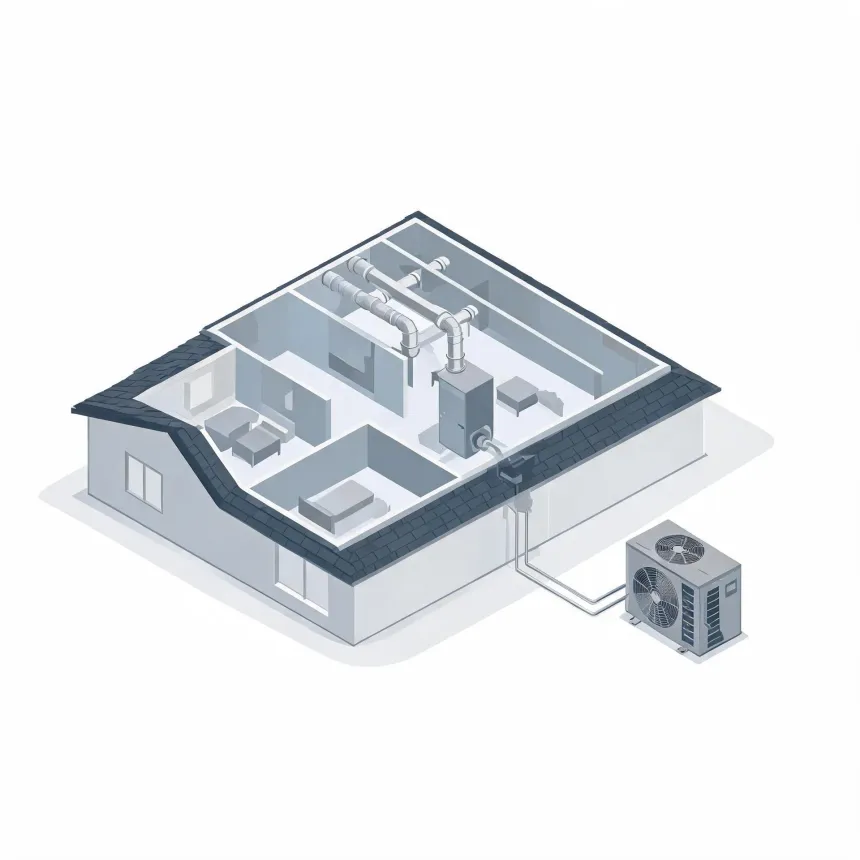
Isometric cutaway illustration of a single-story house showing interior rooms with ductwork, a furnace or air handler, and refrigerant lines running outside to a condenser unit on a pad.
Your system heats October through May and cools July through August.

NOAA nClimDiv, 1991–2020 normals

Heat pumps in Hopatcong run October through May, so September is when a weak part gets found the hard way.

If yours struggled last winter, get it looked at before October asks it to run eight months straight.

Sussex County doesn't stand out for storms, so a failing heat pump is usually just a failing part

197 severe weather events from 2015 to 2024
11% of homes statewide lost power a day or more in 2024
160 damaging wind events from 2015 to 2024
A broken heat pump costs more to ignore hereNew Jersey electricity ran 19.34 cents per kilowatthour in 2024

A heat pump is a collection of parts built to last a long time, and most of them fail one at a time rather than all together. A capacitor goes, a contactor wears out, a sensor drifts and starts giving the board bad information. None of that means the rest of the system is going with it. The question worth asking isn't whether something broke, it's whether the thing that broke is a part a tech can replace in an afternoon or a sign the compressor itself is on its way out. A compressor failure is different in kind, not just size. It's the one part that usually isn't worth repairing on its own, since the labor to get to it and swap it rivals putting in a new system entirely. Everything else on a heat pump, the valves, the motors, the controls, gets replaced on its own all the time without touching the rest of the machine.

Most heat pump problems in Hopatcong are worth repairing

A heat pump that's gone bad here almost always has a known fix behind it, a part worn out or a setting that's drifted off. Worth getting it looked at rather than planning around a replacement.

Find a contractor
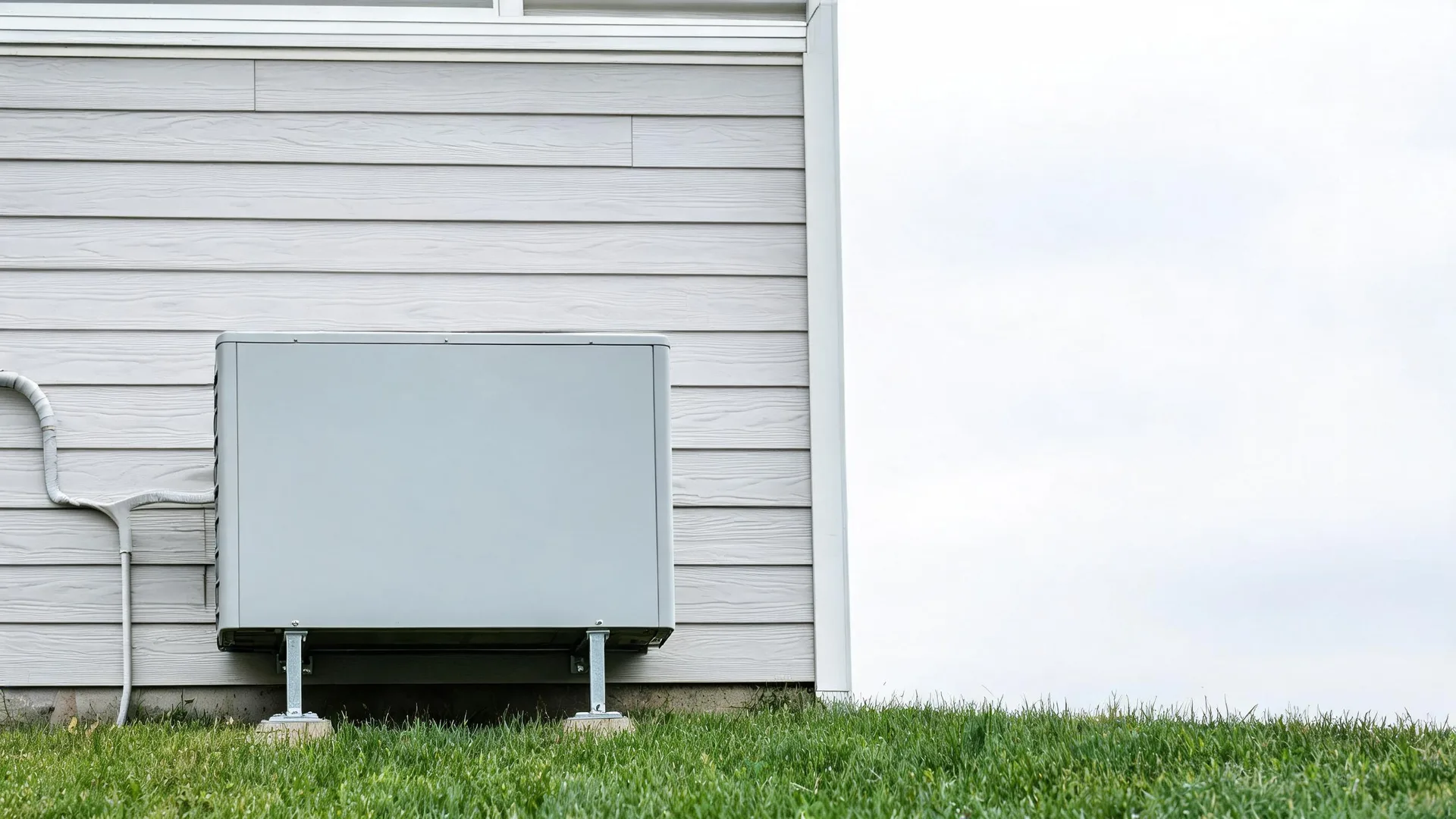
A gray outdoor HVAC unit mounted on a concrete pad beside a house with gray lap siding and a stone foundation.

Find out which one you have before you pay for the repair

A contractor can pull the model and serial off the unit and tell you in minutes whether it's the one the house was built with or a swap that happened later. That one answer changes what this visit is for. An original unit is a candidate for just patching whatever broke this time. A newer one is worth fixing without the age question hanging over it.

It's running but not keeping up

A heat pump that runs constantly and still can't hold the thermostat setting is usually low on refrigerant or losing ground to a coil that's iced over and not defrosting right. The outdoor unit should cycle into defrost on its own every so often in cold weather. If it's caked in ice and staying that way, the defrost control or a sensor behind it has likely failed.

It's blowing air that isn't warm

Air coming out of the vents that feels barely warm, or straight cold, points to the reversing valve stuck in the wrong position or a compressor that's failing to build pressure. This is different from the normal feel of heat pump heat, which runs cooler than a furnace's air but should still read warm against your hand. If it reads cold, something is actually wrong, not just unfamiliar.

A heat pump that's icing over or losing refrigerant doesn't fix itself by staying on. Ice on the outdoor coil blocks airflow, so the unit pulls in less heat each cycle and runs longer to make up for it, which only builds more ice. Low refrigerant works the compressor harder than it's built for, and a compressor that overheats enough times will fail for good, turning a repair into a full replacement. A reversing valve stuck mid-position can also let hot refrigerant gas bypass where it needs to go, and running it that way wears the valve further instead of resetting it. None of this clears up on its own. The longer a struggling heat pump keeps running, the more likely the next call is about a bigger part than the one that failed first.

A diagnostic visit starts outside at the unit itself. A tech checks the refrigerant pressure, looks at the coil for ice or dirt, and watches how the system responds when it's asked to cycle into heating or into defrost. Inside, they check the air coming off the vents and look at the reversing valve and the board that controls it, since a lot of heat pump trouble traces back to one of those. Electrical readings on the compressor show whether it's drawing power the way it should or straining to do its job. The symptoms a homeowner would notice, weak heat, short cycling, ice that won't clear, usually point the tech toward a likely cause before the panels even come off. The visit ends with a straight answer, what failed, what it takes to fix it, and whether it's worth doing.