




A long white picket fence runs along a mown grass lawn in front of a row of single-story houses with gray siding and shingled roofs, surrounded by large leafy trees.

Heat Pump Repair in Hackensack, NJ

Tell us about the job

Takes about a minute. No obligation.

RepairHeat PumpBergen County, NJ
Step 1 of 2

What ZIP code is the job in?

Heat pumps in Hackensack run heat from October through May and cooling from June through August, so September and May are the months when a weak part gets found out. A system that limped through a mild September can fail outright once it has to run steady in real cold. The same thing happens at the other end, when a capacitor or contactor that barely made it through winter gets asked to switch over and handle the first hot stretch in June. If yours is acting up right at the start of a season, that timing is not a coincidence. It usually means something was already marginal and the added load just found it.

8 months
October through May, your system heats
3 months
June through August, it cools
25°F
the average winter night it heats against
84°F
the average summer afternoon it cools against
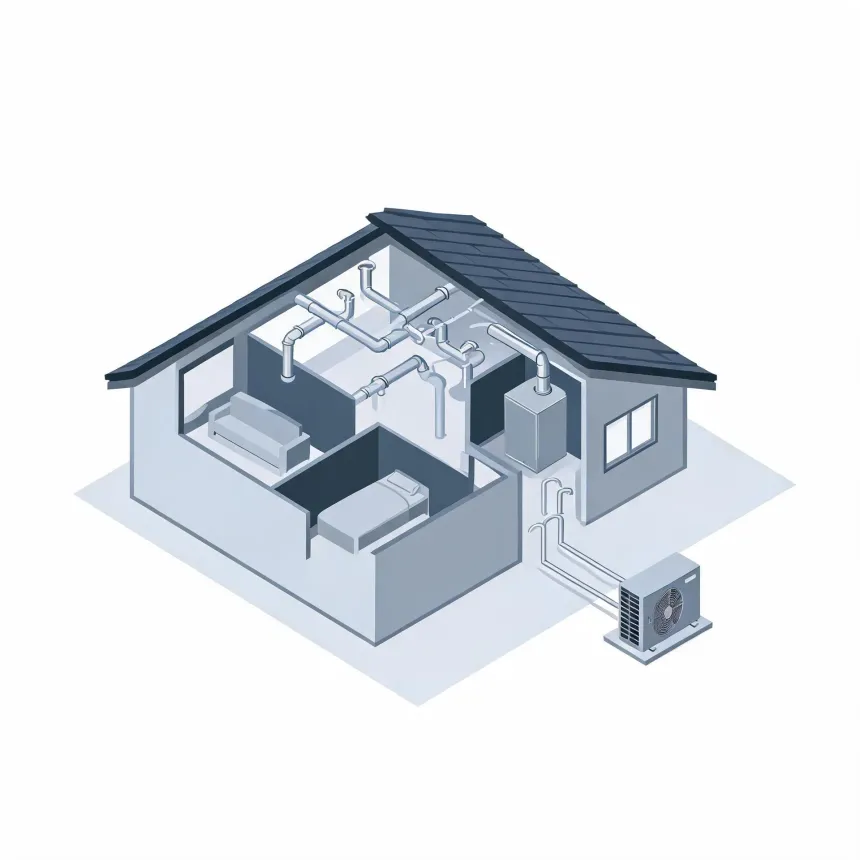
Isometric cutaway illustration of a small house showing ducted air distribution, an indoor air handler, and an outdoor condenser unit connected by lines, with a sofa and bed in the rooms.
Your system heats October through May and cools June through August.

NOAA nClimDiv, 1991–2020 normals

A compressor failure on an old heat pump is the point where most homeowners start asking about replacement instead of repair.

If the system is old enough that other parts are starting to wear too, putting a new compressor in it is money spent on a machine that's still failing around it.

Bergen County sees its share of storms and outages, but that's not why your heat pump quit

246 severe weather events from 2015 to 2024
11% of homes statewide lost power a day or more in 2024
155 damaging wind events from 2015 to 2024

The clearest sign is a heat pump that runs constantly without ever hitting the temperature you set. That usually points to low refrigerant or a reversing valve that isn't switching cleanly between heating and cooling. Short cycling, where it kicks on and off in quick bursts, points a different direction, often a failing capacitor or a thermostat sending bad signals. Ice building up on the outdoor unit in mild weather is also worth paying attention to. Some frost is normal during a defrost cycle, but a coil that stays frozen over means the defrost board or a sensor has stopped doing its job. If the air coming out of the vents feels barely warm, or barely cool, rather than off entirely, that's usually the compressor losing strength rather than a total failure.

A heat pump working harder than it should costs you every month it runs

Electricity in New Jersey ran 19.34 cents per kilowatt-hour in 2024, and a heat pump that's struggling draws more of it just to fall short of the temperature you set. A reversing valve stuck halfway or a coil icing over doesn't fail quietly, it runs longer and harder trying to compensate. Getting the actual cause found now keeps that from showing up on every bill between here and the next change of season.

Find a contractor
A dark gray heat pump unit mounted on a concrete pad next to a house with gray siding and a stone veneer wall.

An old heat pump and an old house often fail together

Half the homes in Bergen County were built in 1960 or earlier. If yours is one of them, and the heat pump came with the house or replaced one that did, it's probably closer to the end of its life than the middle. Compressors and coils wear out over the years, not all at once. A repair is worth paying for only if there's real life left in the system afterward. Ask whoever comes out to look at it how many more years this one has in it before you commit to the fix.

A weak compressor gets weaker if it keeps running

A compressor low on refrigerant or losing its seal still runs when you turn the system on, but every hour it runs in that state adds wear that a healthy compressor would never see. It's working harder to move refrigerant that isn't there in the right amount. That strain shortens what's left of its life, and a problem that started as a repair can turn into a replacement just by being left alone through a few more cycles.
A frozen coil needs the system off, not pushed harder

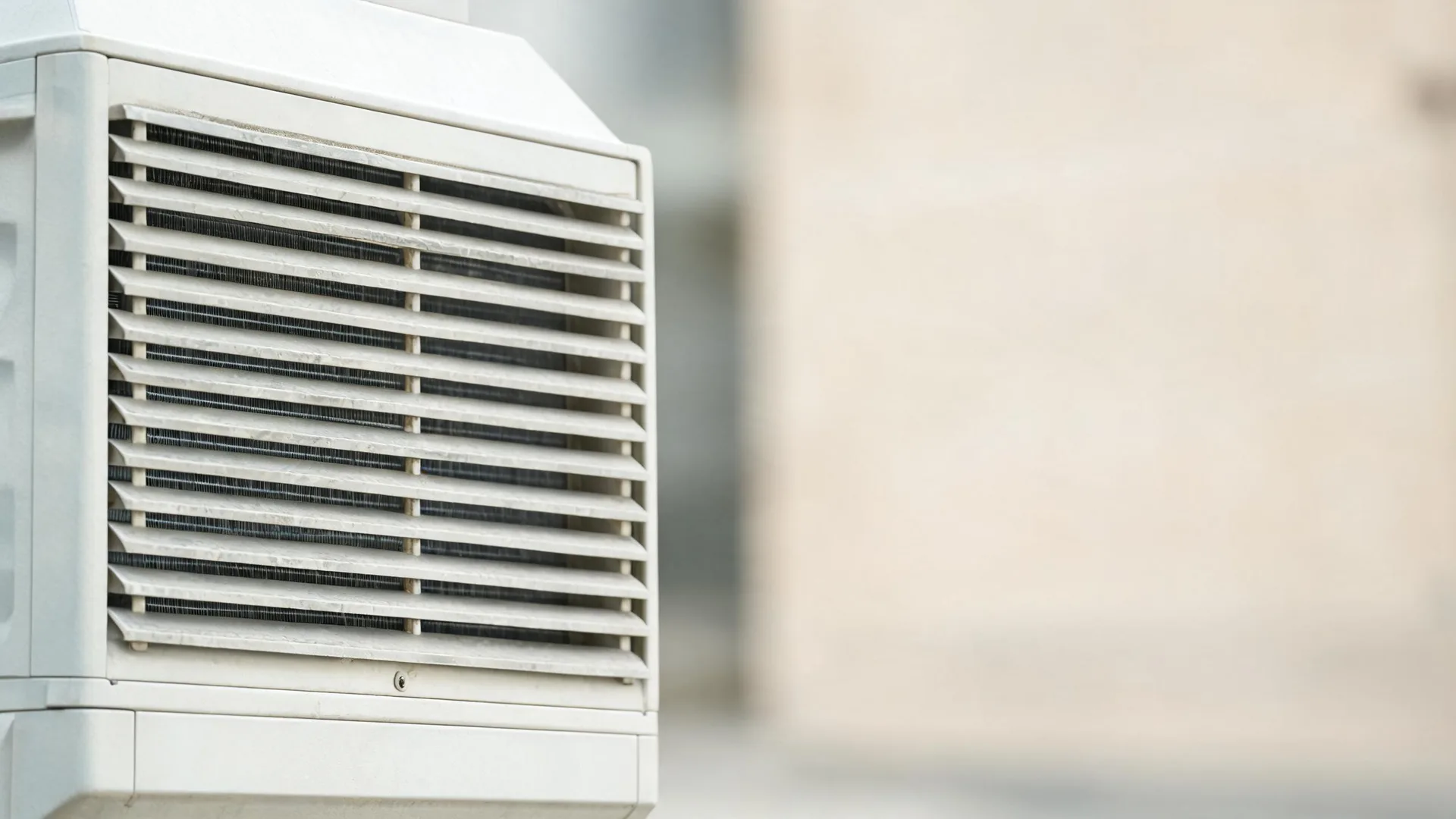
Once a coil ices over, running the heat pump longer doesn't melt the ice, it buries the coil under more of it. Airflow drops, the system pulls harder to move heat through the ice, and parts that depend on steady airflow start running hotter than they should. Shutting it down and letting the coil clear, or having someone find out why defrost isn't kicking in, stops that cycle before something downstream gets damaged too.

Before anyone comes out, there's a few things worth checking yourself. Look at the outdoor unit and clear away anything piled against it, leaves, a fallen branch, anything blocking airflow into the coil. Check the thermostat is actually set to heat or cool as needed, and that the batteries in it aren't dying, because a thermostat with weak batteries can send bad signals without warning you first. Go to the breaker panel and see if the breaker for the heat pump has tripped. If the filter hasn't been changed in a while, swap it, since a clogged filter starves the whole system of airflow and can mimic a much bigger problem. None of that fixes a bad compressor or a stuck reversing valve, but it rules out the simple stuff before you pay someone to find it for you.

A diagnostic visit starts outside, at the unit itself, before anything gets taken apart. The tech checks refrigerant pressure, because low pressure points to a leak somewhere in the lines or coil. They'll run the system through a full cycle, watching whether the reversing valve actually switches between heating and cooling or just hangs halfway. Electrical connections get checked too, since a loose or corroded wire can cause the same short cycling a bad capacitor does. Airflow gets tested at the vents, because weak airflow can come from a dirty filter, a failing blower motor, or a coil that's partly frozen, and each of those needs a different fix. By the end, the point isn't just naming what's broken, it's telling you whether that part is worth replacing on a system this old or whether it's the first of several things about to go.