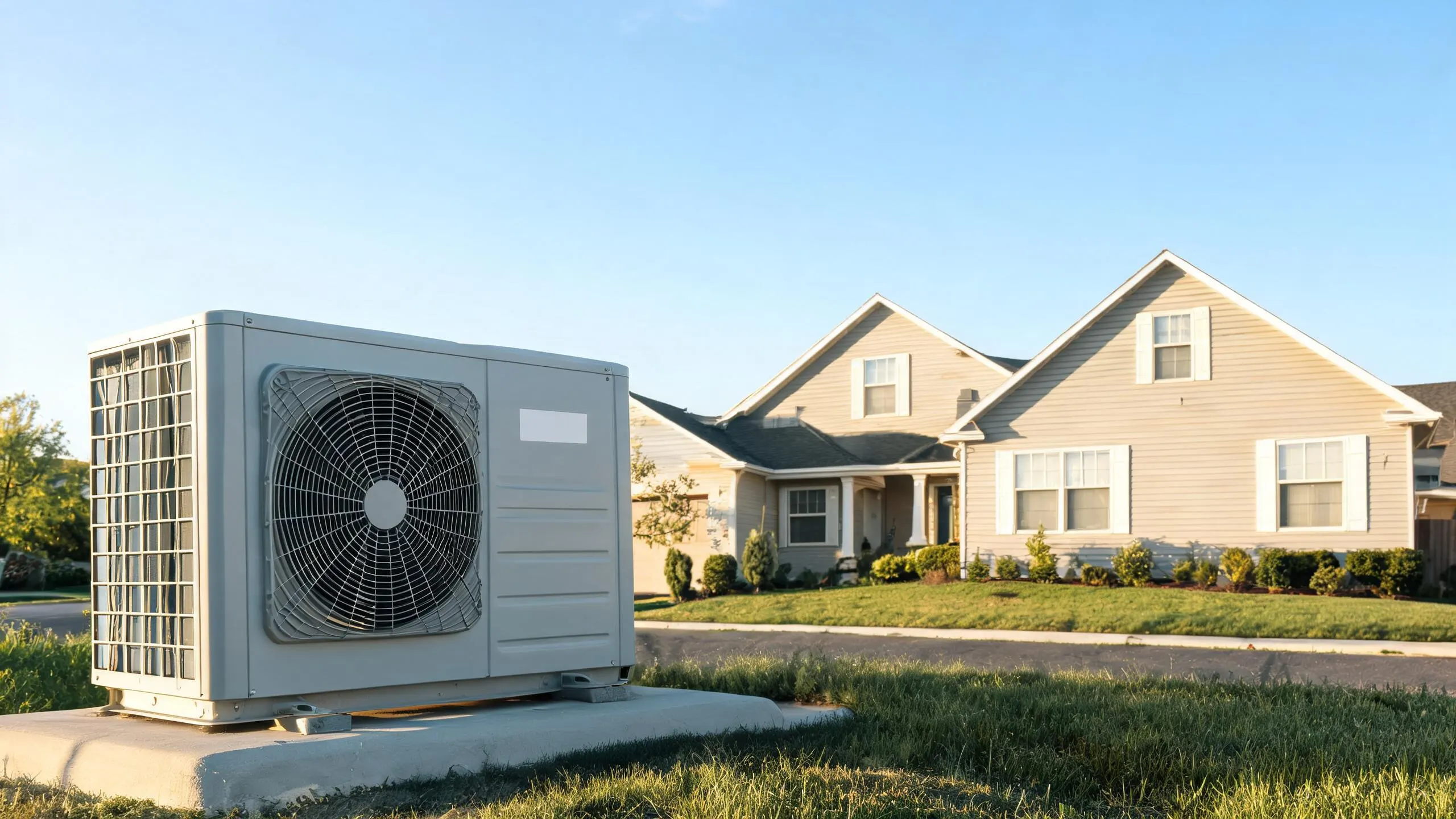






An outdoor heat pump unit mounted on a concrete pad in front of a two-story suburban house.

Heat Pump Repair in Glassboro, NJ

Tell us about the job

Takes about a minute. No obligation.

RepairHeat PumpGloucester County, NJ
Step 1 of 2

What ZIP code is the job in?

A heat pump in Gloucester County works both sides of the year, heating and cooling, in a climate that counts as mixed under the 2021 energy code. That's real work, but it's not extreme. Winter lows average 28°F overnight across December, January and February, which is cold enough to matter but far from the hardest conditions a heat pump handles elsewhere. There's no brutal summer heat pushing it past its limits either. A unit that isn't fighting extremes tends to hold up better over time, so when something does go wrong here, it's usually a specific problem worth fixing rather than a sign the whole system is worn out.

7 months
October through April, your system heats
4 months
June through September, it cools
28°F
the average winter night it heats against
85°F
the average summer afternoon it cools against
Isometric cutaway illustration of a single-story house with a dark gabled roof, showing interior rooms with ductwork leading to an indoor air handler and an outdoor condenser unit connected by lines on the ground outside.
Your system heats October through April and cools June through September.

NOAA nClimDiv, 1991–2020 normals

Half the homes in Gloucester County were built in 1980 or later.

A heat pump in a newer Gloucester County home still has years ahead of it, which is why a repair is usually the right call.

At 19.34 cents a kilowatt-hour, a heat pump running wrong is a cost you feel every month

Power costs 19.34 cents a kWh statewide
140 damaging wind events from 2015 to 2024
9 hail events from 2015 to 2024
Called out before the cold sets inHeat here starts in October, so September is when a weak heat pump gets found out.

The age of the unit matters more than the age of the breakdown. A compressor or reversing valve failure on an old system is a different call than a capacitor or a defrost sensor going out on one that still has plenty of life in it. Ask what's actually failed before deciding anything. Some parts, like a run capacitor or a contactor, are cheap and quick to swap and bring the system right back to normal. Others, like the compressor, are expensive enough that a tech will usually walk you through whether it's worth it on a system that old. A heat pump that short cycles, blows air that isn't warm enough, or won't switch between heating and cooling is telling you something specific broke, not that the whole unit quit. Get the diagnosis first. That's what tells you whether you're looking at a repair or a harder decision.

A specific part failed. Get it found and fixed.

A heat pump that isn't fighting extreme heat or extreme cold all year holds up well, and that's the case here. When one in Gloucester County breaks, it's almost always one part, not the whole system. Get it looked at and find out which.

Find a contractor
A gray heat pump condenser unit mounted on a concrete pad against the gray lap-siding exterior wall of a house.

What actually gives out

A heat pump switches between heating and cooling by reversing the flow of refrigerant, and that reversing valve is one of the first things to wear out since it's working every time the system changes direction. The defrost cycle is another weak point. In heating mode the outdoor coil can ice up, and a bad defrost sensor or control board leaves frost building until the coil can't pull in any heat at all. The capacitor that starts the compressor and fans weakens with every start-up over the years until it can't kick the motor over anymore, which shows up as a unit that hums but doesn't start, or one that short cycles. Low refrigerant from a slow leak shows up as ice on the lines or heat that never feels quite warm enough. None of these mean the system is at the end of its life. They mean one part did what parts eventually do.

Check the thermostat first

Set it to heat and push the temperature well above room temperature, then listen for the outdoor unit to kick on. If nothing happens, make sure it's set to heat and not fan only, and swap the batteries if it uses them. This rules out a setting before anyone assumes a part failed.
Look at the outdoor unit and the filter

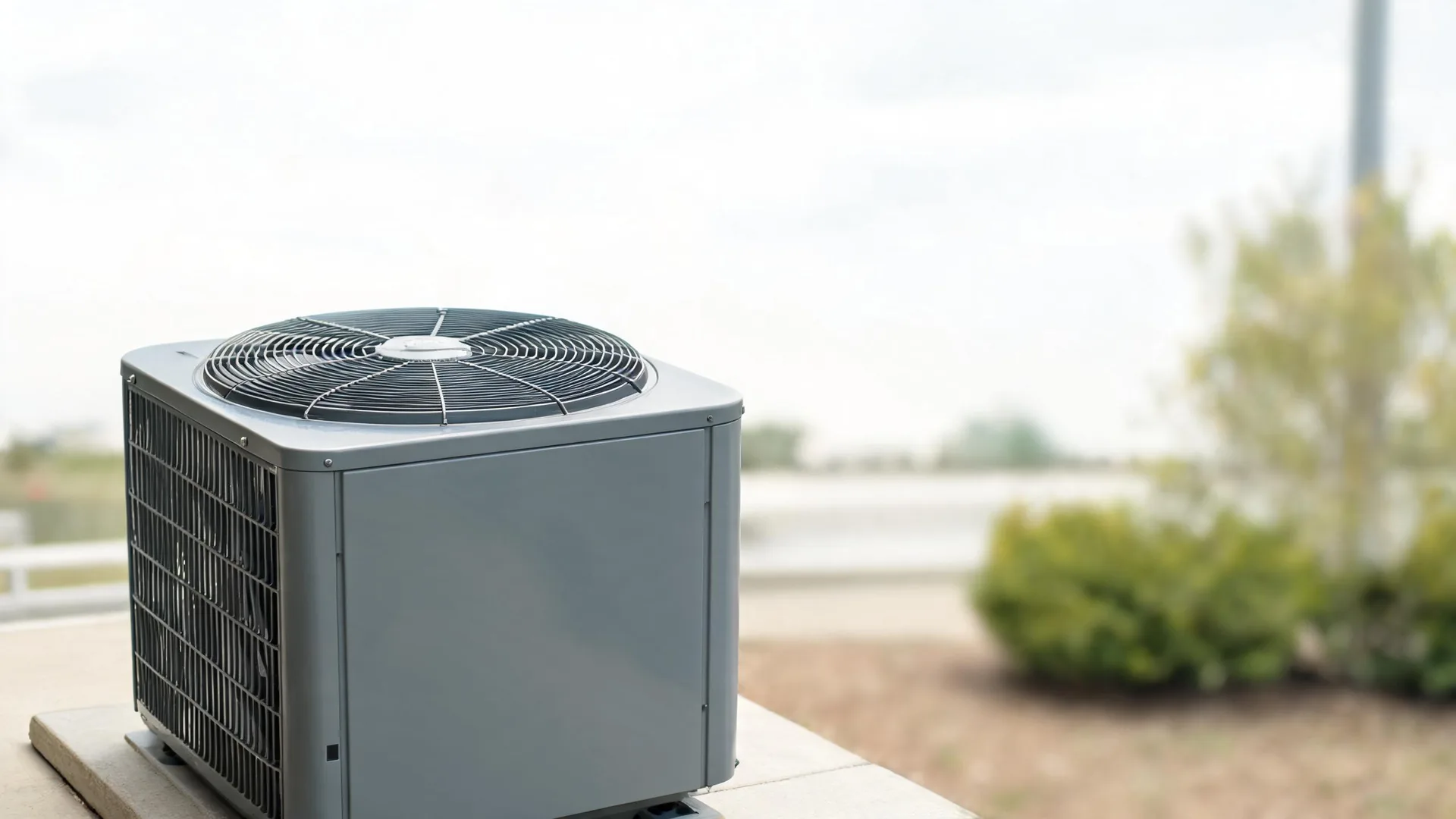
Walk outside and see if the coil is caked in ice or buried in leaves and debris. Then pull the filter and hold it up to light. A clogged filter starves the system of airflow and can look exactly like a failing part, so it's worth ruling out first.

A heat pump that's struggling doesn't fix itself by staying on. If the outdoor coil is icing over, running longer only builds more frost, and the system loses what little heat it was pulling in. A weak capacitor forces the compressor to draw harder on every start, and that strain on the motor windings is what finally takes the compressor out with it. Low refrigerant works the same way. The compressor keeps trying to move a full cycle of refrigerant through a system that doesn't have enough, and that's what burns it out over time. A system that's short cycling or icing up needs to come off, not keep trying.

Most calls start with the air coming out not feeling warm, even though the unit is running. That points to low refrigerant or a reversing valve stuck partway between modes. Some units cycle on and off every few minutes instead of running a normal stretch, which usually means a failing capacitor or a thermostat sensor feeding it bad information. Others run constantly and still can't hold the temperature, which happens when the outdoor coil is iced over and can't pull in heat no matter how long the compressor works. A unit that's gone completely silent, no hum, no fan, is often simpler than it seems, a tripped breaker or a blown fuse before it's anything inside the cabinet. Any grinding, clicking or buzzing is worth mentioning to whoever comes out, since that sound usually points straight at the part making it.