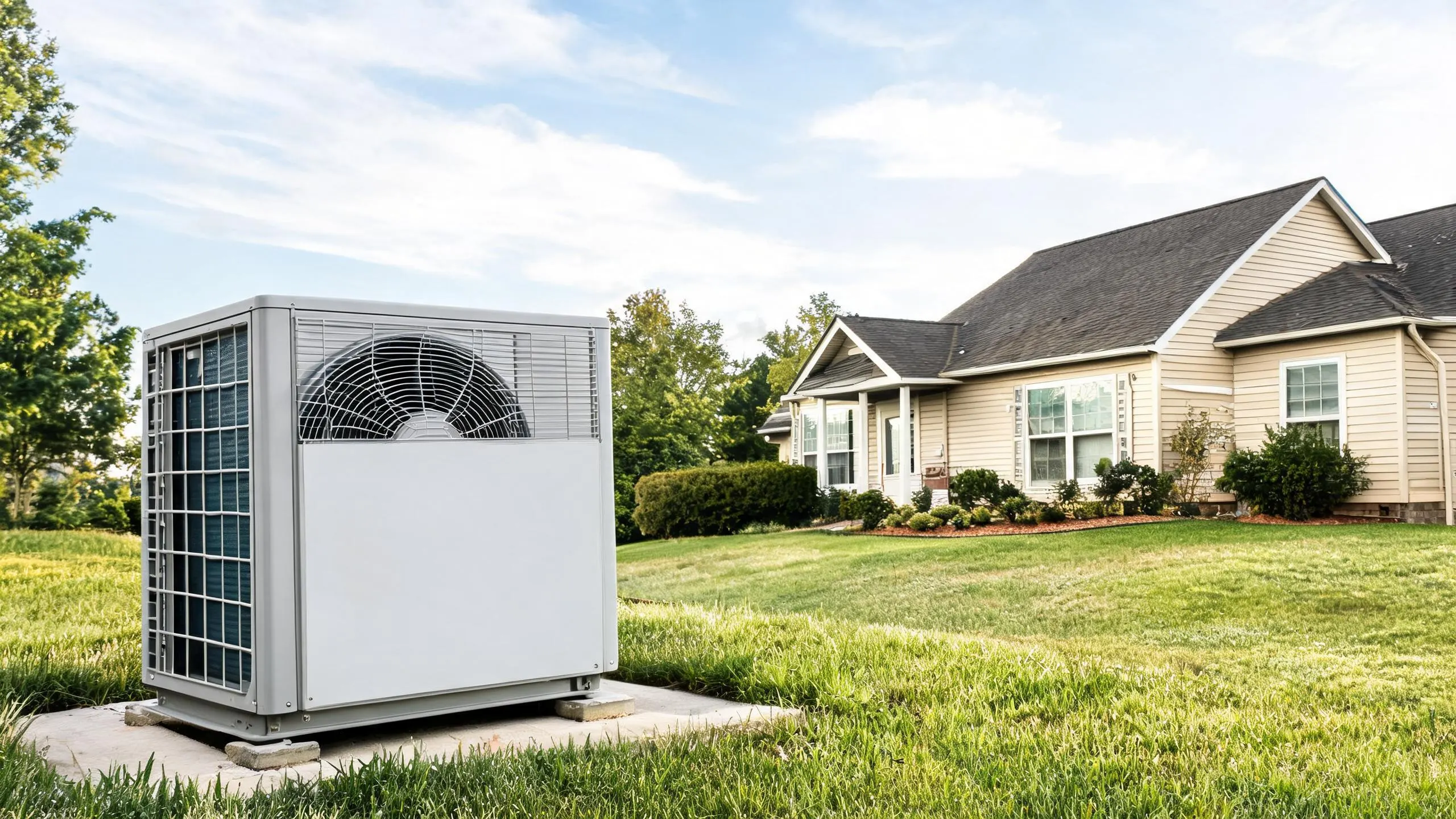
An outdoor heat pump unit mounted on a concrete pad in front of a single-story suburban house with beige siding.

Heat Pump Repair in Camden, NJ

Tell us about the job

Takes about a minute. No obligation.

RepairHeat PumpCamden County, NJ
Step 1 of 2

What ZIP code is the job in?

The first cold mornings find the weak spot

A heat pump in Camden County switches over to heat in October after months of running cooling or sitting idle. Whatever was already marginal, a low charge, a worn contactor, a weak run capacitor, tends to give out right at that switch, not in the middle of winter.

This machine runs seven months straight after that

Once heat starts in October it keeps running through April. A repair put off at the start gets harder to live with every week after, since the heat pump is not shutting off long enough to make the problem easy to ignore.

7 months
October through April, your system heats
4 months
June through September, it cools
27°F
the average winter night it heats against
85°F
the average summer afternoon it cools against
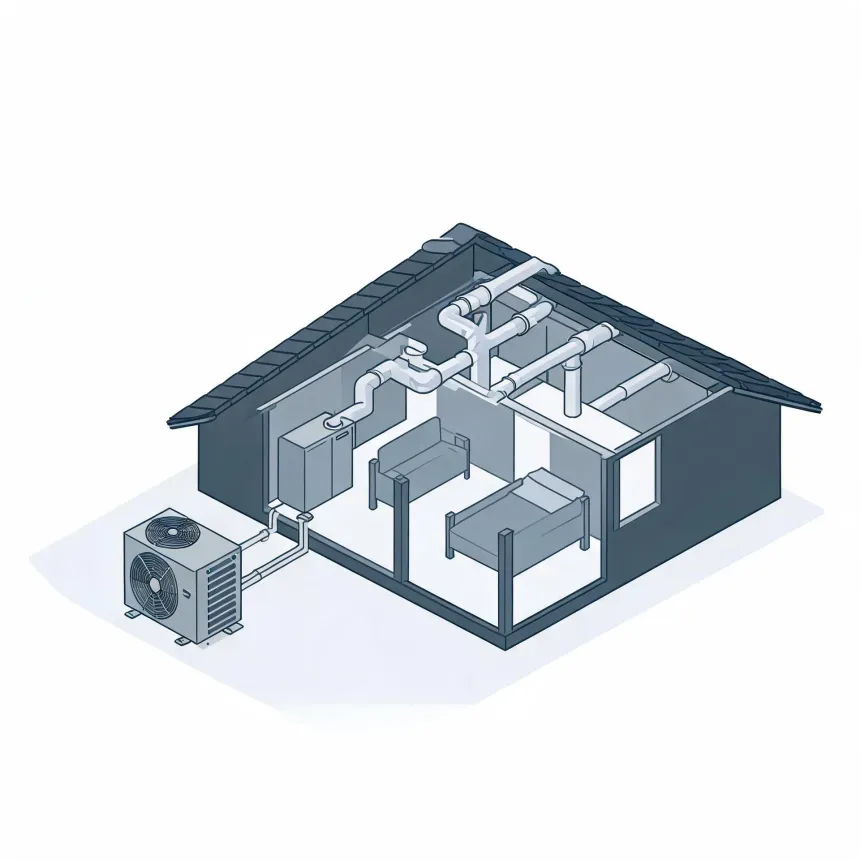
Isometric cutaway illustration of a house showing interior ductwork, an indoor air handler, and beds, with an outdoor condenser unit connected by lines outside the wall.
Your system heats October through April and cools June through September.

NOAA nClimDiv, 1991–2020 normals

Camden County winters bring overnight lows around 27 degrees on average.

A struggling heat pump shows it fastest on the coldest nights of the year.

A heat pump that's struggling costs more here to leave broken

Power costs 19.34 cents a kWh statewide
225 damaging wind events from 2015 to 2024
28 hail events from 2015 to 2024

Electricity here runs 19.34 cents per kilowatthour, higher than most of the country, and a heat pump losing charge or running on a weak capacitor pulls harder for the same heat. That difference shows up on the power bill long before the unit quits altogether. Since this machine runs for months without much of a break once it switches to heat, a repair put off now gets paid for every day it waits. Have it looked at while it is still a repair and not a replacement.

Before you pay for this repair, ask how much life the unit has left

Half the homes in Camden County were built in 1967 or earlier. If your heat pump is the one that came with the house, it has likely been running a long time already. A repair is worth it on a unit with years left. Before you pay for one, ask how much life this unit has left.

Find a contractor
A man seen from behind carrying a worn canvas tool bag walks up concrete steps toward a dark teal front door of a house with gray horizontal siding, beside a shrub in a blue ceramic pot.
A dark gray heat pump unit mounted on a concrete pad next to a house with gray siding and a stone veneer wall.

The nameplate settles it faster than guessing

A nameplate on the unit gives the install year, if it's still the original. That's a faster answer than guessing from the house. A contractor checking the repair can read it in the same visit, before any parts get ordered.

A refrigerant leak doesn't hold steady

A heat pump low on charge keeps running, but the compressor has to work harder to move heat with less refrigerant doing the job. That extra strain is what wears it out early. The leak doesn't get smaller because the unit kept running. It gets ignored until the compressor is the problem instead of the charge.

A failing part drags the rest down with it

A weak capacitor makes the compressor start hard every cycle instead of starting clean. Each hard start wears the compressor a little more. Left alone, a bad capacitor doesn't stay its own small problem. It takes the compressor down with it, and the compressor is what the rest of the system depends on.

Most heat pump failures trace back to a handful of parts. The reversing valve is one. It's what switches the system between heating and cooling, and when it sticks, the unit keeps running but stops putting out the right air. The defrost control is another. It's supposed to melt off the ice that builds up on the outdoor coil in cold weather, and when it fails, that ice keeps building until the coil can't pull in heat at all. Capacitors and contactors wear out from the plain number of times they cycle on and off, season after season. None of these announce themselves with a dead system. The unit keeps running, worse every week, which is why they often go unnoticed until something bigger fails alongside them.

A diagnostic visit starts with questions. When did it start, what changes have you noticed, is it still heating at all or just struggling to keep up. Then the contractor checks the obvious things first. Airflow at the vents. The thermostat settings. Whether the outdoor unit is iced over or blocked. After that it's gauges and meters. Refrigerant pressure shows whether the charge is low. A meter on the capacitor shows whether it's still holding the rating it's supposed to. The reversing valve gets checked by watching whether the system actually switches when it's told to. None of this is guesswork. Each test points to a part or rules it out, and by the end the contractor knows which part is failing and why, not just that something is wrong.