






A row of illuminated white colonial houses photographed at twilight along a tree-lined road with a stone wall in the foreground.

Heat Pump Repair in Burlington, NJ

Tell us about the job

Takes about a minute. No obligation.

RepairHeat PumpBurlington County, NJ
Step 1 of 2

What ZIP code is the job in?

Winters here average 27 degrees overnight through December, January and February, cold enough that a heat pump runs most of the day to keep up. Summers ask real work of it too. None of that is unusual for a heat pump, and it doesn't point to anything wrong with yours. If it's blowing cold air in heating mode, short cycling, or running nonstop without getting the house to temperature, that's a specific problem with a specific cause, like a refrigerant leak, a failing reversing valve, or a thermostat that's lost its calibration. A contractor can check which one it is rather than guessing.

7 months
October through April, your system heats
4 months
June through September, it cools
27°F
the average winter night it heats against
85°F
the average summer afternoon it cools against
Isometric grayscale illustration of a cutaway two-story house showing interior ductwork, an indoor air handler unit, and an outdoor condenser unit on a pad beside the building.
Your system heats October through April and cools June through September.

NOAA nClimDiv, 1991–2020 normals

Heat pumps here run heat from October through April and cooling from June through September.

September and May are when a weak part finally gets tested, right before the season needs it most.

Older homes, more storms, same heat pump problems

Half the homes here were built by 1977
405 damaging wind events from 2015 to 2024
57 hail events from 2015 to 2024

A compressor is the part worth asking about first. If a contractor finds that one failing, replacement is usually the better call, since it drives the cost of the whole repair and isn't cheap on its own to swap out. A bad capacitor, a failed defrost board, or a stuck reversing valve are a different story. Those get fixed on their own without touching the compressor, and a heat pump that's otherwise sound can run a long time after. Age matters too, but less than how the rest of the system has held up. A unit that's been serviced regularly and kept clean can be worth repairing well past the point where a neglected one isn't.

A heat pump running wrong costs you every day it's not fixed

New Jersey runs 19.34 cents per kilowatthour, among the higher rates in the country. A heat pump that's short cycling or running nonstop is drawing power the whole time it struggles to catch up. Find the part causing it and the fix is usually straightforward.

Find a contractor
A man in a navy shirt, tan work pants and a cap, seen from behind, climbs porch steps toward a dark teal front door while carrying a canvas tool bag.
A white mini-split heat pump outdoor unit mounted on a concrete pad beside a gray-sided house, surrounded by gravel and green shrubs.

Running through it doesn't fix it

A heat pump that's struggling still runs, and that's what makes it easy to put off. A refrigerant leak gets worse because the compressor keeps trying to move a full charge of refrigerant that isn't there anymore, and it wears against metal it was never built to touch. A failing reversing valve left alone can stick in one position, and then the system can't switch between heating and cooling at all. Weak electrical parts, like a contactor with pitted contacts or a capacitor losing its charge, make the compressor pull harder to start each cycle, and that strain shortens its life. None of this fixes itself by running longer. The part causing the problem is doing less work than it should, and everything downstream of it is doing more.

What you'll actually notice first

Air from the vents that isn't warm in heating mode, or isn't cool in summer. A unit that shuts off a few minutes after starting, then kicks back on again and again. One that runs without stopping and still can't get the house to the temperature on the thermostat. Ice on the outdoor unit when the weather doesn't call for it. Each of these points to one part not doing its job. It doesn't mean the whole system is done.
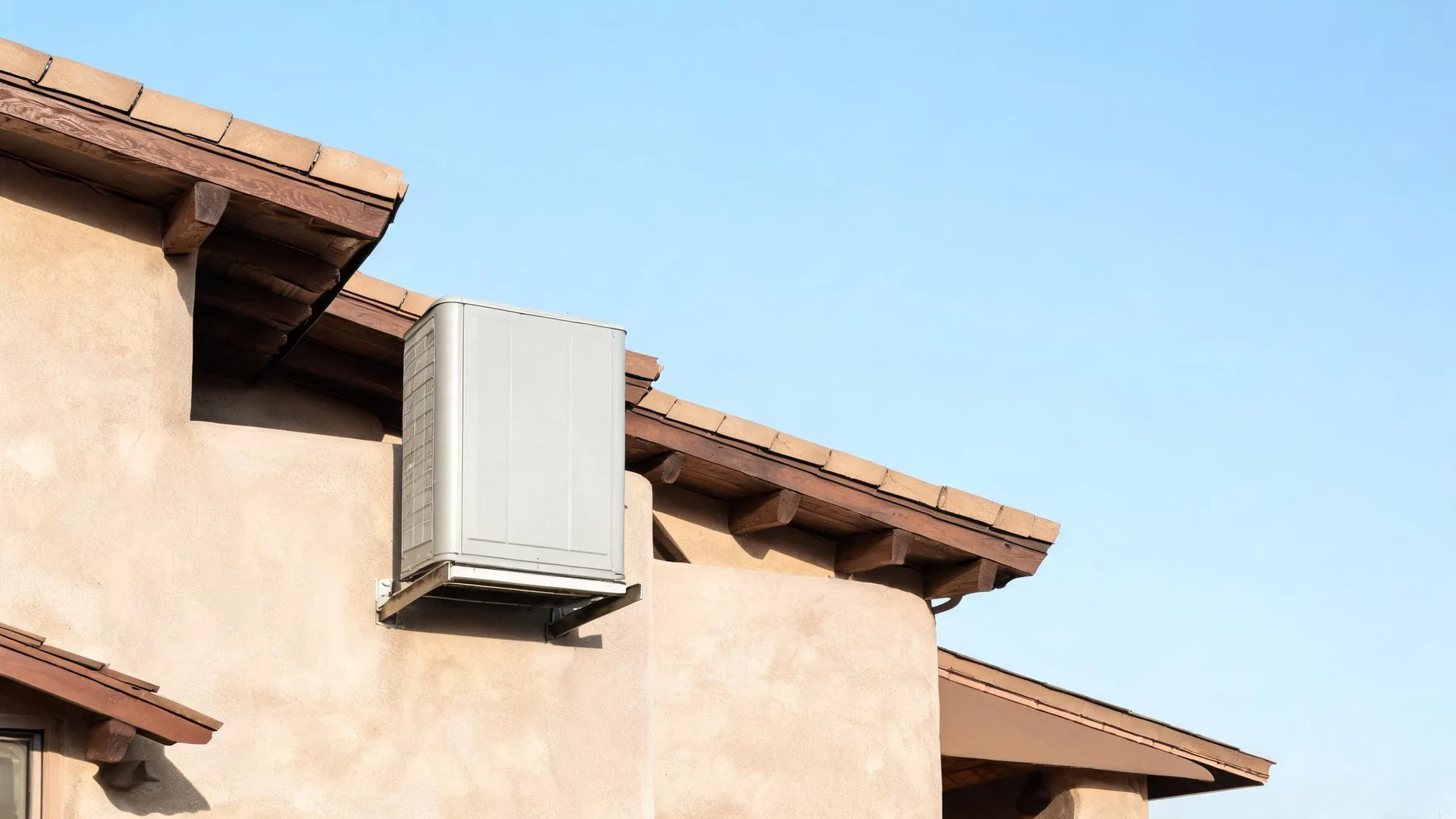
What to tell the contractor

Say which mode it happens in, heating or cooling. Say whether the outdoor unit has ice on it and whether the air coming from the vents feels off or just weak. Say how often it's cycling on and off. Those details point toward a reversing valve, a refrigerant leak, or a failing sensor, instead of leaving the contractor to start from nothing. A heat pump doing any of this is still running, so there's usually time to get it looked at before it stops altogether.

A few things are worth checking before anyone comes out. Start with the thermostat. Make sure it's set to heat or cool as the season calls for, and that the temperature is actually set above or below the room, since a setting bumped by accident looks exactly like a failed system. Check the air filter next. A filter clogged with dust chokes airflow across the indoor coil, and that alone can cause weak air, ice on the coil, or a unit that runs without ever catching up. Walk outside and look at the outdoor unit. Leaves, mulch, or anything piled against it blocks airflow the same way a dirty filter does, and it clears by hand. Check the breaker panel too. A heat pump that won't start at all sometimes just needs a tripped breaker reset. If the filter is clean, the outdoor unit is clear, and the thermostat is set right, the problem is inside the system itself, and that's the point to call someone instead of testing it further.

A contractor starts by asking questions before any panel comes off. When does the problem show up. Is it in heating or cooling. Is it constant or only sometimes. Then come the gauges. Checking refrigerant pressure shows whether the charge is full or low, and a low charge means there's a leak that has to be found, not just topped off again. The electrical parts get tested next. The capacitor, the contactor, the defrost board each get checked against what they should read rather than guessed at. The reversing valve gets checked too, since a heat pump stuck in one mode often comes down to that valve not shifting when it's told to. By the end, a contractor should be able to point to the one part causing the trouble and explain what it takes to fix it.