







Aerial view of a square outdoor air conditioning condenser unit on a concrete pad beside a house wall with a sliding glass door.

AC Repair in Jersey City, NJ

Tell us about the job

Takes about a minute. No obligation.

RepairCentral ACHudson County, NJ
Step 1 of 2

What ZIP code is the job in?

Summers here run about four months, June through September, with afternoon highs averaging 84 degrees. That's steady work for an air conditioner but nothing extreme. A unit that's sized right and kept up should get through that stretch without drama. When one starts short cycling, blows warm air, or trips its breaker, the cause is usually ordinary. A dirty filter can choke off airflow. The refrigerant charge can run low. A capacitor can fail. The coil can ice over. A contractor can check which one it is and tell you whether it's worth fixing.

4 months
June through September, your air conditioner is on duty
84°F
the average summer afternoon it cools against
35 wind events
in ten years, and wind drives debris into outdoor units
Isometric grey illustration of a cutaway single-story house showing interior rooms, ceiling ductwork connected to an indoor air handler, and an outdoor condenser unit linked by lines outside the wall.
Your air conditioner works hardest from June through August.

NOAA nClimDiv, 1991–2020 normals

June is when Jersey City AC systems go back to work after sitting idle since September.

May is the month to get a weak capacitor or low charge found, before the first hot week finds it instead.

Half the homes in Jersey City were built in 1966 or earlier

Half the homes here were built by 1966
Cooling runs June through September
Summer afternoons average 84°F
Electricity in New Jersey isn't cheapHomes here paid 19.34 cents per kilowatthour in 2024, so a struggling AC runs up a bigger bill every month it goes unfixed.

If your AC came with a house built that long ago, ask the contractor one more thing while they're there. Find out how much life is left in the unit itself. A repair makes sense if the fix is simple and the system has years left. It makes less sense if you're patching an old unit that's already near the end. Either way, you want that answer before you pay for the repair, not after.

A broken AC costs you every month it runs unfixed

At 19.34 cents a kilowatthour, a unit that's low on charge or short cycling adds to the bill every day it runs that way. Have it looked at and fixed now instead of paying for the problem all summer.

Find a contractor
A man in a dark shirt and tan pants carries a canvas tool bag up concrete steps toward a teal front door of a house with light horizontal siding and a potted shrub.
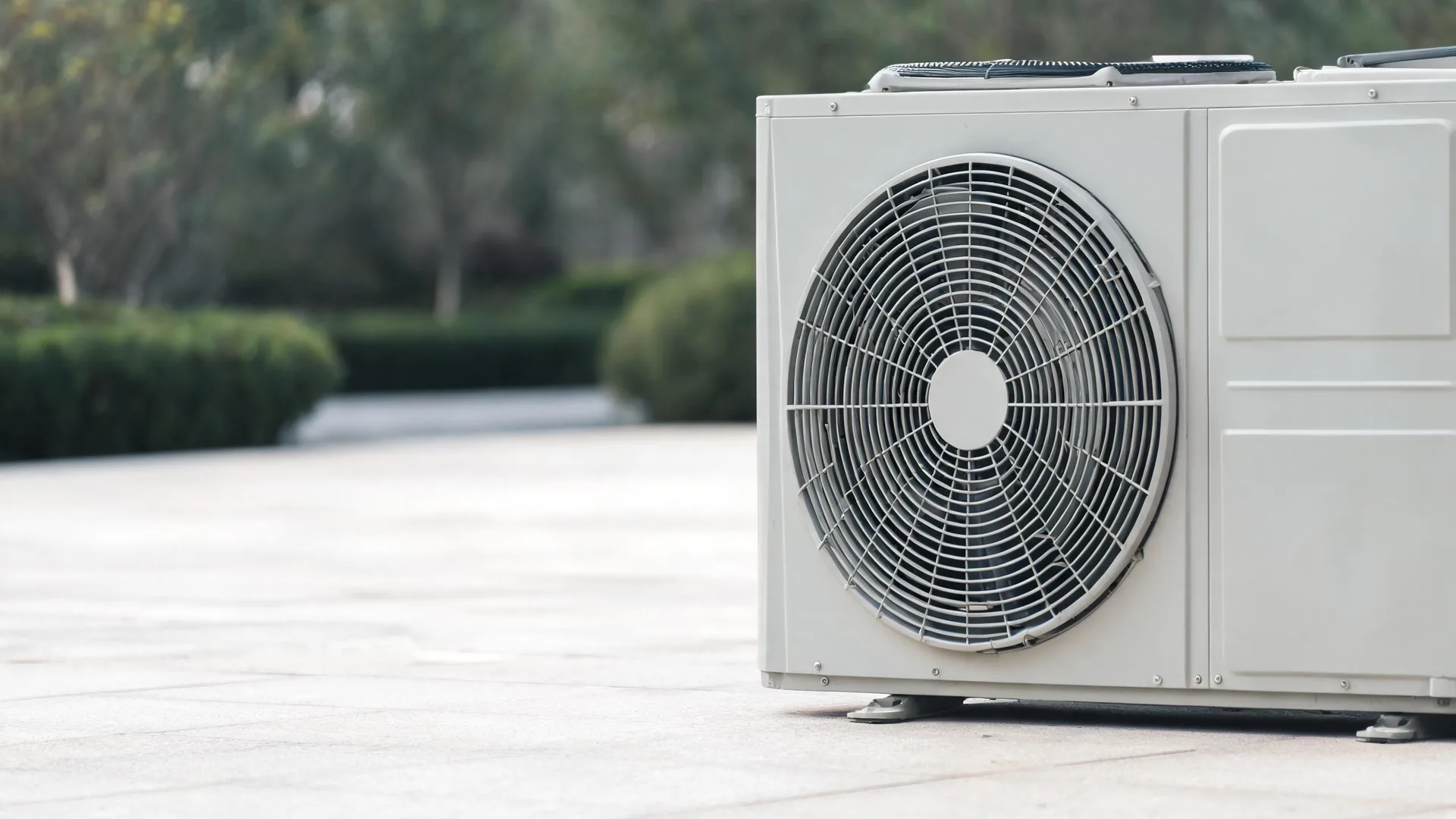
A gray cylindrical air conditioning condenser unit mounted on a concrete pad next to a light-colored vinyl-sided house exterior.

What to check before you pick up the phone

Start at the thermostat. Set it a few degrees below room temperature and listen for the system to kick on. If it does, walk outside and check whether the fan is spinning and air is moving off the coil. Pull the filter and hold it up to a light. If you can't see light through it, that's choking the airflow, and a clean filter might be the whole fix. Walk the house and check that vents aren't blocked by furniture or shut all the way, since closing off too many forces the system to work against itself. If you see ice on the indoor coil or the line running outside, shut the system off and let it thaw before anyone touches it again. Running it iced up stresses the compressor. Check the breaker too. If it's tripped, reset it once. If it trips again, stop there and let a contractor look at it, since a breaker that won't hold usually means a short, not something to force. Notice whether the fan runs steady or cycles on and off fast, and whether you catch any odd smell when it's running. That's worth telling the contractor before they even open the unit up.

A low charge gets worse, not better

A system low on refrigerant makes the compressor work harder to move heat. That extra strain shows up as heat, and heat is what wears a compressor down. Keep running it low and the compressor can fail outright, turning a repair into a full replacement.

Ice on the coil is a reason to shut it off

Once the indoor coil starts icing, less air gets past it, so the system cools even less and ices further. Left running, that ice can work down into the compressor itself and cause damage that has nothing to do with whatever started the problem.

Aerial view of a gray central air conditioning condenser unit on a concrete pad next to a house with vinyl siding.

A new air conditioner would cut about $30 a year off cooling for a typical Hudson County home.

  • A new one at the federal minimum, 13.4 SEER2$370 a year
  • An older air conditioner$400 a year

Estimates for a typical Hudson County home, compared with an older unit built to the previous federal minimum, from EIA household energy data, New Jersey fuel prices and NOAA climate normals. Your home will differ.

Repair makes sense when a part like a capacitor or contactor has failed.

Replacement makes sense when the compressor has failed or the system uses R-22 refrigerant, which is no longer made.

A diagnostic starts before the panels come off. A contractor asks what the system was doing, when it started, and whether anything changed right before, since that points them toward a handful of causes instead of all of them. They'll check the thermostat call, confirm the breaker holds, and watch the system start up to see if it struggles or trips. Gauges go on the lines to read the refrigerant charge, because that number says a lot about whether the compressor is under strain. They'll pull the filter, look at the coil for ice or dirt, and check the capacitor and contactor, since those are the parts that wear out and fail on a normal schedule. By the end they can usually tell you which part failed, why, and whether fixing it is worth doing or whether the unit is too far gone to bother.