







When to replace an AC unit in Jersey City, NJ

Your new air conditioner project goes to an installer who works in Hudson County.

Get an air conditioner pro

Most air conditioners in Jersey City last 12 to 15 years, and age is the first thing to check against your unit's condition. After that point, the compressor and coils have worked through more than a decade of humid summers, and wear catches up at once rather than gradually. If your system is in that range and needs a repair this year, replacing it usually makes more sense than fixing it again. Watch for a few other signs too. Rooms that stay warm no matter where you set the thermostat mean the unit can no longer keep up with a Jersey City summer. Short cycles where it shuts off soon after starting point to a unit working harder than it should. A spike in your electric bill with no other explanation often means the system is losing efficiency as it ages. Any one of these on its own is worth a look. Several together, especially in an older unit, usually mean it is time to plan for a new one before next summer.

A gray-haired woman in a dark sweater sits with a blanket on her lap near a window, looking out at autumn-colored trees, in a living room with a sofa, built-in shelves, and a potted plant on a side table.
A woman with long gray hair in a knit sweater sits on a sofa with cushions and a blanket, looking out a large window toward yellow autumn foliage.
A gray-haired woman in a cream knit sweater sits on a light sofa with a blanket, looking out a window toward yellow autumn trees, with a framed picture and potted plant in the background.
An older woman in a cream knit turtleneck sweater sits on a sofa with a blanket, looking out a window with autumn-colored trees outside, in a dimly lit living room with a lamp, framed art, and a patterned rug.

Repair the AC or Replace It

Repair

  • A single part failure, like a failed capacitor or a stuck contactor, on a unit under 10 years old is usually worth fixing.
  • If the compressor and coils are sound, a repair can get you through this summer without a big outlay.
  • A unit still under manufacturer warranty often costs little out of pocket to fix.
  • Repair makes sense if this is the first breakdown you've had, not the third in two summers.
  • If the unit was properly sized for your home when installed, repair keeps a good match in place.

Replace

  • Past 12 to 15 years, the compressor has pushed through a decade of Jersey City's humid summers and is closer to failing for good.
  • A second major repair in a few years usually costs more over time than putting that money toward a new unit.
  • Older units run on R-22 refrigerant, which is no longer produced, so a leak can mean the system can't be recharged at all.
  • A new unit carries a current SEER2 rating, which matters here given how much power costs in New Jersey.
  • If your ductwork or home layout changed since the original install, a replacement lets the new unit get sized correctly.
  • A unit that cycles on and off constantly in July and August is struggling to keep up, even if it hasn't fully failed yet.
  1. Age and repair history get weighed against the cost of a new system

  2. A load calculation sizes the replacement to your house, not just the old unit

  3. The old refrigerant lines and pad get checked before anything new goes in

  4. The new condenser and coil get set, wired, and charged to spec

Is your AC telling you it's done?

You'll likely notice it before you can name it. The house takes longer to cool once the sun's been on it all afternoon. The unit runs almost the whole time on the worst days and the bill reflects it. You might hear a rattle from the outdoor unit that wasn't there last summer, or a hum when it tries to start and doesn't quite catch. Some rooms stay warm no matter how long it runs. Water pooling near the indoor unit means a drain line or coil problem that won't fix itself. Ignore these and the strain usually lands on the compressor, the most expensive part to replace, and a hot stretch in July is a hard time to be without cooling at all.

A gray outdoor air conditioner condenser unit on a concrete pad beside a house with light vinyl siding, with an electrical disconnect box and conduit on the wall and a leafy shrub with dark mulch to the right.

Running the way it should

A condenser like this cycles on, cools the house, and shuts off. The lines and conduit run clean from the unit to the disconnect box. Nothing rattles, nothing trips the breaker, and the pad underneath sits level. A unit in this shape is worth repairing if something does go wrong.

An outdoor air conditioner condenser unit on a concrete pad beside a house with horizontal lap siding, with a gray electrical disconnect box and conduit on the wall and a green shrub over pine-needle mulch at left.

Showing its age

The grille on this one is caked with dirt and worn from years outside. That kind of buildup makes the unit work harder to pull air through the coil. Paired with a system already past 12 to 15 years old, a dirty, weathered cabinet like this is often the sign that replacement makes more sense than another repair.

How does a contractor decide my AC needs replacing, not just a recharge?

How does a contractor decide my AC needs replacing, not just a recharge?

A recharge only fixes the leak's symptom, not the leak itself

A low charge doesn't happen on its own. Refrigerant doesn't get used up the way fuel does, so if the level is low, it's leaving through a crack in the coil or a bad fitting somewhere in the line set. A contractor's job before adding refrigerant is finding where it's getting out. A small fitting leak can often be repaired and the system recharged. A leak in the coil itself is a different matter. Coils corrode from the inside out over years of condensation, and once they're pitted, patching one spot doesn't stop the next. At that point a recharge buys a few months at most, and replacing the coil, or the whole unit if it's old, is what actually holds.

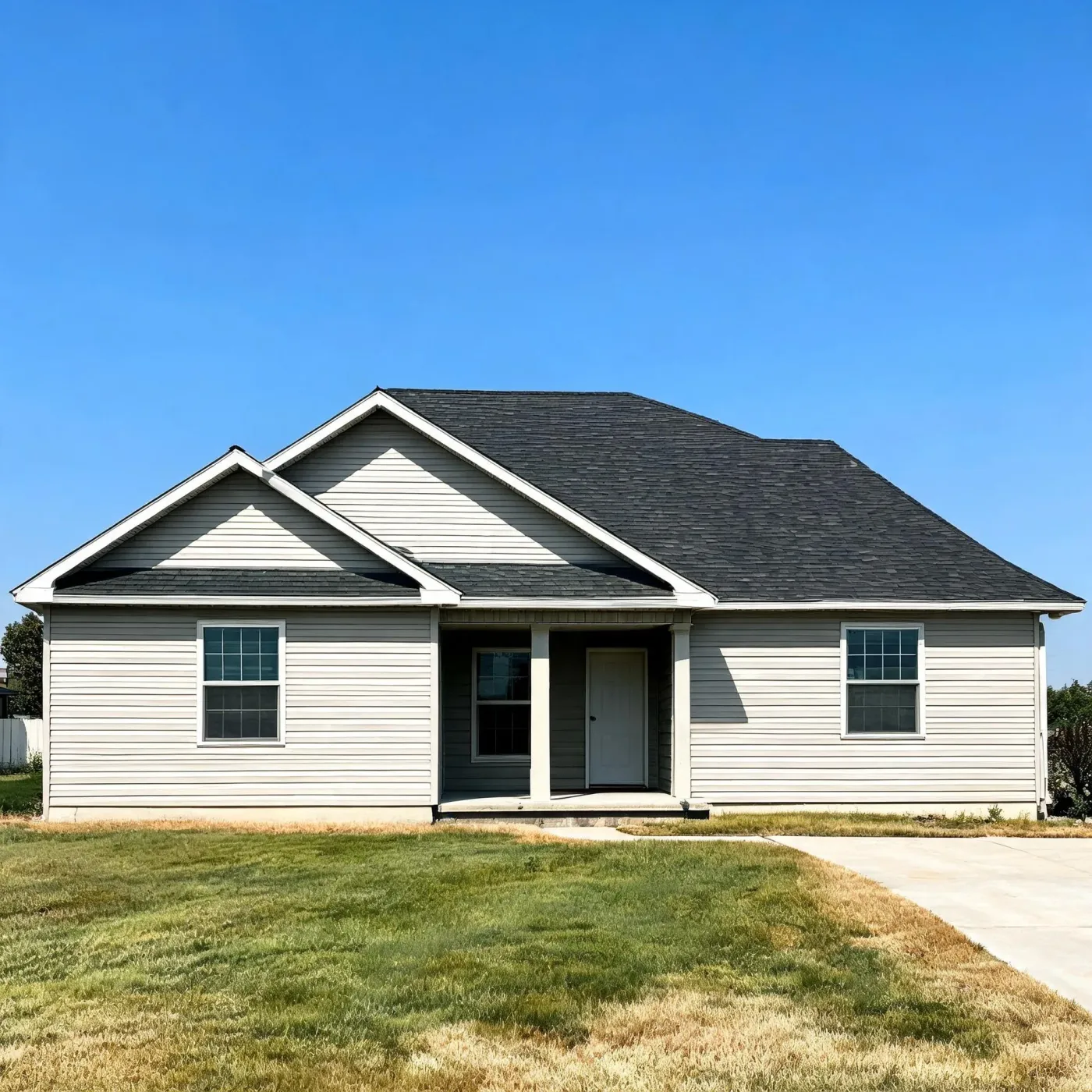
A single-story house with light beige vinyl siding, dark gray gabled shingle roof, a small covered front entry, and two windows, fronted by a patchy green and brown lawn with a concrete driveway at right under a clear blue sky.

A dew point tells you how the air actually feels, not just the temperature reading, and in Hudson County it averages 65°F across June, July and August. That's the sticky range where the air holds onto its moisture instead of letting your AC pull it out easily. The unit has to run longer to wring that moisture out of the air before the house feels dry and comfortable, and an older system with worn coils or a tired compressor falls further behind on days like that. You'll notice it as a house that stays clammy even when the thermostat says it hit the set temperature. A system sized and running right handles this without straining. One that's aging won't, and a contractor matched to your situation can tell you which one you're dealing with.

NASA POWER T2MDEW

Get matched with an air conditioner pro in Hudson County

A fifteen-year-old condenser in Jersey City has already worked through fifteen humid summers, and that kind of history doesn't reverse itself. Once a unit gets old enough that a technician is naming the compressor as a risk, waiting for the next breakdown just means picking the hottest week of the year to deal with it instead of picking your own time. Replacing it now, before the hottest stretch, means someone sizes the new system properly instead of rushing in whatever fits the old pad. It also means you're not without cooling while Hudson County sits in that thick, sticky air for days at a stretch. A contractor can look at your actual unit, its age, its repair history, and tell you plainly whether it's worth fixing or worth replacing. That's a better answer than guessing from how the house feels on a bad afternoon. Getting that answer now, before the system fails outright, is what puts you back in control of the timing instead of the weather.

Why SEER2 matters on replacement

Any new condenser sold today has to meet the current SEER2 minimum, which is higher than what your old unit was built to. That rating measures efficiency, how much cooling you get for the electricity you put in, not how much cooling power the unit has. A contractor sizes the new system to your house with a load calculation, so you end up with a condenser and coil matched to the square footage and layout, not just a same-size swap for what's being pulled out. Since Jersey City runs on some of the most expensive power in the country, a unit that meets the current minimum instead of an old one built to a lower standard changes what the AC draws on a July afternoon.

What the refrigerant switch means

Older systems were built around R-22, a refrigerant that's been phased out of production. If your condenser still runs on it, a leak repair means sourcing refrigerant that's increasingly scarce and priced accordingly, and a contractor will tell you that plainly before touching the lines. New systems run on R-410A, and installing one means the old lines get checked or replaced rather than reused, since the two refrigerants aren't interchangeable in the same coil and lineset. This is part of why a compressor failure on an R-22 unit tends to end the conversation about repair. It isn't just the part, it's what the part runs on.

A woman in a cream knit sweater sits in an armchair with her eyes closed beside a window showing orange autumn foliage, with a lamp behind her and a cup of tea and white flowers on a side table.
An older man with gray hair and a beard, wearing a dark blue fleece zip jacket, leans back in an upholstered chair with his eyes closed in sunlight near large windows, with a potted green plant and bare trees behind him.
A gray outdoor air conditioning condenser unit on a concrete pad beside a house with horizontal lap siding, with a wall-mounted disconnect box and conduit to the left and a green shrub with mulch to the right.
A condenser kept clear like this pulls air through the coil the way it was designed to, so it isn't working harder than it has to.
A dirty outdoor air conditioning condenser unit on a concrete pad beside a house wall with horizontal siding above a painted brick foundation, with a gray electrical disconnect box and conduit on the wall.
Dirt packed into the coil fins blocks airflow, and the unit has to run longer to move the same heat out of your house.

Cooling runs June through September

Four months a year is a lot to ask of a condenser that's already worn. If yours is old enough to worry about, June through September is when that weakness shows up as a breakdown, not a quiet year of standing idle.

NOAA nClimDiv 1991-2020

An outdoor air conditioning condenser unit on a concrete pad beside a house with horizontal lap siding, with an electrical disconnect box and conduit on the wall and a green shrub to the right.

Working the way it should

This condenser sits clean on its pad, disconnect box mounted on the siding with conduit running straight down to it. The louvers are clear and the top grille is open. A unit kept like this moves air freely and shuts off once the house is cooled, instead of running longer than it needs to.

An outdoor air conditioner condenser unit on a concrete pad beside a house with horizontal siding and a lower concrete foundation wall, with coiled refrigerant lines at right.

Worn past its years

Dirt has packed into the louvered panels and the fan grille, and the metal shows real weathering. The refrigerant lines in back are exposed to whatever wear the cabinet itself shows. A condenser that looks like this has usually been struggling for a while before anyone calls about it.

A woman stands in the open doorway of a white stucco house holding the dark door, facing a man in a black cap and shirt seen from behind in the blurred foreground, with a potted flowering plant beside the entry.

Knowing where your AC stands

Age, condition and the summer ahead are what decide this, not any one of them alone. A unit under 10 years old with one bad part is usually worth repairing. A unit past 12 or 15 years, running hard through every humid afternoon, with a contractor already naming the compressor as a concern, is telling you plainly what it needs. You've seen what that looks like in your own house now: the longer runtimes, the higher bill, the sounds that weren't there before.

If you're still unsure which side of that line your unit falls on, that call doesn't have to be yours to make alone. Submitting your information here connects you with a contractor who looks at your specific unit, your house and what you've described, and reaches out to talk through what they find. You stay in your house, cool, while someone else carries the job of figuring out what it needs.

Interior corner of a living room with a beige upholstered armchair holding a textured pillow and throw, a eucalyptus arrangement in a ceramic vase on a wooden table in the foreground, a blurred glass-front cabinet behind, and a potted plant on a sunlit window sill.
A white clapboard house at dusk with a lit pedimented portico, wooden front door, potted ferns, stone walkway, lawn, and illuminated hydrangea shrubs.

Air Conditioner Installation

Find an air conditioner installation pro in Hudson County

New system or replacementCentral ACHudson County, NJ
Step 1 of 2

What ZIP code is the job in?

  • A multi-pane white window looking out on snow-covered evergreen and bare trees, with a ceramic mug, pine cones, a book, a knit blanket and a burlap cushion in the foreground.
    • Get matched with someone who does this kind of work in Hudson County.
    • A local installer who puts in air conditioners gets your project.
  • A cream knit throw and striped pillow on a light upholstered sofa beside a window, with a woven basket of split firewood in the foreground.
    • Send the form and the search for an installer is over.
    • One request and the search for a pro is handled.
  • A weathered wooden bench with a beige cushion and a fringed brown throw sits on a wood-plank porch beside a large planter with a thin-branched shrub, against a light-colored house wall with a dark-framed window.
    • Skip collecting and comparing quotes for the new air conditioner.
    • Skip the round of in-home estimates for a new air conditioner.
  • Exterior of a dark shingle-sided house with a white-trimmed divided-light window, a yellow-leaved tree, trimmed shrubs, and two small pumpkins on a stone pillar cap.
    • A licensed installer who works in Hudson County gets your project.
    • A licensed pro who works in Hudson County gets your request.