


Side profile of a bearded man wearing a faded dark blue baseball cap and a matching dark T-shirt against a plain light gray background.

AC drain line clogging in sticky New Jersey summers

Tune-up, service, or cleaningCentral ACNew Jersey
Step 1 of 2

What ZIP code is the job in?

A clogged AC drain line usually means algae or mold built up inside the condensate line until it blocked the flow completely. Your air conditioner pulls moisture out of the air every time it runs, and in New Jersey it runs hard and long through a muggy summer. All that water drips into a pan and drains out through a narrow plastic line, and the same damp, dark conditions that make the system good at drying your house are perfect for growth inside that line. Once it clogs, the water has nowhere to go. You might see it pooling near the indoor unit, staining the ceiling below an attic system, or the AC may shut itself off because a safety switch senses the backup. Left alone, a clogged line can mean real water damage inside the house, not just a system that stops cooling.

A gray-haired man in a dark coat dusted with snow stands in a warmly lit home entryway, with a lamp, sofa, window and white staircase banister behind him.
An older man with gray hair and a beard, wearing a dark coat dusted with snow and a blue plaid scarf, stands smiling in a dimly lit entryway with a window, framed picture, table lamp and staircase behind him.
A gray-haired, bearded man in a dark winter coat with snow on the shoulders stands in a doorway of a home interior with a lit lamp, framed pictures, a potted plant and a staircase behind him, and an evergreen wreath at the left edge.
A gray-haired man in a dark coat with snow on the shoulders and collar stands smiling in a dimly lit entryway with a paneled front door, lamps, and a framed picture in an adjoining room.

The coil inside your air handler is cold and wet most of the day once summer sets in here, and that combination is exactly what algae needs to grow. The water has somewhere to go, down a PVC line that usually slopes toward a floor drain or outside, but the line itself is the problem. It sits dark and damp for months at a stretch, and whatever grows in there doesn't rinse out on its own. Some setups add a P-trap to the line, which holds a bit of standing water by design, and that standing water is where debris settles and builds fastest. As the buildup narrows the pipe, the pan underneath starts filling quicker than it can drain. Most systems have a float switch sitting right in that pan for this reason. When the water rises past a certain point, the switch shuts the system down rather than letting it overflow onto your floor or ceiling below. That shutoff is doing its job. It just means the clog already happened upstream.

How the Clog Actually Forms

  • Warm, wet air moves across the evaporator coil and condenses into water that drips into a pan underneath.
  • That pan drains through a PVC condensate line, usually running downhill to a floor drain, a drain pan, or straight outside.
  • Algae and mold feed on the constant moisture in that dark, wet line and build up along the inside walls.
  • Once enough buildup narrows the pipe, water backs up into the drain pan faster than it can empty.
  • A float switch sitting in the pan senses the rising water and cuts power to the system before it overflows.
  • Some systems route the line through a P-trap, and that trap holds standing water that collects debris over time.
A gray outdoor air conditioning condenser unit on a concrete pad beside a house with horizontal vinyl siding, a brick foundation, downspout, electrical disconnect box, mulch bed and a green shrub.
Water drains freely from the line and the pan stays dry underneath this unit.
An outdoor air conditioning condenser unit with a dirty mesh coil guard sits on a concrete pad beside a house with horizontal lap siding, a wall vent, and conduit running to an electrical disconnect box.
A clogged line backs water into the pan until it overflows onto the floor below.

What a Clog Costs Your House

  • A clogged drain line usually shows up first as water stains spreading across the ceiling below an upstairs unit or around a closet air handler.
  • Many New Jersey systems sit on a float switch that shuts the AC off once the pan fills, so the house stops cooling on the muggiest afternoon.
  • A musty smell near the vents often means algae is already growing in the line, even before any water shows up.
  • Warped flooring or a soft spot near the indoor unit points to water that has been backing up for a while, not a one-time overflow.
  • If the unit sits in an attic or over finished living space, a clog can mean drywall or insulation damage before anyone notices the water.
  • Homes that run the AC nonstop from June through September give algae more months to build up inside the line than homes that run it only on hot days.

Most people find out about a clogged drain line from a stain, not a diagnosis. It shows up as a brown ring on the ceiling under an upstairs unit, or a damp patch on the closet floor around an air handler. If your system has a float switch, you might get lucky and just lose cooling on a 90 degree day instead of getting water damage. That switch is doing its job when it shuts the unit off, but it means the house heats up fast while the pan sits full and nothing drains.

Not every sign is water you can see. A musty smell drifting out of the vents usually means algae has already taken hold inside the line, before it has backed up far enough to overflow anywhere. Left alone, that overflow finds the lowest point it can. Flooring near the indoor unit can warp or go soft underfoot. If the unit sits in an attic or above a finished room, the water can soak into drywall and insulation for a while before anyone upstairs or downstairs notices anything wrong.

How much algae builds up in the line comes down partly to how long the system runs. A house that keeps the AC going from June through September gives algae more time to grow inside that line than one that only runs it on the hottest days. Either way, the line narrows before it blocks, so slower drainage is usually the first clue, if anyone happens to check.

A woman wrapped in a thick cream knit blanket sits in an armchair beside a lit table lamp, with an open book in the foreground and a frost-covered window behind her.
A woman in a cream knit sweater sits in an armchair indoors, eyes closed and smiling, beside a window showing yellow and orange autumn foliage, with a mug on a wooden side table and shelves holding vases behind her.
A gray outdoor air conditioning condenser unit on a concrete pad beside a house with light horizontal siding, with a mulched planting bed and lawn to the left.

Matched to your air conditioner job

A licensed local pro takes the request for your air conditioner tune-up.

A local pro who knows air conditioners gets your details and gets in touch.

Reach a local pro

Asking costs nothing, and the choice to hire stays yours.

Skip Maintenance or Keep Up With It

Skip maintenance

  • The drain line gets checked only after water already shows up on the ceiling or the float switch cuts the AC off.
  • Algae builds up unseen inside the line all summer since nothing flushes it out between service calls.
  • A clog that forms in July can sit there through the hottest, most humid stretch of the season before anyone looks at it.
  • Once the pan overflows, you're dealing with ceiling or floor damage on top of whatever it takes to clear the line.
  • The AC may shut down on a 90 degree day right when you need it running.

Keep up with maintenance

  • A technician clears the drain line and checks the pan before algae has a chance to build into a full blockage.
  • Catching a slow buildup early means the float switch never has to shut the system off to protect your floors.
  • Someone who services this equipment every summer in New Jersey knows which systems clog first and why.
  • Working with one local, licensed contractor means a single point of contact instead of several companies calling about the same job.
  • A clear line keeps the system running through the long muggy stretch without an unplanned shutoff.
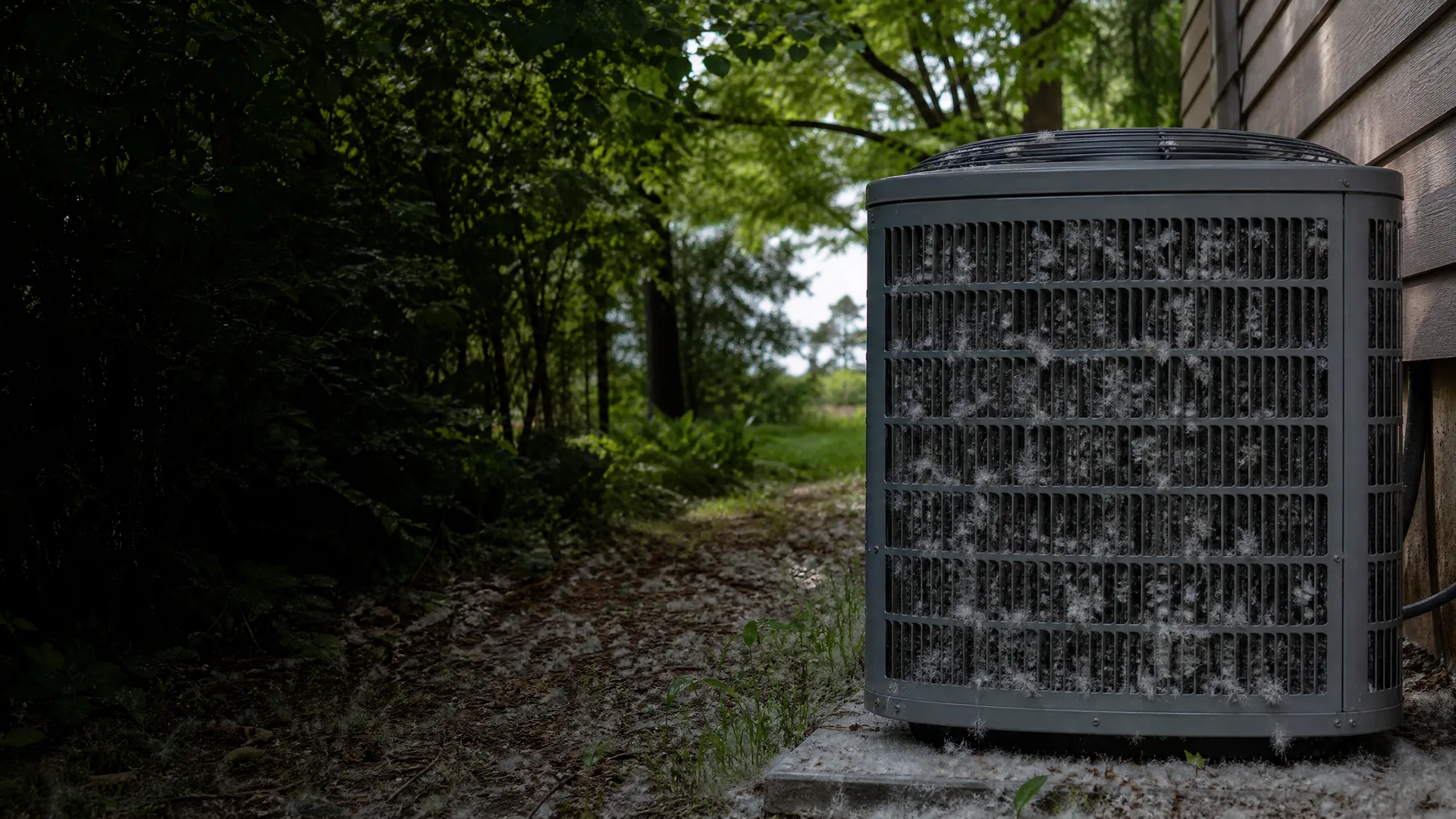
An outdoor air conditioning condenser unit beside a wood-sided house, its coil fins covered with white cottony seed fluff, with a shaded wooded path and green trees behind.

The fluff came off the cottonwoods down the block a week ago, and some of it landed here. You walk past the condenser on your way to the garage and stop. The fins are gray-white, packed solid in the grooves, the kind of thing you'd miss if you weren't looking straight at it. The unit is running. You can hear it. What you can't tell from the sound is whether the air coming through that matted coil is enough, or whether the system is working harder than it should just to keep up on a day that isn't even hot yet. You make a note to deal with it, then head on to the garage.

Why does my AC drain line keep clogging every summer?

It happened last year too. You cleared it out, the AC ran fine for a while, and now you are back to a musty smell near the vent or water pooling in the pan again. It feels like something you should only have to deal with once, not every single summer.

Because the line never gets flushed between service calls, so algae has all summer to rebuild

Clearing a clogged line gets rid of the blockage that's there, but it doesn't stop new algae from growing. The inside of the line stays wet and dark every time your AC runs, and that's exactly what algae needs to take hold again. In New Jersey, where the system runs for months without much of a break, there's no dry stretch long enough to slow that growth down. A line that gets flushed once during a maintenance visit stays clear longer than one that only gets attention after it's already backed up. Without that regular flush, the same buildup that caused last year's clog has the whole summer to come back.

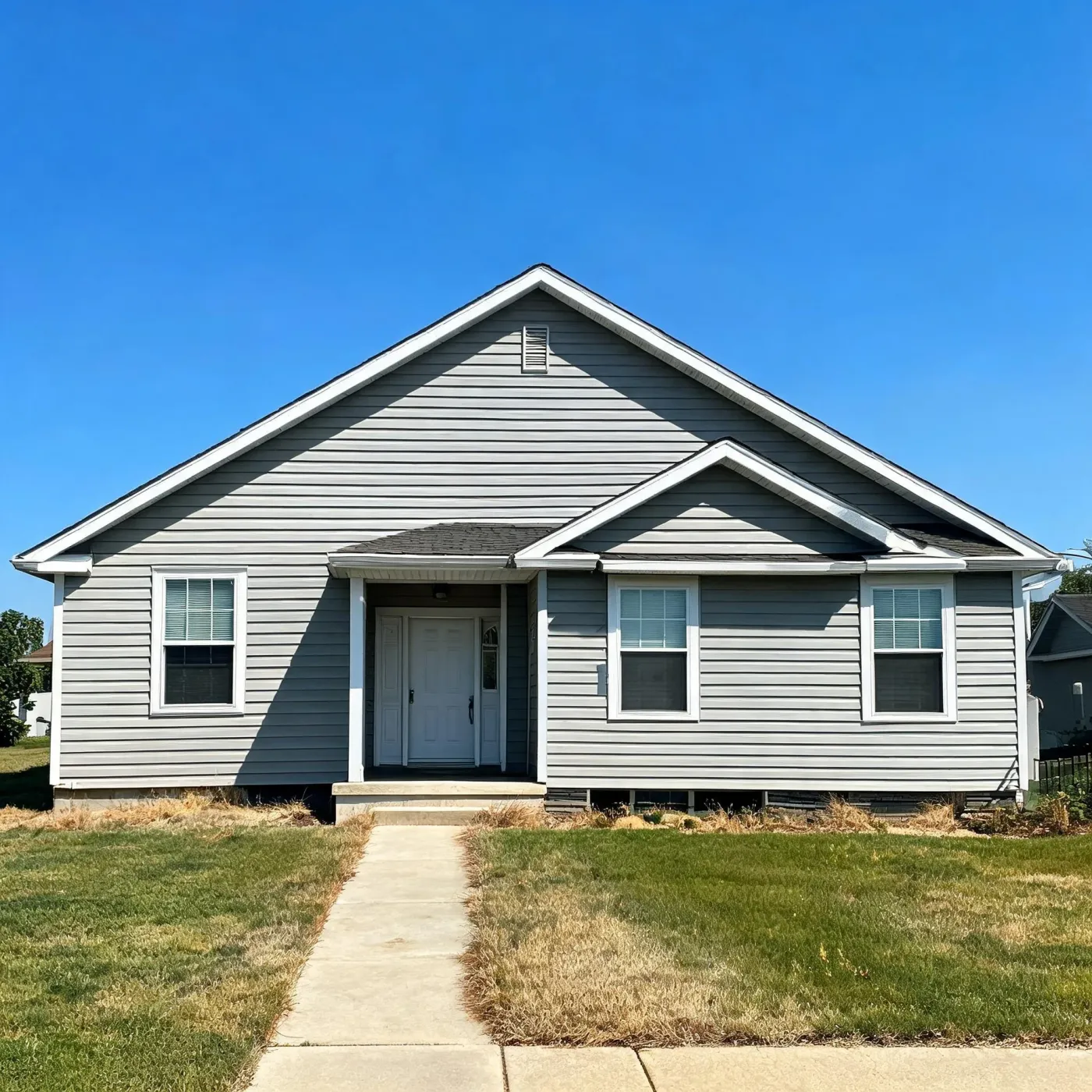
Single-story gray horizontal-siding house with white trim, gabled roof, white front door, and two windows, fronted by a concrete walkway through a patchy lawn under a clear blue sky.

New Jersey's summer air holds a dew point around 63°F, averaged across June, July and August by NOAA. That's heavy, damp air, the kind that sits on your skin instead of moving past it. Your air conditioner has to pull that extra moisture out before it can even start cooling the house down, and all that water has to leave through the condensate line. More moisture pulled from the air means more water running through the line all summer, which gives algae more to feed on and less time between runs for the line to dry out. That's why the clog shows up here, and not somewhere drier.

NASA POWER T2MDEW county cells weighted by homes

An outdoor air conditioning condenser unit on a concrete pad beside a house with light blue horizontal siding, with a shrub to the left and a conduit and disconnect box on the wall to the right.
Before you get your air conditioner maintenance
An outdoor air conditioning condenser unit on a concrete pad beside a house with horizontal lap siding, with a gray electrical disconnect box and conduit on the wall, mulch bed and shrub to the right, and mown grass in the foreground.
After you get your air conditioner maintenance
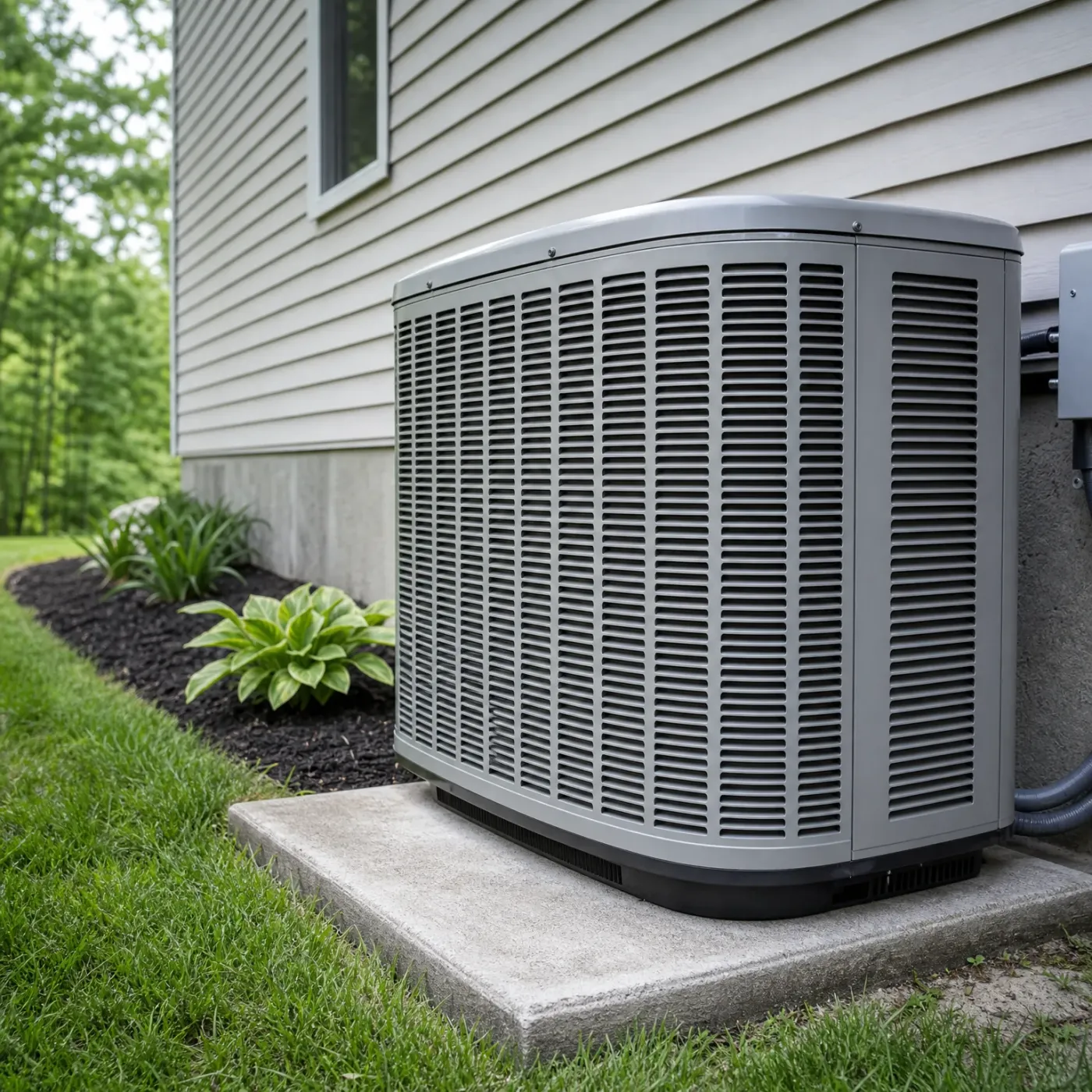
A gray outdoor air conditioning condenser unit on a concrete pad beside a house with horizontal siding and a stone veneer base, with refrigerant line and electrical disconnect box on the wall and flowering shrubs to the left.

Maintained unit

This condenser sits clean on its pad, fins clear, lines running straight into the wall. A unit kept up like this gets its drain line checked before algae builds up enough to block it, so the pan stays dry and the AC keeps running through August without a surprise shutoff.


An outdoor air conditioner condenser unit on a concrete pad beside a house with light gray horizontal siding, with mulch and green shrubs on either side and a concrete walkway in the foreground.

Neglected unit

This older unit shows years of dirt packed into the fins and casing, the kind of neglect that usually extends to the drain line too. Once algae clogs that line, water backs into the pan, the float switch cuts the power, and the house stops cooling on the next humid afternoon.

Power costs 22.48 cents per kilowatt-hour statewide

At 22.48 cents per kilowatt-hour, every hour your AC runs to fight a clog costs more here than almost anywhere else. A unit straining against a backed-up pan draws longer to cool the same rooms, and that shows up on your bill before you ever see water on the ceiling.

EIA-861 2025 statewide residential average

A man in a dark jacket and khaki pants walks through an open gate in a stone wall toward a woman standing in the open front doorway of a single-story white house with a dark shingled roof and river-rock accents.

A clean drain line keeps the AC running and the ceiling dry

The line clogs with algae, the pan backs up, and either the float switch shuts the system off or water finds the ceiling first. That's the whole problem, and a clear line is the whole fix. Nothing about a New Jersey summer changes that, it just means the line has more water to carry and more chances to clog before October.

A contractor who works on AC systems around New Jersey all summer has seen this line fail in every way it fails, in homes set up like yours. Getting matched with one means someone local looks at your unit, not a call center working from a script, and you're not fielding calls from three companies trying to win the job. One contractor, looking at your actual condenser and your actual line, is how this gets fixed before it shows up on your ceiling.

A light-colored ceramic vase holding green leafy branches sits on a round wooden table, with a wooden-framed armchair draped in a cream throw, a tripod floor lamp, and sheer curtains blurred in the background.
A dark standing-seam metal roof with a stone chimney and metal cap, seen against a backdrop of autumn-colored forest and layered hills under an overcast sky.

An air conditioner pro near you

Find a licensed air conditioner pro

No fee to send it, and nothing to sign.

A technician who clears New Jersey drain lines all summer knows where algae builds up first and how to flush it before the pan overflows. Getting matched with one local contractor who works on your kind of system beats guessing at the fix yourself after the ceiling already shows a stain.