

Why mini splits drip inside in sticky New Jersey summers
Send the request today and let a mini split pro reach out to you.
Send it todayWhy is my mini split dripping water inside in the summer?
You caught it right away, which is the best time to catch it. Water coming from a mini split indoors in the middle of a New Jersey summer usually means one of a few things, and none of them are things to wait out. Left alone, a drip can turn into a wet wall or a stain on the ceiling below the unit.
It's a clogged or blocked condensate drain
Your mini split pulls moisture out of the air and that water has to go somewhere. It runs down a drain line and out of the house. When air here is heavy and humid for months at a stretch, the unit is pulling more water than it would in a dry climate, and algae or dust can build up in that line faster. Once the line is partly blocked, the water backs up and finds another way out, usually down the front of the indoor unit or along the wall underneath it. A dirty filter or a unit that was never pitched quite right can cause the same thing. Either way, the fix is mechanical, not something that clears on its own.
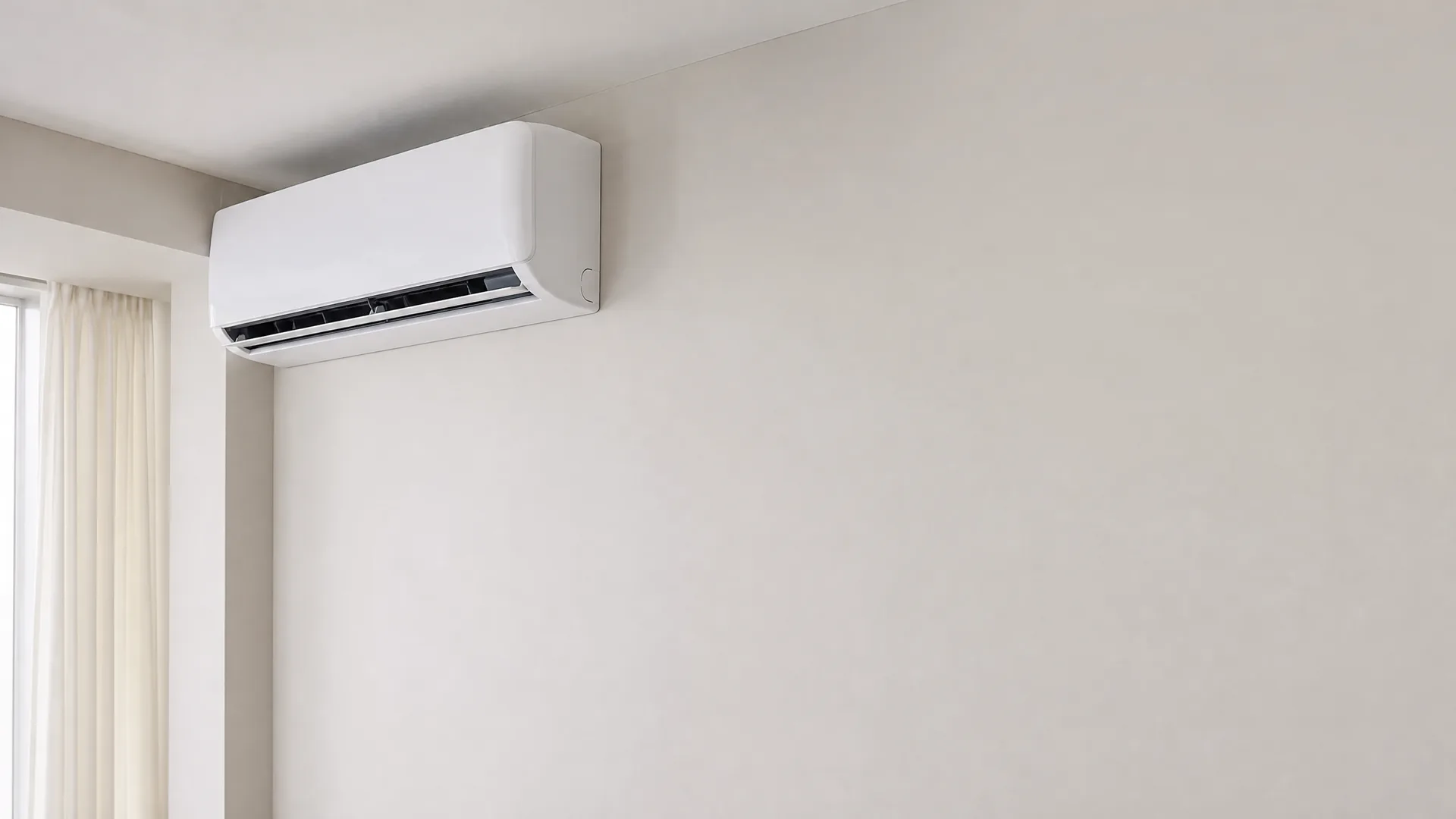
The condensate line is clogged
Every indoor unit pulls moisture out of the air and carries it out through a small drain line. Algae and dust build up inside that line over a summer of steady use, and once it's blocked, the pan backs up and spills over into your house. On a muggy August day that unit might be pulling a quart of water or more out of the air, so a clog shows itself fast.
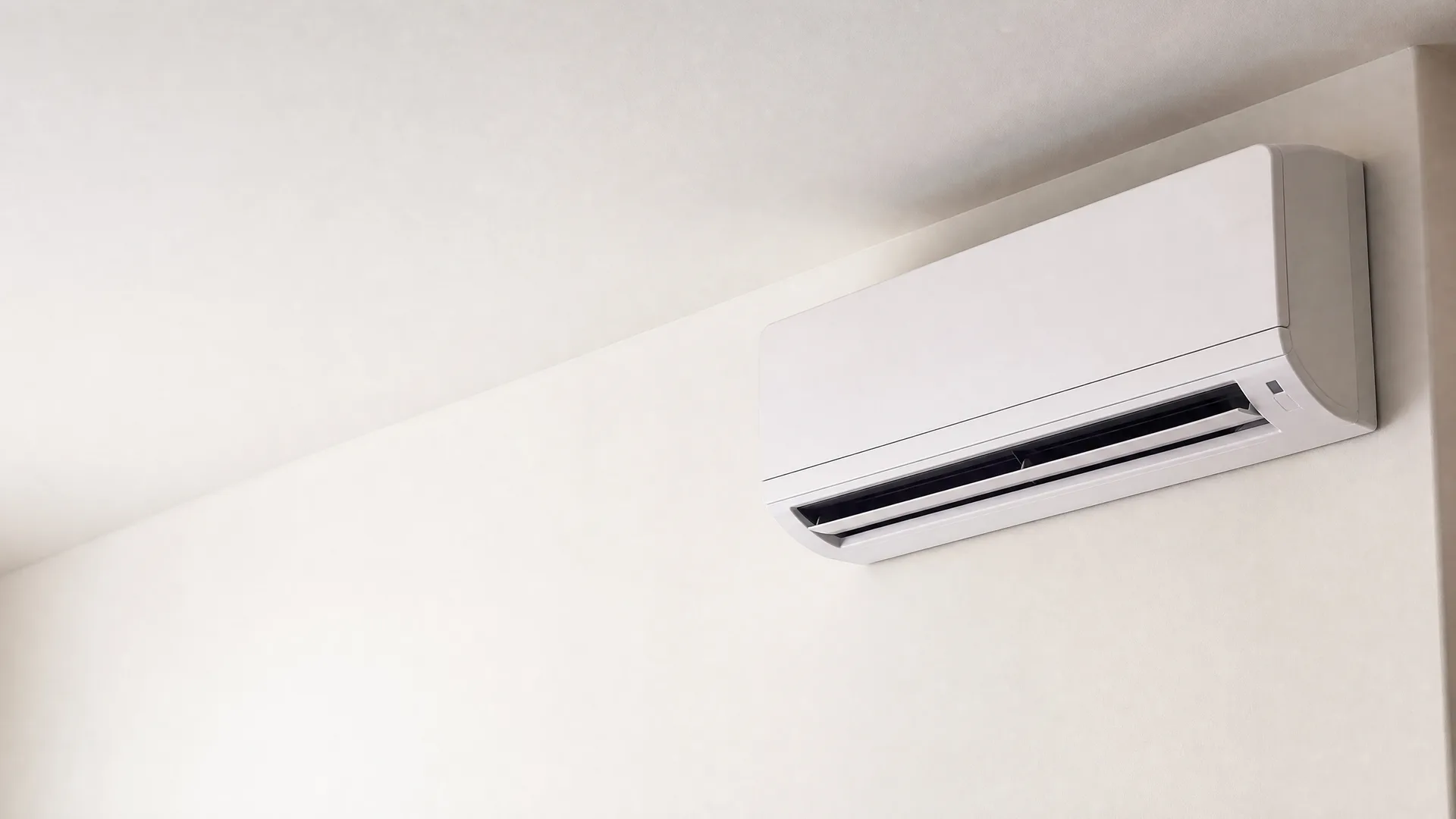
A dirty filter freezes the coil
The indoor coil needs steady airflow across it to stay above freezing. A filter packed with dust chokes that airflow, the coil ices over, and when the unit cycles off or you turn the fan down, that ice melts all at once. That's often more water than the pan or drain line can handle in one go, so it finds its way out onto your floor instead.
Clear It Yourself or Call It In
Clean it yourself
- A clogged drain line sometimes clears with a wet-dry vacuum held to the outdoor end of the line, pulling the blockage out the way it went in.
- Rinsing the washable filters behind the front cover cuts down on the dust and lint that feeds algae growth in the line.
- You can check that the indoor unit is sitting level, since a unit that has tilted over time will pool condensate on the low side of the pan.
- A dirty blower wheel caked with dust can throw droplets past the pan, and a soft brush can reach some of what's visible without opening the unit further.
- None of this tells you whether the real problem is the line, the pump, the coil, or the insulation on the line itself.
Call for a repair
- A technician can run a line clear with equipment that reaches blockages a shop vacuum can't pull from the outdoor end.
- If the unit has a condensate pump, a tech can test it under load to see if it's actually moving water or just running.
- A frozen coil dripping as it thaws points to low refrigerant or restricted airflow, and only gauges and a look at the coil confirm which.
- A tech can check whether the line's insulation has worn through, which causes sweating along the pipe itself rather than a clog.
- Getting it looked at now means skipping the research of finding a licensed contractor, the calls to see who's available, and explaining the drip over again to each one.

You're at your desk around two in the afternoon, the kind of sticky day where the mini split has been running since breakfast. You notice the wall under the indoor unit looks dark, a streak running down toward the baseboard. When you touch it, it's wet. You grab a towel and lay it on the floor under the drip, then stand back and watch another bead of water form at the bottom edge of the unit and slide down the wall. The air in the room still feels cool and dry. It's just this one spot, steady, like a slow leak that hasn't stopped since you first saw it.
Hand off the search today
A dripping mini split in July doesn't wait for a convenient week. The longer that water sits against the wall, the more of the drywall and the floor underneath it have to be dealt with later, and in a New Jersey summer the unit keeps running and keeps dripping the whole time. You could spend the afternoon calling around, explaining the same leak to three or four different shops, then sitting with the quotes trying to guess who actually works on your brand. Or you could send this request once and let someone who does this for a living take it from here. With power rates what they are in this state, a mini split that's struggling or shutting itself off to protect against overflow is already costing you more than the repair will. Send the request and stop carrying this one yourself.
Catch it now versus wait it out
Dealing with the drip this week means a contractor checks the line, the pan, and the filters, clears what's clogged, and the wall dries out before it goes any further. It's one visit instead of a problem that keeps circling back every humid stretch for the rest of the summer. The unit keeps running either way, so the water doesn't pause while you decide. Catching it now also means whoever looks at it is only dealing with a clog or a dirty filter, not a pan that's cracked from sitting full of water for weeks or drywall that's gone soft.
What waiting usually turns into
Put it off and the same drip keeps finding the same path down the same wall, every muggy afternoon the unit runs. What started as a clogged line can turn into a warped baseboard, stained drywall, or a pan that's corroded from standing water. At that point the fix isn't just the mini split, it's whatever got wet underneath it. New Jersey summers don't let up for long once they start, so the unit isn't going to get a break that lets the problem dry out and fix itself. The difference between the two paths isn't the clog. It's everything the clog is sitting on top of.


The indoor unit is built to handle water. Its coil is cold enough that humidity in the air condenses on it, the same way a cold glass sweats on a July afternoon, and that water drips into a pan below. From there it travels out through a line, either pushed by a small pump or just running downhill, until it empties outside or into a floor drain. In a New Jersey summer, with the air as sticky as it gets, that coil pulls more water out of the air than it would somewhere dry, so the line is carrying more than usual most days. The trouble starts small. Algae builds a film inside the tubing, dust settles into it, and the path narrows. A filter that hasn't been rinsed in a while sends more of that dust straight at the coil and pan, adding to what collects further down the line. Once the line is narrow enough, water can't leave the pan as fast as the coil is making it, and it backs up over the edge and down the wall.
How the drip actually starts
- The indoor unit's coil pulls humidity out of the air and that water runs down into a condensate pan underneath it.
- A small pump or gravity line carries that water out through tubing routed to the outside wall or a floor drain.
- Mini splits in New Jersey's sticky summers pull more water than they would in a dry climate, so the line has more to carry.
- Algae and fine dust collect inside the drain line over weeks of steady runtime and narrow the path the water has to take.
- A dirty filter lets more dust reach the coil and pan, which adds to what builds up inside the drain line downstream.
- Once the line is partly blocked, water backs up into the pan faster than it can drain out and spills over the edge.






Power costs 22.48 cents per kilowatt-hour statewide
At 22.48 cents per kilowatt-hour, a mini split stuck running hard while it's clogged is an expensive way to drip water on your wall. Clearing the line early gets the unit back to cooling the way it should, instead of straining to keep up all summer.
EIA-861 2025 statewide residential average



New Jersey summer air carries a dew point around 63°F, averaged across June, July and August, according to NOAA climate data. That's heavy enough that your mini split is pulling real volume of water out of the air all day, not just a trickle. More moisture through the coil means more water running down that condensate line every hour the unit runs. A line that might handle a drier climate without issue gets pushed harder here, and a small clog that would barely matter in a milder spot is enough to back up the pan and send water down the wall instead of out through the drain.
NASA POWER T2MDEW county cells weighted by homes
A dripping mini split almost always comes down to the same thing: water that can't get out the way it's supposed to. The line clogs, the pan backs up, and it shows up on your wall. Catching it now, like you're doing, keeps it to a wall that needs to dry out instead of drywall that needs to be replaced. You don't have to spend the rest of this sticky week calling around New Jersey, explaining the same drip and the same wall to five different contractors, and sorting through quotes to figure out who actually answers the phone. Send the form once and that search is off your plate. Your mini split still needs someone to open it up, clear the line, and check the pan, but finding that person stops being something you have to do yourself. The water stays where it belongs, and so does your afternoon.
Hand off the mini split problem