



How often to clean a mini split in New Jersey

A white wall-mounted mini-split air conditioner indoor unit with a dark horizontal air outlet vent, shown against a plain light gray background.
Start one form

Clean the filters on a mini split yourself every two to four weeks when you're running it hard, and have the coils, blower wheel and drain line looked at once a year. In New Jersey, summers run long and sticky, and a mini split cooling a room day after day pulls in dust and moisture fast. The filters catch most of it, but once they're clogged, the unit works harder to push air through, your electric bill climbs, and mold can start building in the coil or drain pan where you can't see it. A yearly check gets into those parts, flushes the drain line before it clogs and backs up, and catches a dirty coil before it costs you in power or a service call. Skip it a season or two and the unit still runs, just worse: weaker airflow, a musty smell when it kicks on, and higher bills for the same cooling.

A smiling bearded man in a dark green sweater sits at a dinner table with a glass of red wine, a bowl of salad and a lit candle in the foreground, in a dimly lit room with a framed picture, lamp and potted plants behind him.
A woman in a cream knit sweater reclines on a sofa with her eyes closed and a slight smile, a closed dark book resting on a blanket in the foreground and a lit lamp and small potted plant behind her.

Air moves through the filter first, then across the evaporator coil, which is what actually pulls heat out of your room. Dust that gets past the filter settles on that coil as a fine film, and once it's coated, the coil can't transfer heat the way it did when it was clean. The blower wheel sits just past the coil, pushing the cooled air out into the room through small curved blades. Dust builds up on those blades too, and it throws off the airflow in a way a filter rinse at home won't touch. Meanwhile the coil is shedding condensation the whole time it runs, and that water has to go somewhere. It drains out through a line that stays damp as long as the unit is cooling, which is exactly the kind of environment algae grows in. Once that line clogs, the unit either shuts itself down or the water backs up and finds its way out through the indoor head, onto the wall underneath it. A yearly visit is when a contractor actually pulls the coil and blower wheel free of the housing to get at what the filter never reaches.

What's Actually Happening Inside

  • The filter catches dust and lint before air ever reaches the coil, so a clogged filter forces the coil to pull harder for the same cooling.
  • Behind the filter sits the evaporator coil, and once that coil picks up a film of dust it loses its grip on the heat it's supposed to pull out of the room.
  • The blower wheel has small curved blades that grab dust from the air passing through, and a coating there throws off the airflow a contractor can't fully correct by cleaning the filter alone.
  • Condensation off the coil runs down a drain line, and the same damp conditions that let a mini split cool well also grow algae inside that line.
  • A clogged drain line backs up until the unit shuts itself off or water drips out of the indoor head and onto the wall below it.
  • A contractor checking the unit once a year pulls the coil and blower wheel apart from the housing to clean them properly, something the filter rinse at home doesn't reach.
A wall-mounted white mini-split air conditioner indoor unit with visible dust and grime around its outlet vent, installed near the ceiling on a plain light-colored wall.
Before you get your mini split maintenance
A white wall-mounted mini-split indoor unit on a light gray interior wall, with a white curtain on a black rod at left and a leafy plant in the lower left corner.
After you get your mini split maintenance

What a dirty mini split costs you

  • A dirty filter makes a mini split run longer to hit the same temperature, and that shows up directly on your electric bill.
  • A unit left dirty through a full New Jersey summer can start blowing air that smells musty when you walk into the room.
  • Ice can form on a coil that's lost airflow, and once that happens the unit stops cooling until it fully thaws out.
  • A drain line clogged with algae backs up and drips water onto the wall or floor below the indoor unit.
  • Skipping the yearly check on the blower wheel lets dust build up there too, which cuts airflow even with a clean filter.
  • A mini split that's working harder than it should wears out its compressor sooner than one that's kept clean.

You'll notice it before you can name it. The room takes longer to cool than it used to, so the unit runs more hours to get there, and with power costs what they are in New Jersey that difference lands on your bill every month, not just once. Walk in and catch a musty smell and that's usually a sign moisture has been sitting somewhere it shouldn't, either on the coil or in a drain line that isn't draining the way it should. Left long enough, a coil starved of airflow can ice over, and once ice forms the unit stops cooling altogether until it thaws, which in the middle of a sticky July stretch is the worst time to find out. The drain line matters too. Algae builds up in it over a season, and when it clogs the water has to go somewhere, usually down the wall or onto the floor under the indoor unit. The blower wheel collects its own layer of dust even when the filter is clean, since it sits downstream of the filter, and that cuts airflow regardless of how often you've been rinsing the filter yourself. None of this breaks the unit overnight. What it does is make the compressor work harder for longer, season after season, and a compressor run that way wears out sooner than one that's had the coil, drain and blower wheel checked and cleaned on schedule.

Power costs 22.48 cents per kilowatt-hour statewide

At 22.48 cents per kilowatt-hour, every extra hour your mini split spends straining through a dirty filter or a dusty coil lands on your bill. A clean unit cools your room faster and shuts off sooner, so the cost of skipping maintenance shows up fast here.

EIA-861 2025 statewide residential average

Doing it yourself takes time

Finding someone to look after a mini split usually means searching for contractors who actually work on ductless systems, calling a few, and explaining the same symptoms each time. Then you wait for quotes and try to compare them with no way to know who's guessing and who's not. A local contractor who services mini splits all summer already knows what usually fails first in a New Jersey system that runs hard from June through September, so that back and forth disappears.


One call, not five

You get matched with one licensed contractor local to you, not a batch of companies competing for the job. That means one call back, one visit scheduled, one person who already knows the make and model you have before they show up. Someone working on mini splits in this area every season has seen which coils clog fast in humid weather and which drain lines back up first, so the visit starts with that knowledge instead of a stranger learning your system from scratch.

A smiling woman with long dark hair in a gray sweater sits behind a white countertop holding a glass of red wine, with a dimly lit living room and dark kitchen island in the background.
A woman in a beige knit sweater with her hair up laughs while looking to the side, seated in a dimly lit living area with a sofa, windows and a kitchen counter behind her, a glass of red wine in the lower right foreground.
A woman in a black sweater laughs while seated at a light stone counter with a glass of red wine, in a dimly lit living and dining room with bookshelves, a table lamp and framed artwork behind her.
A smiling woman with long dark hair in a beige sweater sits at a granite counter with a glass of red wine, with a living room, fireplace and dining area behind her.
A two-story house with light horizontal siding, a gabled roof and a white front door, set on a grassy lawn between two leafy trees, with a wet street and sidewalk in the foreground under low sunlight.

A summer dew point of 63°F means the air sitting around your mini split is already heavy before the unit does anything with it. That coil isn't just cooling the room, it's wringing water out of the air to keep things from feeling damp, and a dirty coil or filter loses ground to that faster than it would somewhere drier. You'd notice it as a room that stays sticky even after the unit's been running a while, or a return grille that feels wet to the touch. A contractor who works mini splits in New Jersey all summer has seen that exact complaint plenty of times, and knows it's usually the coil losing its grip on the humidity before it's anything more serious. Source: NOAA climate normals.

NASA POWER T2MDEW county cells weighted by homes

Skip the search

A licensed local pro takes the request for your mini split tune-up.

No fee to send it, and nothing to sign.

  1. Room air gets pulled in across the filter first.

  2. The filter strains out dust before air reaches the coil.

  3. The evaporator coil cools the air and pulls out moisture.

  4. Water collects in a pan below the coil.

Why is your mini split not cooling like it used to

You turn it on and the room takes longer to feel cool than it did last summer. The air coming out feels weaker, almost lukewarm at the vent, even with the thermostat set the same as always. Sometimes there's a smell when it first kicks on, a little musty, like a damp towel left in a closet. You might notice water pooling near the indoor unit, or ice building up on the coil you can see through the vents. None of that is normal, and none of it fixes itself. A unit working that hard runs longer to do the same job, and on New Jersey power rates that difference shows up on your bill before anything else does.

A white wall-mounted mini-split indoor unit high on a beige interior wall, with a potted olive-like tree at right and an armchair and window visible through a doorway at left.
A clean filter and coil let this unit pull sticky air in, cool it, and push it back out without extra strain.
A wall-mounted mini-split air conditioner indoor unit with visible dust and staining, installed on a beige interior wall below white crown molding.
Dust packed into the vents like this makes the unit work harder and still fall behind on a muggy day.

Cleaning It Yourself vs. Having It Serviced

DIY maintenance

  • You can wash or vacuum the filters yourself every two to four weeks during a long New Jersey summer without any tools.
  • Doing it yourself means fitting the job into an evening you'd rather spend on something else.
  • You can check the filter but you can't see the evaporator coil or the drain line without opening the unit up.
  • A missed filter cleaning for a few weeks won't ruin the system, but it adds strain you won't notice until the bill comes.
  • You're on your own for figuring out why the unit is icing up or blowing weak air if filter cleaning alone doesn't fix it.

Scheduled contractor visit

  • A licensed local contractor checks the coil, blower wheel and drain line, the parts you can't get to on your own.
  • You deal with one contractor who already knows ductless systems, instead of calling around and explaining the same problem more than once.
  • Someone who services mini splits all season in New Jersey knows what usually fails first in a unit run hard through a sticky summer.
  • A yearly visit catches a drain line clog or a dusty coil before it shows up as water damage or a weak-cooling room.
  • You get a second set of eyes on the system beyond what the filter tells you, since a clean filter doesn't mean a clean coil.
A white wall-mounted mini-split air conditioner unit installed high on a beige interior wall below white crown molding, with a window and woven shade at the left edge showing green foliage outside.

Clean and clear

This is a mini split that's kept up with. Air moves across it, into the room, with nothing standing in the way. It pulls a sticky July evening down to a comfortable room without running long to do it.

A dusty, stained white wall-mounted mini-split air conditioner indoor unit installed high on a plain off-white interior wall near the ceiling.

Dusty and strained

Dust has built up across the face of this unit, inside the housing too. It's pulling the same amount of power but losing some of it to grime before the air ever reaches you. Left like this through a full summer, it'll run longer and still fall behind.

A closed laptop and a speckled ceramic mug sit on a wooden table beside a stoneware vase with a leafy branch, with a wooden chair, kitchen counter with cutting board and bowl, and dark upper cabinets in the dim background.

Wash the filters, get the coil checked once a year

That's the whole answer. Filters every two to four weeks through a New Jersey summer, coil and drain line looked at once a year, and the unit keeps up with the humidity instead of falling behind on it. Skip that and the strain shows up in two places: a room that takes longer to cool and a bill that climbs while it tries.

Finding someone to do the yearly part is its own chore, and most evenings you'd rather spend on anything else. You'd be searching for a contractor who actually works on ductless systems, calling around, explaining what the unit's been doing each time you reach someone new, then waiting on quotes to see which one makes sense. One request here gets you a licensed New Jersey contractor who already knows mini splits, has a season or two of local calls behind them, and is the only one who'll call you back.

A living room corner with a beige sofa and cushion, a round wooden coffee table holding a pale ceramic vase of eucalyptus stems and a wooden bowl, and a curtained window with a potted plant above a latticed radiator cover in the background.
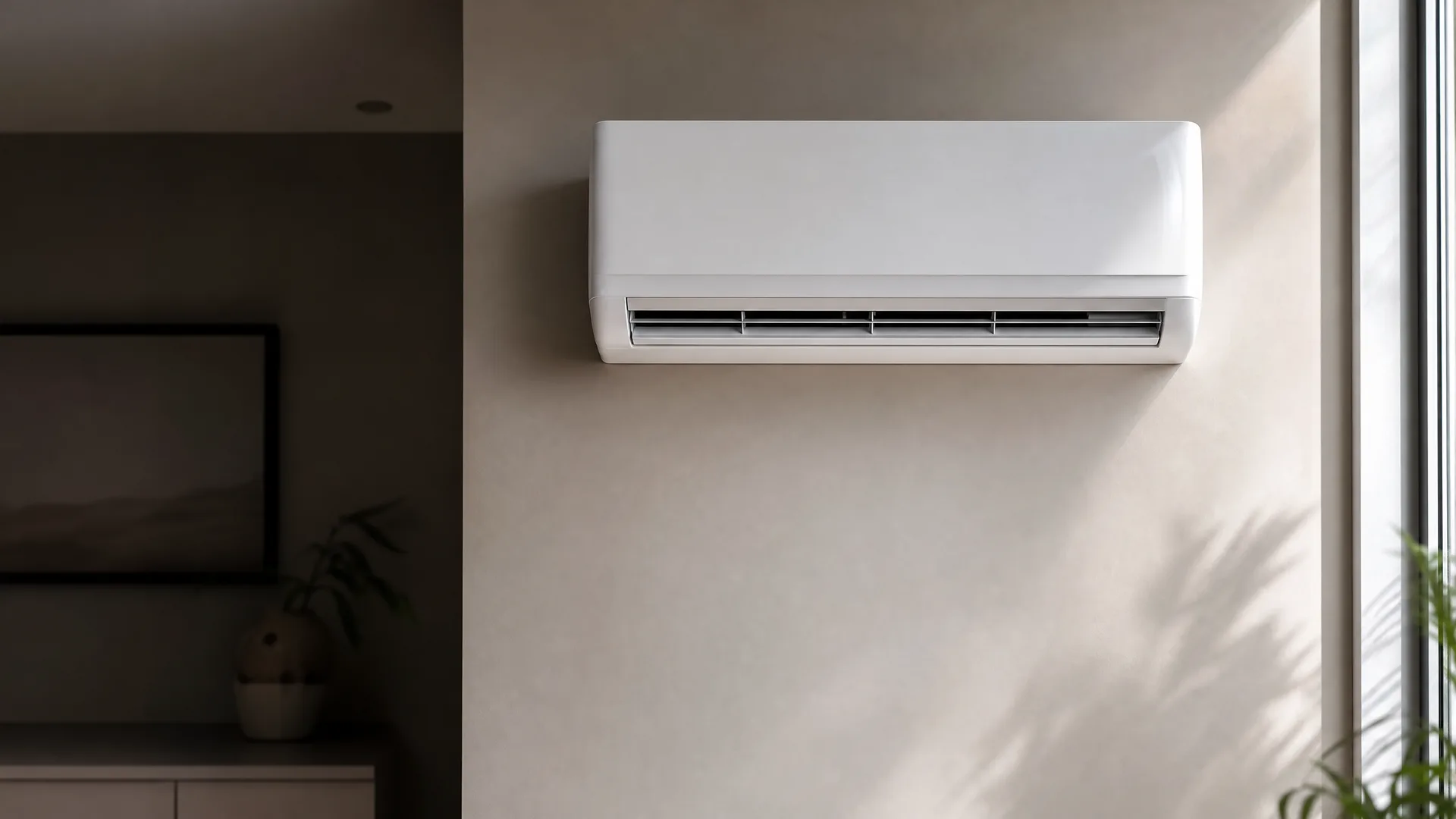
A white wall-mounted mini-split air conditioner on a plain beige interior wall, with a framed picture and potted plant in the dim left background and sunlit window with foliage at right.

Explain it one time

Tune-up, service, or cleaningMini-splitNew Jersey
Step 1 of 2

What ZIP code is the job in?