
Why AC units freeze up in sticky New Jersey summers
A frozen AC unit almost always means airflow or refrigerant trouble, and New Jersey summers push both to the edge. When the air is this sticky, your system has to pull more moisture out of the air just to cool the house, and that extra load means the coil runs colder for longer. If airflow is choked by a dirty filter or a closed vent, or if the refrigerant charge is low, the coil can drop below freezing and ice forms right on it. Once ice builds up, the system cools even less, so the coil gets colder still and the ice spreads. Left alone, this usually ends with water leaking into the house or the compressor straining against a blocked system. A unit that freezes once in a bad stretch of humidity is worth watching. One that freezes again within days or weeks has a problem that needs a contractor to find before it causes bigger damage.




A coil needs a steady pass of warm house air to stay above freezing. Cut that airflow, a dirty filter, a closed vent, furniture blocking a return, and the coil starts dropping toward 32 degrees. New Jersey's humidity makes this worse than it would be somewhere dry. All that moisture in the air keeps landing on the coil, and once the coil is cold enough, that moisture turns to frost instead of running off through the condensate line. A refrigerant leak does the same thing from a different direction. Low pressure in the coil pulls its temperature down across the whole surface, not just one spot, so ice forms even with the airflow working right. Once frost starts, it builds on itself. The ice blocks more airflow, the coil gets colder, and the problem speeds up the longer the unit runs. A thermostat set too low during a sticky stretch can trigger the same freeze even when the filter is clean and the charge is fine. Either way, once the coil ices over, the system stops removing heat or moisture from the house at all.
How a Coil Actually Freezes
- Warm air moving across the evaporator coil keeps it above freezing, so anything that cuts that airflow, a clogged filter, a blocked return, closed vents, lets frost start to build.
- Once a section of coil drops below 32 degrees, the moisture New Jersey's humidity keeps piling onto it turns to ice instead of draining off as condensate.
- Low refrigerant from a leak drops the pressure in the coil so low that the whole coil runs cold enough to freeze, not just one spot.
- Ice on the coil blocks the airflow further, so the problem speeds up on its own the longer the unit keeps running.
- A thermostat set too low for a sticky stretch can pull the coil down to freezing even with the airflow working fine.
- Once ice covers the coil, the system stops pulling heat and humidity out of the house at all, so running it longer only makes the ice worse.


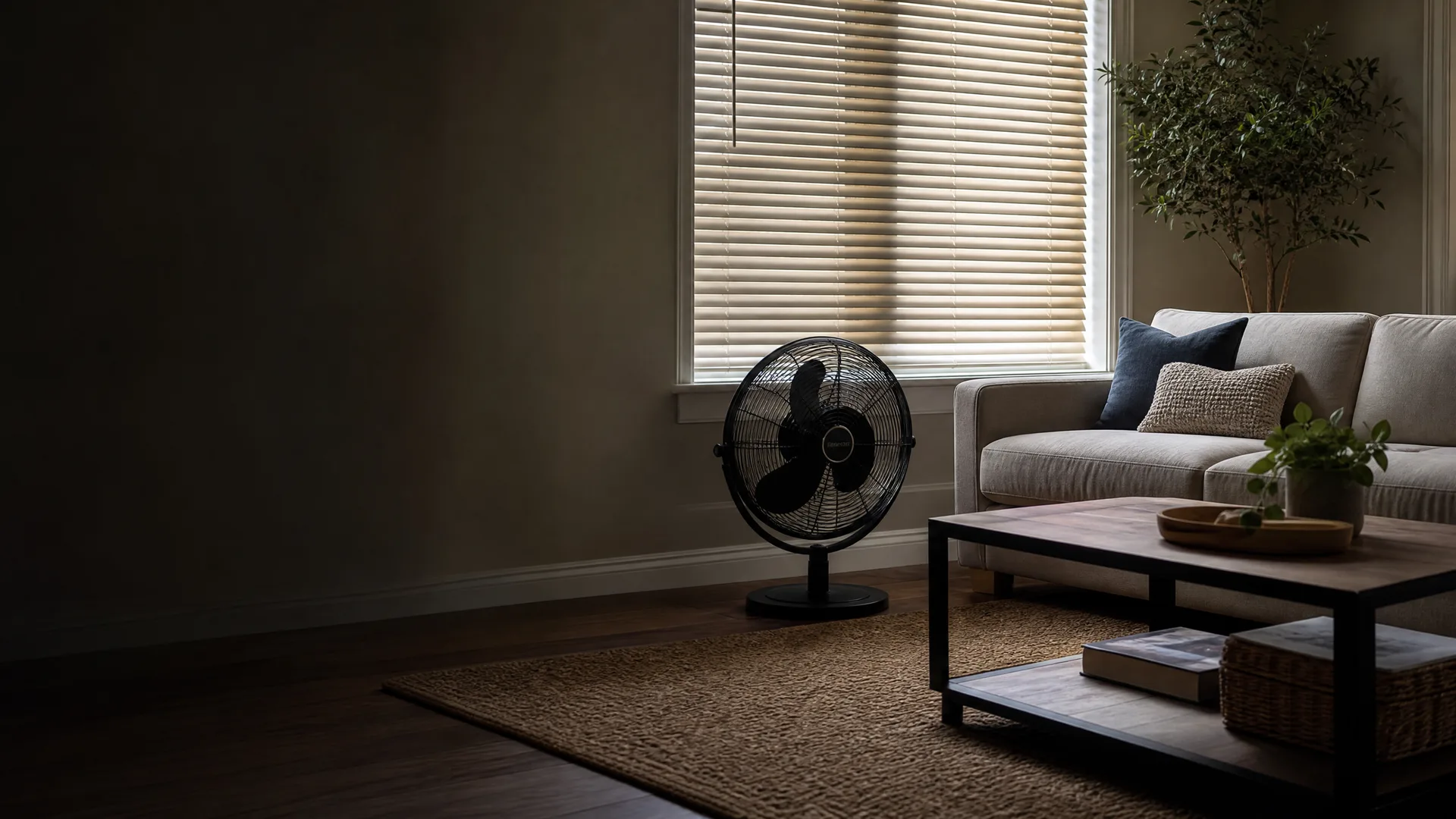
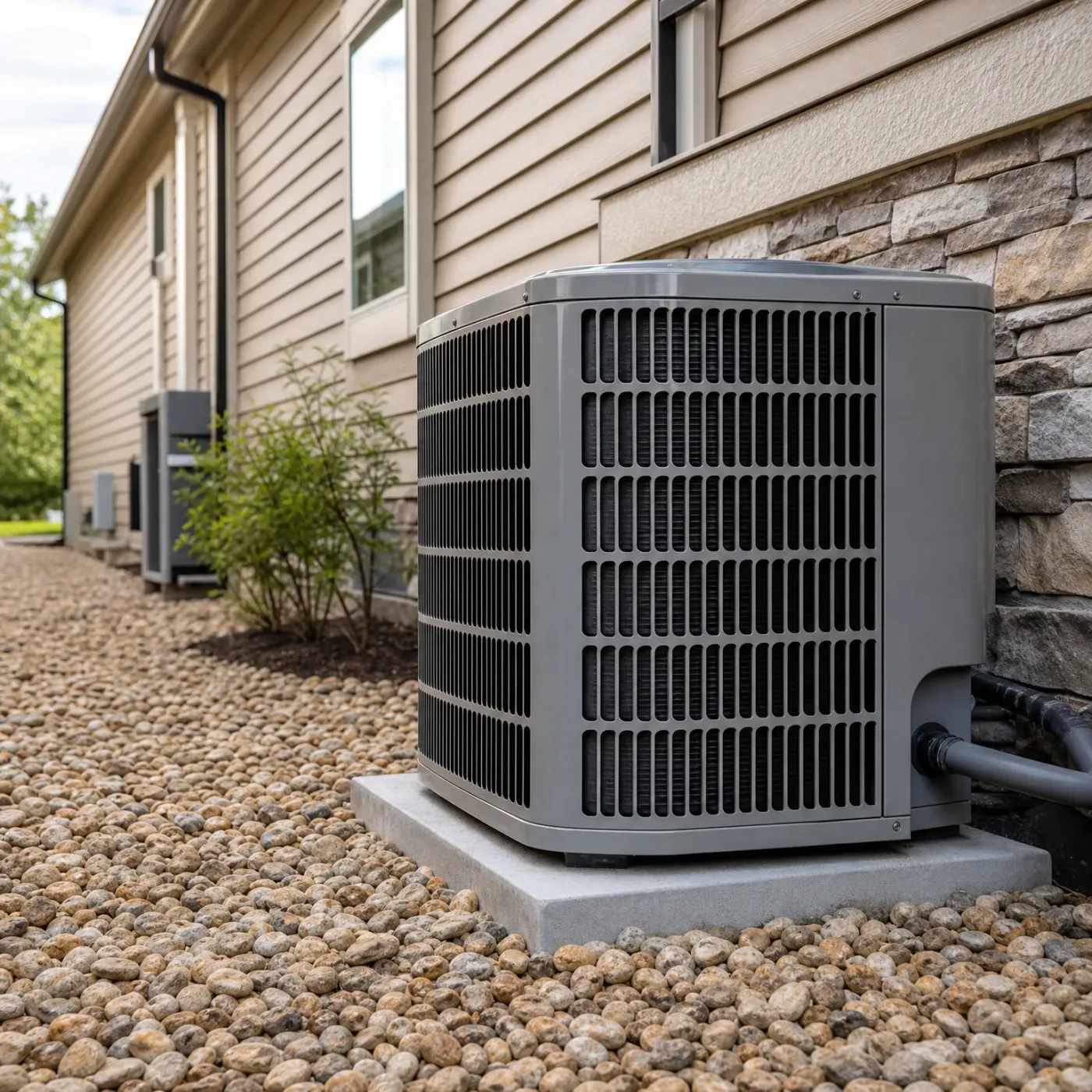
By three o'clock the blinds are shut against the sun and the living room still feels close. The floor fan next to the couch is going on high, pointed at nobody in particular, just pushing the air around. You already bumped the thermostat down twice since lunch and it hasn't caught up. There's a smell coming off the vent now, flat and a little damp, like a basement. You go check the outside unit and the line running into the wall has a sleeve of ice on it, thick enough to see from the driveway. Inside, the supply vents are barely moving air. The fan keeps running. The house keeps climbing.

A frozen unit won't cool your house faster
Once ice builds on the coil, the air coming out of your vents turns warm, not cold. Shutting the system off and switching the thermostat fan to "on" lets the ice melt, but it will freeze again if the cause underneath is still there. Running it anyway just pushes water past the drain pan, and in a lot of houses that drain sits right above a finished ceiling or a wall.
A contractor who knows what to check first can usually tell you in a few minutes whether it's airflow or refrigerant, instead of you guessing and shutting the system down twice in one week. Once you send the request, you're not the one tracking down who's free and who isn't.



A pro who works on air conditioners
Send the request today and stop worrying about who to call.
Say what's going on with your air conditioner, and a pro who works on them reaches out.
Sending the form costs nothing.
Keep Running It or Call
Keep running it
- The coil stays ice-covered and the air from your vents gets warmer, not cooler, the longer you wait.
- Liquid refrigerant can make it back to the compressor instead of boiling off in the coil, and that's the part that costs the most to replace.
- Water from the melting ice has somewhere to go, and if the drain pan or line can't keep up, it ends up on your floor.
- Whatever narrowed the airflow or dropped the charge in the first place is still there, so the ice comes back within a day or two.
- The system keeps drawing power to run a compressor that isn't actually cooling anything, on a month when your bill is already high.
Shut it off and call
- Running just the fan lets the coil thaw without adding more frost on top of what's already there.
- A technician checks the filter, the return, and the refrigerant charge to find which one let the coil get that cold.
- Catching a low charge now means finding the leak before it empties the system again next week.
- Once the actual cause is fixed, the coil holds above freezing on its own and the ice doesn't come back.
- Once you send the request, a contractor reaches out to you, and finding someone to look at it stops being your problem.


Power costs 22.48 cents per kilowatt-hour statewide
At 22.48 cents a kilowatt-hour, a frozen unit costs you twice. The compressor keeps running while the coil sits iced over doing no cooling at all, so you're paying New Jersey power rates for a system that's straining and not making your house any colder.
EIA-861 2025 statewide residential average
What a Frozen AC Comes Down To
- A frozen coil almost always traces back to restricted airflow or low refrigerant, and both get worse the longer you wait.
- Shutting the system off lets the ice melt, but the same freeze returns until the actual cause gets fixed.
- Running a frozen unit risks sending liquid refrigerant back to the compressor, the costliest part to repair.
- A stuck thermostat fan setting buys you melted ice, not a working air conditioner.
- Once a contractor is matched to your home, you're done chasing down who can come fix it.
- The sooner the airflow or refrigerant problem gets found, the sooner your vents blow cold again.
A frozen coil is airflow or refrigerant, almost always, and New Jersey's sticky air gives both a reason to fail faster than they would somewhere dry. Turn the system off and let the ice melt if you want cold air back for a few hours, but that's not a fix. Whatever cut the airflow or dropped the charge is still there, and the freeze comes back as soon as the coil gets cold again. Keep running it instead and you risk worse than warm air. Liquid refrigerant can reach the compressor before it boils off the way it's supposed to, and the compressor is the one part in the system that costs the most to replace. None of this is a verdict on the unit itself. It's a sign that something specific needs attention, a filter, a return vent, a low charge, and once that's found, the system goes back to doing what it's built to do. That part isn't yours to chase down. Once a contractor who works on systems like yours is matched to your house, finding help stops being something you have to manage. The coil gets looked at, the actual cause gets named, and your vents go back to blowing cold instead of lukewarm. A frozen AC in the middle of a New Jersey summer is unwelcome, not complicated. The cause is findable and the fix is ordinary once someone's looked at the unit itself.





Get your air conditioner to the right pro
Send the request today and let an air conditioner pro reach out to you.
You're not committing to anything by asking.