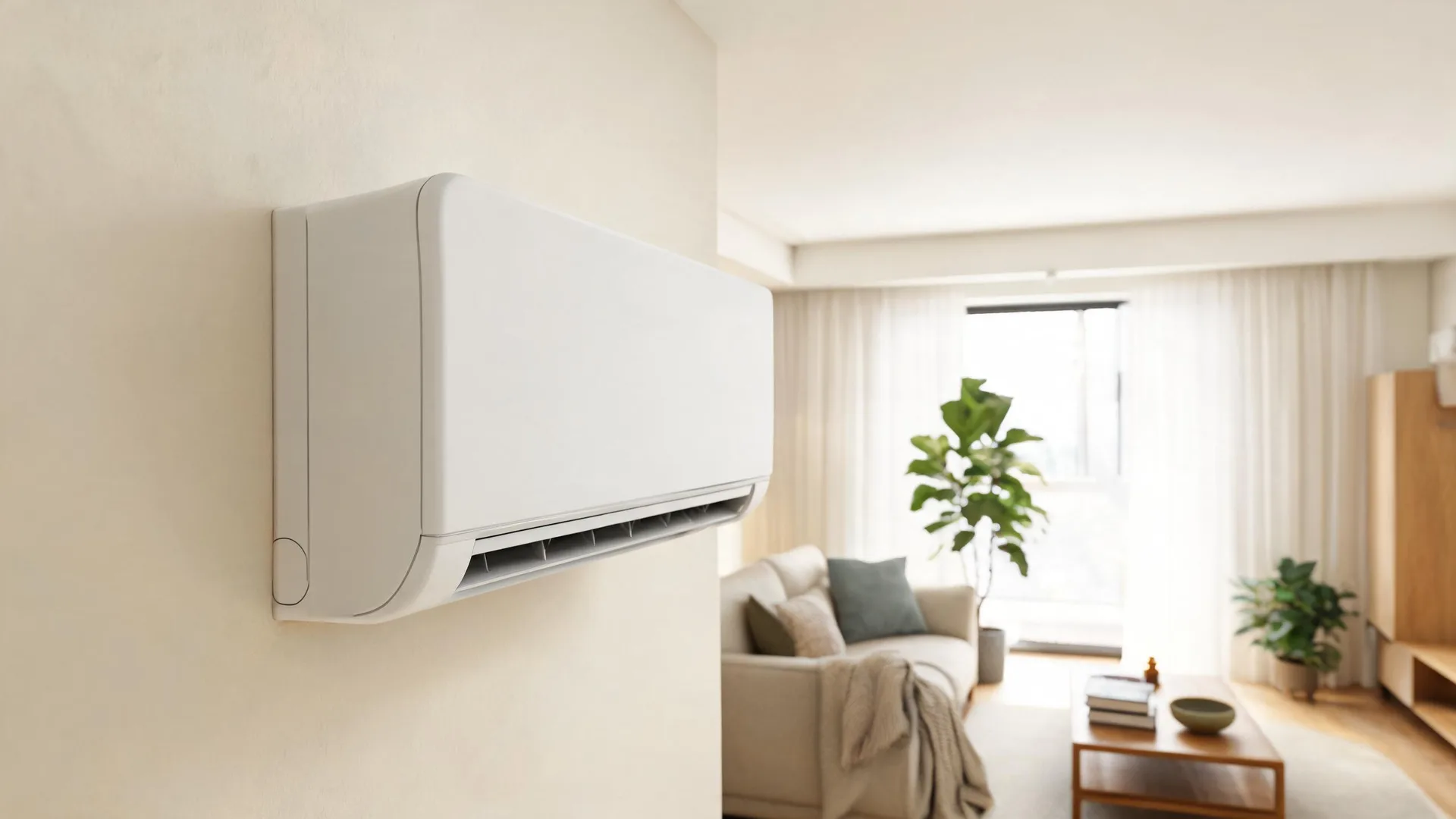
Electricity here runs 19.34 cents a kilowatt-hour
New Jersey households paid that rate in 2024. A mini split that pulls less power to do the same heating or cooling job matters more here than in a state where power is cheap.

Takes about a minute. No obligation.
New Jersey households paid that rate in 2024. A mini split that pulls less power to do the same heating or cooling job matters more here than in a state where power is cheap.
Mini splits vary in how much power they need to move the same amount of heat. Ask for the efficiency rating on any system quoted for Salem, and compare it against others before deciding.
NOAA nClimDiv, 1991–2020 normals
Fuel oil and gas heat most homes in Salem County, split between the 26.0% still burning oil and the 47.9% on utility gas.
A mini split works alongside either one, so adding one doesn't mean touching the furnace or the oil tank.



Cooling runs about four months here, June through September, with afternoon highs averaging 85°F. That's a real load on a mini split, but not an unusual one. A correctly sized unit handles it without needing to be oversized or built to a higher efficiency tier than normal. Salem County is also a mixed climate, so the same system has to carry its weight in winter, not just summer. Standard sizing and a standard efficiency rating are built for exactly that kind of year-round demand.
Cooling in Salem starts in June. If the install happens in May, the system is sized, placed and running before the first hot stretch, not during one. That's one less thing competing for a contractor's time in June, and one less thing you're deciding under pressure.
Find a contractorThe system has to go in a house that's already standing, with walls and framing that were built decades ago. Ask where the installer plans to put the outdoor unit, how the line set gets from outside to the indoor head, and whether the wall you want it on can take it. Those questions matter more in a house half this age than in one built last year. Get the answers before anyone drills a hole.
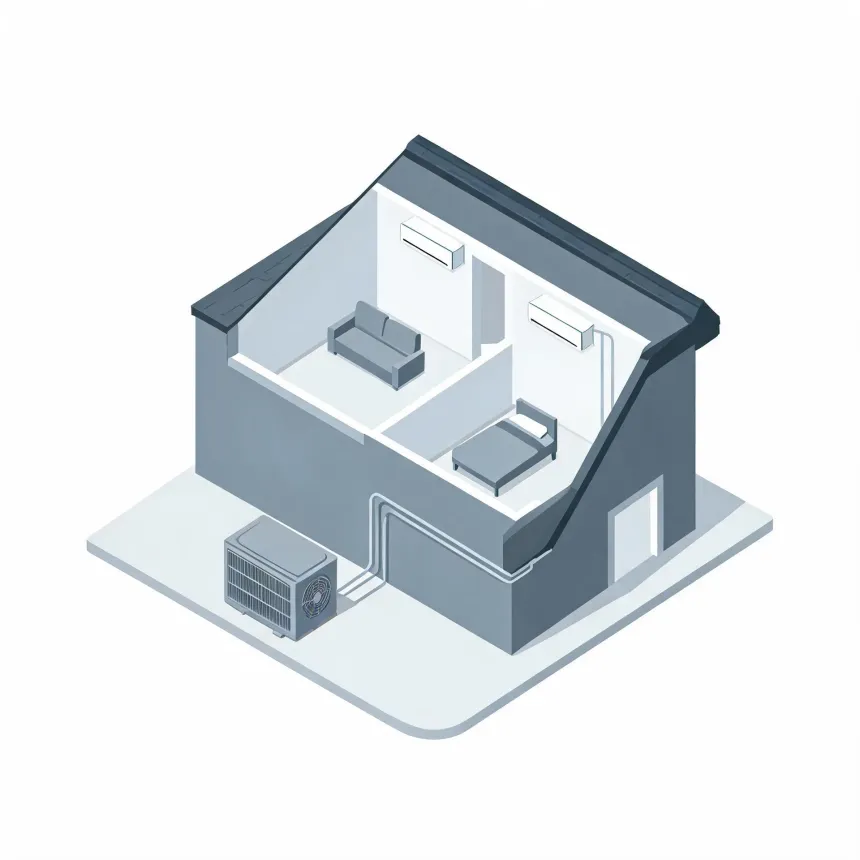
A mini split system can run one indoor head off one outdoor unit, or several heads off one larger outdoor unit, each in its own room with its own thermostat. Ask whether the quote is a single zone or a multi zone setup, and why that number was chosen for the space being heated and cooled. More heads on one outdoor unit means more flexibility room to room, but each added zone also adds a line set run and another spot where a refrigerant line has to be sealed and insulated.
The outdoor unit holds the compressor, and the compressor is the part most likely to need attention over the life of the system. Ask where it's going to sit and how much clearance it has on each side, since a tech needs room to reach the panels and coil. Ask too how the condensate drains, both from the indoor head and from the outdoor unit in winter, since a blocked drain is one of the more common service calls on these systems.
If this is replacing window units or an old ductless system, the old equipment has to come out before the new one goes in. A window unit just gets pulled and the opening closed back up. An old mini split means draining the refrigerant from the line set properly rather than just cutting the lines, since venting refrigerant to the air is illegal and any tech doing this work knows it. If the house is getting a mini split alongside an existing furnace or boiler, nothing about the old heating system changes. It stays right where it is, doing what it already does, and the mini split just adds cooling or supplemental heat to the rooms it serves. Ask the installer what happens to the old outdoor unit and line set specifically, since a line set left in a wall with old refrigerant residue can cause problems for whatever gets installed next.
Install day starts with the outdoor unit going on its pad or wall bracket, then the line set getting run to wherever the indoor head is going. That line set gets pressure tested before any refrigerant moves through it, because a leak sealed up behind drywall is a much bigger problem than one caught that afternoon. The indoor head goes up, the electrical gets tied in, and then the system gets charged with refrigerant and run through both heating and cooling to check it's doing what it should. A tech worth hiring checks the line set pressure again after charging, not just once at the start. Expect some noise and some open walls or a small hole where the line set passes through, and expect the crew to test the system before they call it done, not just mount it and leave.