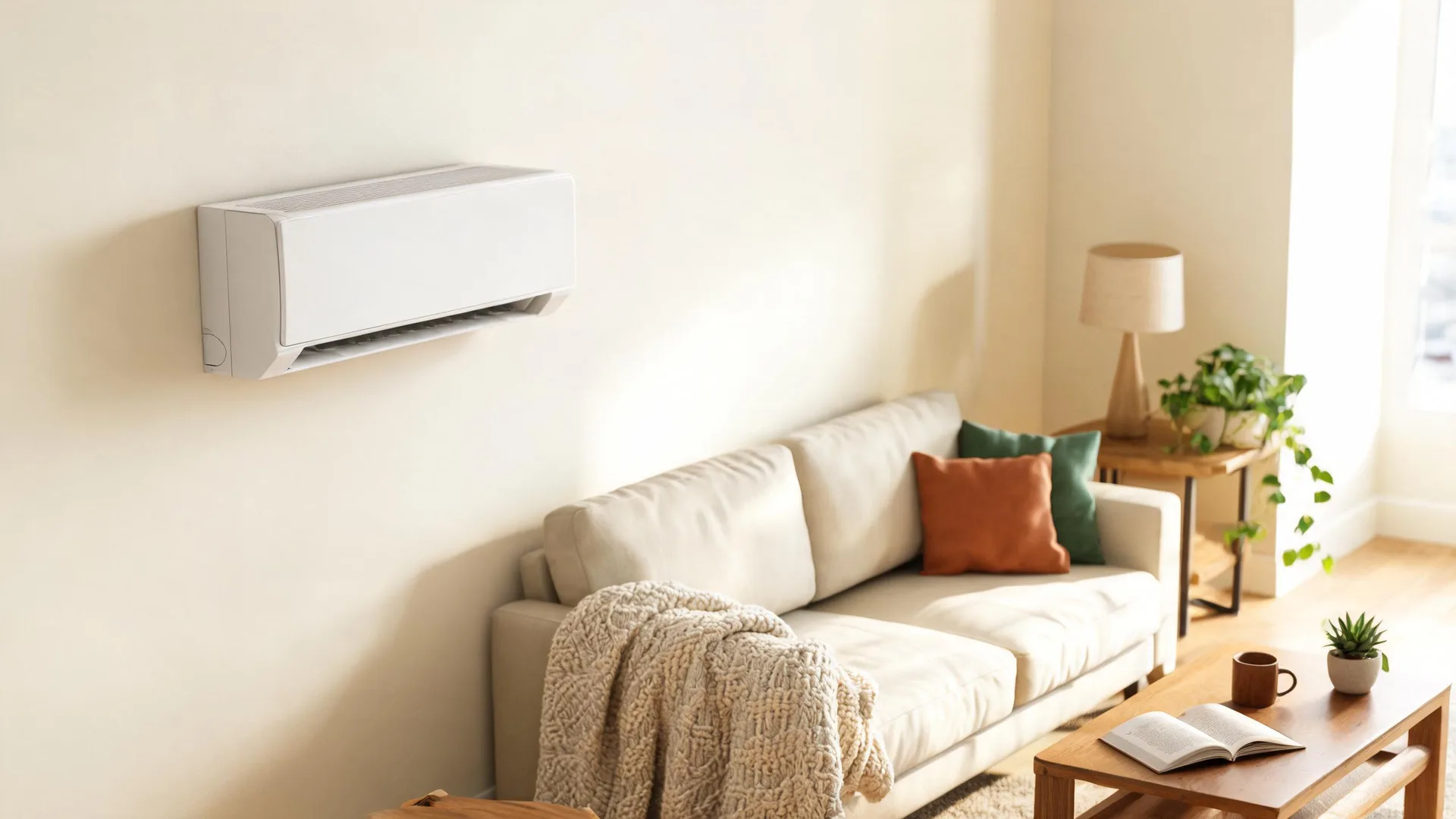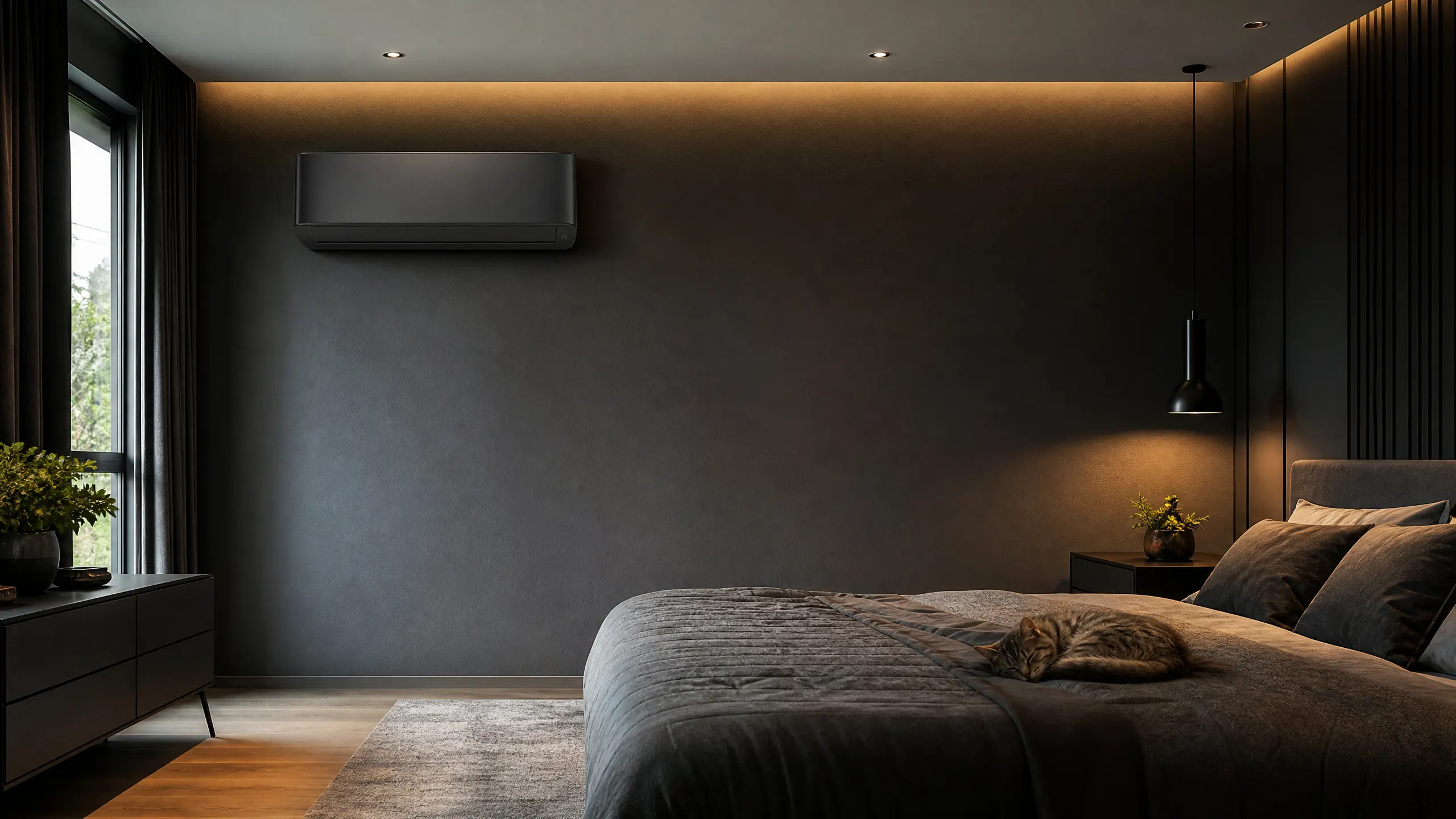
A dark, minimalist bedroom featuring a sleeping cat on a grey-quilted bed, a wall-mounted air-conditioning unit, warm cove ceiling lighting, and a pendant lamp illuminating the bedside table.

Mini Split Installation in Phillipsburg, NJ

Tell us about the job

Takes about a minute. No obligation.

New system or replacementMini-splitWarren County, NJ
Step 1 of 2

What ZIP code is the job in?

Electricity here runs 19.34 cents a kilowatt-hour

New Jersey's rate sits above most of the country. A mini split run on this power costs more per hour than the same unit would in a cheaper state, so how efficiently it's sized and installed matters more here than it would elsewhere.

The install decides what you pay after

A mini split sized right for the rooms it covers and charged correctly will hold its efficiency for years. One that's oversized or undercharged runs longer than it should to do the same job, and at this rate that difference shows up on every bill.

8 months
October through May, your system heats
3 months
June through August, it cools
21°F
the average winter night it heats against
82°F
the average summer afternoon it cools against
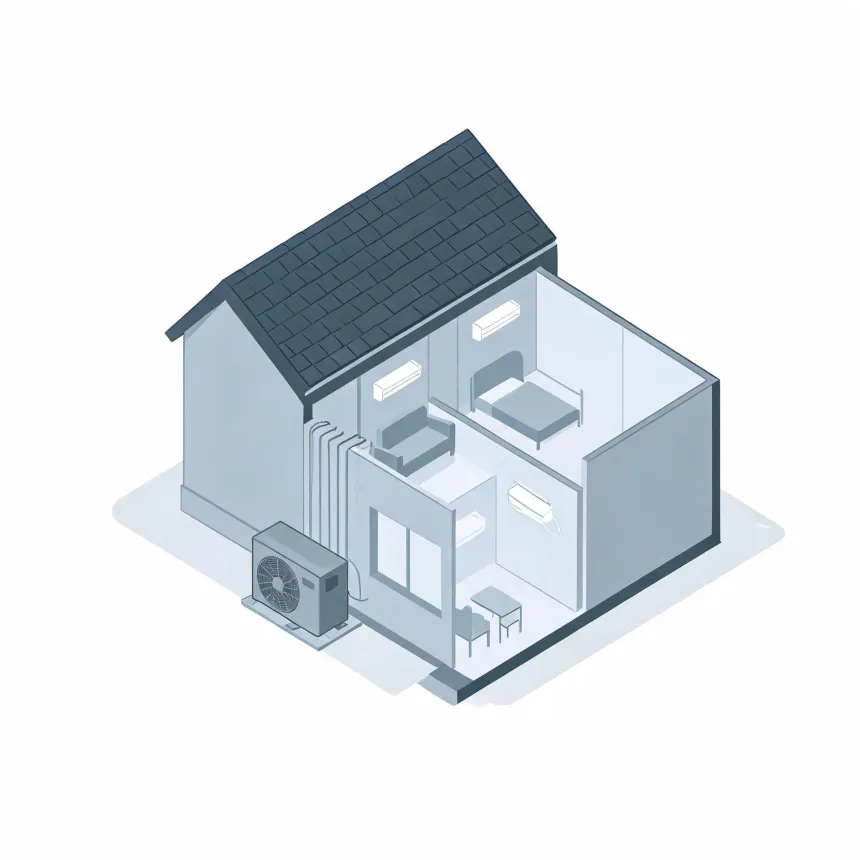
Isometric illustration of a cutaway house with a dark shingled gable roof, showing interior rooms with a bed, chairs and table, three wall-mounted mini-split indoor units connected by line sets to an outdoor condenser unit on a pad outside.
Your system heats October through May and cools June through August.

NOAA nClimDiv, 1991–2020 normals

The old system doesn't have to come out before the new one goes in.

Most installs disconnect and remove the old unit once the new lines are run, so there's no stretch with no heat or cooling at all.

Half of Warren County heats with gas, and a mini split doesn't change that

50% of homes heat with gas
Cooling runs June through August
Summer afternoons average 82°F
Before Phillipsburg needs coolingHomes in Warren County run cooling June through August. May is the month to get it installed.

Summer here is short. Cooling runs about three months, June through August, and the afternoon high averages 82°F even in the middle of that stretch. Warren County sits in zone 5A, a cool climate where heating carries the bigger load all year. A mini split doing that kind of work doesn't need to be the highest-efficiency model on the shelf. It needs to be sized right for the rooms it serves and installed clean, so it's not straining on the handful of hot afternoons it actually sees.

Half these homes were built in 1972 or earlier. Size the install to the house you have.

Half the homes in Warren County were built in 1972 or earlier. An older home wasn't built around a mini split, so sizing it right means looking at the actual rooms and walls it has to serve rather than going off square footage alone. Get that part right at install and the system holds the efficiency it's rated for.

Find a contractor
A white outdoor air conditioner condenser unit mounted on metal wall brackets against gray horizontal siding, with a blue sky and white clouds behind it.

The number on the label came from a lab, not your wall

The efficiency number on a mini split's label comes from a lab test, run at one set of conditions with the line set length the standard calls for. It tells you how the unit performs under those conditions, not mounted on a wall with the line set run through an attic, charged a little light, or sized for the wrong room. What holds that number once it's installed is the load calculation, the line set run, and the charge. Get those right and the unit runs close to what the label promises. Skip any of them and the rating on the box stops meaning much, because the unit never sees the conditions it was tested under again.

Sizing is a room by room calculation

A contractor works out the load for each room a head will serve. That means the glass it has, which way it faces, what's on the other side of its walls. Add up the wrong rooms or skip this step and the number on the unit is a guess, not a size.

Oversized fails quietly

A head that's too big cools the room fast, shuts off, and starts again a few minutes later. It never runs long enough to pull moisture out of the air, so the room feels cool and damp instead of just cool. Undersized has the opposite problem. It runs constantly and still can't hold the temperature on the hottest afternoons.

A mini split's price comes down to what the crew can't see from the brochure. How many zones, for one. Each indoor head needs its own line set run from the outdoor unit, and the length and path of that line set matters more than people expect. A short straight run through one wall costs less labor than a line that has to snake through an attic or drop down an exterior wall to clear a window. Electrical work adds its own cost if the panel doesn't have room for a new circuit. And the outdoor unit needs a mounting pad or bracket solid enough to hold it still, because a unit that vibrates loosens its own refrigerant joints over time. None of this shows up on the unit's spec sheet. It shows up in how long the crew is on site and how much they have to work around.

Install day starts with the outdoor unit and the line set, not the indoor head on the wall. The crew runs refrigerant line, a condensate drain, and power between the outdoor unit and each indoor head, then those lines get connected and the whole system is pressure tested before anything is charged with refrigerant. That pressure test matters more than almost anything else that happens that day. A leak at a joint will eventually bleed off refrigerant and leave the system working harder to do the same job, and there's no way to see that from across the room once the wall plate is on. After the test holds, the line set gets vacuumed to pull out moisture and air, then the system is charged to the weight the manufacturer specifies for that line length. A head mounted level, with a clean line set run and a charge that matches the lines, will run quietly for years. One rushed through those last steps won't fail that day. It'll just run a little worse every year after.