

Is a mini split worth it in Jersey City, NJ

New system or replacementMini-splitHudson County, NJ
Step 1 of 2

What ZIP code is the job in?

Is a mini split actually worth it in Jersey City

You're looking at a mini split for your Jersey City home, maybe for a room your gas furnace doesn't reach well, or to replace an old window unit, and you want to know if it actually pays off here. Between humid summers and cold winters, you want something that handles both without a heating bill that makes you regret it.

Yes, especially for the rooms your main system struggles to cool or heat

A mini split earns its keep in Hudson County because it does two jobs at once. It cools through the sticky months and heats through the cold ones, without relying on ductwork. That matters here because most homes heat with gas, and a mini split gives you an electric option for shoulder season heating or for a room the furnace never quite warms. The catch is the power bill. Electricity here runs among the highest rates in the country, so a mini split used as your only heat source through a full Jersey City winter can cost more to run than the gas furnace it's paired with. Used the way most homeowners here use one, for added comfort in specific rooms or as backup, it's worth the install.

A white wall-mounted mini-split air conditioner on a beige interior wall, next to a window with sheer white curtains and green foliage outside.

Running clean

A mini split that's kept up pulls humidity out of the air fast and holds the room at whatever temperature you set, even on the muggiest August afternoon. The coil stays clear, airflow stays strong, and it switches over to heat without strain once the cold sets in.


A dusty, discolored wall-mounted mini-split air conditioner indoor unit on a plain white wall, with its horizontal louvers and vent grille visible.

Choked with dust

A mini split this dirty can't move air the way it should. The grime on the vents and coil makes the unit work harder for less cooling, and in a sticky Jersey City summer that means a room that never quite feels dry. Left alone, it puts more strain on the compressor.

What does a mini split actually do to your bill here?

  • Cooling runs June through September

    Four months of cooling is real work for a mini split, but it's a fraction of the year, so a unit sized and installed right earns its keep fast.

  • Heat runs October through April

    Seven months of heat is the bigger question. A mini split that heats well through a Hudson County winter is doing most of its work right here.

  • Power here costs 24.97 cents per kilowatt-hour

    At 24.97 cents per kilowatt-hour, every hour your mini split runs costs more than it would almost anywhere else, so how efficiently it runs matters more than usual.

NOAA nClimDiv 1991-2020 · EIA-861 2025

A bearded man in a dark sweater leans back in a black leather armchair with his eyes closed, with a bookshelf, potted plant, window and a sofa holding a folded newspaper behind him.
A man in a blue sweater sits in an armchair with his eyes closed, beside a window and a side table holding a mug and a folded newspaper, with a dark bookshelf behind him.
A man in a gray knit sweater leans back on a brown leather sofa with his eyes closed, in a room with bookshelves, a lamp, plants, and a side table holding a folded newspaper and a dark mug.
A man in a dark gray sweater reclines in a brown leather armchair with his eyes closed, beside a wooden table holding a striped mug and folded newspapers, in a living room with a sofa, bookshelf, lamp, and window blinds.
A white wall-mounted mini-split indoor unit installed high on a gray interior wall, with a sofa, dark table and window visible in an adjoining room to the right.
A clean mini split pulls the humidity down fast on a muggy day and keeps that bedroom or addition even without your furnace's help.
A wall-mounted mini-split air conditioner indoor unit with a dusty beige casing and dark louvered vent, installed near the ceiling on a plain beige wall.
Dust and yellowing on the casing mean the coil behind it is likely coated too, so it struggles to cool and costs you more to run.

A mini split earning its keep in your house looks like this: the room your furnace barely reaches finally holds a steady temperature in January, and that window unit you've been hauling up every June stays in the basement for good. If the install was done right, the bill reflects it, since power here costs more than almost anywhere else and a unit that's sized wrong or placed badly will run constantly trying to catch up. Skip the install or get it wrong and you'll notice it fast: a bedroom that's still sticky in August, a living room that never quite gets warm when it's 20 degrees out, a compressor cycling on and off all day because the unit's fighting a space it can't handle. None of that shows up right away. It shows up on the bill a few months in, and in the rooms that still feel like they did before you spent the money. The difference between a mini split that's worth it and one that isn't usually comes down to whether it was matched to the room and put in correctly from the start.

A dusty white wall-mounted mini-split air conditioner indoor unit with open louvers, installed near the ceiling on a plain light-colored wall.
Before you get your mini split installation
A white wall-mounted mini-split air conditioner unit high on a light gray interior wall, with a beige curtain and window at the left and wood-look flooring below.
After you get your mini split installation
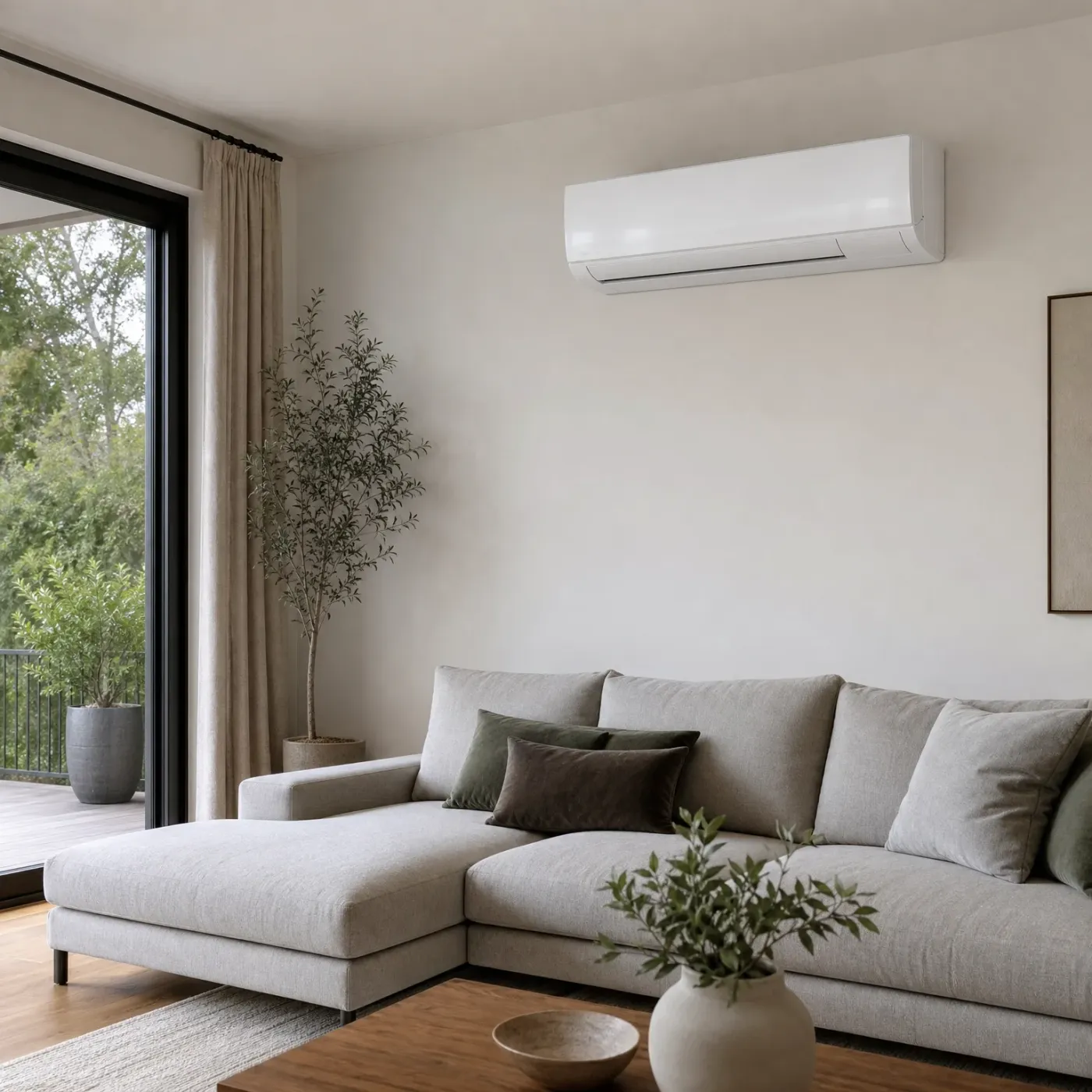
Living room with a grey sectional sofa, wall-mounted white mini-split air conditioner above it, a potted tree beside sliding glass doors with beige curtains, and a wooden coffee table with a vase of foliage in the foreground.

It's off your list after this

Skip the round of in-home estimates for a new mini split.

One request ends the search for a mini split installer.

Skip calling around

No fee to send it, and nothing to sign.

One Zone or Multi-Zone

One zone

  • Covers the single room your furnace underheats or your window unit used to fight, nothing more.
  • Costs less to install since there's only one indoor head and one line set to run.
  • Leaves every other room on the gas furnace, so your heating bill doesn't change much outside that space.
  • Simpler to size right, since you're matching one unit to one room's heat loss and sun exposure.
  • If that back bedroom or sunroom is the only trouble spot in the house, one zone solves the actual problem.

Multi-zone

  • Puts a head in several rooms off one outdoor unit, so the addition, the upstairs, and the office all get covered.
  • Each indoor head runs its own zone, so you're not cooling or heating rooms nobody's using.
  • Costs more upfront than a single zone, since the outdoor unit and the line sets both have to handle the extra load.
  • Worth considering if your gas furnace struggles in more than one part of the house, not just a single room.
  • Needs a contractor who sizes each zone separately, because an outdoor unit matched wrong starves one room to feed another.
  1. Refrigerant inside the line set absorbs heat from indoor air at the coil.

  2. The compressor outside pressurizes that refrigerant and raises its temperature.

  3. Heat releases outdoors through the outdoor coil as refrigerant condenses.

  4. Cooled refrigerant returns inside and the cycle repeats continuously.

Why does one room still feel wrong?

Maybe the head is running but the room still feels muggy by late afternoon, or it takes a long time to catch up once the sun hits that side of the house. You might hear it short cycling, kicking on and off every few minutes instead of settling into a steady run. Ice on the outdoor unit in winter, or water pooling under the indoor head, both point to something off with the install or the charge. A filter you can see dust through, or a faint musty smell when it first kicks on, means the coil behind it needs attention. Left alone, a unit working this hard drives your electric bill up without actually keeping the room comfortable.

An older man with gray hair in a green quarter-zip sweater leans back on a couch with his eyes closed and head tilted up, in a sunlit room with windows, houseplants, a lamp, and a cushion behind him.
A woman in a cream knit sweater sits in an armchair with her eyes closed and head tilted back, beside an open window showing orange and yellow foliage, with a mug on a small round table and a bookshelf behind her.
A closed silver laptop and a light ceramic mug of dark coffee on a wooden table, with a wooden chair, kitchen counter with sink, pendant lamp, potted plant, and a window showing a sunset sky in the background.

So is it worth it

A mini split sized right for the room and installed well is worth it in Jersey City. It earns its keep in winter more than summer, since you're running it against the cold for seven months against four, and it does that without touching the gas lines your furnace already uses. The room that never got warm enough finally does. The window unit comes out of the frame for good.

Getting there means finding someone who'll size the unit correctly and set the line set and refrigerant charge the way the manufacturer specifies, and that's the part most homeowners don't want to handle alone. You'd normally be calling around, explaining the same room and the same problem to every installer, then sitting with quotes trying to tell a fair price from a bad one. Send the form once and that search is off your plate.

Interior corner with sheer white curtains at a window, a brown upholstered sofa in the foreground, and a wooden multi-drawer cabinet holding a round ceramic vase with leafy branches.
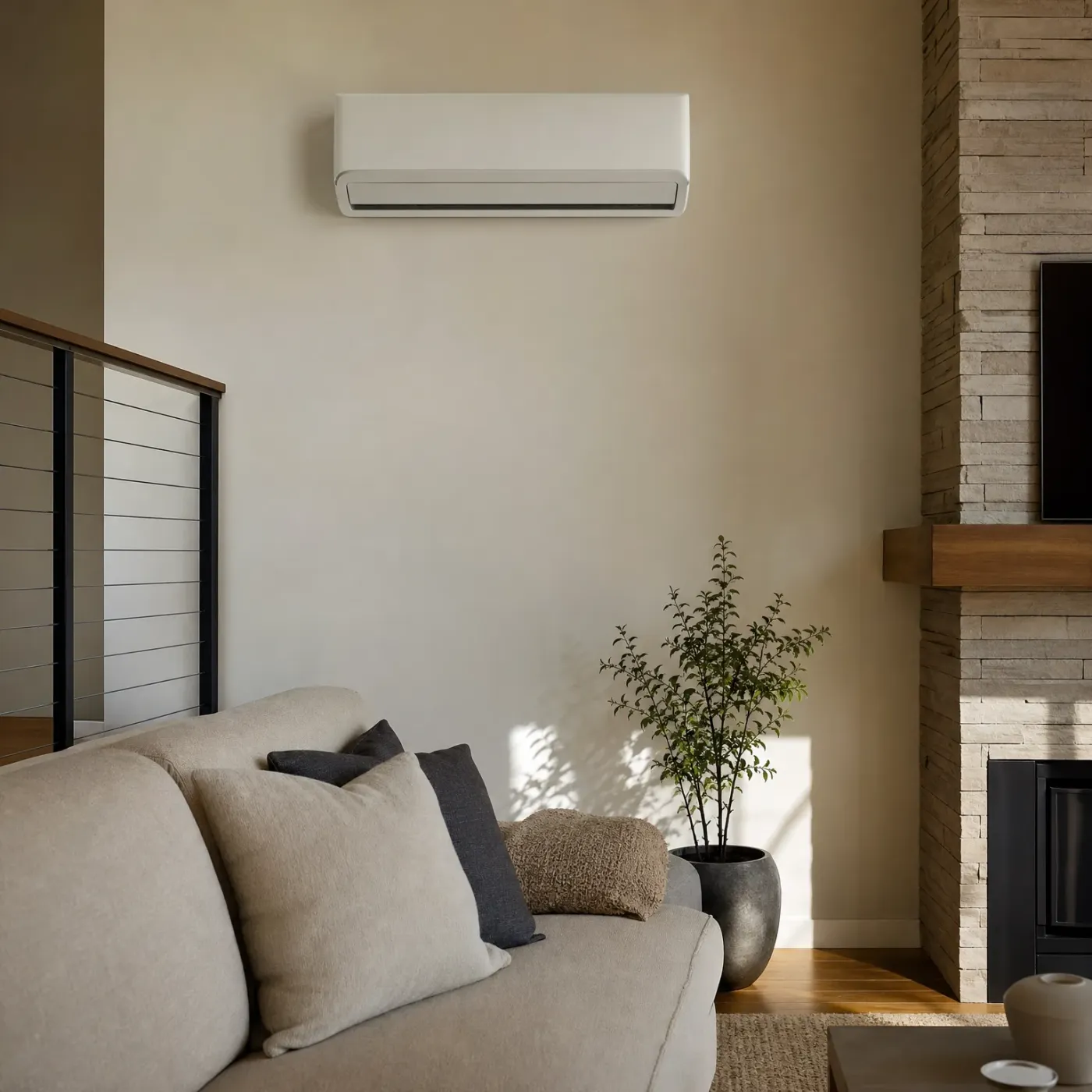
Interior living room with a white wall-mounted mini-split air conditioner high on a beige wall, a light gray sofa with cushions, a potted small tree, a stacked-stone fireplace with wood mantel and mounted TV, and a cable railing at left.

Stop chasing a mini split pro

Fill out one form

Describe the project once instead of to every installer.

Sending the form costs nothing.