



Mini split smells musty in New Brunswick, NJ

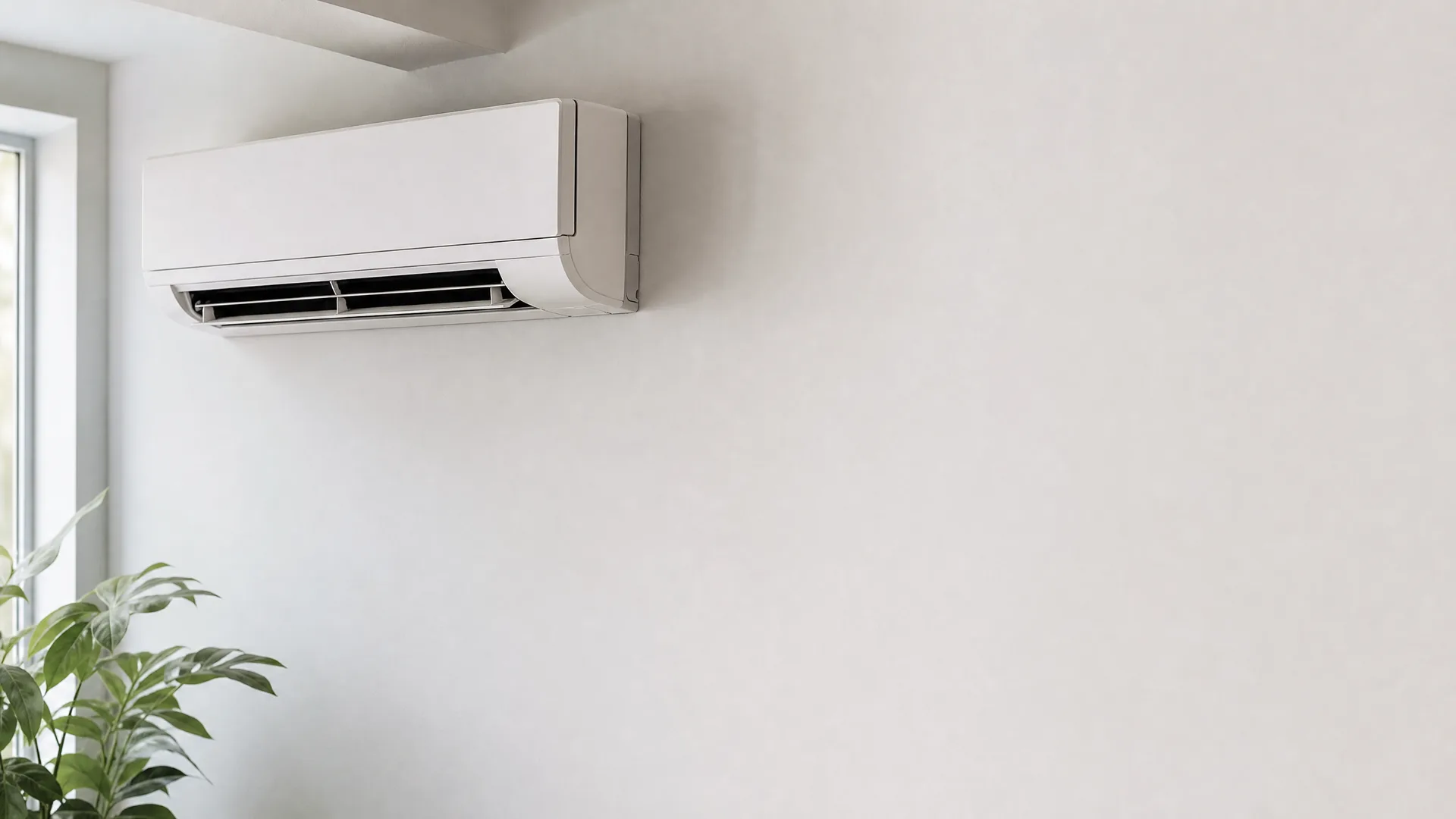
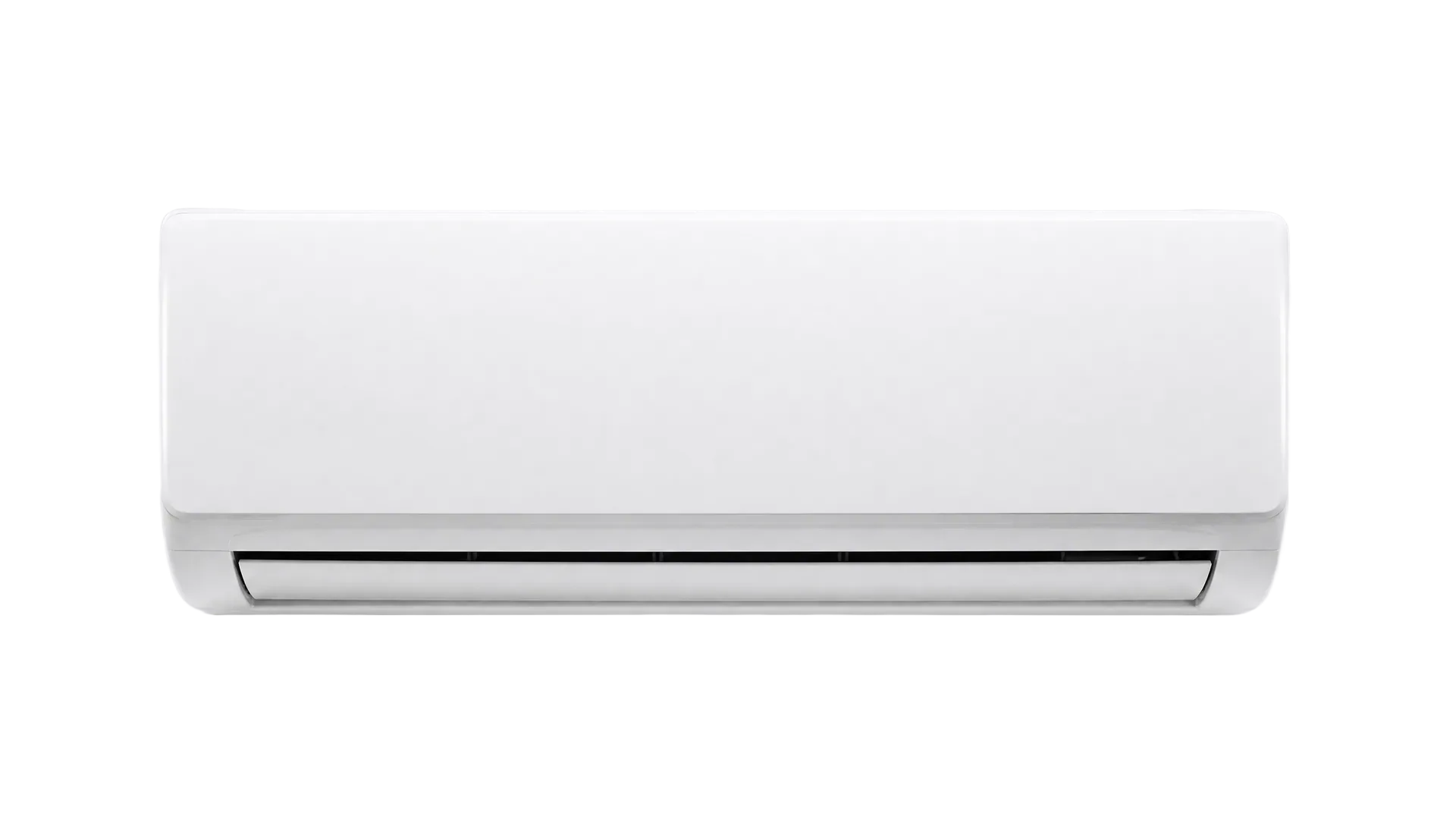
A white wall-mounted mini-split air conditioner indoor unit with a horizontal air outlet vent, centered against a plain light gray background.
Find my pro

That musty smell is water sitting somewhere it shouldn't. Inside the indoor unit is a coil that collects moisture whenever the mini split runs, and a drain line that's supposed to carry that water outside. When the coil stays wet between cycles, or the drain line gets a clog of algae and dust, the water sits and starts to mildew, and the smell gets pushed into the room every time the fan kicks on. Summers in Middlesex County are sticky, so the coil is working hard and collecting a lot of condensation for months at a stretch, which gives mold more to feed on than it would in a drier climate. A dirty filter makes it worse, since it slows the airflow across the coil and keeps it wet longer. The smell itself won't damage the unit right away, but it means moisture is building up where it shouldn't, and it tends to come back each time you turn the system on until the coil and drain are actually cleaned.

Why does this keep coming back once the weather changes?

  • Cooling runs June through September

    Cooling runs June through September here, and that's four straight months of the coil staying wet if the drain line is slow to clear.

  • Heat runs October through April

    Heat runs October through April, so the same indoor unit sits unused for stretches between seasons, long enough for standing water to turn stale.

  • Power here costs 23.82 cents per kilowatt-hour

    Power here runs 23.82 cents per kilowatt-hour, so running the unit just to dry it out costs more than it would somewhere cheaper.

NOAA nClimDiv 1991-2020 · EIA-861 2025

Where the smell actually starts

  • The indoor unit's coil sits above a drain pan, and a condensate line carries the water out to a hose or small pipe outside.
  • Dust and dander settle on a wet coil and turn into a film that mold grows on, which is where the musty smell starts.
  • A sagging or kinked drain line lets water pool instead of draining, and that standing water sours fast.
  • Most mini splits have a washable filter behind the front cover, and a clogged filter slows airflow enough that the coil stays wet longer.
  • The blower wheel behind the coil can collect the same grime, and once that happens the smell blows straight into the room every time it spins up.
  • A contractor doing maintenance flushes the drain line, pulls and rinses the filter, and checks the coil and blower wheel for buildup.

The indoor unit on your wall is built to handle water. The coil pulls moisture out of the air, that water drips into a pan underneath, and a condensate line carries it out of the house through a hose or small pipe you can usually find near the outdoor unit. That's the normal path. The smell shows up when something along that path slows down or stops.

A coil that stays damp between cycles collects dust the same way a wet countertop collects crumbs. That film is what mold takes hold on, and it's what you're smelling when the unit kicks on. The drain line is the other half of the problem. If it sags, kinks, or has a low spot, water sits in it instead of running out, and standing water goes sour within days.

Airflow matters too. Most mini splits have a washable filter right behind the front cover, and when it's clogged, less air moves across the coil, so the coil takes longer to dry between cycles. The blower wheel sits just behind that coil, and it picks up the same grime over time. Once the wheel is coated, it throws that smell into the room every time it spins up, even if the coil itself is clean.

A contractor doing maintenance works through this in order: flush the drain line, pull and rinse the filter, then check the coil and blower wheel for buildup.

An older man with gray hair and a beard, wearing a dark jacket dusted with snow, stands smiling in a dimly lit hallway with lamps and a living room visible behind him.
A gray-haired, bearded man in a dark snow-dusted coat stands smiling in a dimly lit entry hall with a staircase, a lit table lamp, a framed picture, and a living room visible through a doorway.
An older man with white hair and a beard, wearing a dark snow-dusted coat and scarf, stands in a warmly lit interior hallway with a framed landscape picture, a table lamp and a potted plant behind him, and a snowy view through a window at left.
A gray-haired, bearded man in a dark coat dusted with snow stands smiling in a dimly lit room with a lamp, mirror, framed art, and a sofa in the background.

The smell clears on its own

Run the mini split on fan only for an hour with the room windows open, and clean or rinse the filters if they're due. Sometimes that's enough, especially if the unit has sat unused for a week or two and the smell is mild. Humid stretches in July and August make this less likely to hold, since the coil goes right back to sitting wet the next time it cools the room. If the smell is faint and new, this is worth trying before anything else. If it comes back within a few days, the water isn't clearing on its own.


The smell keeps coming back

A recurring musty smell past a quick clean usually means the drain line or the coil itself needs attention a filter rinse won't reach. That's a job for a contractor, especially heading into a New Brunswick summer when the indoor unit will run daily for months. Left alone, a slow drain can overflow the pan and mark the wall or ceiling below it. Getting someone out to look at it now, before the heavy cooling months set in, means it's handled instead of something you're managing around all summer.

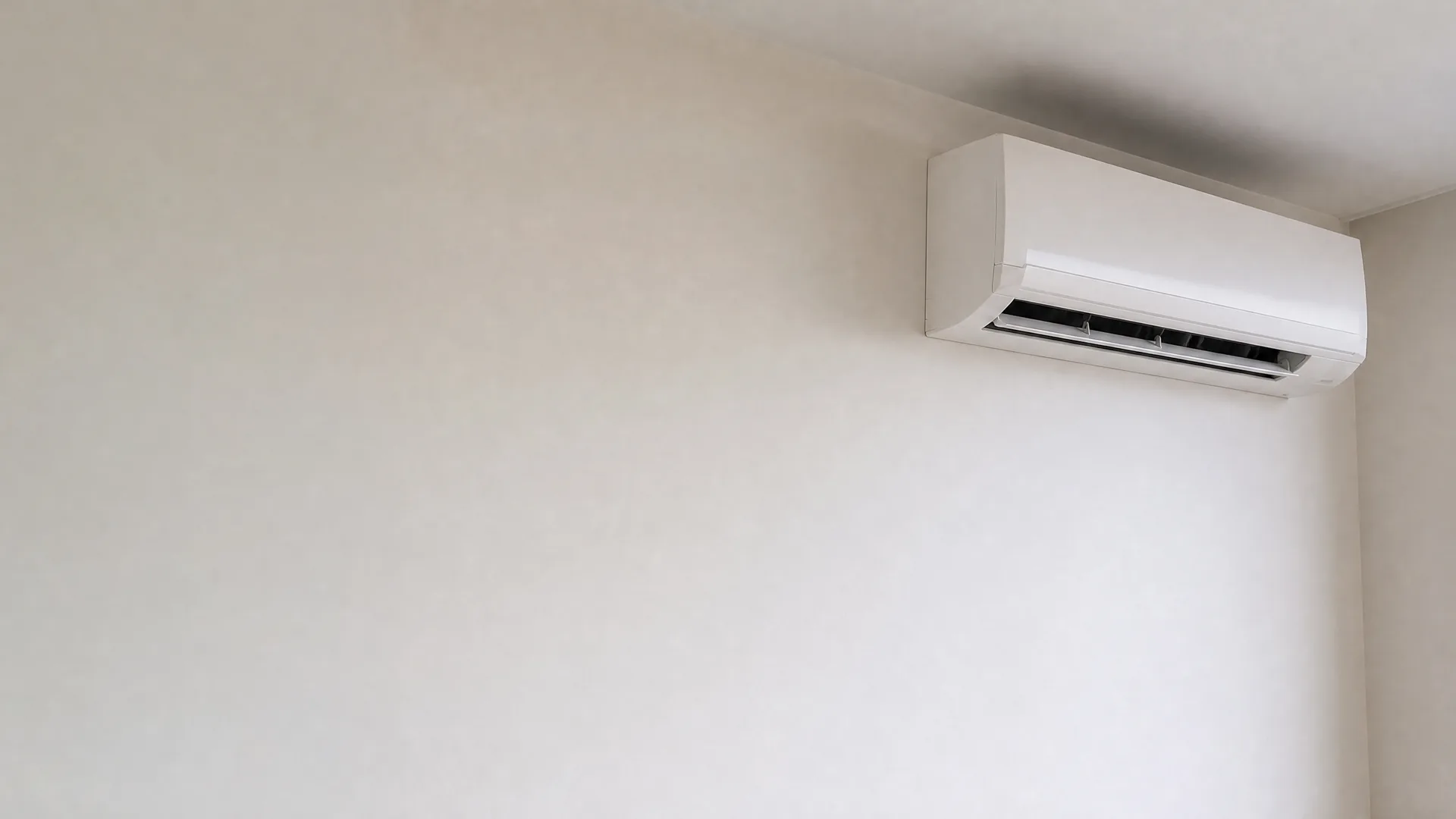
A dusty white wall-mounted mini-split air conditioner indoor unit installed high on a beige interior wall below a white ceiling and trim.
Before you get your mini split maintenance
A white wall-mounted mini-split air conditioner installed near the ceiling on a light-colored interior wall, with a window and green foliage visible at the left edge.
After you get your mini split maintenance

A mini split's drain line slopes about an inch for every ten feet it runs, just enough for gravity to carry the water out on its own.

Let that slope sag even a little, or let algae build up inside the line, and the water stops moving. It sits against the coil instead, and that's the smell.

Cooling runs June through September

Four months of cooling means four months of that coil staying wet every day it runs. Once the weather turns in June, your mini split won't get a break long enough to dry out on its own until fall, so a slow drain line keeps feeding the smell the whole time.

NOAA nClimDiv 1991-2020

A white wall-mounted mini-split air conditioner on a light gray wall in an empty room with dark wood flooring, white baseboards, a tray ceiling with recessed lights, and a window at the left.

Running clean

A mini split that's draining right looks like this. The coil dries out between cycles, the line carries water outside without a fight, and the air coming off the unit doesn't carry any smell with it.

A wall-mounted mini-split air conditioner indoor unit with a yellowed plastic casing and dark horizontal vent louvers, installed on a plain light-gray wall.

Running wet

Dust on top and dark residue around the vents means water's been sitting somewhere it shouldn't. That residue is mold feeding on a coil or a drain pan that never gets the chance to dry.

A woman wrapped in a thick fleece blanket sits on a sofa holding an open book, beside a lit table lamp and a frost-covered dark window.
A woman in a cream knit sweater sits with eyes closed in an armchair beside an open window showing orange and yellow autumn foliage, with a mug and books on a small side table.

Get matched with a mini split pro in Middlesex County

Send the form, and lining up the mini split tune-up stops being yours to chase.

Sending the form costs nothing.

A white wall-mounted mini-split air conditioner on a plain light-colored interior wall, with a window at left and a green leafy plant in the lower left corner.

What a wet coil does to your air

Every room that mini split serves gets air pulled across that coil first. If the coil's holding water and growing a film on top of it, that smell isn't staying near the indoor unit. It's going wherever the air goes, which in a lot of homes here is the whole upstairs or the whole main floor. Anyone in the house with allergies or asthma usually notices before anyone else does, because mold and mildew in the airflow tend to hit them first.

A white wall-mounted mini-split air conditioner installed near the ceiling on a plain beige interior wall, with empty wall space to the left.

What a stuck drain line can soak

If the condensate line backs up far enough, the water has to go somewhere, and that's usually out of the drain pan and down the wall behind the indoor unit. On a wall-mounted unit that means drywall, insulation, maybe the framing behind it, sitting damp without anyone seeing it until there's a stain or the wall feels soft. The longer a slow drain goes unnoticed, the more of the wall around the unit gets a chance to soak it up.

Clean It Yourself or Call Someone

Clean it yourself

  • Wiping the filters and running fan-only mode handles surface dust, but it won't reach the coil or the drain line itself.
  • A wet-dry vacuum at the outside drain outlet can sometimes pull a short clog free if you can get a seal around the opening.
  • You have no way to check the line's slope or see how far back any clog or algae growth goes once it's past the first foot or two.
  • If the smell comes back within a few weeks, the fix didn't reach whatever's actually holding water, and you're back where you started.
  • Any mistake with the indoor unit's cover or wiring while you're in there is yours to live with or pay to undo.

Have it serviced

  • A contractor can flush the full drain line and check its slope, not just the part you can reach from outside.
  • The coil gets cleaned directly, which clears the film growing on it instead of just treating the smell it gives off.
  • Service turns up a sagging line or a clog further down before it backs up and drains water into the room instead of outside.
  • Filters get cleaned or replaced as part of the same visit, so you're not separating that step out on your own.
  • Once it's done, the coil has a real chance to dry out between cycles instead of sitting wet through the next four months of summer.
A white wall-mounted mini-split air conditioner unit installed high on a light gray interior wall below crown molding, with a bamboo-shaded window at the lower left.

Working the way it should

This is what a clean mini split looks like on the wall. No film on the casing, no haze around the vents, just a unit moving air. The coil behind it is drying out between cycles, so there's nothing sitting around long enough to smell.

A wall-mounted mini-split air conditioner indoor unit with a dusty, discolored cover, installed near the ceiling on a plain light-colored wall.

Dust and discoloration showing through

This casing's picked up a layer of dust and gone dull in patches. That's what builds up on the outside when moisture's lingering on the inside. By the time it shows on the plastic like this, the coil behind it has likely been holding water a while.

Is this smell actually something to worry about?

You'll notice it most when the mini split first kicks on, a damp, closed-up smell that fades after a few minutes of running. Check the wall or floor under the indoor unit for a damp spot or a water stain, and look at the vents for a dark film building up around the edges. If anyone in the house has allergies or asthma, you may notice more sneezing or a stuffy feeling in whatever room that unit serves. Left alone, a drain line that's not clearing keeps the coil wet day after day, and mold on a wet coil doesn't go away by itself. It spreads across the coil and gets blown into the room every time the unit runs.

A two-story gray clapboard house with white-trimmed windows and a white front door, framed by large green trees, with a wet concrete walkway and sidewalk crossing a lawn in the foreground.

Summer air in Middlesex County carries a dew point around 63°F, which is the heavy, sticky air you feel from June through August. That moisture load means your mini split's coil is pulling more water out of the air on a muggy July day than it ever would in October. More water means more runoff heading down that drain line, and more chances for it to sit if the line is slow or sagging. On a thick, humid night the unit's coil barely gets a break between cycles, so a musty smell that was mild in spring can turn sharp and constant once the air outside gets heavy.

NASA POWER T2MDEW

A woman in a cream cardigan and jeans stands with one hand raised facing an open front door of a gray horizontal-siding house, with a black lantern wall light, a potted shrub with yellow flowers, and a stone-faced porch column.

A musty mini split means water that isn't draining the way it should

The coil gets wet every time the unit runs, and the drain line is supposed to carry that water out. When it doesn't, the smell shows up. That's true whether the line has a clog, a sag, or a film of algae built up inside it from a season of use. Nothing about the fix changes what you already know: the unit needs to drain clean and dry out between cycles, the same as it did when it was new.

A contractor who works on mini splits in Middlesex County can look at the coil and the line and tell you which one is holding water, then clear it. From there, finding someone to do that work is the part you can hand off. Once you send the details, a contractor who covers New Brunswick gets in touch, and the smell stops being something you have to figure out on your own.

A shallow dark wooden bowl and a stack of books rest on a wooden table in front of a beige sofa with linen and green cushions, with a tall ceramic vase of thin branches beside a window in the background.
A dimly lit room with a dark gray wall holding a white wall-mounted mini-split air conditioner near the ceiling, with a sofa, table lamp, potted plant, and curtained window at left.

Find a mini split maintenance pro in Middlesex County

Send the form and the mini split tune-up stops being something to remember.

Tune-up, service, or cleaningMini-splitMiddlesex County, NJ
Step 1 of 2

What ZIP code is the job in?