






A white wall-mounted mini-split indoor unit on a gray interior wall above a beige sofa, with a framed picture, a floor lamp, wood slat wall trim, and a window showing green foliage.

No quotes to chase

How long mini splits last in New Jersey

A mini split running through a New Jersey summer and a New Jersey winter works harder than the spec sheet suggests. How long yours lasts depends on the install, the unit, and how it's used. This page gets into what actually shortens or extends that life, and when replacement starts making more sense than another repair. Skip the round of calls to different companies and the back and forth explaining the same unit: a local installer who works on these year-round can look at yours directly.

Fill out one form

A mini split in New Jersey typically runs 12 to 15 years before it needs replacing, sometimes longer if it was installed right and serviced on schedule. The number swings because the unit works both ends of the year here, pushing cool air through sticky summers and carrying real heating load once temperatures drop, since most homes in the state still lean on gas for that and ask the mini split to cover specific rooms or additions. That dual duty adds wear a system in a milder climate wouldn't see. What cuts life short almost always traces back to install: a line set sized wrong, a unit mounted where it can't drain properly, refrigerant charge that was never checked against the actual run of line. None of that shows up right away. It shows up as a compressor working harder than it should for years, then failing early. The install is the part you can control, and it's the part that decides whether 12 years turns into 8 or into 16.

A dusty, stained wall-mounted mini-split air conditioner indoor unit near the ceiling on a plain beige wall, with visible lint buildup at its intake grille.
Before you get your mini split installation
A white wall-mounted mini-split air conditioner installed high on a beige interior wall near the ceiling, with a white-framed window at the left edge.
After you get your mini split installation

The compressor outside is the part doing the real work, and in a New Jersey summer it cycles on and off far more than the number on the spec sheet ever accounted for. Every one of those cycles adds wear. The refrigerant lines running through your exterior wall take their own beating, freezing and thawing each winter until the joints start to give. Inside, the coil pulls dust and mold out of the humid air and holds onto it, and once it's dirty the compressor has to run longer just to hit the temperature you set. Sizing matters more than people think. A unit too big for the room shuts off before it's pulled the humidity out, cycling on and off instead of running steady, and that short cycling wears the compressor faster than steady use would. The condensate line clogs more here than in a drier climate, and when it backs up it can shut the system down or damage the indoor unit. And if the same unit is heating your home through winter and cooling it through summer, it's logging close to twice the hours of one that only runs half the year.

What Actually Wears a Mini Split Out

  • The outdoor compressor cycles on and off far more often in a New Jersey summer than the spec sheet's test conditions assume.
  • Refrigerant lines running through an exterior wall take a beating from freeze and thaw cycles each winter, which stresses the joints over years.
  • The indoor coil collects dust and mold in the humid months, and a dirty coil forces the compressor to run longer to hit the set temperature.
  • A unit sized too large for the room short cycles, turning off before it pulls enough humidity out of the air, which wears the compressor faster.
  • The condensate drain line clogs more in a humid climate, and a backed-up drain can shut the whole system down or damage the indoor unit.
  • A mini split used for both heating and cooling logs roughly twice the run hours of one that only cools, which shortens its working life.
A gray-haired woman in a white top and gray cardigan sits in an upholstered armchair indoors, looking toward a window with a green potted plant, with a bookshelf behind her.
A woman with her hair in a bun holds a sleeping child against her chest on a couch, both wrapped in a knit blanket, with a lit lamp, potted plant and framed picture in the background.

What Shortens Yours in New Jersey

  • A mini split that short-cycles through August humidity wears out its compressor years before a properly sized one would.
  • Running on electric heat strips during a January cold snap can push your power bill well past what gas heat would cost.
  • A refrigerant leak that goes unnoticed for a season can leave you without cooling right when you need it most.
  • An outdoor unit mounted too close to the house can ice over each winter and strain the whole system.
  • Skipping a filter cleaning for a year or more makes the indoor coil work harder and raises what you pay to run it.
  • A unit installed with the wrong line set length will lose efficiency for as long as you own it.

Most of what cuts a mini split's life short here traces back to two things: how it was sized and installed, and how it gets used once it's running. Undersized for the room, it has to short-cycle through every humid stretch of summer, and that wear adds up on the compressor faster than a correctly sized unit would ever see. Some households lean on electric heat strips during the coldest snaps instead of a furnace, and since New Jersey power rates run high, that choice shows up fast on the bill, often costing more than gas heat would for the same stretch of cold. A slow refrigerant leak is easy to miss because the system keeps running, just worse, until a July afternoon when it stops cooling altogether. Where the outdoor unit sits matters too. Mounted too close to the house, it can ice over each winter, and that ice makes the whole system work harder to do the same job. Inside, a filter that goes uncleaned for a year forces the coil to pull harder for the same airflow, which shows up as a higher bill before it shows up as a breakdown. And if the line set connecting the indoor and outdoor units was cut to the wrong length at install, that's not something you fix later. It's a loss of efficiency you pay for every month, for as long as you own the system. None of these are rare. They're the ordinary ways a mini split's working life gets shorter than it should.

A man with gray hair and a beard wearing a dark green shirt jacket over a navy top sits on a gray sofa in a living room, looking to the side, with a window, potted plant and shelving in the background.
A gray-haired man in a navy button-up shirt over a white tee sits on a light gray sofa in a living room, looking off to the side, with a window, houseplant, framed picture and shelving behind him.
A man with gray hair, a beard and glasses, wearing a dark green sweater, sits on a gray sofa in a sunlit living room with a potted plant, table lamp and wooden sideboard behind him.
A man with grey hair and stubble in a dark sweater sits on a grey sofa indoors, looking off to the side, with a potted plant and a sunlit window behind him.

No phone calls to make

One installer gets your project, so there's no bidding war over it.

Sending the form costs nothing.

A white wall-mounted mini-split air conditioner indoor unit on a light gray wall above a white baseboard and wood-look floor.

Running clean

A mini split that's sized right and serviced on schedule looks like this. The vane moves freely, the panel reads normal, and the unit cycles on and off instead of running flat out all afternoon. That steady cycling is what keeps the compressor alive through a New Jersey summer.


A white wall-mounted mini-split air conditioner indoor unit installed near a textured ceiling on a plain beige wall, with visible dust and discoloration on its casing and vent.

Caked in dust and grime

Grime like this builds up when the filter isn't cleaned and airflow gets choked off. The unit works harder to push the same air through, the coil behind it stays dirtier longer, and a system that should run another decade starts failing years early.

Power costs 22.48 cents per kilowatt-hour statewide

At that rate, a mini split that's sized wrong or losing refrigerant shows up fast on your bill, not just in January with the heat strips running but in July too. A unit that cycles the way it should keeps that cost in check over its whole 12 to 15 years.

EIA-861 2025 statewide residential average

A white wall-mounted mini-split air conditioner installed near the ceiling on a beige interior wall, with a window and bamboo blind at the left edge showing green foliage outside.

Running clean

A mini split that's maintained like this keeps its panel clear and its vents open. Air moves through without resistance, so the compressor cycles the way it was built to instead of straining to push air past a clogged filter. That's what gets you the full years out of it.

A wall-mounted mini-split air conditioner indoor unit with discolored casing and dusty vents, installed near the ceiling on a plain light-colored wall.

Choked with dust

Dust and grime on the panel and louvers mean the unit is working against itself. Airflow drops, the coil behind that panel has to work harder to do the same job, and the compressor runs longer than it should to hit the temperature you set. Left alone, that shortens the unit's life.

What the Install Determines

Installed wrong

  • A unit sized for a smaller room short-cycles in July, turning on and off instead of running a steady stretch, which wears the compressor faster than the load ever should.
  • Line sets routed with sloppy joints lose refrigerant slowly, so the system runs low for months before anyone notices the house isn't cooling right.
  • A condensate line with no slope backs up and drips into the wall or ceiling near the indoor unit, a problem that shows up as water damage before anyone thinks to check the drain.
  • An outdoor unit set directly on the ground gets buried in snow or ice by February, cutting off airflow the compressor needs to run.
  • Electrical work that skips a dedicated circuit can trip breakers under heavy summer load, right when the system needs to run longest.

Installed right

  • A unit matched to the room's actual size cycles on and off through the afternoon instead of running flat out, which is what keeps the compressor from wearing down early.
  • Line sets brazed and pressure-tested hold their charge for years, so the system keeps the capacity it was built with.
  • A condensate line sloped and run to a proper drain point clears water away from the unit instead of letting it pool.
  • An outdoor unit mounted on a pad or bracket above grade stays clear of snow and ice through a New Jersey winter.
  • Wiring run to code with its own circuit means the system draws power without tripping breakers during the hottest or coldest stretches.
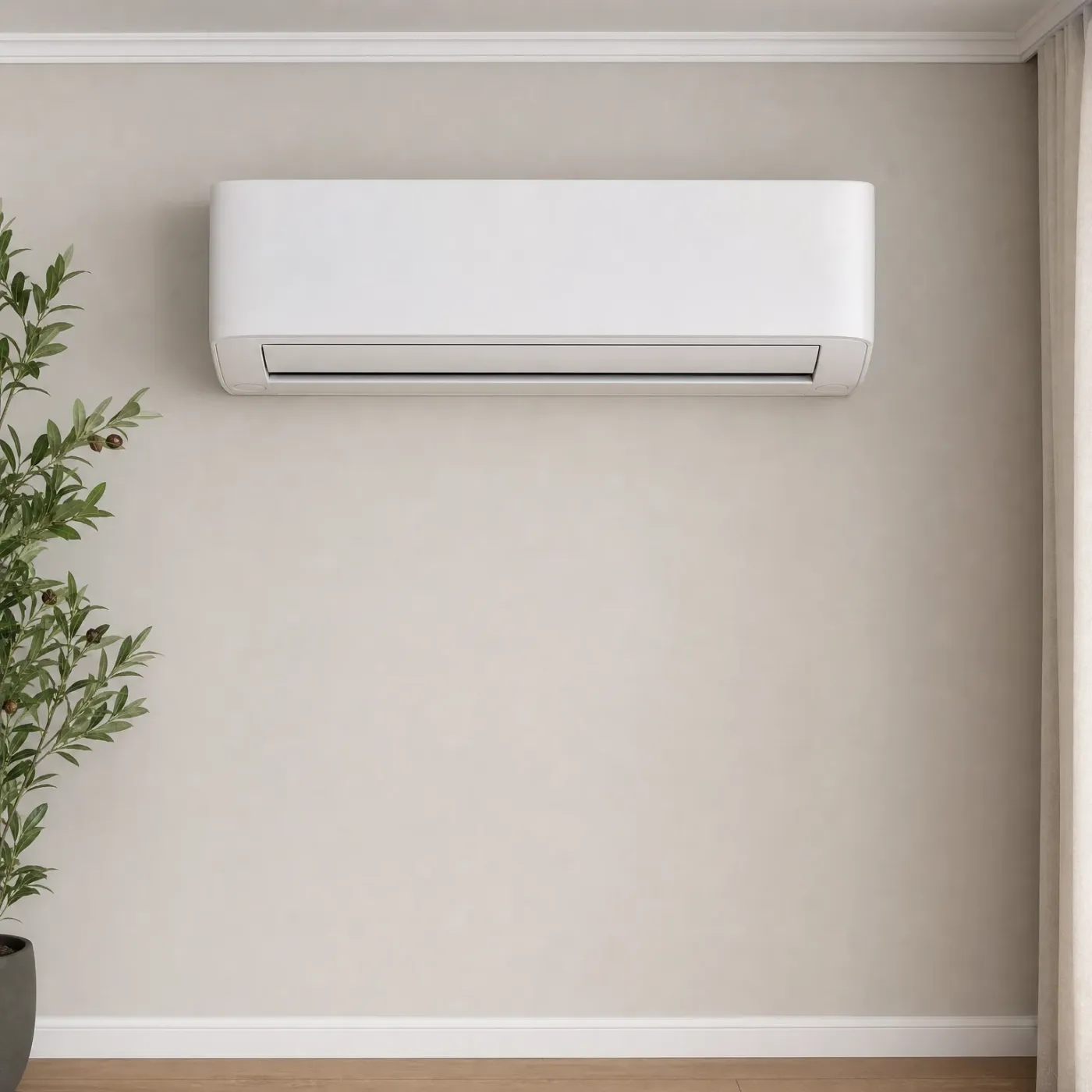
A white wall-mounted mini-split indoor unit on a beige interior wall, with a potted leafy plant at the left and a curtain edge at the right.
A unit like this cycles on and off at a normal pace, holding the room steady through a sticky July afternoon.
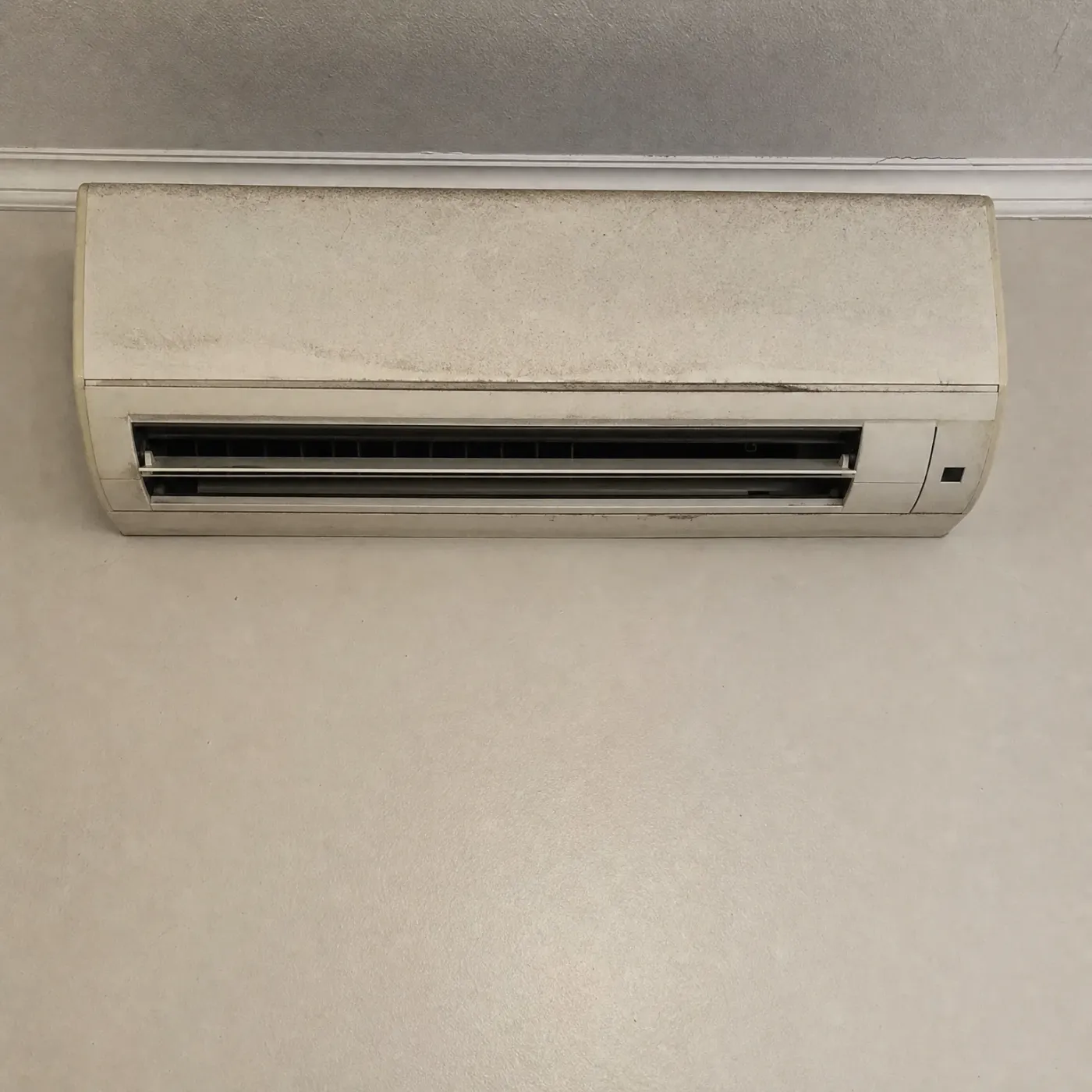
A dusty, discolored wall-mounted mini-split air conditioner indoor unit near the top of a plain light-colored interior wall below a white molding strip.
Dust packed into the vents like this blocks airflow, so the compressor strains and wears out well before 12 years.
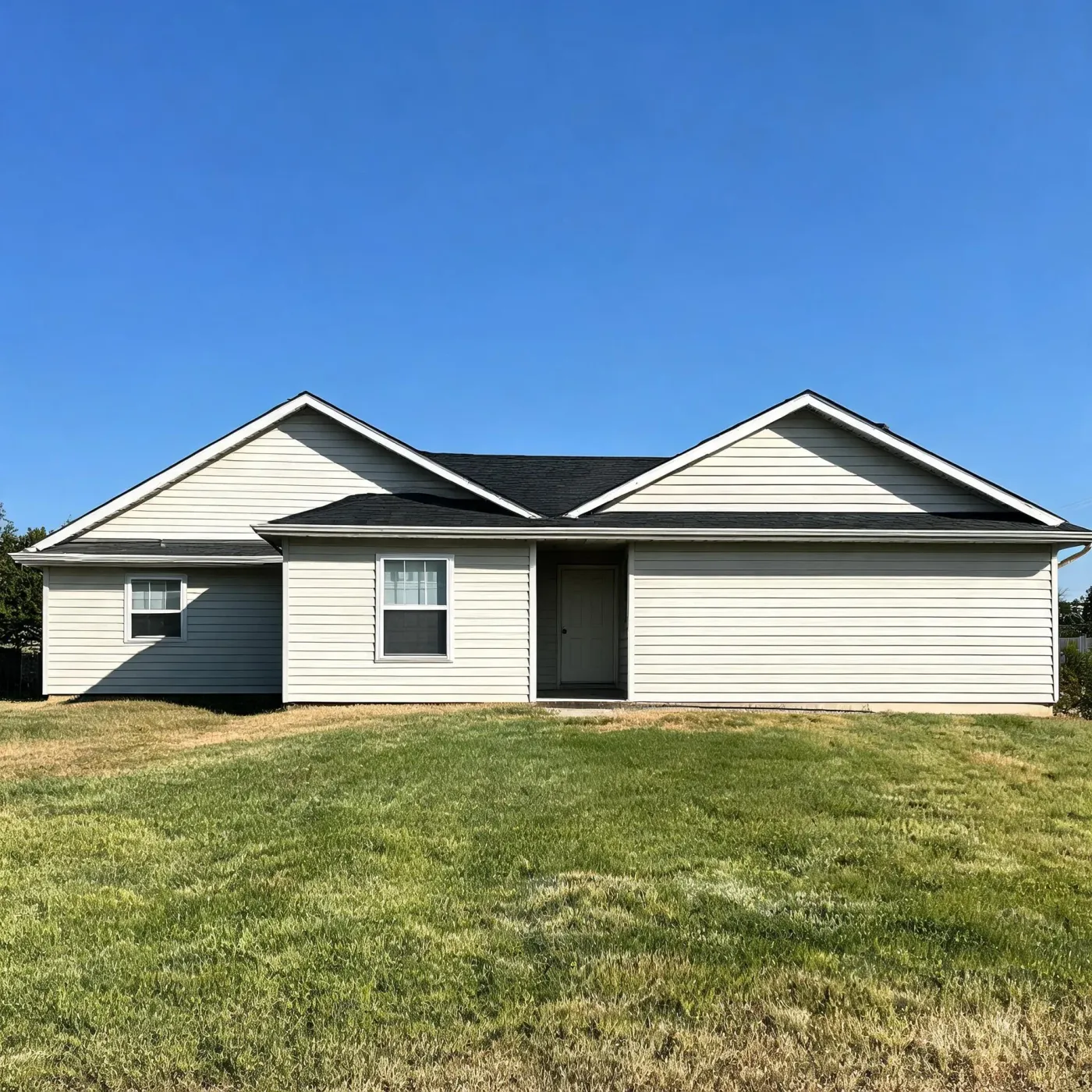
A single-story house with cream vinyl siding, dark shingled gable roofs, two windows and a center door, set on a grass lawn under a clear blue sky.

A dew point in the 63°F range is what makes a July afternoon here feel heavy instead of just warm, and it's what your mini split is actually fighting all summer. Pulling moisture out of air that thick takes more work than cooling dry air to the same temperature, so the compressor runs longer stretches to get the room comfortable. You'll notice it in how the unit behaves: it doesn't just kick on and cycle off, it holds a steady run through the muggiest part of the afternoon. That extra runtime adds up across a whole summer, and it's part of why the compressor sees more wear here than it would somewhere drier.

NASA POWER T2MDEW county cells weighted by homes

What is your mini split telling you right now

Walk past it and pay attention. A unit running normally cycles off and on through the afternoon rather than blowing nonstop for hours. The air coming out should feel genuinely cold in summer, not just cool. Listen for a rattle in the outdoor compressor or a hiss near the line set running through the wall, either can mean a slow refrigerant leak. Check the panel for an error code and the vents for dust buildup blocking the airflow. Water pooling under the indoor head means the condensate drain is backed up. None of this means the unit is finished, but ignored long enough, a refrigerant leak or a clogged filter forces the compressor to strain, and that's what turns a 15 year unit into a 9 year one.

  1. A tech measures each room to size the compressor correctly.

  2. Line sets run through the wall and connect to the outdoor unit.

  3. The system gets pulled into a vacuum to clear out air and moisture.

  4. Refrigerant is weighed in to the manufacturer's exact charge.

A wooden table with a closed laptop, a ceramic mug of dark coffee, and a glass vase of eucalyptus stems beside a window, with a dark green kitchen cabinet, wooden counter, potted herb, cutting boards and bowl blurred in the background.

12 to 15 years, if the install earns it

A mini split in New Jersey lasts 12 to 15 years when it's sized for the room, charged correctly, and serviced on schedule. Skip any of that and the compressor pays for it, usually years before it should have quit. The unit you have now is either on that path or working against itself every summer and winter, and the signs are the ones already covered here: how it cycles, how cold the air actually feels, what's sitting in the vents.

Finding someone to look at it is its own chore, the kind most people put off. Searching for installers, calling a few, describing the same symptoms three times over, then weighing quotes that don't quite compare. This page connects you with one licensed New Jersey contractor who works on mini splits all year in homes like yours, so you're not fielding calls from five companies trying to figure out who actually knows the equipment.

A living room corner with a beige upholstered armchair holding navy and striped cushions, a small round wooden side table with a carved bowl and a potted green plant, a framed landscape picture on a pale wall, built-in shelving, and a curtained window.
A modern two-story house with dark siding and stone base at dusk, with lit soffit lights, a path of large rectangular pavers set in dark gravel, planting beds, a lawn, and an orange and blue sunset sky above distant trees and water.

Mini Split Installation

One form, no calling around

New system or replacementMini-splitNew Jersey
Step 1 of 2

What ZIP code is the job in?

  • A beige upholstered armchair with an olive cushion sits in a sunlit corner beside a wooden side table holding a ceramic vase with leafy branches, under a framed abstract artwork, on a woven rug over a wood floor.
    • A local installer who puts in mini splits gets your project.
    • Get in touch with a local installer about a new mini split.
  • A gray outdoor condenser unit on a concrete pad surrounded by dark gravel, beside a dark wood-sided wall with an electrical disconnect box and a stone veneer wall with a small evergreen shrub.
    • Send the form and stop researching installers for the new mini split.
    • One request ends the search for a mini split installer.
  • A beige upholstered oversized armchair with a matching cushion and a knit throw draped over one arm, beside a round wooden side table holding a vase of greenery near a curtained window, with a framed landscape print on the wall and a woven rug on a wood floor.
    • Skip collecting and comparing quotes for the new mini split.
    • Explain the job once and skip repeating it on every call.
  • Sunlit living room corner with a beige upholstered sofa, cushion and knitted throw, a round wooden side table holding a white ceramic vase of leafy branches and a small wooden bowl, a framed landscape painting on the wall, and a window at right.
    • Your request goes to one pro, not a list of companies.
    • The pro who reaches out is licensed in New Jersey.