





Two white multi-story colonial houses with lit windows and black shutters photographed at night, fronted by a stone wall.

Heat Pump Repair in Jersey City, NJ

Tell us about the job

Takes about a minute. No obligation.

RepairHeat PumpHudson County, NJ
Step 1 of 2

What ZIP code is the job in?

Your heat pump works through winters here where the overnight average sits around 28°F, then switches over for a humid summer. That's zone 4A, a climate that asks real work of both sides of the system. It's not extreme work, though. A heat pump here isn't fighting the kind of cold or heat that wears a system down fast. So when one starts acting up, age and neglect are the more likely cause than the climate wearing it out. That's a system usually worth repairing rather than replacing.

7 months
October through April, your system heats
4 months
June through September, it cools
28°F
the average winter night it heats against
84°F
the average summer afternoon it cools against
Isometric illustration of a cutaway single-story house showing interior ductwork, an indoor air handler and simple furniture, connected by lines to an outdoor condenser unit beside the building.
Your system heats October through April and cools June through September.

NOAA nClimDiv, 1991–2020 normals

Heat here starts up in October, after your heat pump has sat idle since spring.

A weak part usually waits for that first cold morning to fail, so September is the time to get it looked at.

A heat pump pulling more power to run worse adds up fast on a bill this size, so this isn't one to leave for next month

Power costs 19.34 cents a kWh statewide
35 damaging wind events from 2015 to 2024
16 winter storms from 2015 to 2024

New Jersey homes paid 19.34 cents per kilowatthour in 2024, among the higher electric rates in the country. A heat pump that's struggling, short cycling, leaning on its backup heat strip, or just not keeping up pulls more power to do a worse job. That cost shows up on the next bill whether or not anyone's looked at it yet. A refrigerant leak or a failing part doesn't get cheaper by waiting. The sooner it's diagnosed, the sooner you stop paying extra for a system that isn't working right.

A system usually worth fixing, not replacing

Your heat pump hasn't been fighting extreme heat or cold to get where it is. If it's acting up, that points to age or a part that needs attention, not a machine that's been worn out by the climate. Worth having someone track down what's actually wrong before you think about replacing it.

Find a contractor
A gray heat pump outdoor unit mounted on a concrete pad next to the stone-accented exterior wall of a house.

Running a heat pump that's struggling just moves the failure further down the line

A heat pump that's struggling doesn't fail cleanly. It fails gradually, and running it through that decline speeds the decline up. A compressor working against a refrigerant leak runs hotter and strains harder with every cycle, so a repair that would have been simple early on turns into a compressor replacement later. A failing capacitor makes the compressor or fan motor pull harder to start each time it cycles, and that extra heat works against the motor windings. Ice on the outdoor coil that isn't melting off in the defrost cycle just builds up, and a coil buried in ice can't pull heat from the air, so the system leans harder on the backup strip to keep the house warm. None of this gets better with patience. The part under strain stays under strain every hour the system keeps running, and it's usually the compressor, the one part you least want to replace, that ends up paying for it.

Check the thermostat and the breaker first

Make sure the thermostat is set to heat and the set temperature is actually above room temperature. Check the breaker panel for your air handler and your outdoor unit, both can trip separately. If the outdoor unit is dead quiet and the indoor fan isn't running either, this is where to look before anything else.
Look at the outdoor unit, but don't chip at the ice

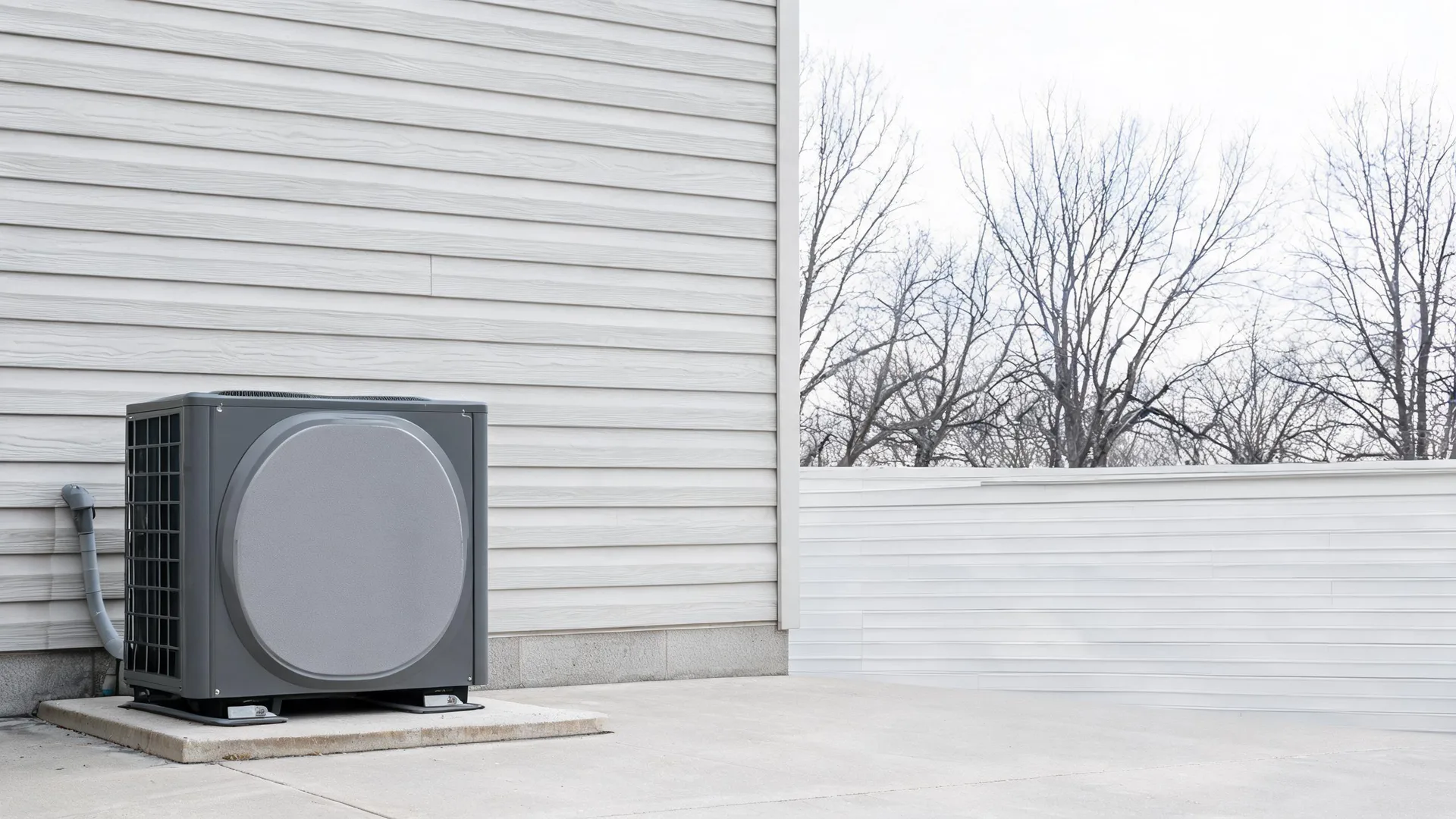
A heat pump outdoors in cold weather will sometimes show a thin layer of frost, that's normal and it melts off on its own during defrost cycles. A thick coat of ice that isn't going away, or ice that's built up solid around the coil, is not normal. Don't chip or pry at it. Clear leaves, snow or anything blocking airflow around the unit, but leave the coil itself alone and let a tech deal with the ice.

A heat pump fails in a handful of predictable ways. The reversing valve sticks, and the system gets stuck in one mode or stops switching over cleanly between heat and cool. A capacitor weakens, and the compressor or fan motor starts struggling to kick on, pulling harder each time until it finally doesn't start at all. Refrigerant leaks out slowly at a fitting or coil joint, and the system keeps running but moves less and less heat, working harder for a worse result. The defrost board or sensor can fail, and then the outdoor coil never gets the signal to clear itself, so frost builds into ice that chokes off airflow. Contactors pit and burn from years of opening and closing, and eventually they don't make contact at all. None of these come from a system being pushed too hard. They come from parts wearing out the way parts do, usually with some warning before they quit outright.

The question is usually simpler than it feels in the moment. A heat pump fails because one part wears out. A compressor, a reversing valve, a coil, a motor, a board that times the defrost cycle. Replacing that one part is almost always the right call, even if it's the compressor. What changes the math is whether other parts are wearing out at the same time. A system near the end of its life tends to fail in one spot, get patched, then fail somewhere else a season later. If this is the first real problem the system has had, fix it and move on. If a tech is naming a different failed part than the one that failed last time, that pattern is worth paying attention to. It says more about where the system is headed than any single repair does on its own.