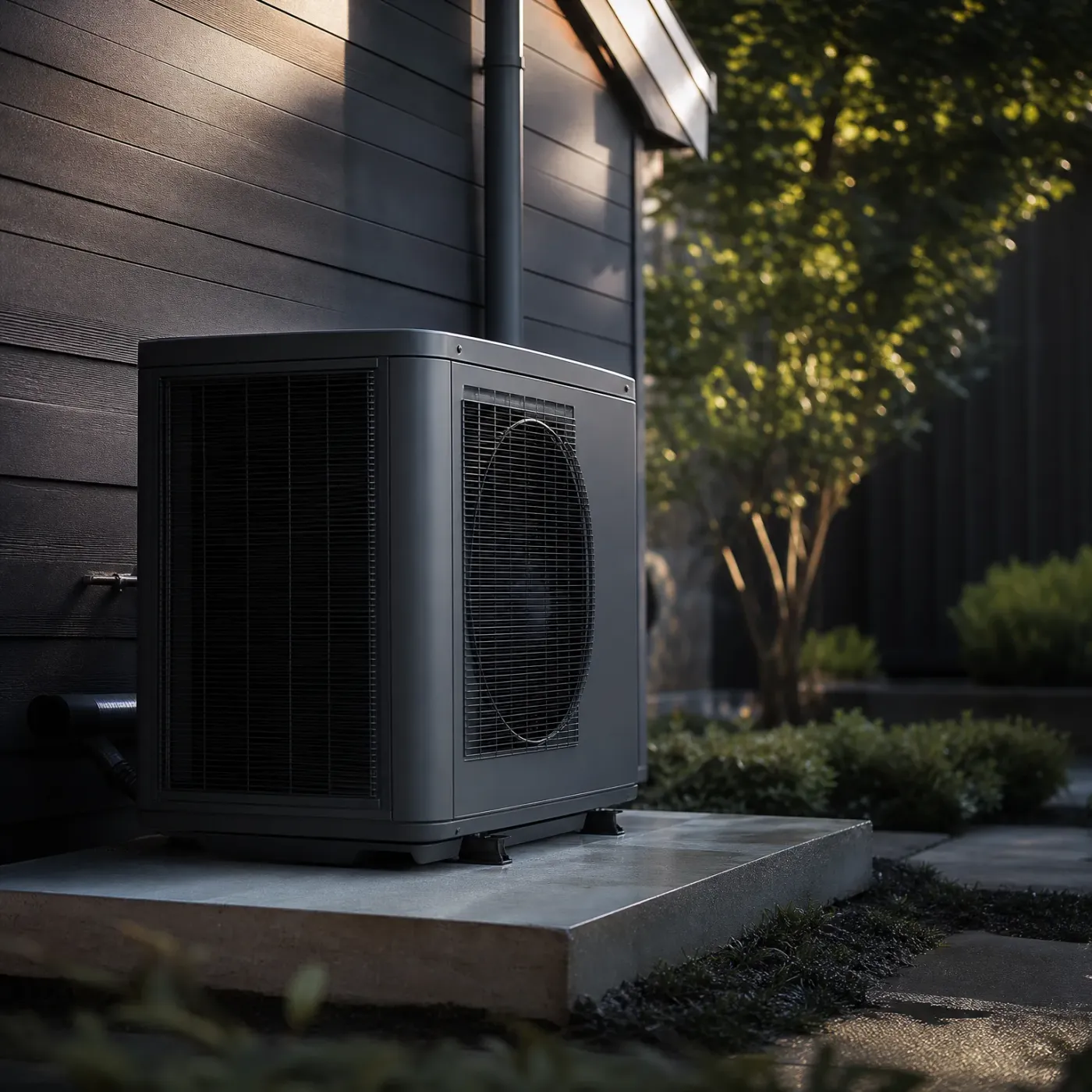

A gray outdoor condenser/heat pump unit with a side fan grille sits on a concrete pad beside a dark horizontal wood-sided house, with shrubs and a small tree nearby.

The right pro for this job

Is a heat pump enough for winter in Jersey City, NJ

A heat pump pulling heat out of cold air sounds like a hard job, and in Jersey City winters it can fall behind on the coldest nights. Whether yours keeps up depends on the unit's rating and how it's sized for your house. This page gets into what to check, and can connect you with a local contractor who installs and sizes these systems for Hudson County winters.

Connect with a pro

A heat pump can heat your home through a Jersey City winter, but most will struggle on the coldest days, usually in January, when the temperature drops into the teens or lower. That's because a heat pump works by pulling heat out of the outside air, and the colder that air gets, the less heat there is to pull. Older and lower-efficiency units may also start to ice over below freezing, and the unit has to pause and run a defrost cycle to clear it before it can keep heating. What this means for you depends on your model. A cold-climate heat pump rated for low temperatures can usually carry the house on its own. An older or undersized one may need backup heat, like electric resistance coils or a furnace, to get through the coldest stretches. If your home only has the heat pump and no backup, those are the nights worth paying attention to.

A gray outdoor heat pump unit on a concrete pad beside a house with horizontal lap siding, connected by conduit and a flexible line to a wall-mounted disconnect box, with low shrubs and mulch nearby.

Keeping up

On most winter days, this is what the work looks like: the outdoor unit runs steady, pulling in whatever heat the air outside still holds. You won't hear it straining. The house holds its temperature, and the heat pump covers the load on its own, no help needed from a backup source.

An outdoor air conditioner condenser unit on a concrete pad beside a house with horizontal lap siding, with a shrub to the left, bare dirt in front, and conduit and a metal disconnect box on the wall.

Falling behind

On the coldest nights, the unit runs longer and still can't keep up. You might notice the air coming out feels cooler than usual, or the house loses a degree or two it doesn't get back until morning. That's the point where a backup heat source has to pick up the difference.

What does a Jersey City winter actually ask of your heat pump?

  • Winter nights average 28°F

    Overnight lows average 28°F here in December, January and February. That's the range where your heat pump has to work hardest to keep up.

  • Heat runs October through April

    Heat runs about seven months a year here, October through April. That's most of the year your heat pump carries the load alone.

  • Cooling runs June through September

    Cooling runs about four months, June through September. The same unit that struggles on the coldest nights handles summer without any trouble.

NOAA nClimDiv 1991-2020

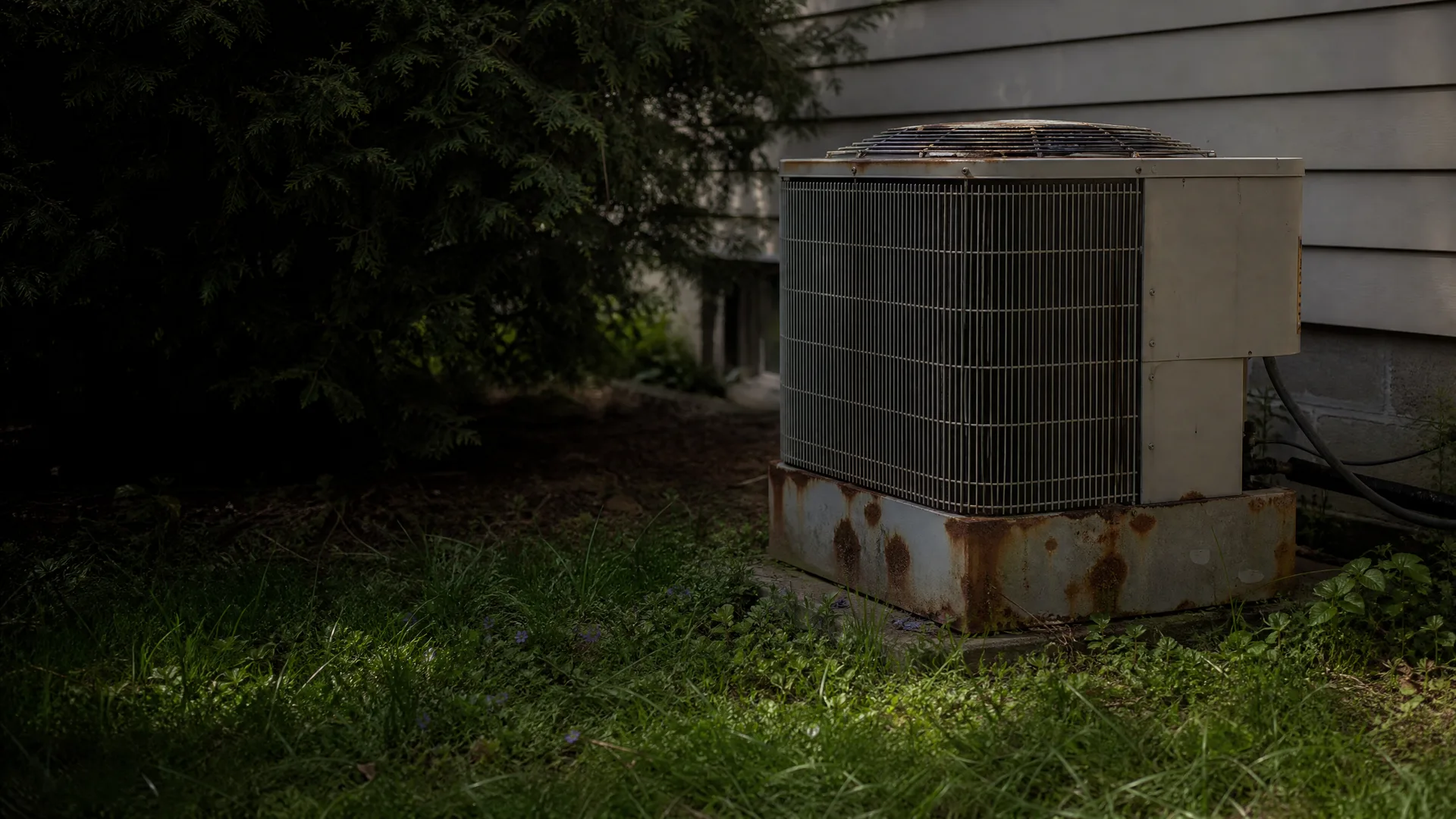
An outdoor air conditioner or heat pump condenser unit sits on a rusted concrete pad beside a house with horizontal siding, surrounded by grass and dark evergreen foliage.

You're out in the side yard on one of the first warm days in April, finally dealing with the stuff winter left behind. The outdoor unit sits there against the fence, and you notice it properly for the first time in months: rust creeping along the base, worse than last spring. It made it through another Jersey City winter, but you remember the nights it ran almost nonstop and the house still felt a few degrees off. You crouch down and look at the rust line, wondering how many more winters are in this unit before the cold wins and the repair calls start.

Heat Pump Alone or With Backup

Heat pump alone

  • On the coldest nights, usually when it drops into the teens, the heat pump has to run longer to pull the same amount of heat out of thinner, colder air.
  • If the unit is undersized for your house, you'll notice the indoor temperature drifting down a degree or two on those nights instead of holding steady.
  • No backup means the heat pump is the only thing standing between your house and whatever the night does, so its rating and sizing have to be right from the start.
  • Electricity in Hudson County runs expensive, and a heat pump working its hardest on the coldest days is pulling the most power it ever will.
  • Lower upfront complexity, since there's no second fuel line, no second thermostat setting and nothing else to maintain alongside it.

Heat pump with backup

  • When the outdoor temperature drops low enough that the heat pump alone can't keep up, backup heat, usually gas or electric resistance, picks up the difference.
  • Most homes in the area already heat with gas, so a furnace already in the house can often serve as that backup without adding a new fuel line.
  • Backup heat only needs to run on the hardest days, not all winter, so it isn't carrying the full heating load October through April.
  • The thermostat or control board switches over on its own once the heat pump can't hold the setpoint, so nobody has to flip anything by hand.
  • Having a second heat source means a breakdown in one doesn't leave the house with no heat until a contractor gets there.
A gray-haired bearded man in a dark snow-dusted coat and scarf stands inside a dimly lit home entryway, with a hallway, framed picture, lit table lamp and staircase behind him.
An older man with gray hair and a beard, wearing a dark snow-dusted coat, stands in a warmly lit home entryway with a hallway, console table with lamp, patterned rug, and living room visible behind him.
An older man with gray hair and a beard, wearing a dark coat dusted with snow and a blue plaid scarf, stands smiling in a dimly lit entryway with a window, framed picture, table lamp and staircase behind him.
A gray-haired man in a dark coat dusted with snow stands in a warmly lit home entryway, with a lamp, sofa, window and white staircase banister behind him.

Matched to your heat pump job

A licensed installer who works in Hudson County gets your project.

Asking costs nothing, and the choice to hire stays yours.

How your heat pump handles cold

  • Below about 25 to 30°F, most heat pumps lose capacity and lean on a second heat source called backup or auxiliary heat.
  • That backup heat is usually electric resistance coils in the air handler, and it costs more to run than the compressor alone.
  • A defrost cycle kicks in when frost builds on the outdoor coil, reversing the system briefly and sending a burst of cooler air inside.
  • The thermostat's balance point, the outdoor temperature where backup heat takes over, gets set during installation and can be adjusted.
  • If your system has a dual fuel setup, a gas furnace takes over below the balance point instead of electric coils.
  • A heat pump sized too small for your house will lean on backup heat sooner and more often than one sized right.

A heat pump moves heat, it doesn't make it, and that gets harder the colder the air gets. Once it's down around 25 to 30 degrees, the unit can't pull enough heat out of the air on its own, so a second heat source kicks in to cover the gap. In most homes that's a set of electric resistance coils sitting in the air handler, and they draw a lot more power than the compressor does by itself. You'll notice the difference on the bill after a stretch of nights that cold. Separately, you may feel a few minutes of cooler air coming from the vents even when it isn't that cold out. That's the defrost cycle, not a problem. Frost builds up on the outdoor coil, and the system briefly reverses itself to melt it off before going back to heating. The outdoor temperature where backup heat takes over is called the balance point, and it's set when the system is installed. It isn't fixed forever. It can be adjusted if it's kicking in earlier than it should. Some homes in Jersey City run a dual fuel setup instead, where a gas furnace takes over below the balance point rather than electric coils. And if the heat pump itself is undersized for the house, all of this happens sooner and more often than it should, because the unit is working past its range on nights that shouldn't call for it yet.

A gray outdoor heat pump unit on a concrete pad beside a house with horizontal lap siding, with a conduit running to a wall-mounted disconnect box and a green shrub to the left.
A clean unit with clear airflow around it can pull heat efficiently even on a cold Jersey City morning.
An outdoor air conditioning condenser unit on a concrete pad beside a house with horizontal siding above a brick foundation, with a flexible conduit running to a wall-mounted disconnect box.
Dust and grime caked on the coils make the unit work harder to pull heat out of January's cold air.
  1. Refrigerant inside the outdoor coil absorbs heat from the outside air

  2. A compressor squeezes that refrigerant to raise its temperature further

  3. Hot refrigerant moves inside and releases heat through the indoor coil

  4. A reversing valve switches the cycle between heating and cooling modes

How does the heat pump know when to switch to backup heat?

You've probably heard the outdoor unit change its sound on a cold morning, or noticed the air coming out of the vents feels different than usual. You want to know if that's the heat pump giving up, or if something else is happening. It helps to know what actually triggers the switch, since it isn't guesswork on the system's part. There's a specific point where it decides it needs help.

A thermostat sensor triggers it, not the outdoor temperature alone

The system tracks the gap between the temperature you've set and the temperature the house has actually reached. When the heat pump alone can't close that gap fast enough, usually on a cold Jersey City morning when the outdoor coil is pulling heat from air in the 20s or teens, the thermostat calls for backup heat to make up the difference. Some thermostats also use an outdoor sensor to bring backup on sooner, before the indoor temperature has a chance to drop. Either way, the compressor doesn't stop. The backup coils just add heat on top of what it's already producing, until the house catches up to the setpoint.

A woman wrapped in a thick textured blanket sits on a sofa with an open book on her lap, beside a lit lamp and bookshelf, with a frost-patterned window behind her.
An older woman with short gray hair in a cream knit sweater smiles while looking to the side, standing behind a wooden board holding a round loaf of bread, with a dark window and lamp-lit interior behind her.

Power here costs 24.97 cents per kilowatt-hour

At 24.97 cents per kilowatt-hour, every hour the backup coils run costs you real money. A heat pump that's sized right for your house leans on those coils less, so keeping the compressor doing most of the work on a cold night matters more here than in places with cheaper power.

EIA-861 2025

A woman stands in the open black front door of a white-sided house with a dark shingled roof while a man in a navy jacket approaches along the walkway, with lantern wall lights, a potted shrub, and flowering garden beds nearby.

A heat pump can carry your Jersey City winter, if it's sized and backed up right

A heat pump will heat your house through the cold months here. On most days it won't even strain to do it. What decides whether it keeps up on the coldest nights, when the temperature drops into the teens, is whether it was sized for your house and whether the backup heat is working the way it should. That's a question about your specific system, not heat pumps in general.

A local contractor who works on these systems all winter can look at yours and tell you where it stands, whether the sizing is right, whether the coils are clean, whether the backup heat kicks in when it should. Getting matched with one contractor who knows this equipment and this climate means someone looks at your actual setup instead of guessing at it, and you're not fielding calls from five companies to get there.

Interior corner of a room with a dark upholstered sofa and textured cushion, a potted plant, sheer curtains at a multi-pane window showing blurred green and yellow trees, and a dark table holding a wooden tray with stacked coasters and a small ceramic vase.
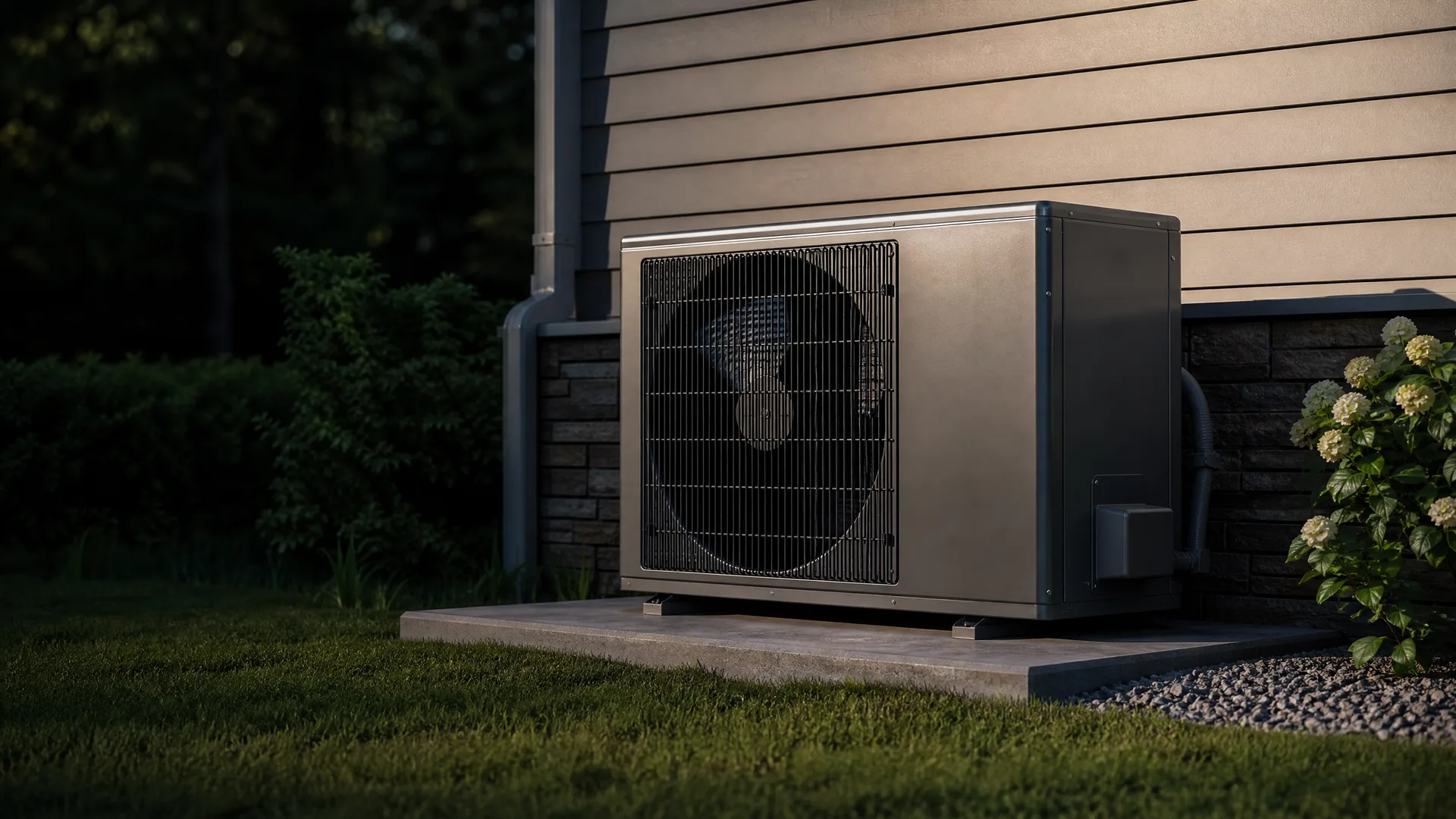
An outdoor heat pump unit with a large circular fan grille sits on a concrete pad beside a house with horizontal siding and a stone base, surrounded by lawn, shrubs and a flowering bush.

A heat pump pro near you

New system or replacementHeat PumpHudson County, NJ
Step 1 of 2

What ZIP code is the job in?