
Running quiet
A heat pump in good shape hums at a steady level when it kicks on, no clanking, no grinding. The grille stays clear, the pad underneath stays level, and the line set runs clean from the unit to the wall.
A loud noise from your heat pump usually points to one of a few things. Banging or clanking often means a loose part inside the outdoor unit, sometimes a fan blade that's come loose or hit debris. A hissing or bubbling sound can mean refrigerant leaking or moving where it shouldn't. A buzzing noise points to an electrical problem, maybe a failing capacitor or contactor. Rattling is frequently just a cabinet panel worked loose, but it can also mean something has gotten into the fan. Through a Newark winter your heat pump runs long hours keeping up with the cold, and that extra strain shows up as noise before it shows up as a breakdown. A unit that's defrosting will hum or click as it switches modes, which is normal, but a new sound that keeps happening isn't. Whatever the cause, running the unit with a loose or failing part risks turning a small repair into a bigger one.




Winter nights average 25°F
Overnight temperatures in Essex County average 25°F in December, January and February. That's a long stretch of cold your heat pump has to pull from outside air, and a loose or strained part tends to announce itself right in that stretch.
Heat runs October through May
Heat runs October through May here, about eight months. That's eight months of near-constant cycling on your outdoor unit, which is plenty of time for a worn part to start making noise.
Cooling runs June through August
Cooling runs June through August, about three months. The same outdoor unit handles both jobs, so a noise you first hear in summer can still be there when heat season starts back up in the fall.
NOAA nClimDiv 1991-2020

A heat pump in good shape hums at a steady level when it kicks on, no clanking, no grinding. The grille stays clear, the pad underneath stays level, and the line set runs clean from the unit to the wall.

Dust and debris packed into the grille block airflow and strain the fan motor. That buildup, along with a loose panel or a part knocked out of place, is often where a new noise starts.
A grinding noise from the outdoor unit is one of the sounds that makes people stop and go check, and it should. It's a different sound than the clanking or hissing covered above, and it usually means something specific is wearing down rather than just loose or rattling.
The fan inside the outdoor unit spins on a motor with bearings inside it, and bearings wear down over years of running through Essex County winters and summers alike. When they go, metal grinds against metal instead of turning smooth, and you'll hear it as a grinding or grating sound that gets louder as the fan speeds up. A worn motor can seize completely if it keeps running, and a seized fan motor means the outdoor unit can't move air across the coil at all. Less often, grinding comes from the compressor itself, which is a bigger repair. Either way, a contractor needs to open the unit and check which part is actually making the sound before anything gets replaced.
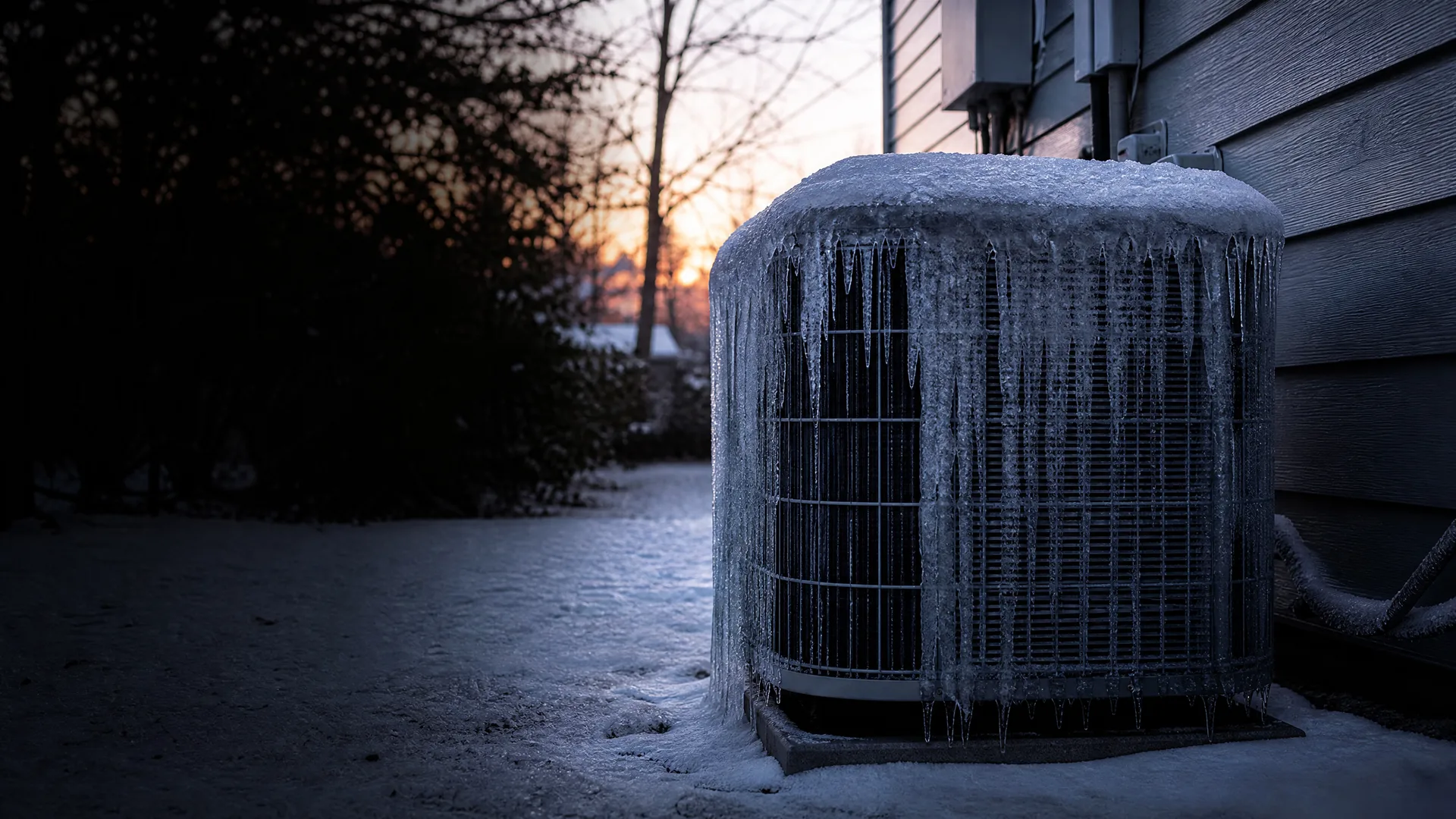
You go out for the paper a little after six, still dark, and that's when you hear it before you see it, a low grinding sound coming from the side yard. The outdoor unit sits there coated in ice, thick on the coils, a crust of it even on the fan guard. Overnight it dropped into the mid-20s again, the kind of cold that's normal here by January, and the unit kept trying to run anyway. The fan blade is grinding against the ice built up around it. You stand there in your coat watching it struggle, the sound catching every few seconds, and you know this isn't something that clears on its own by noon.
Explain the heat pump problem once instead of to every shop in Essex County.
Sending the form costs nothing.

The unit sits level on its pad, grilles clear, conduit running clean along the wall. When it cycles on, you hear a steady hum and nothing else. No clanking from inside the cabinet, no rattle from the fan. That's what a heat pump should sound like through a Newark winter.

Grime has built up thick across the grilles, and the fan has to fight through it to pull air. A unit in this shape often runs louder than it should, and it's working harder to move the same amount of air. Left alone, that strain tends to land on the fan motor or the bearings next.

A heat pump that's grinding or clanking doesn't fix itself. A loose fan blade keeps hitting what it's hitting every time the unit cycles on, and in Newark that's many times a day once it gets cold. What starts as a bent blade can end as a burned-out fan motor. A refrigerant leak gets smaller in volume and bigger in cost the longer it runs, because the compressor keeps working to make up for what's missing. That's the part that's expensive to replace.
There's also the house to think about. If the noise means the unit is struggling to pull heat from the outside air, your living room is the one that runs cold while it tries. You notice it on the thermostat before you notice it outside. Instead of pulling up review sites, calling a few numbers, and explaining the grinding sound over and over to each one, you can send this once and let someone qualified take it from there.

A contractor shuts power to the outdoor unit at the disconnect.
They pull the cabinet panel to expose the fan and motor mount.
They turn the fan blade by hand to check for wobble or contact.
They check the motor mount bolts and the compressor's rubber feet.


A loud heat pump is not something to wait out. The sound itself is information. Grinding usually means metal on metal, a fan blade hitting a guard or a motor mount that's worked loose. Clanking points to something knocking around loose inside the cabinet. Hissing or bubbling can mean refrigerant escaping from a line it shouldn't be. Each of these has a different fix, and a contractor who hears which one you've got already knows where to look first.
What doesn't help is leaving it alone through more cold nights. Essex County winters push a heat pump hard, cycling on again and again, and a loose part keeps hitting the same spot every time it does. A small problem now turns into a bigger repair later, not because the unit is fragile, but because the cause doesn't go away on its own.
What you're actually short on right now is probably not patience with the noise. It's time to find someone who can look at it. That means searching for a licensed contractor who covers Essex County, calling around to see who's free, and explaining the same grinding or clanking sound to each one until someone can come out. Send the details through once and that search is no longer yours to run. The repair still takes a visit and the right parts, but finding who does it stops being your problem the moment you do.





Skip calling shops to ask who repairs heat pumps in Essex County.
You're not committing to anything by asking.