


90°F and climbing
That's where a Newark summer afternoon can sit for hours. A grinding or screeching noise left alone often means the unit quits exactly when you need it most.
Once you send the form, finding a pro is off your list.
Hand it offA loud noise from the AC is unsettling, especially when it starts suddenly or gets worse by the day. You want to know if it's something minor or if the unit is about to fail on a hot, sticky Newark afternoon. The sound itself usually points to what's wrong before anyone even opens the cabinet.
A grinding or screeching sound usually means the blower motor bearings are wearing out. Banging or clanking points to a loose or broken part inside the compressor, hitting the housing with every cycle. A hissing sound can mean refrigerant escaping from the line. Rattling is often just a loose panel or bolt, which is simple, but it can also be a sign something has come loose inside the unit itself. With Essex County summers running hot and humid for months, an AC under strain gets loud fast, and a noise that shows up now usually means something has already started to give. Left alone, most of these get worse and can take the whole system down with them.




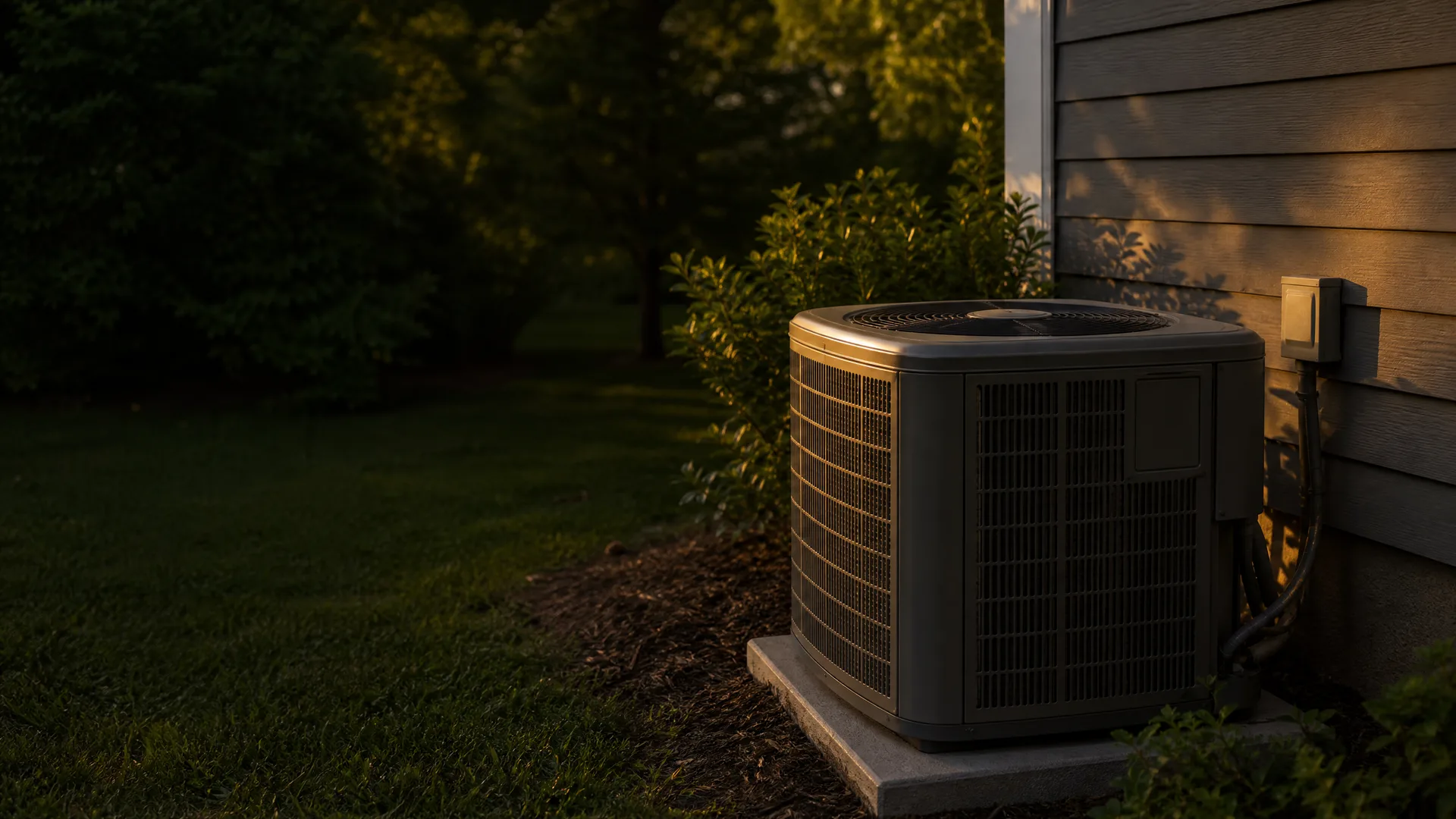
You're out back around seven, grill still warm, the light going gold over the fence line. The condenser sits against the house, and that's when you notice it, the fan inside the cage isn't spinning. No hum, no whir, nothing moving. The unit clicks like it's trying, then goes quiet again. You crouch down and listen closer. Somewhere behind you a window unit on a neighbor's porch keeps humming along, which makes the silence from yours more obvious. Inside, your kids have the TV up to cover for the air going warm and still. You stand there a minute, watching the blades not turn, August pressing in.
You're probably hearing it most from the kitchen or wherever the thermostat sits, maybe worse at night when the house is quiet and everything else is off. If it's a grinding or screeching from the outdoor unit, that's usually a motor bearing going bad, and the fan can seize completely within days. A banging sound means something loose is hitting the blades, metal on metal, and it'll keep chewing on itself until it's shut down and looked at. If the noise comes with weaker airflow or the house not cooling like it should, the AC is already working harder to do less, and that shows up on your power bill before summer's over. Left alone, a lot of these turn into a full system failure on the next string of 90 degree days.
A loose part or worn bearing starts vibrating or grinding.
The sound changes as the part wears further under strain.
A contractor opens the panel and traces the noise to its source.
The worn or loose part gets tightened, replaced, or cleared.


The pro who gets in touch is licensed in New Jersey and works in Essex County.
After you send the request, you're done searching.
It costs nothing to send, and you don't have to hire anyone.


That's where a Newark summer afternoon can sit for hours. A grinding or screeching noise left alone often means the unit quits exactly when you need it most.
A local contractor who works on these units all summer knows which sounds mean a quick fix and which mean the compressor is at risk.
Three months a year, your AC is the thing standing between your house and a sticky Newark summer. A strange noise now matters more than it would on a mild October day, because this unit still has June through August to get through.
NOAA nClimDiv 1991-2020
A squeal, a grind, or a metal-on-metal screech that started today and is getting louder usually means a part is failing fast. A motor bearing going dry, a blade hitting the cage it's bent against, a compressor straining under a bad part. Left running, it can turn a repair into a replacement, and it can quit outright on a 90 degree afternoon. If the sound is new and sharp, shut the unit off at the thermostat and get someone out before you run it again.
A noise that's been there for weeks, stays the same, and hasn't changed with the weather or the thermostat setting is a different situation. Maybe it's a rattle on startup, or a hum that's always been part of how this unit sounds. You can keep cooling the house and watch for any change, louder, different, or paired with weaker airflow. If it holds steady, it's worth mentioning at the next service visit rather than an emergency call tonight.
A loud noise from your AC almost always comes down to one thing: something loose, something worn, or something about to fail outright, and which one it is decides whether you wait or call today. A squeal or grind that showed up suddenly needs a contractor soon, before it costs you the whole system on a hot afternoon. A rattle that only happens at startup can usually wait for a convenient appointment. Either way, you don't have to figure out which part is making the sound before you ask for help. A local contractor who works on these units all summer can tell a loose panel from a dying bearing within minutes of opening the cabinet, because they've heard both more times than they can count. You'll be matched with one contractor, not a handful calling all afternoon, and they'll already know what tends to go wrong on units that have sat through a few Newark summers like yours.

Done looking for an air conditioner pro



