A row of gray and beige wood-sided two-story houses behind a white picket fence, with a grass lawn in the foreground and large leafy trees overhead.

AC Repair in Salem, NJ

Tell us about the job

Takes about a minute. No obligation.

RepairCentral ACSalem County, NJ
Step 1 of 2

What ZIP code is the job in?

June is when weak parts fail

AC here runs June through September, and that first real stretch of heat is when a capacitor or contactor that barely made it through last year finally gives out. The unit sat idle since last fall. June is when it gets asked to work hard again.


A May checkup still catches it

If your AC came with the house and hasn't been looked at, having someone check it in May, before the first hot stretch, can catch a weak part before it fails outright. Once you're into June through September, that same part is working under full demand with no slack left.

4 months
June through September, your air conditioner is on duty
85°F
the average summer afternoon it cools against
6 hail events
in ten years, and hail bends the fins on outdoor coils
73 wind events
in ten years, and wind drives debris into outdoor units
Isometric cutaway illustration of a house showing attic ductwork, an indoor air handler, and an outdoor condenser unit connected by lines.
Your air conditioner works hardest from June through August.

NOAA nClimDiv, 1991–2020 normals

Four months of real cooling load here is not unusual for a central AC.

So when a unit struggles in Salem, the cause is almost always a specific worn part, not the climate.

At 19.34 cents a kilowatt-hour, a struggling AC gets expensive fast

Power costs 19.34 cents a kWh statewide
Cooling runs June through September
Summer afternoons average 85°F
Every month it struggles, it's burning cashGet a worn part diagnosed before another AC bill comes in at 19.34 cents a kilowatt-hour.

A diagnostic visit starts with questions, not tools. The tech wants to know what the system is actually doing. Short cycling, running nonstop, blowing warm, tripping the breaker. Each of those points somewhere different. Then the gauges come out. Refrigerant pressure gets checked at the service ports. The capacitor gets tested under load, since it can read fine sitting idle and still fail the moment it has to start the compressor. Airflow gets checked too. A coil that's freezing up often has nothing wrong with the refrigerant at all, it's just not getting enough air across it. Electrical connections get checked as well, because a loose or corroded one can act like a failing part that's actually fine. By the end the tech can usually point to one thing and say that's what's causing it.

If your AC is original to the house, find out what's left in it

Half the homes in Salem County were built in 1962 or earlier. A system that came with a house that age has likely had years of hard summers already. Before paying for a repair, have the tech tell you what shape the rest of the unit is in.

Find a contractor
A man seen from behind carrying a worn canvas tool bag walks up concrete steps toward a dark teal front door of a house with gray horizontal siding, beside a shrub in a blue ceramic pot.
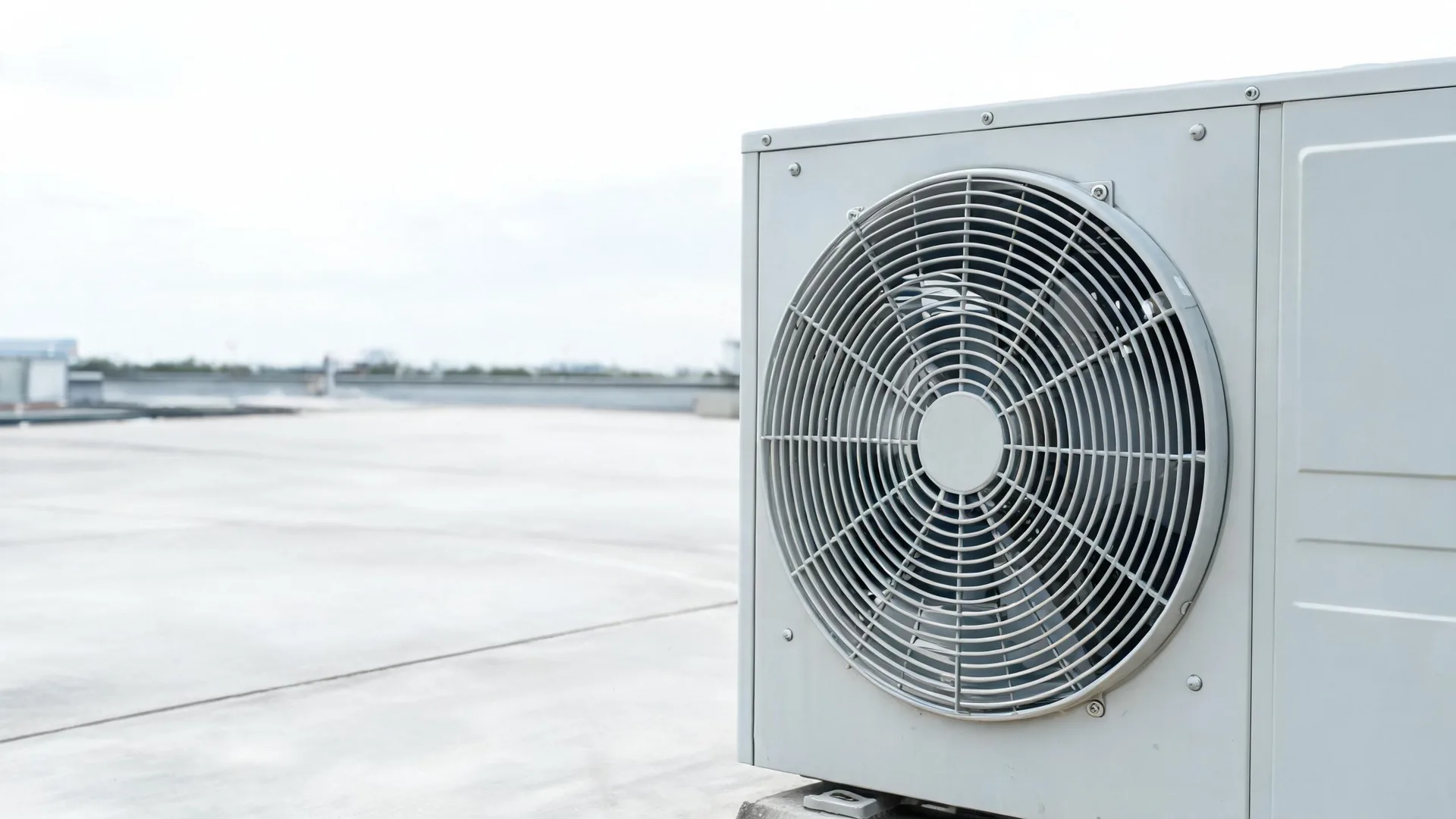
An outdoor air conditioning condenser unit mounted on a concrete pad surrounded by gravel, photographed against a partly cloudy blue sky.

What to check before the tech shows up

Before anyone comes out, check the filter. A clogged one starves the coil of air and can make the whole system act like it's low on refrigerant when it isn't. Look at the outdoor unit too. Leaves, grass clippings or a fence line grown in close all choke airflow the same way. Check the thermostat batteries if it uses them, and make sure it's actually set to cool and not just on. Inside, feel the vents. Warm air from every vent points one direction, weak air from every vent points another, and that's worth telling the tech before they arrive. Go to the breaker panel and see if anything tripped. If it did, reset it once. If it trips again, stop and leave it alone, that's not something to keep resetting. None of this fixes a bad capacitor or a refrigerant leak, but it rules out the easy things first and gives the tech a head start on the real problem.

Most failures are electrical, not refrigerant

A capacitor weakens over time and loses its ability to give the compressor and fan motor the jolt they need to start. A contactor's contacts pit and burn from years of arcing every time the system cycles on. Both tend to fail at the exact moment the system is working hardest, not while it sits idle.

A dirty coil causes problems that look like something else

When the outdoor coil is caked with dirt or the indoor coil is iced over, the system can't move heat the way it's supposed to, and it starts throwing symptoms that mimic a refrigerant leak or a failing compressor. Keeping both coils clean is one of the few things that heads off a repair instead of causing one.

An outdoor air conditioning condenser unit on a concrete pad next to the gray vinyl siding of a residential home.

A new air conditioner would cut about $30 a year off cooling for a typical Salem County home.

  • A new one at the federal minimum, 13.4 SEER2$380 a year
  • An older air conditioner$410 a year

Estimates for a typical Salem County home, compared with an older unit built to the previous federal minimum, from EIA household energy data, New Jersey fuel prices and NOAA climate normals. Your home will differ.

Repair makes sense when a part like a capacitor or contactor has failed.

Replacement makes sense when the compressor has failed or the system uses R-22 refrigerant, which is no longer made.

A repair fixes one part. A replacement question is really about the rest of the unit. A failed capacitor or contactor is a cheap part doing a specific job, and swapping it brings the whole system back to normal. That's worth doing almost every time, no matter the age of the unit. A compressor is different. It sits sealed inside the cabinet and costs much more to deal with on its own, and when it starts failing the rest of the system is usually not far behind. A coil that leaks once can be patched. A coil that's leaked more than once is thinning out everywhere, not just at that one spot, and patching it again only buys a little time. A good tech tells you both things. What broke, and what else in the unit is close behind it.