






An outdoor air conditioning condenser unit installed beside the exterior wall of a blue vinyl-sided house at sunset.

AC Repair in Point Pleasant, NJ

Tell us about the job

Takes about a minute. No obligation.

RepairCentral ACOcean County, NJ
Step 1 of 2

What ZIP code is the job in?

June is when most AC problems in Point Pleasant turn up. The system sits idle through May, then gets asked to run for hours straight as soon as the first warm stretch hits, and that load finds whatever part was already weak. A capacitor that was marginal before shutdown fails outright once it has to carry a full day. A low charge that seemed fine suddenly can't keep up. Cooling here only runs from June through September, so a unit that struggles at the start rarely gets better on its own. Getting it looked at early beats waiting to see if it sorts itself out.

4 months
June through September, your air conditioner is on duty
84°F
the average summer afternoon it cools against
29 hail events
in ten years, and hail bends the fins on outdoor coils
278 wind events
in ten years, and wind drives debris into outdoor units
Isometric cutaway illustration of a single-story house showing interior rooms, ceiling ductwork, an indoor air handler, and an outdoor condenser unit connected by lines, in gray and white tones on a white background.
Your air conditioner works hardest from June through August.

NOAA nClimDiv, 1991–2020 normals

A diagnostic visit means finding which part is behind the symptom, not just hearing that cooling is bad.

A tech checks capacitor, charge, airflow and the contactor before anything gets replaced, so the part that actually failed is the only one that gets swapped.

Point Pleasant pays 19.34 cents a kWh, so a struggling system costs more here every month it runs

Power costs 19.34 cents a kWh statewide
Cooling runs June through September
Summer afternoons average 84°F

Half the homes in Ocean County were built in 1981 or later. If yours is one of them, the AC probably isn't the original unit, but the house itself isn't old by the standards of the trade. A system that went in with a newer build still has working life ahead of it under normal conditions. That matters when you're deciding whether to fix what's wrong or start over. A single bad part, a capacitor or a contactor, is usually worth repairing rather than replacing the whole unit over. Worth checking what year your house went up, if you don't already know.

Nothing unusual going on here, just a system that needs a look

Ocean County sees its share of wind, hail and the occasional tornado, same as a lot of places on the Jersey Shore. None of that points to anything specific going wrong with an AC. If yours is struggling, it's probably a capacitor or a charge issue, not something the weather did to it. Worth getting the real cause found instead of guessing.

Find a contractor
A man in a cap, dark shirt and tan pants carries a canvas tool bag as he steps up onto a porch toward a dark teal front door, with a potted shrub beside him.
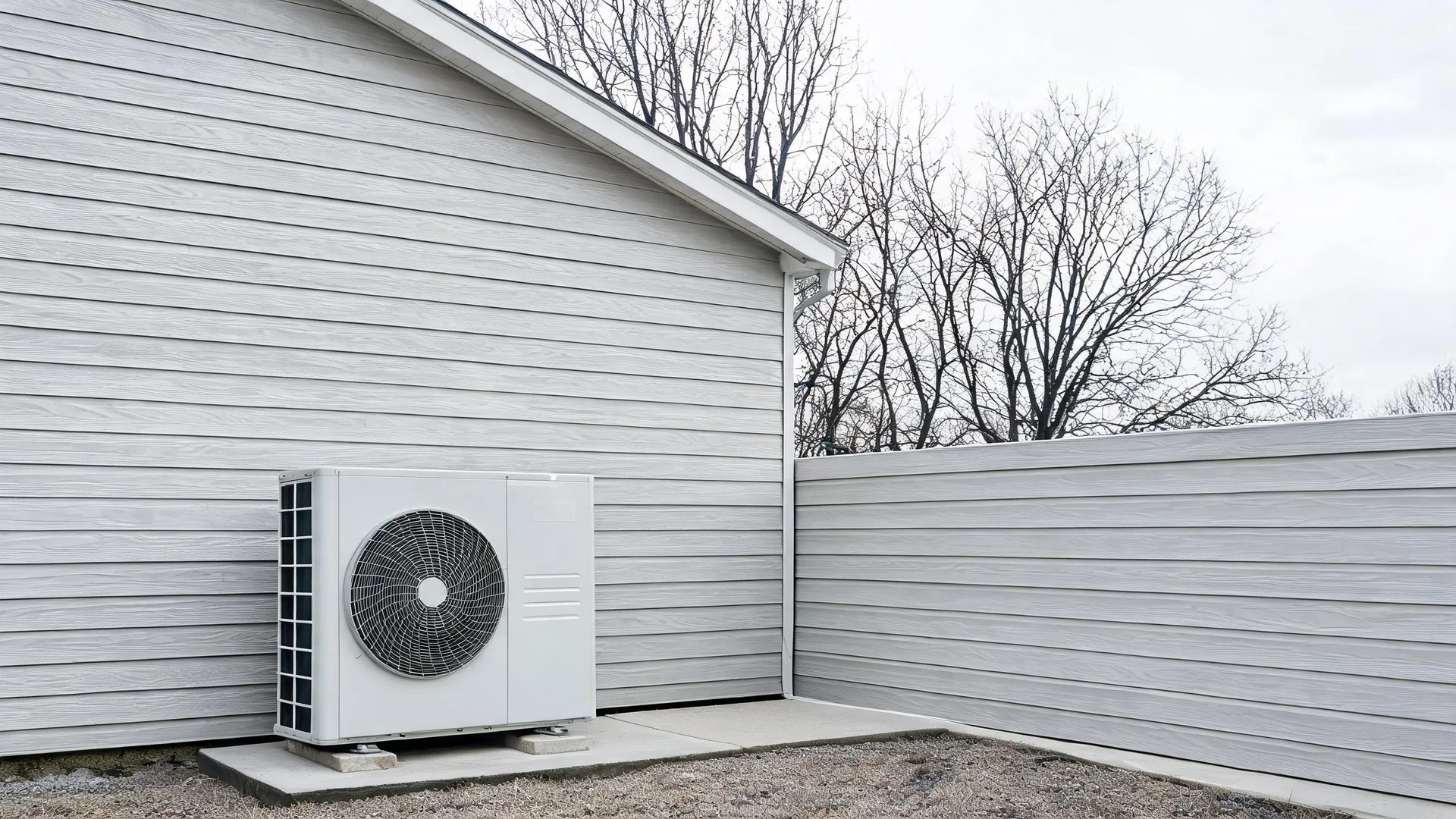
A gray cylindrical air conditioning condenser unit mounted on a concrete pad next to a light-colored vinyl-sided house exterior.

Why letting it run doesn't let it rest

A weak capacitor doesn't fail all at once. It struggles to start the compressor, the compressor draws more current trying to kick on, and the extra heat that draws wears the capacitor down further. Run it another day and the margin gets thinner. A low charge works the same way in a different direction. The compressor runs longer to make the same cooling, runs hotter doing it, and that heat is hard on the windings and the oil that lubricates them. Neither of these gets better with more runtime. A system that's struggling and gets shut off for a few hours has a chance to cool down and come back under less strain. One that keeps running because the house is hot just keeps adding heat and current to a part that's already behind. The short-term fix of letting it run while you wait to see tends to turn a capacitor job into a compressor job.

What you'll actually notice first

Warm air out of the vents while the thermostat says it should be cold. The system running long stretches without the house catching up. Short cycling, where it kicks on, shuts off after a minute, then starts again. A hissing or bubbling sound near the indoor unit, or ice on the refrigerant line. Any one of these is worth a call. More than one at once usually means it's been struggling for a while.

What the sound and the smell tell you

A grinding or squealing from the outdoor unit usually means a motor bearing is going. A burning smell from the vents means something electrical is overheating, and that one shouldn't wait. A musty smell points to moisture where it doesn't belong, often a clogged drain line. None of these fix themselves, and running the system while you wait usually makes whatever's failing fail harder.

An outdoor air conditioning condenser unit positioned beside a blue-sided house at sunset.

A new air conditioner would save little on running costs in Ocean County, so the repair decision comes down to the unit's condition.

  • A new one at the federal minimum, 13.4 SEER2$320 a year
  • An older air conditioner$340 a year

Estimates for a typical Ocean County home, compared with an older unit built to the previous federal minimum, from EIA household energy data, New Jersey fuel prices and NOAA climate normals. Your home will differ.

Repair makes sense when a part like a capacitor or contactor has failed.

Replacement makes sense when the compressor has failed or the system uses R-22 refrigerant, which is no longer made.

Age of the part matters more than age of the unit. A capacitor or a contactor is a small, cheap thing to replace, and swapping it brings a system back to normal no matter how old the system is otherwise. What changes the math is the compressor. That part isn't practical to replace on its own, so a failed compressor usually means a failed system. The other thing worth weighing is how the system's been acting before this. One sudden failure after years of running fine is usually just a part giving out. A unit that's needed a service call every summer for a while running is telling you something more, and it's worth asking the tech doing the repair where this one stands before you spend on it again.