Low-angle view across a grassy lawn toward a light-gray house with a dark shingled roof, dormer windows and dark shutters, framed by large leafy trees under an overcast sky.

AC Repair in Morristown, NJ

Tell us about the job

Takes about a minute. No obligation.

RepairCentral ACMorris County, NJ
Step 1 of 2

What ZIP code is the job in?

Three months of real work

Morristown air conditioners run from June through August. Afternoon highs average 82°F across those months. That is a normal cooling load, not a punishing one. A system breaking down now is almost always wear or a part failing, not the climate asking too much of it.


What that means for the repair

When a unit fails here, look first at what fails in any AC after regular use. A weak capacitor. A worn contactor. A low charge. A clogged drain line. There is no local culprit to chase. Finding which of the usual parts gave out is the job.

3 months
June through August, your air conditioner is on duty
82°F
the average summer afternoon it cools against
31 hail events
in ten years, and hail bends the fins on outdoor coils
188 wind events
in ten years, and wind drives debris into outdoor units
Isometric cutaway illustration of a single-story house showing interior rooms, ductwork and an air handler in the attic space, and an outdoor condenser unit connected by lines at the exterior wall.
Your air conditioner works hardest from July through August.

NOAA nClimDiv, 1991–2020 normals

May is the last quiet month before Morristown AC units start running in June.

A weak capacitor or low charge usually waits for that first real load to show itself.

Half the homes here date to 1971 or earlier, old enough that the AC has likely been replaced at least once

Half the homes here were built by 1971
Cooling runs June through August
Summer afternoons average 82°F

Ask how much life is left before you fix it

If the AC in your home has never been replaced, ask your contractor how much life is left in it before you decide to repair it.

Find a contractor
A person in a dark jacket, knit cap and tan work pants climbs porch steps toward a dark green front door, carrying a canvas tool bag, with a potted shrub beside the entry.
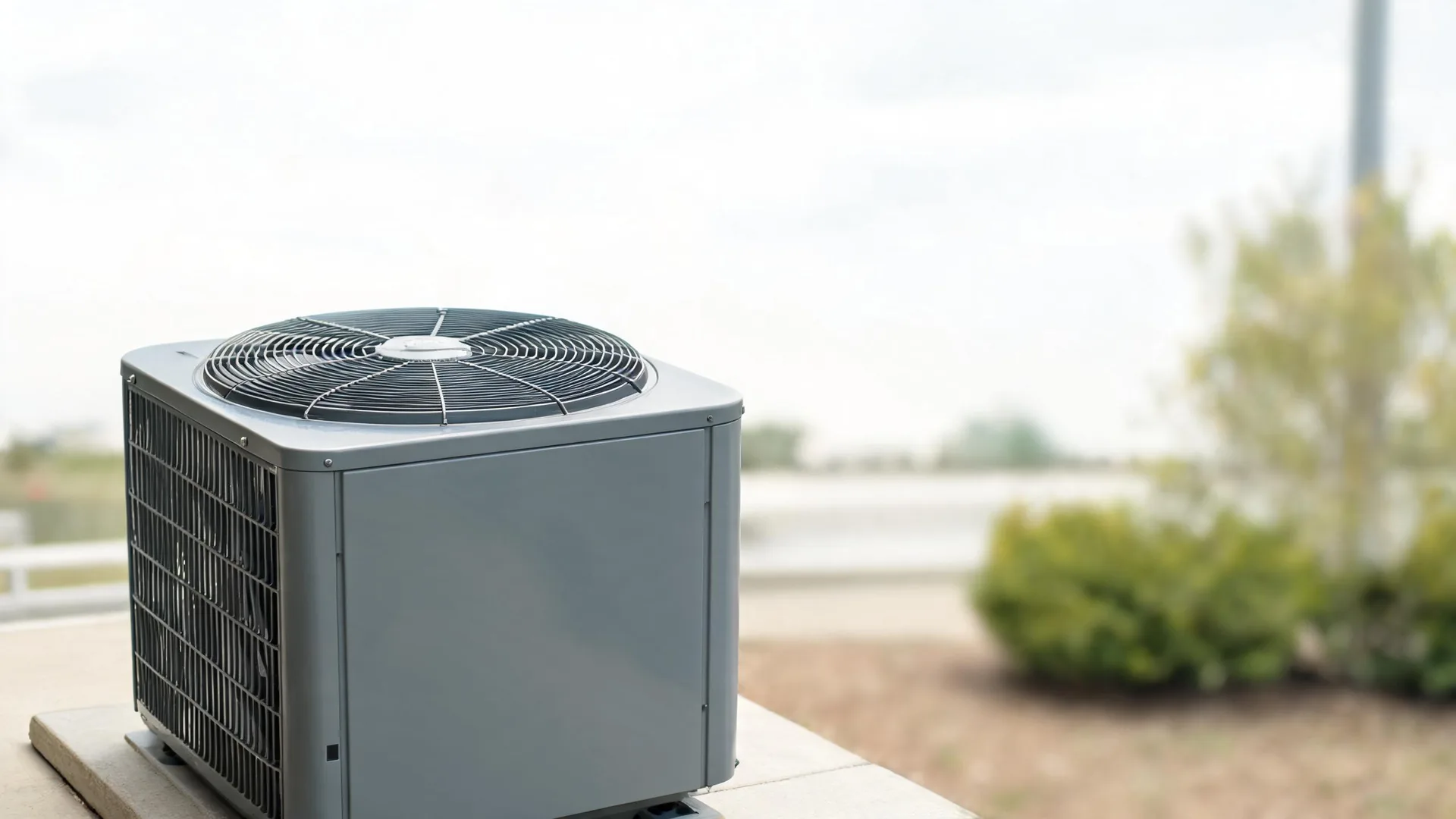
An outdoor air conditioning condenser unit mounted on a concrete pad surrounded by gravel, photographed against a partly cloudy blue sky.

What you can rule out yourself

Before anyone comes out, check the thermostat batteries and make sure it's set to cool, below room temperature. Go to the breaker panel and look for a tripped breaker on the AC circuit. Outside, look at the condenser. If the fan isn't spinning and you hear a hum, don't keep flipping it on and off. If you see ice on the refrigerant line or the indoor coil, shut the system off and let it thaw completely before anyone touches it. Check the filter. A filter clogged with dust chokes airflow and can cause the exact icing you just looked for. Look at the outdoor unit for anything blocking it, leaves, a fallen branch, grass clippings packed into the fins. Inside, check that supply vents are open and not blocked by furniture or rugs. If there's a drain line near the indoor unit, see if water is pooling under it or near the furnace, that tells you the line is clogged before anyone has to pull it apart to find out.

Warm air from every vent

If the system runs but the air coming out isn't cold, that points to the refrigerant side. A low charge means a leak somewhere in the line set or coil, and it won't refill itself over time. Running a system low on charge for long stretches puts extra strain on the compressor, which is the part you least want to lose.

Short cycling or won't stop running

A unit that kicks on and off every few minutes is usually fighting a failing capacitor or a dirty condenser coil outside. One that runs constantly without ever satisfying the thermostat is often low on refrigerant or has a coil so dirty it can't shed heat. Either way the compressor is working harder than it should.

An outdoor air conditioning condenser unit positioned on a concrete pad next to a blue-sided house, surrounded by green shrubs and flowering hydrangeas at sunset.

A new air conditioner would save little on running costs in Morris County, so the repair decision comes down to the unit's condition.

  • A new one at the federal minimum, 13.4 SEER2$220 a year
  • An older air conditioner$230 a year

Estimates for a typical Morris County home, compared with an older unit built to the previous federal minimum, from EIA household energy data, New Jersey fuel prices and NOAA climate normals. Your home will differ.

Repair makes sense when a part like a capacitor or contactor has failed.

Replacement makes sense when the compressor has failed or the system uses R-22 refrigerant, which is no longer made.

The honest way to size up an aging AC is by what's failed before and what's failing now. One dead capacitor in an otherwise sound system is a repair, that part just wears out and gets swapped. A compressor going, or a coil leaking in more than one spot, is a different question, because those are the expensive parts the rest of the system depends on. Age alone doesn't retire a unit. What matters is whether the next fix is minor and isolated or whether you're being asked to replace the part that costs nearly as much as starting over. A contractor who's inside the unit can tell you which kind of problem you actually have.