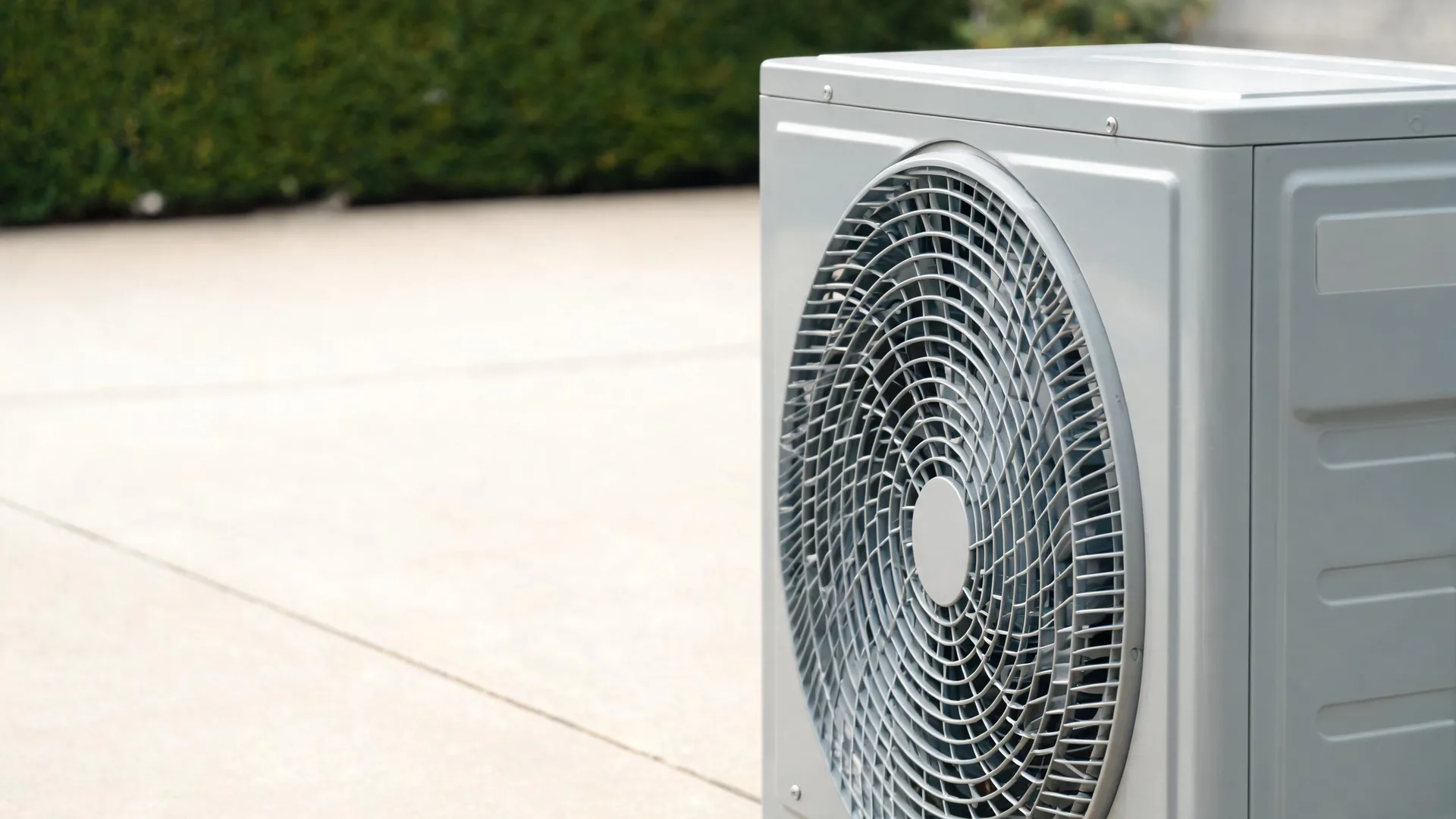
Overhead view of an outdoor AC condenser unit on a concrete pad next to a house with a dark shingle roof.

AC Repair in Long Branch, NJ

Tell us about the job

Takes about a minute. No obligation.

RepairCentral ACMonmouth County, NJ
Step 1 of 2

What ZIP code is the job in?

A dirty condenser coil makes the compressor work harder

The outdoor coil needs airflow to dump heat from the refrigerant. When it's caked with dirt, grass clippings or dryer lint from a nearby vent, the system can't shed heat properly and the compressor runs hotter and longer than it should. That heat is what wears a compressor down over time.


A weak capacitor shows up as a fan that won't start

The capacitor gives the compressor and fan motor the jolt they need to start spinning. When it weakens, you'll hear the unit hum but the fan blade sits still, or the whole system clicks and shuts back off. A failing capacitor puts strain on the motor it's supposed to protect.

4 months
June through September, your air conditioner is on duty
84°F
the average summer afternoon it cools against
32 hail events
in ten years, and hail bends the fins on outdoor coils
253 wind events
in ten years, and wind drives debris into outdoor units
Isometric line illustration of a cutaway single-story building showing interior rooms, ceiling ductwork, an indoor air handler, and an outdoor condenser unit connected by a line set.
Your air conditioner works hardest from June through August.

NOAA nClimDiv, 1991–2020 normals

A compressor running low on refrigerant still tries to push a full cycle.

Keep it running like that and the compressor overheats, which is a far bigger repair than the leak was.

Half these homes predate central air. The AC that's in them now is what fails, the usual way.

Half the homes here were built by 1975
Cooling runs June through September
Summer afternoons average 84°F
Nothing out of the ordinary here253 damaging wind events in Monmouth County between 2015 and 2024, unremarkable for this area

Electricity in New Jersey ran 19.34 cents per kilowatthour in 2024, well above what a lot of the country pays. That rate applies to every hour your AC runs. A system with a dirty coil or a weak capacitor doesn't cool your house and shut off, it strains to get there and runs long past when it should. The compressor pulls power the whole time it's running, so a unit working harder than it needs to is burning more of that expensive electricity, not less. That cost shows up on every bill until whatever's actually wrong gets fixed.

A system working this hard is costing you every day it runs

A dirty coil or a weak capacitor won't fix itself, and at New Jersey's electric rates it doesn't run cheap while you wait. Get the actual cause diagnosed and you stop paying for a compressor that's straining to do its job.

Find a contractor
A man in a cap, navy T-shirt and tan work pants, seen from behind, climbs porch steps toward a dark teal front door while carrying a canvas tool bag.
A gray metal air conditioning condenser unit mounted on a concrete pad in a flat grassy field under a partly cloudy sky.

Strain adds up in the compressor, not in any part you can just swap out

A compressor is the most expensive part in the system, and it's also the part that wears from strain rather than age alone. One that's spent a season running hot from a dirty coil or a weak capacitor has already lost some of its life before it ever quits outright. That's the thing about this kind of wear, it doesn't show up as a single breakdown. It shows up as the system needing more repairs, further apart at first, then closer together, until a tech opens the cabinet and finds a compressor that's on its way out instead of a part that's simply failed. At that point the question isn't whether to fix the thing in front of you, it's whether the compressor underneath it is still worth building around. A new capacitor on a compressor that's already damaged doesn't undo the damage, it just lets the system keep running on a part that's already compromised.

Check the filter before anything else

A clogged filter starves the system of airflow. The symptoms look like bigger problems. Weak air from the vents, ice on the refrigerant lines, a system that runs long and never quite cools the house. Pull the filter and hold it up to light. If you can't see through it, that alone could be the whole problem.

Check the breaker and the outdoor switch

Make sure the system is actually getting power before you assume the worst. Check that the breaker hasn't tripped. Look for a disconnect switch or a small pull-out block near the outdoor unit. Some thermostats run on batteries too, so a blank display sometimes just means dead batteries, not a dead system.

Aerial view of a residential air conditioning condenser unit mounted on a concrete pad next to a house with vinyl siding and a sliding glass door.

A new air conditioner would cut about $30 a year off cooling for a typical Monmouth County home.

  • A new one at the federal minimum, 13.4 SEER2$320 a year
  • An older air conditioner$350 a year

Estimates for a typical Monmouth County home, compared with an older unit built to the previous federal minimum, from EIA household energy data, New Jersey fuel prices and NOAA climate normals. Your home will differ.

Repair makes sense when a part like a capacitor or contactor has failed.

Replacement makes sense when the compressor has failed or the system uses R-22 refrigerant, which is no longer made.

A diagnostic starts outside at the unit, not with guesses. The tech checks for power at the disconnect, then goes after the capacitor and the coil first, since those cause most no-cool calls. Refrigerant pressure gets checked with gauges, not by feel, because low charge and a failing compressor can look the same from outside the cabinet. Electrical readings on the capacitor and the motor windings show whether a part is weak before it fails outright. A dirty coil is visible right away, no gauges needed. The point is finding which part is actually causing the symptom, not swapping parts until something works.