






Two white multi-story colonial houses with lit windows and black shutters photographed at night, fronted by a stone wall.

AC Repair in Elizabeth, NJ

Tell us about the job

Takes about a minute. No obligation.

RepairCentral ACUnion County, NJ
Step 1 of 2

What ZIP code is the job in?

AC here runs June through September. Most repair calls come in the first weeks of June, once the system is running hard every day. That's when a capacitor or contactor that was already weak gets pushed past the point of limping along. If your AC is struggling now, it's probably not something new. It's something that was already wearing out before the heat put real load on it.

4 months
June through September, your air conditioner is on duty
84°F
the average summer afternoon it cools against
3 hail events
in ten years, and hail bends the fins on outdoor coils
98 wind events
in ten years, and wind drives debris into outdoor units
Isometric cutaway illustration of a house interior showing ducted air handling equipment and duct runs through rooms, connected by piping to an outdoor condenser unit on a pad outside the wall.
Your air conditioner works hardest from June through August.

NOAA nClimDiv, 1991–2020 normals

A compressor running low on refrigerant starts pulling more current just to keep up.

Let it run that way and the extra heat can burn out the compressor windings for good.

Half the homes in Elizabeth were built in 1956 or earlier, old enough that the AC has likely been replaced at least once

Half the homes here were built by 1956
Cooling runs June through September
Summer afternoons average 84°F
Electricity here isn't cheapNew Jersey households paid 19.34 cents per kilowatthour in 2024, one of the higher rates in the country

A technician starts outside at the condenser. They check that the fan spins freely and the coil isn't caked with debris. Then come the readings. Refrigerant pressure, the current the compressor is drawing, whether the capacitor is still holding its charge. Inside, they'll check the air coming off the coil against the air going in. That tells them whether the system is actually moving heat or just moving air. A dirty filter or a blocked return can throw that reading off before any part has failed at all. If the symptoms point to the thermostat or the wiring instead of the refrigerant circuit, they'll trace that next rather than guessing. By the end you should know which part is failing, not just that something is wrong.

Get it looked at early

Problems tend to show up in the first weeks of the season, when the load hits a part that was already weak.

Find a contractor
An outdoor residential air conditioning condenser unit mounted on a concrete pad, surrounded by gravel with a blue sky in the background.

What to listen for, what to watch for

Warm air coming out of the vents is the one people notice fastest. Sometimes that means the system has stopped moving heat at all. Sometimes it's just losing ground, cooling the house but never quite catching up on the hottest part of the day. Short cycling is the other big one. The unit kicks on, runs a few minutes, shuts off, then starts again before the house has cooled at all. That's hard on the compressor every time it happens. Listen for anything new too. A hum from outside with no fan movement usually points to the capacitor. Grinding or squealing from the condenser fan motor means a bearing is going. Ice on the indoor coil, even on a hot day, means airflow or refrigerant is low, not that the system is working extra hard. None of these fix themselves. They get worse the longer the system keeps running that way.

Check the filter first

A clogged filter starves the system of airflow and shows up as warm vents or ice on the coil, the same signs as a refrigerant problem. Pull it out and hold it up to a light. If you can't see through it, replace it. This takes a few minutes and rules out the cheapest cause before anyone pays for a diagnosis.

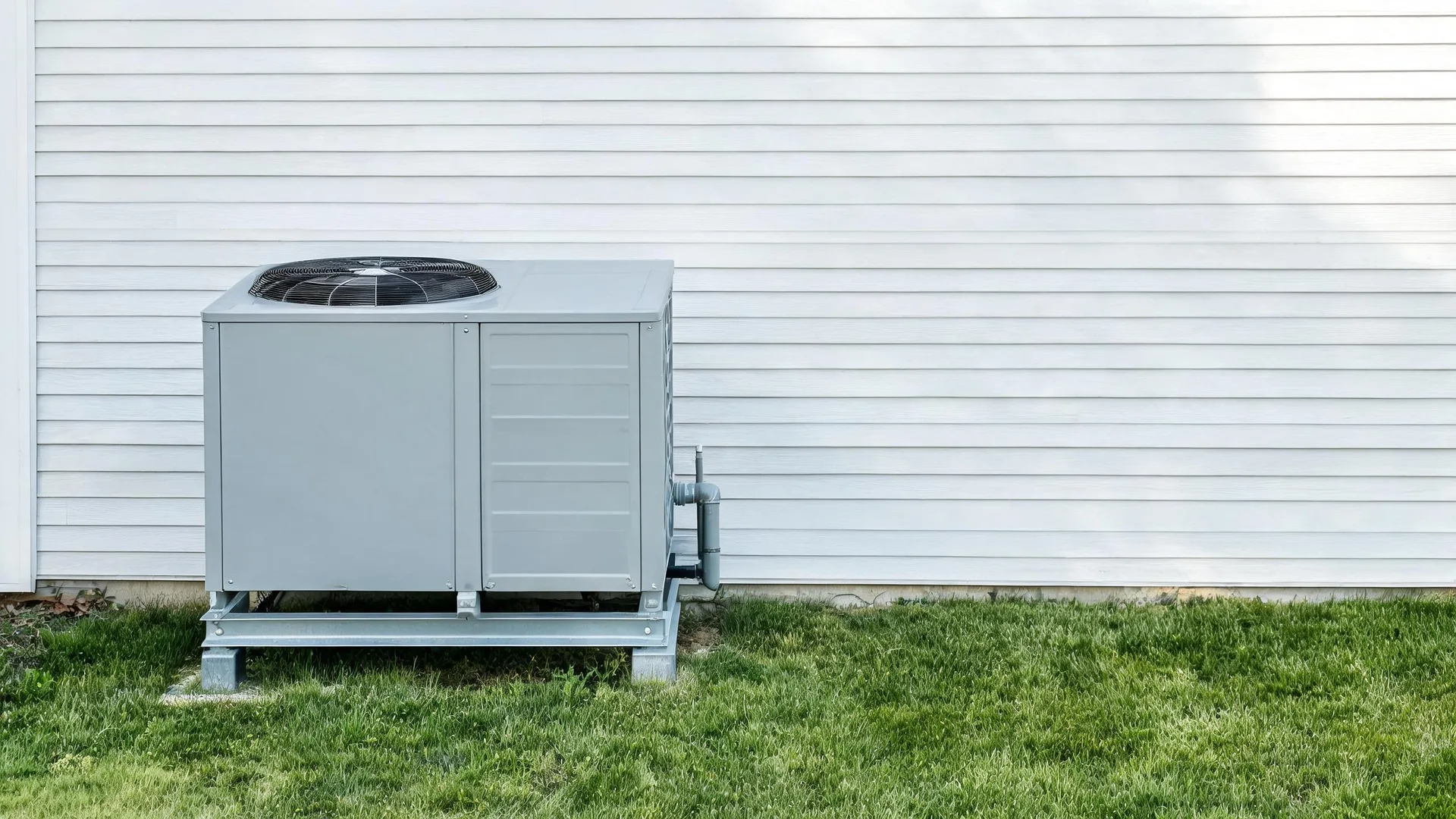
Check the breaker and the outdoor unit

If the system won't start at all, check the breaker before assuming the worst. It can trip from a surge without anything being wrong. Walk outside too. If the condenser fan isn't turning and you hear a hum, don't reset it again and again. That's a capacitor or motor issue, and repeated attempts to start it can do more damage to the compressor.

Overhead view of a gray residential air conditioning condenser unit mounted on a concrete pad beside a house with asphalt shingle roofing.

A new air conditioner would save little on running costs in Union County, so the repair decision comes down to the unit's condition.

  • A new one at the federal minimum, 13.4 SEER2$330 a year
  • An older air conditioner$350 a year

Estimates for a typical Union County home, compared with an older unit built to the previous federal minimum, from EIA household energy data, New Jersey fuel prices and NOAA climate normals. Your home will differ.

Repair makes sense when a part like a capacitor or contactor has failed.

Replacement makes sense when the compressor has failed or the system uses R-22 refrigerant, which is no longer made.

Age matters more than any single symptom. An old compressor has already done a lot of cycles, and when it finally fails, replacing just that part can cost close to putting in a new system anyway. A capacitor or a contactor is a different story. Those wear out on a schedule, and swapping one brings a unit that's otherwise sound right back to normal. The condition of the rest of the system matters too. If the coil is clean, the refrigerant charge has been right, and nothing else has needed work, a repair makes sense even on an older unit. If this is the second or third repair in a short stretch of time, that pattern is telling you something the current problem isn't. A tech who's honest with you will say which kind of problem you have, not just whether they can fix it.