Two white multi-story colonial houses with lit windows and black shutters photographed at night, fronted by a stone wall.

AC Repair in Camden, NJ

Tell us about the job

Takes about a minute. No obligation.

RepairCentral ACCamden County, NJ
Step 1 of 2

What ZIP code is the job in?

Four months of real work

AC here runs June through September, with afternoon highs averaging 85°F. That kind of heat runs a system hard and it tends to expose whatever is already wearing thin, like low refrigerant or a capacitor near the end of its life.


The usual causes, not the weather

A system struggling in Camden County is almost always dealing with a normal mechanical problem, nothing particular to this area. A technician checking yours should be looking at the same parts that fail anywhere. The capacitor. The contactor. The refrigerant charge.

4 months
June through September, your air conditioner is on duty
85°F
the average summer afternoon it cools against
28 hail events
in ten years, and hail bends the fins on outdoor coils
225 wind events
in ten years, and wind drives debris into outdoor units
Isometric cutaway illustration of a house interior showing ducted HVAC piping, an indoor air handler unit, and an outdoor condenser with fan connected by a line, rendered in grey tones on a white background.
Your air conditioner works hardest from June through August.

NOAA nClimDiv, 1991–2020 normals

A diagnostic visit starts with the technician watching the system run, not just hearing what it won't do.

The capacitor, the contactor, the charge and the airflow all get checked before anything gets replaced.

Electricity runs 19.34 cents a kWh here, and a struggling AC eats more of it every afternoon it's 85 degrees outside

Power costs 19.34 cents a kWh statewide
Cooling runs June through September
Summer afternoons average 85°F

May is a good time to get a system looked at here. Cooling starts in June and runs through September, and the first hot stretch is when a weak part usually gives out. A capacitor that tested fine in the cold doesn't always hold up once the system runs for hours at a stretch. Same with a refrigerant leak that was small enough to ignore last fall. Getting it checked before June means the problem gets found on a technician's schedule, not in the middle of a heat wave.

A broken AC in Camden is usually a known problem

Camden County sees its share of storms and wind, but none of that is what's wrong with your AC. A system that won't cool is almost always the capacitor, the contactor, or the refrigerant charge wearing out the way they do everywhere. A technician can check each one and tell you which it is.

Find a contractor
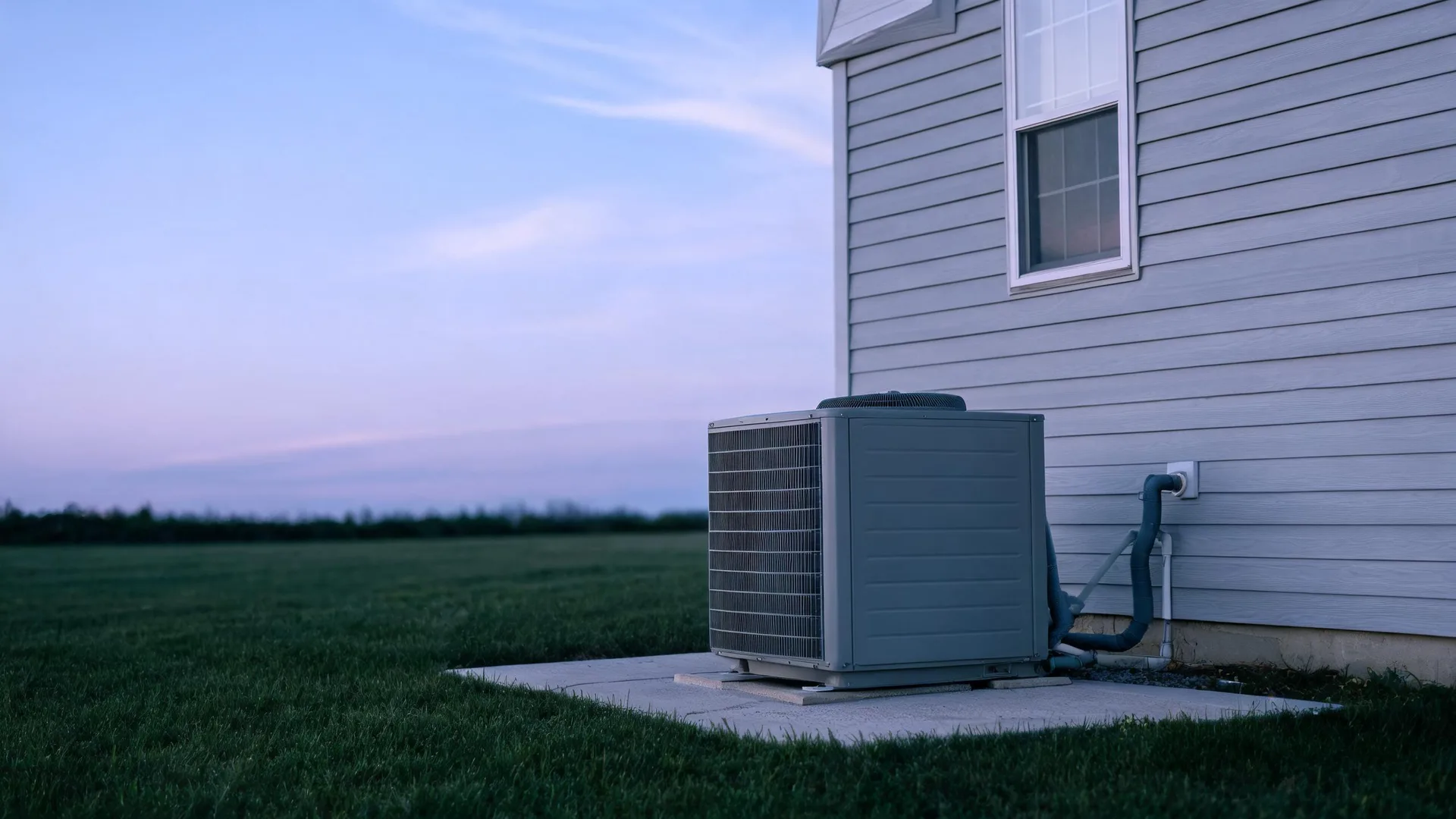
A gray cylindrical air conditioning condenser unit mounted on a concrete pad next to a light-colored vinyl-sided house exterior.

How much life is actually left

If your AC came with the house, ask the technician straight out how much life is left in it before you agree to another repair. A compressor or coil near the end doesn't always announce itself. It just keeps needing the next part replaced. Worth knowing before a repair goes into a system that is not going to outlast it by much.

What you can check first

Make sure the thermostat is set to cool and set below room temperature. Look at the breaker box for anything tripped on the AC circuit. Go outside and check the condenser. If the fan isn't spinning and you don't hear it running at all, that's worth telling the technician. Check the air filter too. A filter clogged with dust chokes off airflow and can make the coil freeze over, which stops the system from cooling even though it's still running.

What tells you to call now instead of waiting

Air blowing that isn't cold, a grinding or screeching noise, or a breaker that keeps tripping are all reasons to shut the system off and get someone out rather than keep running it. A frozen coil or an electrical fault doesn't just mean weak cooling, it can damage the compressor if the system keeps running that way. A system that's simply not cooling well can wait a bit. One doing any of those other things shouldn't be switched back on until it's been looked at.

Overhead view of an air conditioning condenser unit on a concrete pad next to a house with asphalt shingle roofing and vinyl siding.

A new air conditioner would cut about $30 a year off cooling for a typical Camden County home.

  • A new one at the federal minimum, 13.4 SEER2$370 a year
  • An older air conditioner$400 a year

Estimates for a typical Camden County home, compared with an older unit built to the previous federal minimum, from EIA household energy data, New Jersey fuel prices and NOAA climate normals. Your home will differ.

Repair makes sense when a part like a capacitor or contactor has failed.

Replacement makes sense when the compressor has failed or the system uses R-22 refrigerant, which is no longer made.

A repair is worth doing when it fixes one part and the rest of the system is sound. A capacitor, a contactor, a fan motor, these are parts that fail on their own without taking anything else down with them, and replacing one brings the whole system back to normal. It stops making sense when the compressor itself is failing, because that's the part that makes the refrigerant cold in the first place, and nothing else matters if it goes. A coil leaking refrigerant is a similar call, since a coil can be patched but it tends to fail again nearby once it's started. If a technician finds one worn part, fix it. If they find the compressor or a leaking coil on an older system, ask whether a repair is really buying much time.