A row of illuminated white colonial houses with black shutters and a stone wall along a road at dusk.

AC Maintenance in Trenton, NJ

Tell us about the job

Takes about a minute. No obligation.

Tune-up, service, or cleaningCentral ACMercer County, NJ
Step 1 of 2

What ZIP code is the job in?

Electricity here costs more

New Jersey homes paid 19.34 cents per kilowatthour in 2024, well above what a lot of states pay. A dirty coil or a low charge makes your AC run longer to cool the same house. Every one of those extra hours gets billed at that rate.

A neglected AC loses efficiency quietly

A dirty coil, a weak capacitor, a clogged filter. Your AC keeps running with any of these, it just works harder to cool the same house. You will not see that on the unit. You will see it on the meter.

4 months
June through September, your air conditioner is on duty
85°F
the average summer afternoon it cools against
23 hail events
in ten years, and hail bends the fins on outdoor coils
112 wind events
in ten years, and wind drives debris into outdoor units
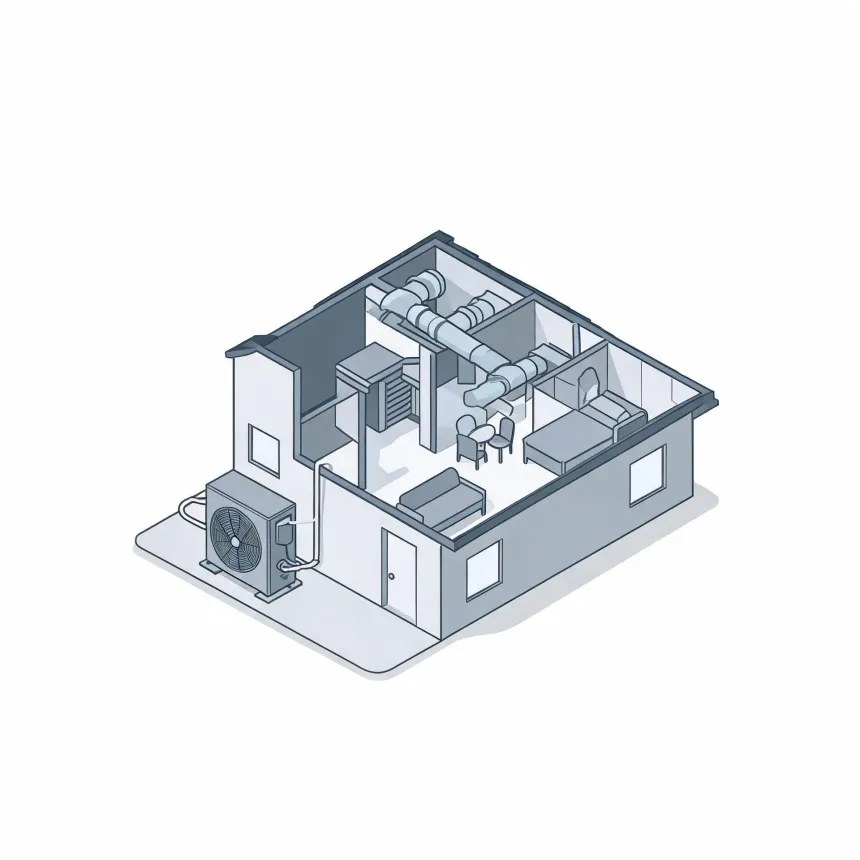
Isometric line illustration of a cutaway house showing interior rooms with furniture and ceiling ductwork, connected to an outdoor condenser unit with a fan beside the building.
Your air conditioner works hardest from June through August.

NOAA nClimDiv, 1991–2020 normals

June is when cooling starts in Mercer County, and that is when your AC has to work right away.

Get it checked in May, before the season puts any load on it.

Half the homes in Mercer County were built by 1969, and an AC system that old needs eyes on it every year

Half the homes here were built by 1969
Cooling runs June through September
Summer afternoons average 85°F
One tune-up a year covers itCooling runs four months here, June through September

A tune-up is where that extra cost gets caught before a summer of running on the meter. A technician cleans the coil, checks the charge, and swaps the filter if it needs it. That is most of what makes an AC work harder than it should. None of it shows up from outside the unit. It shows up as a system that runs fewer hours to cool the same house, month after month, at 19.34 cents a kilowatt-hour.

Get the system checked before summer puts a load on it

If your AC is as old as the house, nobody's looked at the coil or the charge since it was installed. A yearly check catches a problem while it's still small, before a summer of running on the meter.

Find a contractor
A man in a dark jacket, brown pants and cap carries a worn canvas tool bag up porch steps toward a dark teal front door, with a potted shrub in a blue glazed planter beside him.
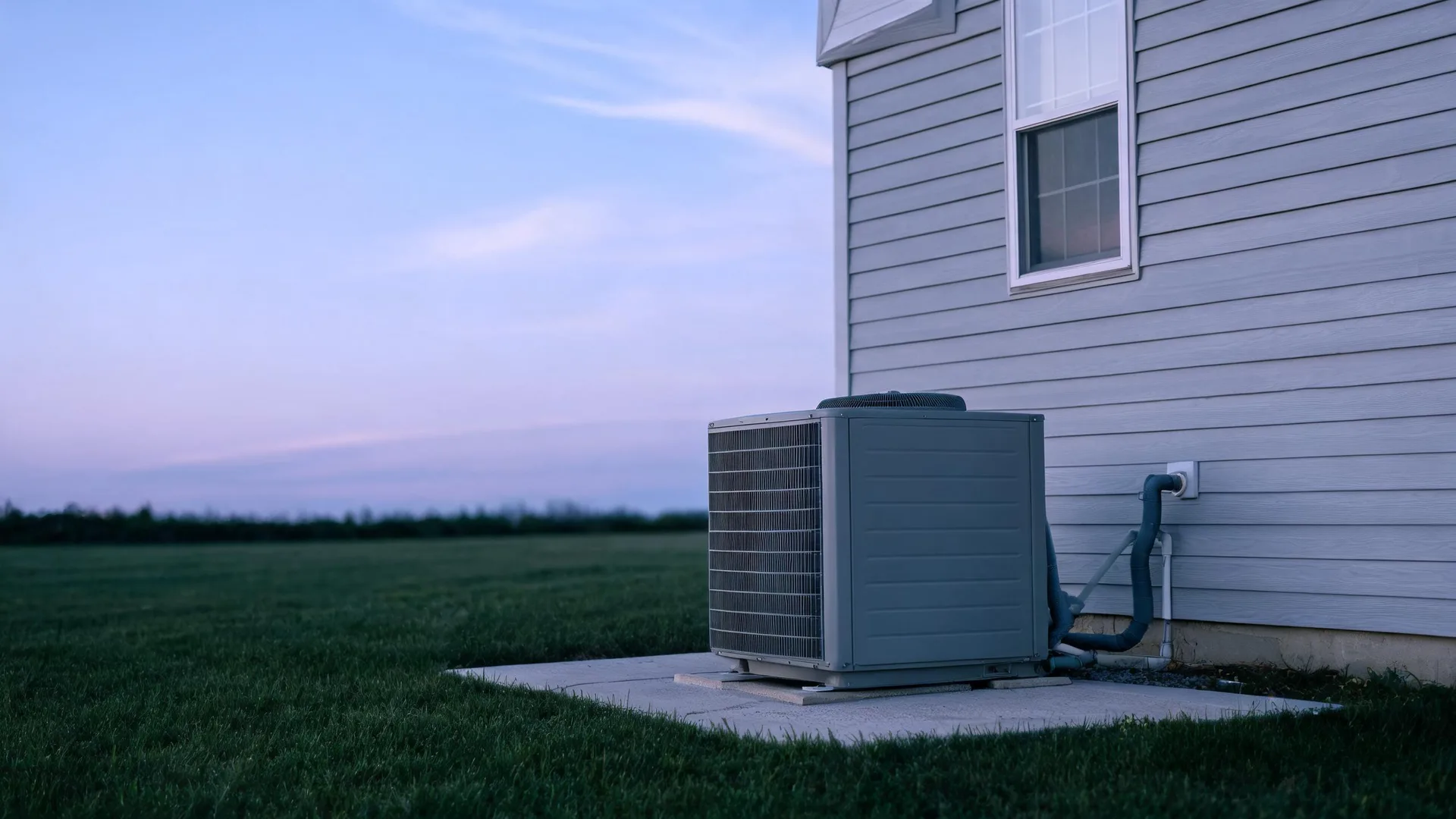
A gray residential air conditioning condenser unit mounted on a concrete pad outdoors, surrounded by green grass under a partly cloudy blue sky.

Where the wear hides

The filter sits right in the airstream, and dust packs it tight faster than most people expect. Airflow drops, the coil inside starves for air, and the system runs longer to move less heat. Outside, the condenser coil collects leaves, grass clippings and dust, and that coating traps heat the system is trying to throw off. A dirty coil, inside or out, makes the compressor work harder for the same result. Then there's the drain line, the path that carries off the water the coil pulls out of the air. Algae and dirt build up inside it over a summer of running, and when it blocks, water backs up into the pan and finds the nearest way out, usually down through the ceiling below. None of this announces itself. The system keeps running right up until it doesn't.

The filter is yours to change

Pull it out and hold it up to a light. If light does not pass through it, swap it. A clean filter is the one thing between visits that actually protects the system, and it takes a minute.

Leave the cabinet closed

Checking the refrigerant charge, testing a capacitor, clearing a clog in the drain line inside the unit all need gauges and training to do safely. Opening the cabinet without them risks a shock, or an AC that runs worse than before anyone touched it.

Overhead view of an air conditioning condenser unit on a concrete pad next to a house with asphalt shingle roofing and vinyl siding.

Book your AC tune-up in May, before homes here start needing cooling in June.

  1. Jan
  2. Feb
  3. Mar
  4. Apr
  5. May
  6. Jun
  7. Jul
  8. Aug
  9. Sep
  10. Oct
  11. Nov
  12. Dec

A tune-up checks the refrigerant charge, cleans the coils, tests the capacitor and tightens the electrical connections.

A tune-up starts outside, with the condenser coil washed clean of the leaves and grass packed into the fins. Inside, the technician checks the blower wheel for the dust that builds up on the blades and cuts airflow without anyone seeing it. The refrigerant charge gets checked against the number the manufacturer specifies, not guessed at. A capacitor gets tested under load, not just looked at, since a weak one can still start the system and still fail a week later. The contacts in the contactor get checked too, since a pitted one arcs every time the system cycles on. Last, the drain line gets cleared so the water the coil pulls out of the air has somewhere to go.