

What an AC tune-up covers before a New Jersey summer
Send the form and the air conditioner tune-up stops being something to remember.
I'm done searchingWhat does an AC tune-up actually cover before summer?
You want to know what you're paying for before you book someone, not a vague promise that your AC will "run better." New Jersey summers get sticky fast, and once the heat sets in, you want your system ready, not getting looked at for the first time when it's already struggling. A real tune-up has a specific list of steps behind it, and knowing them tells you whether the person doing the work is actually checking anything.
A tune-up checks the parts that fail in a New Jersey summer
A tune-up means a technician checks the refrigerant charge, cleans the condenser coil outside, tests the capacitor and contactor, and checks that the system is pulling enough airflow across the indoor coil. These are the parts that take the beating once the humidity sets in and the unit is running for hours at a stretch. A dirty coil or a weak capacitor doesn't always fail outright, it just makes the system work harder and run longer to hit the same temperature, and on New Jersey power rates that shows up on the bill before it shows up as a breakdown. The tune-up is meant to catch that drift before July and August put the real load on the system.
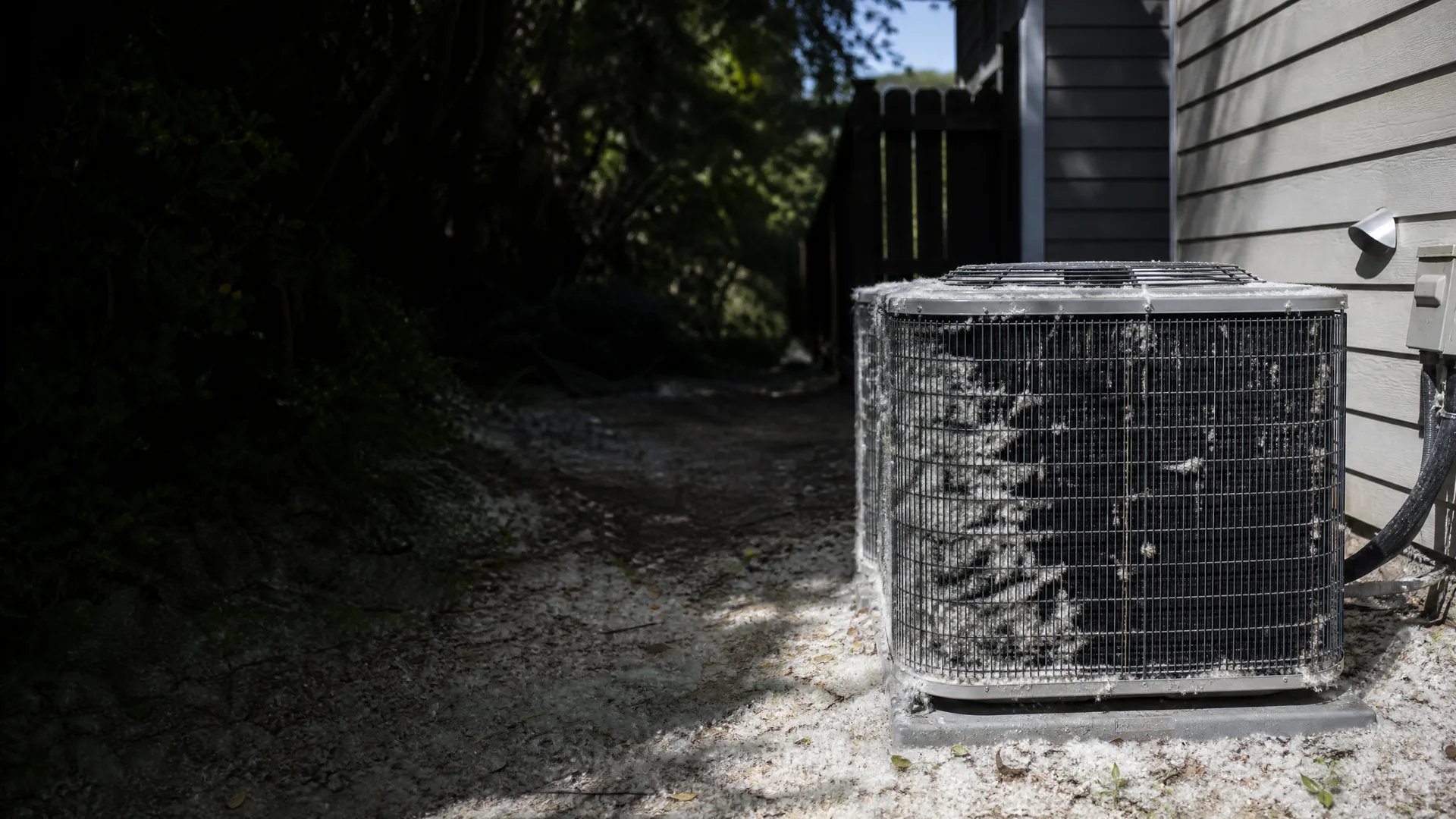
You're out in the side yard on a late May afternoon, coiling up the garden hose, when you notice it. The cottonwood trees have been shedding for a couple weeks now, and the fluff has piled up against the condenser like snow against a curb. You crouch down and see the fins are matted gray-white, the fluff caught in every ridge of metal. The unit is still running, you can hear it, but the airflow through the side feels weak against your hand. You make a note to deal with it before the first real hot stretch hits, because it's only going to get warmer from here.
Is your AC ready for the first real heat wave?
You might not know anything is wrong until the day it matters most. A system that's been skipped a season or two will still turn on, but it works harder to get the same cool air, and your electric bill shows it before anything else does. You may notice the air coming out feels less cold than it used to, or the house takes longer to come down to temperature in the evening. Some systems start short cycling, clicking off and on more than they should. None of this is a threat, it's just how a neglected system behaves. It runs through July and August anyway, straining the whole time, until something finally gives out on the hottest day of the year.




Stop chasing an air conditioner pro
A tune-up before summer is worth doing, but finding someone to do it is its own chore. You end up searching listings, calling a few numbers, explaining the same thing about your condenser or your electric bill three or four times, then sitting on quotes trying to tell them apart. Power in New Jersey already costs more than most of the country, so a system that's been skipped a season runs up a bill you notice. Send this request once and that search is off your plate. You're not calling around, you're not repeating yourself to the next voice on the phone, and you're not left guessing whether the price you got is fair. Someone takes the job of finding the right contractor off your hands, so by the time the first sticky week hits, you're not still the one chasing it down.
What the tech actually checks
- A tech checks the refrigerant charge against the manufacturer's spec, since too little or too much makes the compressor work harder.
- The condenser coil outside gets washed clean, because dirt and cottonwood fluff packed against the fins block airflow and cut cooling capacity.
- The evaporator coil inside gets inspected too, since a dirty coil can ice over once the system runs for hours in July heat.
- Electrical connections get tightened and the capacitor gets tested, because a weak capacitor is one of the most common reasons a compressor won't start.
- The condensate drain line gets checked for clogs, since a blocked line backs up and can shut the system down or leak into the house.
- Thermostat calibration and airflow at the vents get checked last, confirming the system is actually delivering the cool air it's producing.
The order matters. A tech starts with refrigerant charge, because that number drives everything else the compressor does for the rest of the summer. Too little charge and the compressor runs long and hard trying to hit the temperature on your thermostat. Too much, and it can flood the compressor with liquid refrigerant it was never built to handle. From there it's the coils. The condenser sits outside and takes the brunt of a New Jersey summer, catching pollen, grass clippings, and whatever else blows across the yard, so it gets hosed down to let the fins breathe again. The evaporator coil is inside, usually above the furnace, and it gets a look too, since a coil caked with dust can ice over once the system is running six or eight hours a day in July. Then the electrical side: connections get snugged down and the capacitor gets tested under load, because a capacitor that's starting to fail often shows no symptoms until the day it just won't kick the compressor on. The condensate line gets checked next, since a clog there backs water up into the drain pan and some systems shut themselves off rather than let it overflow into your house. Last comes the thermostat and the vents, confirming the cold air the system makes is actually reaching the rooms it's supposed to cool.


Power costs 22.48 cents per kilowatt-hour statewide
At 22.48 cents a kilowatt-hour, a system that's cooling your house harder than it needs to shows up fast on the bill. A tune-up gets your AC back to pulling the amps it was built for, so a hot stretch in July costs you what it should and not more.
EIA-861 2025 statewide residential average

The tech checks the thermostat calls for cooling and responds right.
Capacitor gets tested, since a weak one strains the compressor on startup.
Condenser coil gets washed clean of dirt and cottonwood fluff.
Refrigerant charge gets measured against the manufacturer's spec.
A tune-up before the heat sets in covers the charge, the coil, the capacitor, the airflow, the things that decide whether your system cools your house or just runs trying to. Skip it and the unit still turns on, it just works harder for the same result, and that shows up on your electric bill before it shows up anywhere else. What it doesn't have to cover is your time. Finding a contractor, calling around, explaining the same thing about your condenser three times over, sitting on quotes trying to tell which one is fair, that's the part that wears you down most years. Send the form and that part is done. You're not left sorting through listings on your own, and you're not explaining your situation from scratch to the next person who picks up. Someone licensed to do this work gets your information and takes it from there. Your job was knowing summer was coming. The rest is no longer on you.

Send one request and you're done looking
Skip calling around to set up an air conditioner tune-up.