A single-story red brick house with a dark shingled roof and black shutters, set behind a lawn and a long dry-stone retaining wall, framed by large leafy trees under an overcast sky.

AC Maintenance in Morristown, NJ

Tell us about the job

Takes about a minute. No obligation.

Tune-up, service, or cleaningCentral ACMorris County, NJ
Step 1 of 2

What ZIP code is the job in?

Electricity here runs 19.34 cents a kilowatthour

New Jersey power costs more than it does in most states. A system that has to work harder than it should, because of a dirty coil or a low charge, burns through more of those kilowatthours every time it cycles on.


A strained AC still cools the house, just not for free

A dirty coil or a weak fan motor will not stop your AC from getting the house cold. It just makes the system run longer and pull more power to get there, and in Morristown that extra power costs real money.

3 months
June through August, your air conditioner is on duty
82°F
the average summer afternoon it cools against
31 hail events
in ten years, and hail bends the fins on outdoor coils
188 wind events
in ten years, and wind drives debris into outdoor units
Isometric cutaway illustration of a house interior showing ducted air handling equipment, ceiling ducts, furniture in two rooms, and an outdoor condenser unit connected by lines outside the wall.
Your air conditioner works hardest from July through August.

NOAA nClimDiv, 1991–2020 normals

June is when cooling starts in Morris County, and that's when your AC has to work its hardest.

May is the month to get it checked, before the heat arrives and the system is already under load.

Half the homes here were built by 1971, old enough that a yearly check matters

Half the homes here were built by 1971
Cooling runs June through August
Summer afternoons average 82°F
Weather that's hard on an ACMorris County logged 188 damaging wind events between 2015 and 2024

The filter is the first thing worth checking yourself, before anyone comes out. A dirty filter chokes airflow across the indoor coil, and when that coil can't move enough air, it can ice over even on a hot day. Once ice forms, the system stops cooling the house at all until it melts. The outdoor coil needs airflow too, from the other direction, and leaves or grass clippings pressed against those fins slow it down the same way a dirty filter does. The condensate drain is the quiet one. It carries water away from the indoor coil as the system runs, and when it clogs with algae, that water backs up into a pan or onto the floor around the unit instead.

Have it checked before the system is paying for its own neglect

A coil that has to work harder pulls more kilowatthours every time it cycles on, and at 19.34 cents each, that adds up over a Morristown summer. A yearly check catches the dirty coil or weak charge before the system is under full load.

Find a contractor
A man in a dark jacket, brown pants and cap carries a worn canvas tool bag up porch steps toward a dark teal front door, with a potted shrub in a blue glazed planter beside him.
A gray residential air conditioning condenser unit mounted on a concrete pad outdoors, surrounded by green grass under a partly cloudy blue sky.

If you don't know how old your AC is, get it looked at

A system that has been cooling the same house since before anyone alive remembers the install date is overdue for someone to look at it. If your AC came with the house, a yearly check is the only way to know what kind of shape it is actually in. The tech can tell you how the charge and the electrical connections are holding up, long before anything fails outright.

The refrigerant charge, checked with gauges

A system can be low on refrigerant and still blow cold air, just not as cold as it should. The only way to know the charge is right is to connect gauges and measure it. Run it low too long and the compressor wears against itself in a way that doesn't show up until it quits.

Electrical connections, before they fail

Every time the system cycles on, the contacts and wiring take a small hit of wear. A connection that's gone loose or started to corrode will run fine for months, right up until it arcs or burns through. A tech checks these with the power off and the panel open, someplace a homeowner has no reason to look.

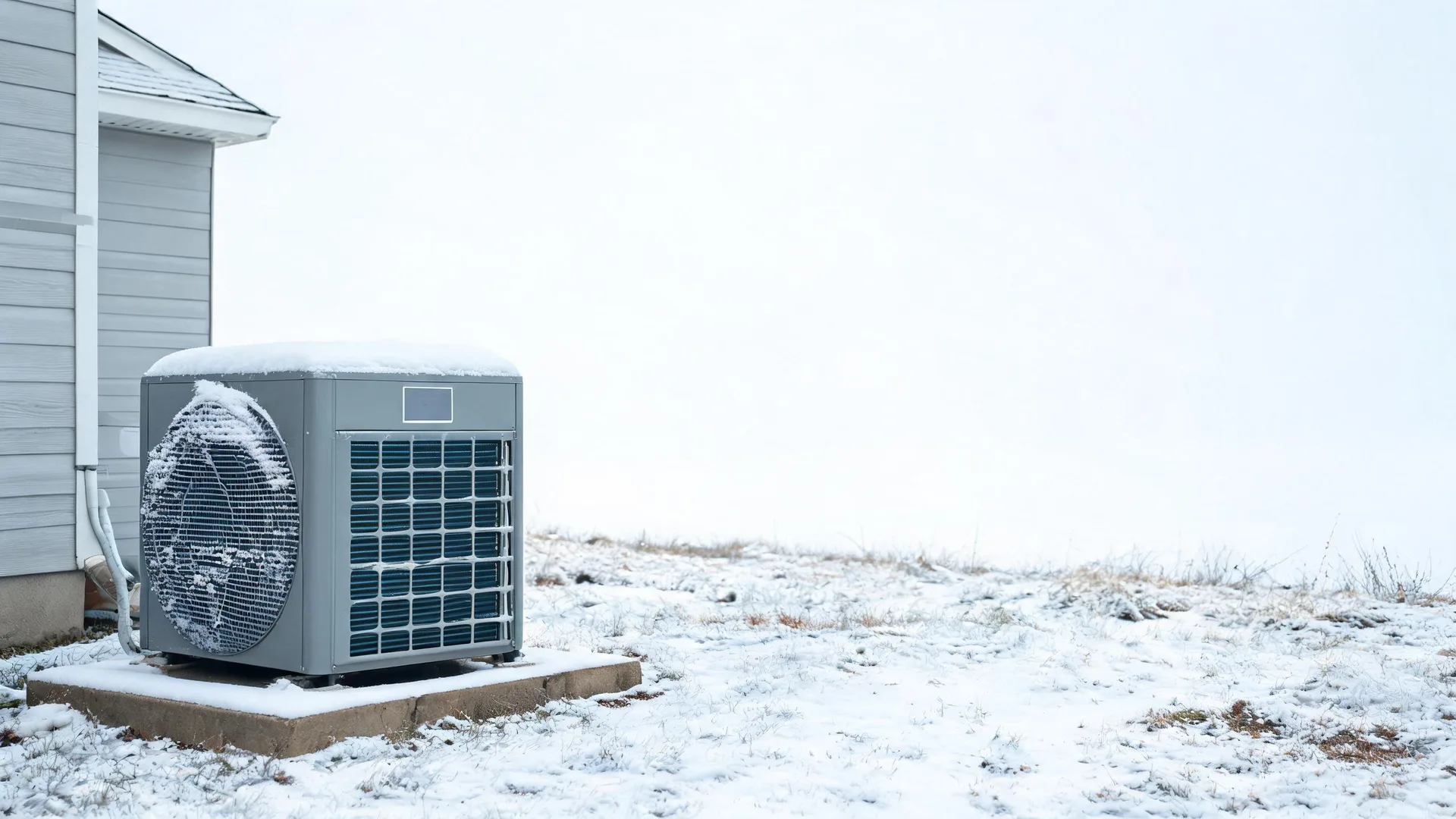
An overhead view of a residential air conditioning condenser unit mounted on a concrete pad next to a house with vinyl siding.

Book your AC tune-up in May, before homes here start needing cooling in June.

  1. Jan
  2. Feb
  3. Mar
  4. Apr
  5. May
  6. Jun
  7. Jul
  8. Aug
  9. Sep
  10. Oct
  11. Nov
  12. Dec

A tune-up checks the refrigerant charge, cleans the coils, tests the capacitor and tightens the electrical connections.

A real tune-up is more than a glance at the filter. The tech checks the refrigerant charge against what the system calls for, not just whether the air coming out feels cold. The blower gets pulled apart enough to see the wheel itself, because dust builds up on the blades and throws off the airflow even when the filter upstream is clean. Electrical connections get tightened, since a loose one runs fine for a while and then arcs. The capacitor gets tested under load, not just looked at, because a weak one can still start the compressor and still be close to failing. And the condensate drain gets flushed, so the system has a clear path to get rid of the water it pulls out of the air all season.