







White colonial-style houses with lit windows photographed at dusk along a tree-lined street.

AC Installation in Vineland, NJ

Tell us about the job

Takes about a minute. No obligation.

New system or replacementCentral ACCumberland County, NJ
Step 1 of 2

What ZIP code is the job in?

New Jersey homes paid 19.34 cents per kilowatthour in 2024, well above what most of the country pays. An air conditioner that runs inefficiently turns more of that expensive power into wasted heat instead of cooled air. When you're choosing a new system, the SEER2 rating tells you how much cooling you get for the power you put in, and in a state with rates like these, that number matters more than it would somewhere cheaper. A unit sized wrong for your home, too big or too small, also costs you, since it cycles more or runs longer than it should. Ask what SEER2 rating you're being quoted, and ask how the contractor sized it for your house.

4 months
June through September, your air conditioner is on duty
84°F
the average summer afternoon it cools against
6 hail events
in ten years, and hail bends the fins on outdoor coils
13.4 SEER2
the federal minimum any new unit must meet
Isometric cutaway illustration of a small home interior with furniture and ducting, showing an indoor air handler connected by lines to an outdoor condenser unit on a pad.
Your air conditioner works hardest from June through August.

NOAA nClimDiv, 1991–2020 normals

Utility gas heats 64.8% of homes in Cumberland County.

Your AC installation is likely a separate job from your furnace, not a swap of one unit for another.

Four months of real heat, nothing that calls for upsizing

Cooling runs June through September
Summer afternoons average 84°F
87 damaging wind events from 2015 to 2024
Built for the house you haveHalf the homes in Cumberland County went up in 1969 or earlier

Cumberland County sits in zone 4A, a mixed climate that asks real work of both your furnace and your AC. That rating sets a floor on what can legally go into your home. Any split-system central air conditioner under 45,000 Btu/h built from 2023 onward has to meet at least 13.4 SEER2. A contractor can quote you right at that minimum and still be within the law. The question worth asking is whether that's what's being installed, or something built with this climate in mind.

May is the month to get this done, before June's heat arrives

Cooling starts in June here and runs through September. May is what you have left before that first hot stretch. Replace it now and there's time to size it right and check the work, not a rush job while the house is already hot.

Find a contractor
A man in a gray shirt and tan pants, seen from behind, climbs wooden porch steps toward a dark teal front door while carrying a canvas tool bag holding wrenches.
A gray metal air conditioning condenser unit mounted on a concrete pad in a flat grassy field under a partly cloudy sky.

The size written on the quote should come from a calculation, not a guess

An oversized unit cools the air fast and shuts off before it ever pulls the moisture out of the room, so the house feels cool and clammy at the same time. It also cycles on and off more than a correctly sized system would, and every start puts more wear on the compressor than the running does. An undersized unit has the opposite problem. It runs long stretches trying to reach the setpoint and sometimes never does on the hottest days, so it just runs and runs with the compressor rarely getting a rest. Both shorten the life of the system, just in different ways. The only way to land on the right size is a load calculation that accounts for the square footage, the windows, the insulation and the orientation of the house, not a guess based on tonnage alone.

The old unit gets disconnected and hauled off

A central air system holds refrigerant, and that refrigerant can't just be vented into the air. Before the old condenser is disconnected, it has to be recovered into a tank, and the line set gets opened only after that's done. The indoor coil comes out too, since a new system needs a coil matched to it. Once everything's disconnected, the old condenser, the coil and any scrap line set get hauled off the property.

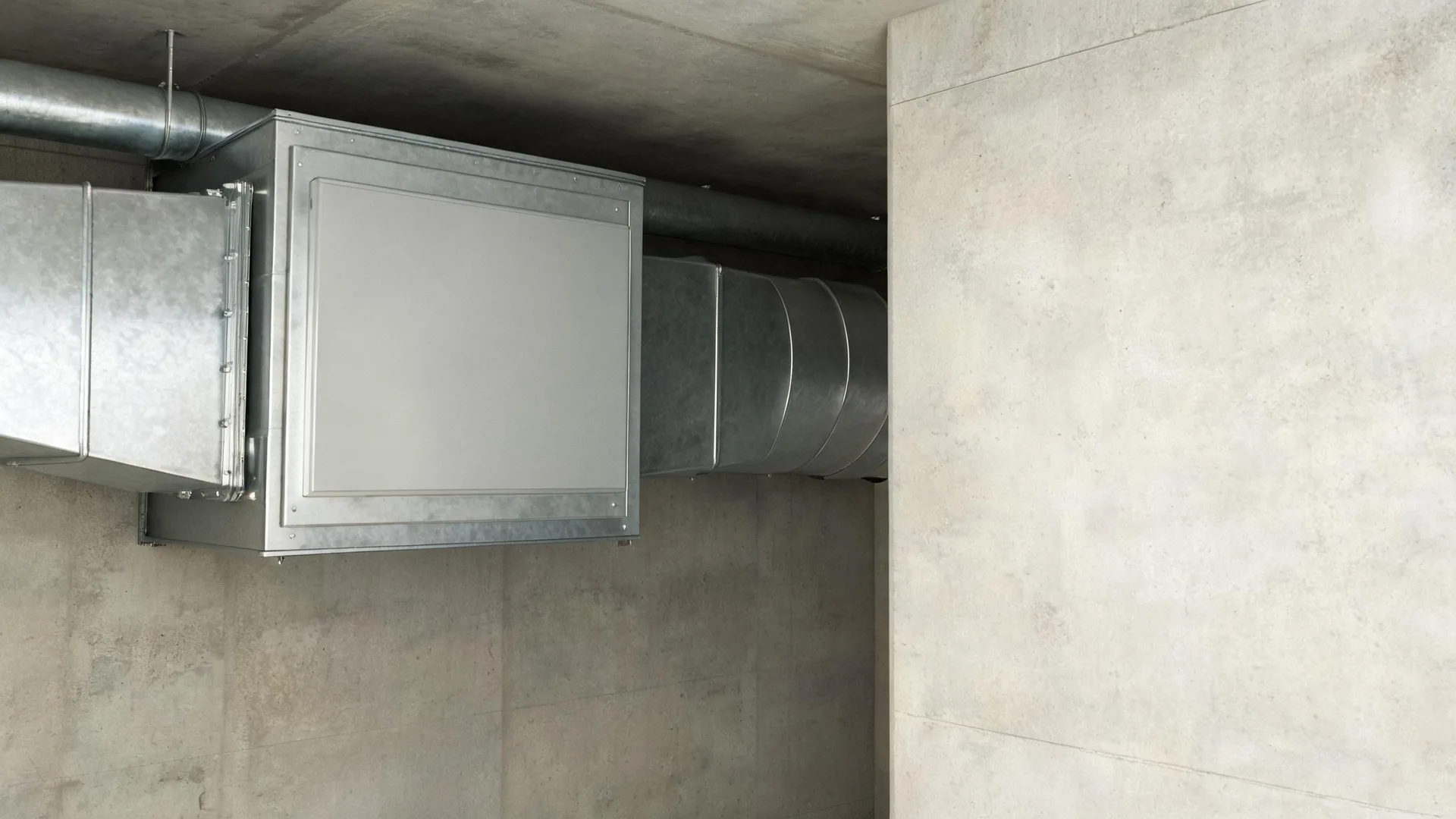
The refrigerant matters more than the metal

Older systems often ran on refrigerant that's being phased out, which is part of why recovery is handled the way it is rather than released. A contractor pulling a permit for the new install has to show the old refrigerant was recovered properly, not just that the old unit is gone. That paperwork is part of the job, not an extra step tacked onto it.

An outdoor air conditioning condenser unit on a concrete pad next to the gray vinyl siding of a residential home.

A higher-efficiency unit would save about $50 a year to run in Cumberland County compared with a new unit at the federal minimum.

  • A higher-efficiency unit$310 a year
  • A new unit at the federal minimum, 13.4 SEER2$360 a year

Estimates for a typical Cumberland County home, from EIA household energy data, New Jersey fuel prices and NOAA climate normals. Your home will differ.

A quote is only worth comparing if you know what's in it. Ask what tonnage is being installed and whether that number came from a load calculation or just a guess based on the old unit. Ask whether the coil, the condenser and the air handler or furnace blower are all matched to work together, since pairing a new condenser with an old coil can keep the system from ever hitting its rated efficiency. Ask what happens to the ductwork, whether anyone is checking it for leaks or just connecting the new unit to what's already there. Ask what the warranty covers, parts versus labor, and whether it's void if someone other than the installer services it later. Contractors quoting the same size unit can still mean very different jobs underneath it.