Electricity here runs 19.34 cents a kilowatthour
New Jersey households paid that rate in 2024, well above the national average. An air conditioner pulls power every time it runs, so that rate applies to every hour it's on.
Takes about a minute. No obligation.
New Jersey households paid that rate in 2024, well above the national average. An air conditioner pulls power every time it runs, so that rate applies to every hour it's on.
A SEER2 rating tells you how much cooling a system gets from a given amount of power. At this rate per kilowatthour, a unit with a higher rating costs less to run than one with a lower rating, even if both cool the house the same.
NOAA nClimDiv, 1991–2020 normals
Utility gas heats 47.9% of homes in Salem County, more than any other fuel.
A gas furnace paired with central air is the setup most homes here already have the ductwork for.



Half the homes in Salem County were built in 1962 or earlier. A house that age wasn't built with central air in mind, and whatever ductwork or electrical setup is in there now reflects decisions made long after the walls went up. The new system has to match what's actually behind those walls, not a standard spec sheet. If your place is one of the older ones, that's worth knowing before you pick a unit.
Four months of cooling a year, with afternoon highs around 85, is normal work for a standard system. Nothing about Salem County pushes you toward a bigger unit or a higher-end one than what fits the house. Get the size and the SEER2 rating right for the space, and it'll handle the summer here fine.
Find a contractorA system that's sized right runs long, steady cycles that pull moisture out of the air and wear evenly across the season. One that's too big shuts off before it finishes a cycle, so the air feels damp even when the house is cool, and the compressor takes the hit from starting up over and over. One that's too small runs flat out all afternoon trying to catch up and never does, which wears it out faster and still leaves the house warm. Getting the size right isn't about matching the old unit or going with a bigger number for good measure. It comes from a load calculation that looks at the square footage, the windows, the insulation, and how the ductwork moves air through the place. That number, not the size of the unit being replaced, is what the new system should be built around.
Removing the outdoor unit and the indoor coil is part of a normal installation. The refrigerant inside the old system gets recovered first, since it can't just be vented out. A licensed contractor handles that recovery as a matter of course.
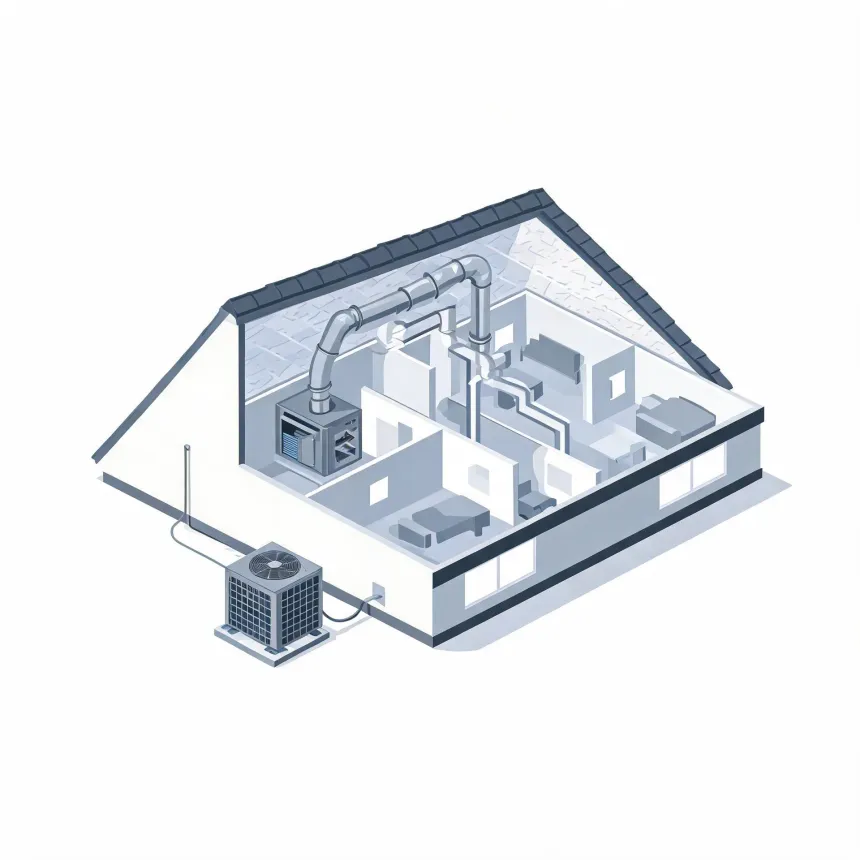
If the existing ducts are sound, the new system connects to them, and the job is mostly swapping equipment. If they're undersized or leaky, that's where the real work is, and it gets found during the look at the house, not after the new unit is already set.
Estimates for a typical Salem County home, from EIA household energy data, New Jersey fuel prices and NOAA climate normals. Your home will differ.
The crew sets the outdoor unit on its pad first, then connects the refrigerant lines running to the indoor coil. If the coil is being swapped too, that part comes out and the new one ties into the existing ductwork or air handler. Electrical work comes next, matching the new equipment to the disconnect and breaker. The system gets evacuated before any refrigerant goes in. That pulls out air and moisture that would otherwise sit in the lines and cause problems later. Once it's charged, the last step is checking airflow and making sure the thermostat is actually controlling the system the way it should. A unit that's running isn't the same as one that's been checked over after the fact.