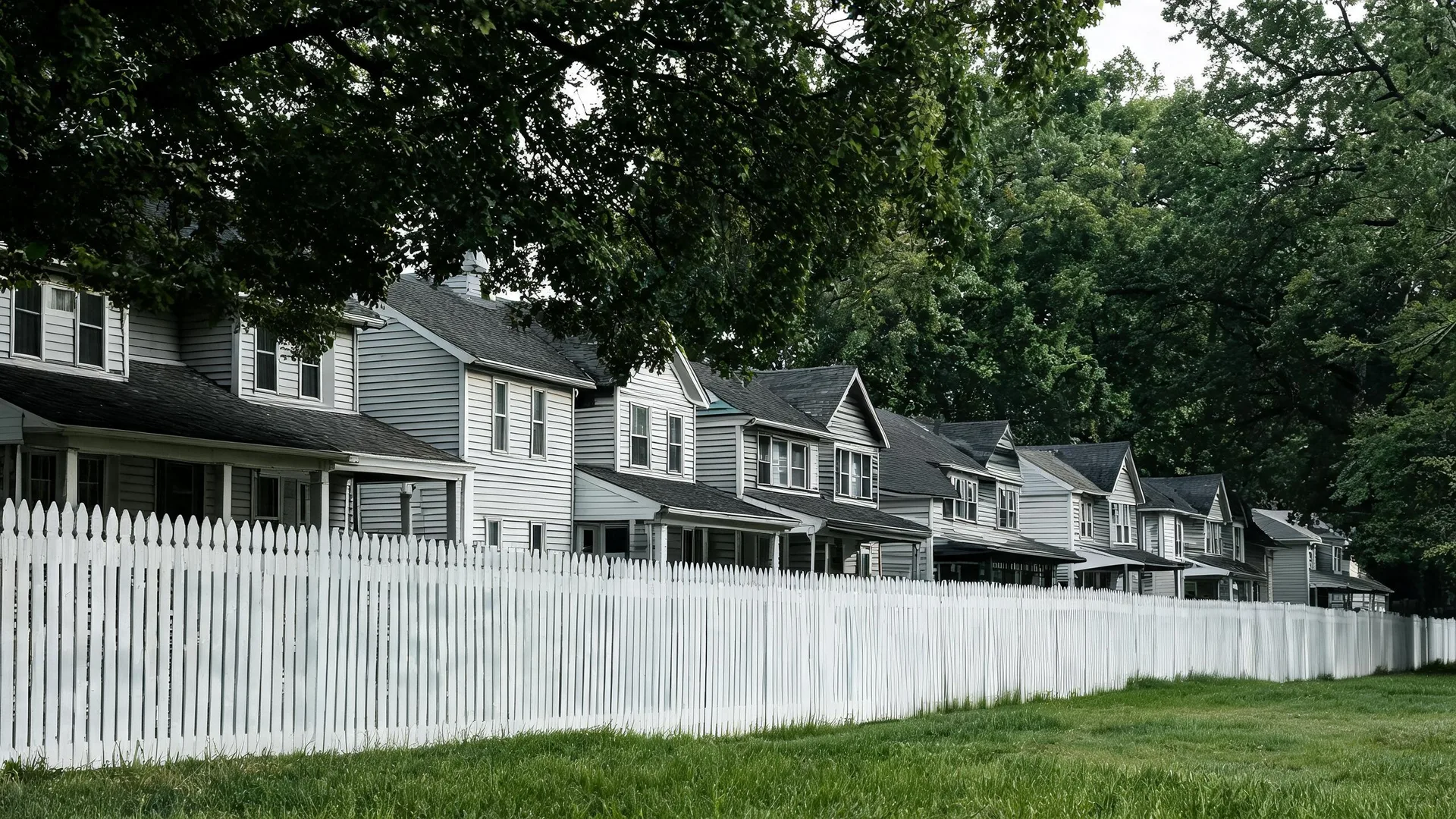






A long white picket fence runs along a grassy lawn in front of a row of gray clapboard houses with pitched roofs, framed by large leafy trees.

AC Installation in Phillipsburg, NJ

Tell us about the job

Takes about a minute. No obligation.

New system or replacementCentral ACWarren County, NJ
Step 1 of 2

What ZIP code is the job in?

New Jersey homes paid 19.34 cents per kilowatthour in 2024, well above what most of the country pays. That rate doesn't change once your new AC is installed, so the unit's efficiency is what decides what each summer actually costs you. A SEER2 rating tells you how much cooling you get for the power you put in, and a higher number means less of that 19.34 cents spent per degree of cooling. Over years of running an AC in this state, that difference is worth asking about before you buy, not after.

3 months
June through August, your air conditioner is on duty
82°F
the average summer afternoon it cools against
7 hail events
in ten years, and hail bends the fins on outdoor coils
13.4 SEER2
the federal minimum any new unit must meet
Isometric cutaway illustration of a house interior showing ducted HVAC piping, an indoor air handler unit, and an outdoor condenser with fan connected by a line, rendered in grey tones on a white background.
Your air conditioner works hardest from July through August.

NOAA nClimDiv, 1991–2020 normals

Half the homes in Warren County were built in 1972 or earlier.

An install sized for the house you actually have, not the one on record, is the one that holds up.

Half this county heats with gas, so a gas furnace is the easy match for whatever's pairing with your new AC

50% of homes heat with gas
Cooling runs June through August
Summer afternoons average 82°F
Get your AC in before JuneCooling here runs June through August, so May is the month to get it done.

Cooling here runs three months, June through August, with afternoon highs averaging 82 degrees. Warren County is rated a cool climate where heating carries the bigger load, not cooling. That means the AC spends most of the year shut off and only works moderate hours when it does run. A system that sees that little work doesn't need to be the top-tier unit to hold up. A straightforward, well-installed system matched to your house will get through those months fine.

Your new AC has to clear 13.4 SEER2 here, and a federal credit can offset going higher

Warren County sits in climate zone 5A, and any split-system AC under 45,000 Btu/h installed here has to meet 13.4 SEER2 at minimum. That floor is set, so the question for your install is what to put in above it. A federal tax credit is available on qualifying equipment, which is worth factoring in before you settle on a unit.

Find a contractor
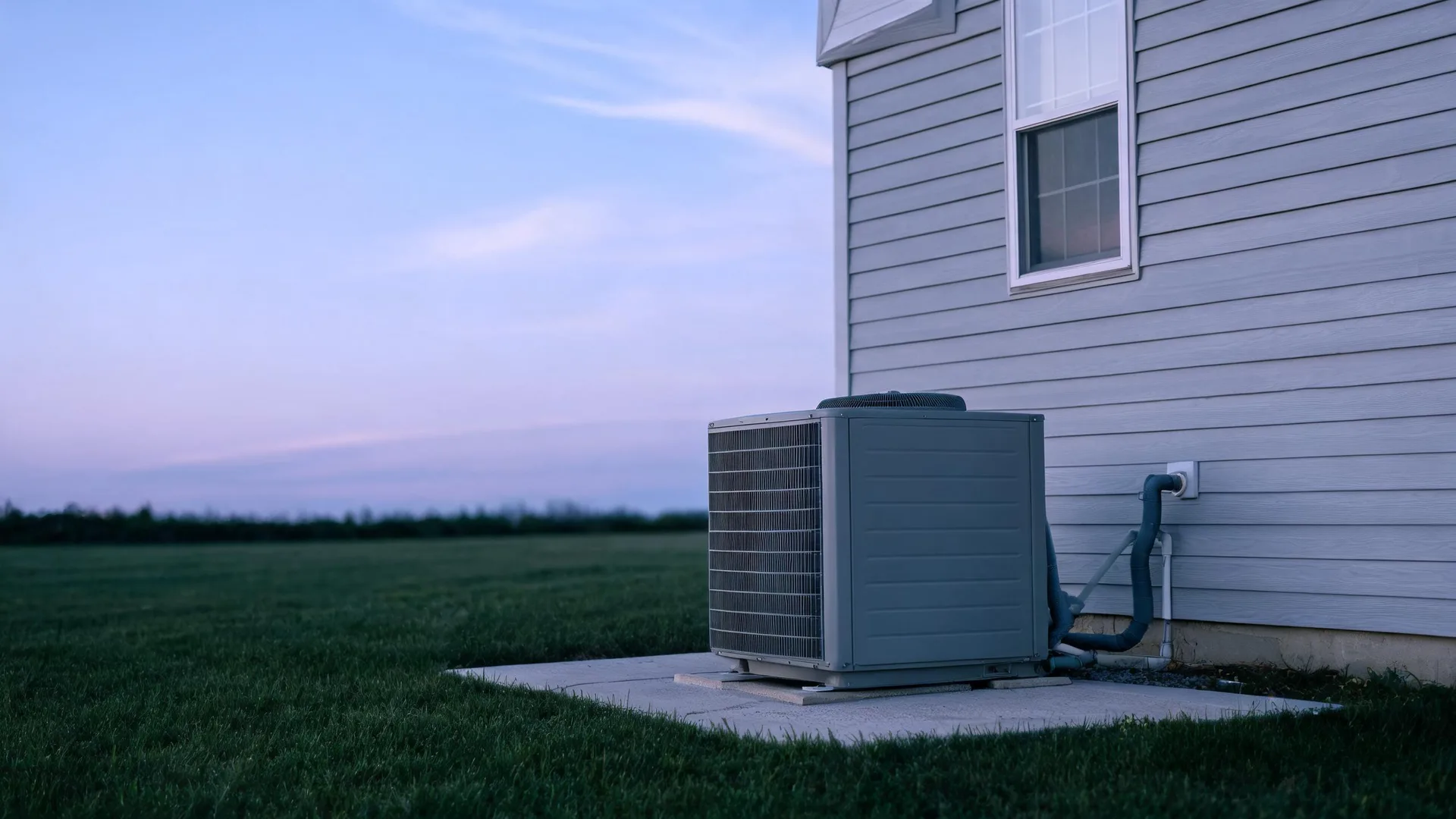
A gray cylindrical air conditioning condenser unit mounted on a concrete pad next to a light-colored vinyl-sided house exterior.

The old unit doesn't just get unplugged

The old condenser doesn't get hauled off and forgotten. Refrigerant inside it has to be recovered into a tank before the unit comes apart, that's the law, not a courtesy. A contractor running the removal pulls the charge down with a recovery machine rather than letting it vent to the air. Once that's done the lines get cut and the old pad or cradle cleared out. The copper line set running to the old unit almost always comes out with it. Old refrigerant oil and any moisture that worked its way in over the years can travel into a new system and cause problems a new compressor shouldn't have to deal with. Fresh line set avoids that risk entirely.

Sizing comes from a room by room calculation, not the old unit's tag

A contractor measures your windows, walls, insulation and layout and runs that through a load calculation to find out how much heat your house actually gains on a hot afternoon. Matching the new unit to whatever was there before just copies a guess that may have been wrong from the start.

Oversized cools the air without pulling the moisture out

A unit that's too big blasts the room down to temperature and shuts off before it runs long enough to pull humidity out of the air, so the house feels cool but damp. Undersized and it runs constantly, straining to reach a setpoint it's not strong enough to hold. Right sized is the one that runs full cycles and leaves the air dry.

Overhead view of an air conditioning condenser unit on a concrete pad next to a house with asphalt shingle roofing and vinyl siding.

Going above the federal minimum saves little here, about $20 a year.

  • A higher-efficiency unit$180 a year
  • A new unit at the federal minimum, 13.4 SEER2$200 a year

Estimates for a typical Warren County home, from EIA household energy data, New Jersey fuel prices and NOAA climate normals. Your home will differ.

Install day starts with the old unit coming out, the pad or cradle, the refrigerant lines, the electrical disconnect, all of it. Lines usually get replaced rather than reused, since old copper can carry contamination into the new system. Once the new unit is set and leveled, the refrigerant lines get connected, pressure tested for leaks, then pulled down into a vacuum to clear out any air and moisture before the charge goes in. The electrical hookup and a new disconnect box come next, then the thermostat gets wired and set up. Before anyone leaves, the system runs through a full cycle so static pressure, airflow and refrigerant charge can be checked against what the equipment calls for. A job done right ends with the contractor walking the house with you, showing you the shutoffs and what the thermostat settings actually do.