







A row of illuminated white colonial houses along a road photographed at dusk.

AC Installation in Paterson, NJ

Tell us about the job

Takes about a minute. No obligation.

New system or replacementCentral ACPassaic County, NJ
Step 1 of 2

What ZIP code is the job in?

New Jersey homes paid 19.34 cents per kilowatthour in 2024, well above what most of the country pays. An air conditioner running on that rate shows the difference in efficiency fast, because every kilowatt it draws costs more here than almost anywhere else. A unit sized wrong for the house, or one with an aging compressor, pulls more of those expensive kilowatts to do the same job. When you're comparing systems for installation, the efficiency rating on the label matters more in Paterson than it would somewhere with cheaper power.

3 months
June through August, your air conditioner is on duty
82°F
the average summer afternoon it cools against
6 hail events
in ten years, and hail bends the fins on outdoor coils
13.4 SEER2
the federal minimum any new unit must meet
Isometric line illustration of a cutaway house showing interior rooms with furniture, ceiling ductwork, an indoor air handler, and an outdoor condenser unit connected by lines.
Your air conditioner works hardest from July through August.

NOAA nClimDiv, 1991–2020 normals

Half the homes in Passaic County were built in 1956 or earlier.

A system going into a house that age has to match the house, not a generic spec sheet.

Three months of cooling in Paterson means June is too late to start shopping

Cooling runs June through August
Summer afternoons average 82°F
42 damaging wind events from 2015 to 2024
Paterson AC InstallationNew Jersey's 19.34 cents per kilowatthour makes the SEER2 number on the label worth comparing before you buy.

Passaic County falls in climate zone 5A, where winter heating is the bigger job but summer still brings real humidity. That zone sets a floor on what a new air conditioner is allowed to be. Any split system under 45,000 Btu/h built new has to meet at least 13.4 SEER2. That's not a sales pitch, it's the legal minimum, and it limits what a contractor can install here regardless of budget. A federal tax credit is available on qualifying high-efficiency equipment, worth factoring in before deciding how far above that minimum to go.

Most of Passaic County heats with gas, so your AC install likely pairs with what you already have

Gas heats 81.4% of homes in Passaic County, and most AC installs here go in alongside a gas furnace, sharing the same ducts and the same air handler. If that's your setup, matching the new condenser to what's already moving air through the house is the straightforward path, instead of pricing out a different kind of system.

Find a contractor
A man in a dark long-sleeved shirt and brown work pants, seen from behind, climbs porch steps carrying a worn canvas tool bag toward a teal front door, with a planter of white flowers and grass beside the entry.
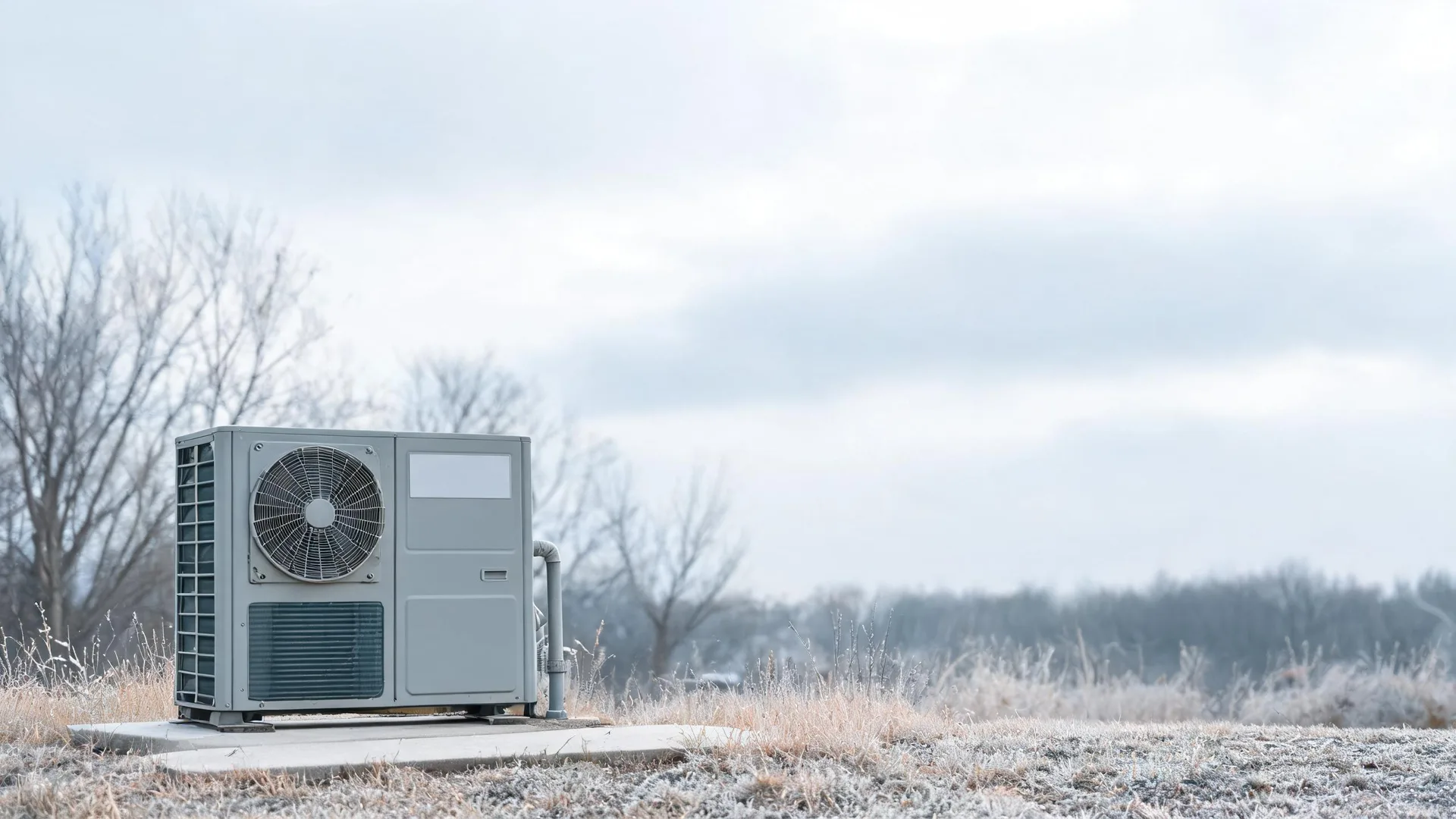
An outdoor air conditioning condenser unit mounted on a concrete pad beside a house, with electrical conduit running to a wall-mounted disconnect box.

The label tells you what the compressor costs to run, not how it feels

The SEER2 number on the label is a ratio, cooling output over the electricity it takes to produce it. A higher number means the compressor is moving the same heat out of the house for less power drawn, nothing more than that. It's not a measure of how cold the air gets or how fast the house cools, and a bigger number doesn't mean a bigger unit. That rating holds up over years of running, not just the first season. The compressor and coil degrade a little every cycle they run, and a unit near the low end of its rated efficiency on day one will likely drift further from it as the parts wear. A dirty coil or a low refrigerant charge pulls real-world efficiency well below what's printed on the label, no matter how high that number was at installation. Whatever the rating says, it only holds if the coil stays clean and the charge stays correct for as long as the system runs.

The size has to match the house, not the budget

A contractor works out the load by looking at square footage, window placement, ceiling height and insulation, then sizes the condenser and coil to that number. A unit too big cools the air fast but shuts off before it pulls the moisture out, so the house feels clammy. One too small runs constantly and never quite catches up on the hottest days. Either mistake costs more to live with than the install itself, so the load calculation drives everything priced after it.

What's already in the walls decides how much new work is needed

If the ductwork is sound and sized right for the new system, a contractor connects to it and moves on. If the trunk lines are too narrow or leaky, they need sealing or resizing before the new condenser can push air the way it's rated to. The electrical panel matters too. Some condensers need a dedicated circuit or a breaker upgrade to run safely. None of that shows up until someone's actually in the attic or the basement looking at what's there.

An outdoor air conditioning condenser unit mounted on a concrete pad next to a blue-sided residential house at sunset.

A higher-efficiency unit would save about $30 a year to run in Passaic County compared with a new unit at the federal minimum.

  • A higher-efficiency unit$200 a year
  • A new unit at the federal minimum, 13.4 SEER2$230 a year

Estimates for a typical Passaic County home, from EIA household energy data, New Jersey fuel prices and NOAA climate normals. Your home will differ.

Installation day starts with a walkthrough to confirm the load calculation still matches what's actually there before anyone touches the old unit. Then the old refrigerant gets recovered into tanks, never vented, because releasing it into the air is against the law. The old condenser comes out and the old coil comes out of the air handler. The line set often gets reused, but only if it's the right diameter for the new system's charge. A new coil goes in first. Then the lineset gets connected and the whole system gets pressure tested for leaks before any refrigerant goes in. Once it holds pressure, the system gets charged to the exact weight the manufacturer specifies, not just until the gauges look right. The last part of the day is airflow, checking static pressure in the ducts and confirming the blower is moving the amount of air the new coil needs to do its job.