White colonial houses with lit windows and dark shutters line a tree-lined street at dusk, bordered by dry-stacked stone walls.

AC Installation in North Plainfield, NJ

Tell us about the job

Takes about a minute. No obligation.

New system or replacementCentral ACSomerset County, NJ
Step 1 of 2

What ZIP code is the job in?

Electricity here runs 19.34 cents per kilowatthour

New Jersey households paid that rate in 2024, well above what a lot of the country pays. A central air conditioner is one of the biggest draws on a home's electric bill through the cooling months, so that rate touches every hour the system runs.

The SEER2 rating decides what that rate costs you

Two systems can cool the same house and pull very different amounts of power doing it. At this price per kilowatthour, the difference between a low-efficiency unit and a high-efficiency one shows up on every bill for as long as the system runs.

3 months
June through August, your air conditioner is on duty
84°F
the average summer afternoon it cools against
12 hail events
in ten years, and hail bends the fins on outdoor coils
13.4 SEER2
the federal minimum any new unit must meet
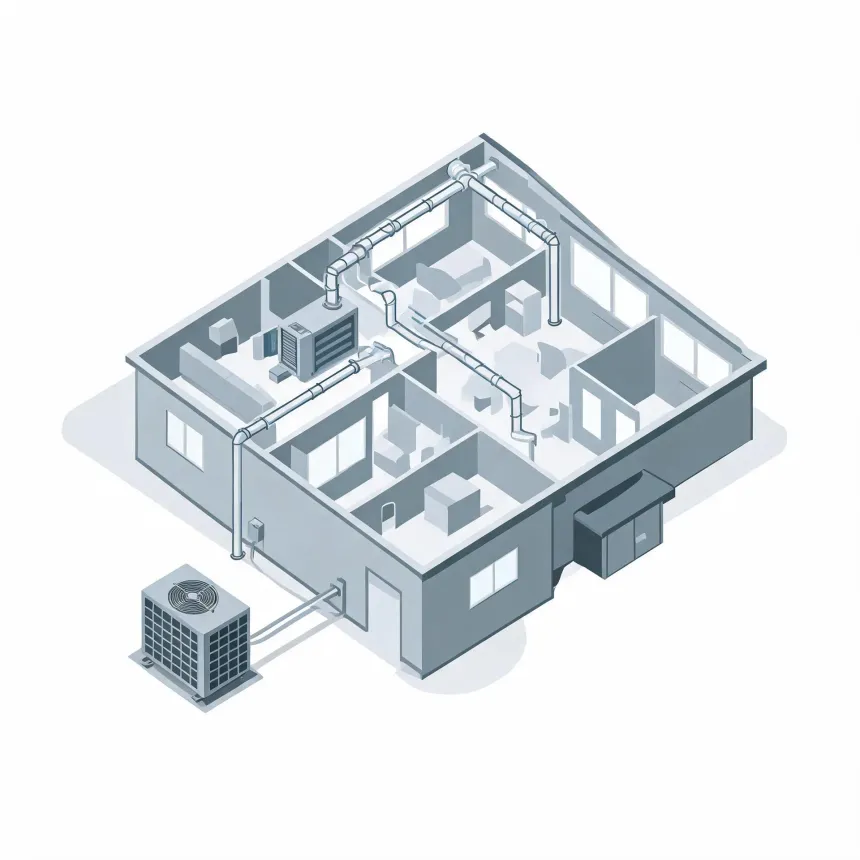
Isometric grayscale illustration of a cutaway house showing interior rooms, ceiling ductwork connected to an indoor air handler, and an outdoor condenser unit linked by lines along the exterior wall.
Your air conditioner works hardest from June through August.

NOAA nClimDiv, 1991–2020 normals

Gas furnaces heat 78.7% of homes in Somerset County.

A gas furnace runs on the same ducts a central air conditioner needs, so the air conditioner has a path already built for it.

Three months of cooling, nothing here that calls for more machine than that

Cooling runs June through August
Summer afternoons average 84°F
153 damaging wind events from 2015 to 2024
Storms here knock out power, not a reason to size up191 severe weather events hit Somerset County between 2015 and 2024, mostly wind and winter storms

Cooling here runs June through August, so May is the month to get a new system in. Wait for the first warm week and you're choosing from whatever's in stock, installed by whoever has an opening that day. Plan it for May instead and the contractor has time to size the unit to your house, not just swap in a match for what was there before. A system that's sized right also gets tested and adjusted while the weather's still mild, not during the first heat wave of the summer.

The system you install here has a minimum to meet, and a credit to claim

Any new air conditioner installed here has to meet 13.4 SEER2 at minimum, the federal floor for this size of system. Somerset County also falls under zone 5A, a cooling climate code that shapes what a contractor can install. On top of that, a federal tax credit is available for qualifying high-efficiency equipment. Worth asking what you qualify for before you pick a unit.

Find a contractor
An outdoor air conditioning condenser unit mounted on a concrete pad beside a house, with electrical conduit running to a wall-mounted disconnect box.

The question that decides how long this runs smooth

A quote is only worth comparing if you know what it's built on. Ask whether the size was set by a load calculation, a room by room count of what the house needs to cool, or by matching the tonnage of the unit being replaced. Those can land on different answers, and only one of them accounts for how this house actually holds heat. A system sized too big cools the air fast and shuts off before it pulls the moisture out, so the house feels damp even when the thermostat reads fine. A system sized too small runs long stretches without ever catching up on the hottest afternoons. Ask what SEER2 rating the quoted unit carries, and whether that number holds once it's installed, since ductwork and a mismatched coil can pull the real efficiency below what's on the label. Ask about the coil too. A furnace or air handler paired with the wrong coil won't deliver the rating either piece is rated for on its own.

The unit is the smallest part of the bill

A condenser and coil can be had at almost any price point, but the labor around them is what makes the install last. Setting the line set correctly, pulling a proper vacuum to clear moisture from the lines, and getting the refrigerant charge exact all take time on site. Skip any of that and the equipment underneath can still fail early no matter what rating is stamped on it.

What's already there changes the job

If the ductwork, the electrical disconnect and the pad are all in working shape, a contractor is mainly swapping equipment. If the ducts are undersized, the breaker needs upsizing, or the old pad has shifted, those become part of the job too. None of that shows up until someone has actually looked at the house, which is why quotes for the same size unit can call for very different amounts of work.

An overhead view of a residential air conditioning condenser unit mounted on a concrete pad next to a house with vinyl siding.

A higher-efficiency unit would save about $30 a year to run in Somerset County compared with a new unit at the federal minimum.

  • A higher-efficiency unit$250 a year
  • A new unit at the federal minimum, 13.4 SEER2$280 a year

Estimates for a typical Somerset County home, from EIA household energy data, New Jersey fuel prices and NOAA climate normals. Your home will differ.

A load calculation and the paperwork should already be settled before anyone shows up with equipment. The work itself starts with disconnecting and draining the old system, then pulling the indoor coil and outdoor condenser out. The line set usually gets replaced or cleaned out rather than reused as is, since old refrigerant oil left behind can contaminate new equipment. Once the new condenser and coil are set, the technician pulls a vacuum on the line set to clear out moisture and air before any refrigerant goes in. That step takes time and can't be rushed, since any moisture left in the lines causes problems later. After the charge is set, the system gets run through its paces, checking airflow, static pressure, and temperature split at the vents before anyone calls the job done.